Ukrainian Vyshyvanka Styling Guide 2026: Modern Folk Revival
The Global Resurgence of the Vyshyvanka in 2026
The Ukrainian Vyshyvanka is no longer confined to museum archives, diaspora gatherings, or annual heritage parades. As we navigate the global fashion landscape of 2026, this intricately embroidered shirt has cemented its status as a cornerstone of the European folk-revival movement. What was once strictly categorized as traditional ceremonial wear has been completely reimagined by contemporary designers and streetwear enthusiasts alike. Today, the Vyshyvanka represents a powerful intersection of cultural resilience, artisanal craftsmanship, and modern sartorial expression. Whether spotted on the spring/summer runways in Paris or integrated into the everyday capsule wardrobes of urban creatives, the embroidered shirt is having a definitive mainstream moment.
According to the UNESCO framework for Intangible Cultural Heritage, the preservation of traditional crafts relies heavily on their continued relevance in daily life. The 2026 fashion ecosystem has embraced this philosophy, transforming the Vyshyvanka from a static historical artifact into a dynamic, living garment. This guide explores how to decode regional motifs, identify leading contemporary brands, and seamlessly style this iconic piece of Eastern European folk dress for the modern world.
Decoding Regional Motifs: From Hutsul to Poltava
Before integrating the Vyshyvanka into your wardrobe, it is essential to understand the visual language woven into its fabric. Historically, the embroidery served as a protective talisman and a marker of regional identity. The Encyclopedia Britannica's comprehensive guide to folk art notes that Eastern European textile traditions are deeply tied to local geography, mythology, and agrarian cycles. In 2026, fashion houses are abstracting these historical codes, but knowing the roots adds profound depth to your styling choices.
The Hutsul Tradition (Carpathian Mountains)
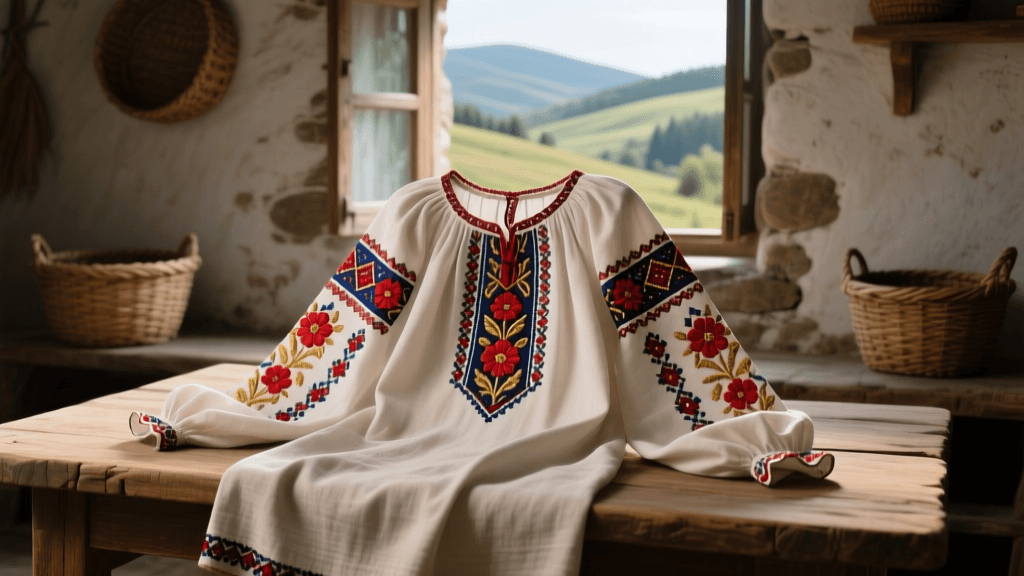
Originating from the highland Hutsul people, this style is characterized by dense, vibrant geometric patterns. Cross-stitch and beadwork are prevalent, utilizing rich reds, deep blacks, and striking yellows. In contemporary styling, a Hutsul-inspired piece acts as a bold statement item, perfect for anchoring a minimalist, monochromatic outfit.
The Poltava Tradition (Central Ukraine)
Starkly contrasting the Carpathian style, Poltava embroidery is famous for its delicate 'white-on-white' (bil po bilomu) technique. Featuring intricate floral and botanical motifs, this style relies on texture and shadow rather than color contrast. It is the preferred choice for elevated office wear and refined evening events, offering a subtle nod to heritage without overwhelming the silhouette.
The Bukovyna Tradition (Southwestern Ukraine)
Bukovyna garments are heavily influenced by neighboring Romanian and Balkan textile traditions, often featuring heavy wool threads, metallic gold accents, and complex diamond motifs. These pieces are inherently luxurious and are frequently adapted by high-end designers for autumn/winter outerwear and layered styling.
Contemporary Brands Leading the 2026 Revival
The 2026 market is rich with brands that honor traditional techniques while employing modern tailoring. When shopping for an authentic yet contemporary Vyshyvanka, look for labels that collaborate directly with regional artisans while utilizing sustainable, modern textiles.
- Etnodim: A pioneer in the modern revival, Etnodim continues to dominate the 2026 market with its minimalist, oversized linen shirts. They focus on subtle, monochromatic embroidery that appeals to fans of Scandinavian minimalism and Japanese streetwear.
- Vita Kin: Synonymous with luxury bohemian fashion, Vita Kin’s 2026 collections feature voluminous silk-blend dresses and shirts with exaggerated sleeves and vibrant, traditional cross-stitch motifs. These are investment pieces designed for high-impact styling.
- Bevza: While primarily a high-fashion label, Bevza consistently integrates subtle Ukrainian agrarian motifs and wheat-stalk embroidery into its sleek, architectural silhouettes, bridging the gap between folk art and avant-garde design.
- Folk Motif: An emerging sustainable brand in 2026, utilizing lab-grown silk and upcycled hemp, featuring digitized patterns derived from 19th-century museum archives.
How to Style the Vyshyvanka for Modern Wardrobes
Styling folk dress in a contemporary context requires balancing the ornate nature of the embroidery with modern, structured, or relaxed silhouettes. Here are three actionable styling formulas for 2026.
1. The Elevated Office Look
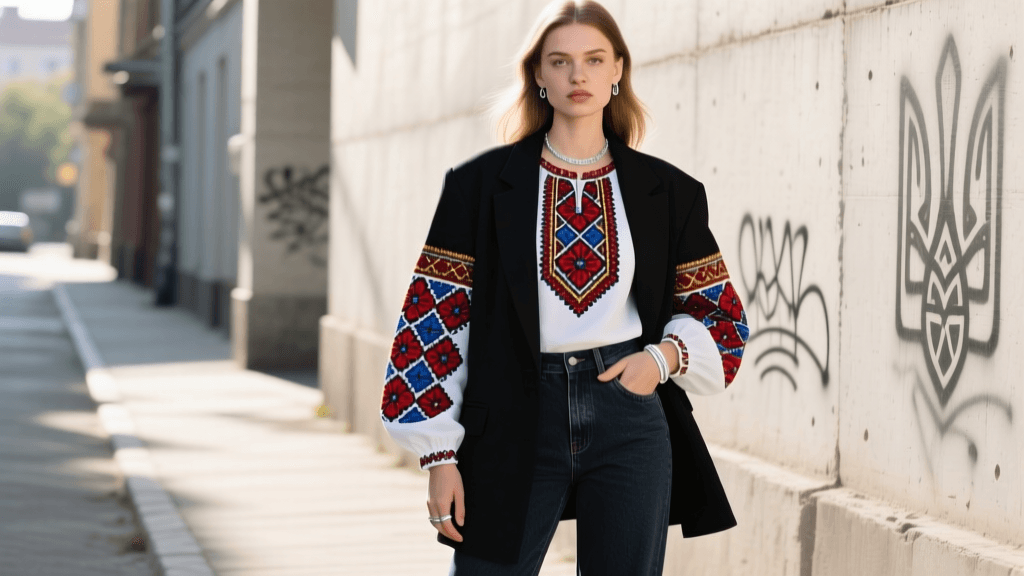
For a professional environment, opt for a Poltava-style white-on-white Vyshyvanka tailored from a crisp cotton-poplin or Tencel blend. Tuck the shirt into high-waisted, wide-leg wool trousers in charcoal or navy. Layer with a structured, collarless blazer to frame the embroidered neckline without hiding it. Finish with pointed-toe leather loafers and subtle gold jewelry that echoes the craftsmanship of the threadwork.
2. Urban Streetwear & Weekend Casual
The streetwear iteration relies on volume and contrast. Choose an oversized, heavy-weight linen Hutsul shirt in natural beige with striking red and black geometric embroidery. Wear it untucked over a fitted black ribbed tank top. Pair with relaxed-fit Japanese selvedge denim or technical cargo pants. Footwear should be chunky—think lug-sole boots or retro-runner sneakers. Add a utilitarian crossbody bag to ground the historical garment in modern urban utility.
3. Evening & Formal Events
For evening wear, look for Vyshyvanka-inspired dresses or tunics crafted from velvet or heavy silk. A deep emerald or midnight blue base with metallic gold Bukovyna-style embroidery exudes opulence. Style with sleek, tailored tuxedo trousers or a bias-cut silk midi skirt. Keep accessories minimal; let the intricate neckline and cuff embroidery serve as the sole focal point of the ensemble.
Traditional vs. Contemporary Vyshyvanka: A 2026 Comparison
To understand how far the garment has evolved, it is helpful to compare historical construction methods with the innovations seen in today's market. The Victoria and Albert Museum's textile archives provide extensive documentation on historical European embroidery techniques, which serve as the baseline for modern adaptations.
| Feature | Heritage Standard (Pre-20th Century) | 2026 Contemporary Standard |
|---|---|---|
| Fabric Base | Hand-woven, unbleached hemp or coarse linen | Organic washed linen, lab-grown silk, Tencel blends |
| Embroidery Thread | Naturally dyed wool, flax, or cotton | Colorfast mercerized cotton, recycled polyester, metallics |
| Silhouette & Cut | Loose, untucked, straight drop-shoulder cut | Oversized streetwear, tailored tucks, asymmetrical hems |
| Production Method | Entirely hand-stitched by local artisans | Hybrid (machine-stitched base, hand-finished motifs) |
| Average Price Range | N/A (Homemade / Barter Economy) | $120 - $850+ USD |
Sustainable Fabrics and Ethical Production
A major driving force behind the Vyshyvanka’s popularity in 2026 is the global shift toward slow fashion and sustainable textiles. Modern consumers demand transparency, and leading Ukrainian brands have responded by reviving heritage agricultural practices. Hemp, which requires minimal water and no pesticides, is experiencing a massive renaissance. When blended with organic cotton, it creates a durable, breathable fabric that perfectly mimics the drape of historical linen but with a softer, modern hand-feel. Furthermore, the use of plant-based, non-toxic dyes has returned, ensuring that the vibrant reds and deep blacks of traditional Carpathian motifs are achieved without the environmental cost of synthetic chemical runoff.
Garment Care: Preserving Your Embroidered Investment
Whether you have invested in a $600 luxury silk piece or a $150 everyday linen shirt, proper care is vital to preserve the integrity of the embroidery. The tension of the threadwork can warp the base fabric if washed or stored incorrectly.
- Washing: Always hand-wash your Vyshyvanka in cool water using a pH-neutral, enzyme-free detergent. Never wring or twist the fabric, as this will distort the geometric patterns. Instead, gently press the water out and roll the garment in a clean, dry towel to absorb excess moisture.
- Drying: Lay the garment flat on a drying rack away from direct sunlight to prevent the dyed threads from fading. Reshape the collar and cuffs while damp.
- Ironing: Always iron the garment inside out on a low-to-medium heat setting. Place a clean cotton pressing cloth between the iron and the embroidery to prevent crushing the three-dimensional texture of the cross-stitch or satin-stitch motifs.
- Storage: For long-term storage, fold the shirt with acid-free tissue paper to prevent hard creases from forming over the embroidered areas. Avoid hanging heavy linen shirts for extended periods, as the weight of the fabric can stretch the neckline and distort the shoulder seams.
Conclusion
The Vyshyvanka’s journey from a regional protective talisman to a global 2026 fashion staple is a testament to the enduring power of European folk dress. By understanding the rich symbolism of regional motifs and applying modern styling techniques, you can integrate this beautiful garment into your daily life with respect and sartorial flair. As the slow fashion movement continues to prioritize heritage, craftsmanship, and sustainability, the embroidered shirt remains not just a piece of clothing, but a wearable narrative of cultural survival and artistic triumph.