Romanian Ia Blouse Embroidery & Sourcing Guide 2026
The Renaissance of the Romanian Ia in 2026
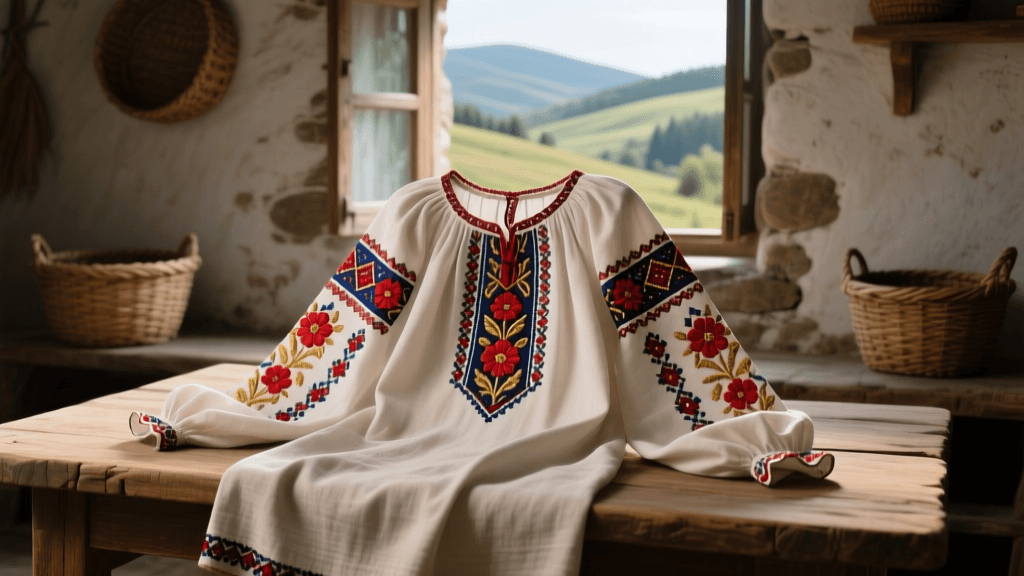
The traditional Romanian blouse, universally known as the Ia, has experienced a massive resurgence in Eastern European folk dress and global sustainable fashion circles throughout 2025 and 2026. Far from being a static museum relic, the Ia is a living garment. Its intricate shoulder embroidery, known as the altiță, serves as a regional fingerprint, communicating the wearer's village, marital status, and social standing through complex geometric and floral codes. In 2026, collectors, folk dancers, and heritage enthusiasts are increasingly seeking out authentic, hand-loomed pieces, moving away from the mass-produced, machine-embroidered imitations that flooded the market in the early 2020s. According to the UNESCO Intangible Cultural Heritage registry, the traditions of producing the decorated blouse with altiță embroidery represent a vital, protected cultural practice shared across Romania and the Republic of Moldova.
Anatomy of the Traditional Ia Blouse
To source an authentic garment, one must first understand its architectural structure. The traditional Ia is not merely a shirt; it is a meticulously engineered textile composed of three distinct embroidered zones.
The Altiță (Shoulder Embroidery)
The altiță is the most visually striking and culturally significant element of the blouse. Located on the upper shoulder and sleeve cap, this dense, rectangular block of embroidery historically served as a protective talisman. In 2026, master artisans in regions like Vâlcea and Argeș are reviving archaic altiță patterns using naturally dyed silk and wool threads, creating a raised, textured surface that machine embroidery simply cannot replicate.
The Încreț (The Gathering)
Directly below the altiță lies the încreț, a narrower band of geometric stitching that hides the structural gathers of the sleeve. Traditionally worked in a contrasting color—often a muted yellow, olive green, or deep navy—the încreț acts as a visual bridge between the heavy shoulder block and the flowing vertical lines of the sleeve.
The Râuri (The Rivers)
Translating to 'rivers' or 'streams', the râuri are the vertical bands of embroidery that flow down the sleeve and the bodice. These lines are meant to symbolize the flow of water, life, and time. The spacing and density of the râuri dictate the formality of the blouse; tightly packed rivers indicate a garment meant for weddings or major religious festivals, while sparse, minimalist rivers denote everyday workwear.
Regional Variations and Motifs
Eastern European folk dress is highly localized, and the Romanian Ia is no exception. When browsing artisan markets or specialized heritage boutiques in 2026, you will encounter distinct regional styles.
- Moldova and Bucovina: Blouses from this northeastern region are famous for their bold, high-contrast color palettes. Deep blacks and vibrant reds dominate, often featuring the coarnele berbecului (ram's horns) motif, symbolizing strength and masculine energy.
- Muntenia and Argeș: The heartland of the classic Ia. Garments here feature intricate, lace-like needlework with a predominance of burgundy, brick red, and subtle gold metallic threads. The spicul (wheat ear) motif is prevalent, honoring agricultural abundance.
- Transylvania and Sălaj: Northern and central Transylvanian blouses often utilize a darker, more somber palette, incorporating deep indigo, forest green, and black. The embroidery is denser, and the fabric is frequently a heavier, home-woven hemp or cotton-linen blend to withstand the harsh Carpathian winters.
- Oltenia and Gorj: Known for the 'Gorj style', these blouses feature highly stylized, abstract geometric motifs. The embroidery often covers the entire sleeve in a continuous, unbroken pattern, creating a stunning visual effect when the wearer dances.
Navigating the 2026 Artisan Market: Avoiding Imitations
As the demand for Slavic and Balkan folk dress has grown, so has the proliferation of 'fast-fashion' folkwear. In 2026, authentic hand-embroidered Ia blouses are considered luxury heritage items. When sourcing a genuine piece, whether from the Romanian Peasant Museum artisan fairs or specialized online heritage guilds, look for the following hallmarks of authenticity:
- The Reverse Side: Turn the blouse inside out. Authentic hand embroidery will show the threads carrying across the back of the fabric, with slight irregularities. Machine embroidery will have a uniform, continuous bobbin thread backing, often with a paper or synthetic stabilizer.
- The Fabric Weave: Genuine antique or modern artisan Ia blouses are woven on traditional looms. The fabric will have a slightly uneven, organic texture (home-woven cotton, hemp, or borangic/silk). Commercial imitations use factory-milled, perfectly uniform muslin.
- The Thread: Artisans use mercerized cotton, wool, or silk. If the thread has a synthetic, plastic-like sheen and melts when exposed to a lighter (test a loose thread only!), it is modern polyester.
Comparison Table: Regional Ia Blouses & 2026 Market Pricing
| Region | Primary Motif | Base Fabric | 2026 Price Range (EUR) |
|---|---|---|---|
| Moldova / Bucovina | Ram's Horns, Sunbursts | Heavy Cotton / Linen | €250 - €450 |
| Muntenia / Argeș | Wheat Ears, Floral Vines | Fine Cotton / Borangic (Silk) | €300 - €600 |
| Transylvania / Sălaj | Geometric Stars, Crosses | Hemp / Wool Blends | €200 - €380 |
| Oltenia / Gorj | Abstract Rhombuses | Lightweight Home-woven Cotton | €280 - €500 |
Note: Prices reflect 2026 market rates for newly commissioned, hand-embroidered garments by certified artisans. Authentic vintage pieces (pre-1950) can command prices upwards of €1,500 depending on condition and provenance.
Traditional Stitching Techniques
The beauty of the Ia lies in its diverse stitching vocabulary. The most common stitch is the Romanian stitch (a variation of the herringbone or catch stitch), which creates a dense, interlocking pattern that is highly durable. Cross-stitch (cruciuliță) is also widely used, particularly in Transylvanian pieces, while chain stitch (lanț) is favored for outlining and creating fluid, curving floral motifs in southern regions. In 2026, heritage workshops are placing a heavy emphasis on teaching the 'hidden stitch' technique, where the thread is never cut until an entire geometric block is completed, ensuring the structural integrity of the garment over decades of wear.
Styling the Ia for Contemporary Folk Festivals
Wearing an Ia in 2026 is about balancing deep cultural respect with modern aesthetics. For traditional folk festivals, the Ia is correctly paired with a fotă (a wrap-around woolen skirt) or a catrință (a woven cotton skirt with vertical stripes). The skirt should be tied at the waist with a brâu (a wide, woven woolen belt) that provides lower-back support and anchors the heavy embroidery of the blouse.
For contemporary, everyday styling, the Ia pairs beautifully with high-waisted, wide-leg linen trousers or a minimalist, ankle-length A-line skirt. Avoid pairing the Ia with denim or overly casual streetwear, as the sheer volume of hand-stitched labor demands a level of sartorial respect. Accessorize with traditional beaded necklaces (mărgele) or a simple, hand-carved wooden pendant to maintain the Eastern European aesthetic without looking costumey.
Care and Preservation of Heritage Textiles
Proper maintenance is critical for preserving the structural integrity of hand-loomed fabrics and natural dyes. According to textile conservation guidelines outlined by institutions like the Victoria and Albert Museum, heritage garments require specialized care. Never machine-wash an authentic Ia. Instead, hand-wash the garment in lukewarm water using a pH-neutral, conservation-grade detergent. Do not wring or twist the fabric; gently press the water out by rolling the blouse in a clean, dry cotton towel.
Dry the Ia flat in the shade, as direct sunlight will rapidly fade natural dyes like madder root (red) and woad (blue). When storing the blouse for the off-season, avoid wire hangers, which will distort the delicate gathering of the neckline. Fold the blouse loosely with acid-free tissue paper to prevent the heavy altiță embroidery from creasing, and store it in a breathable cotton pillowcase in a cool, dry environment. By following these preservation steps, your 2026 investment will remain a vibrant, wearable piece of Balkan history for generations to come.