Viking Smokkr Apron Dress: 2026 Authentic Reconstruction Guide
The Evolution of Viking Age Women's Garments
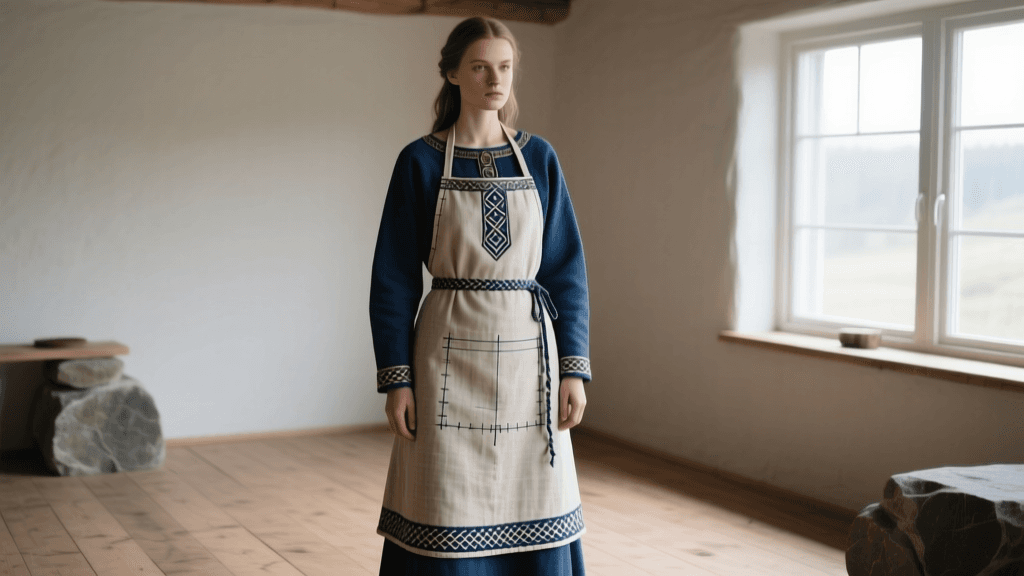
The landscape of Viking Age historical reenactment and traditional garment reconstruction has undergone a massive paradigm shift as we navigate through 2026. For decades, the popular imagination—and early 20th-century reenactment groups—relied on the so-called 'wrapped blanket' or heavily pleated models of the Viking apron dress. However, modern textile archaeology has thoroughly debunked these misconceptions. Today, the focus is entirely on the tailored, structured smokkr (apron dress) worn over a linen or fine wool serk (underdress). This guide provides a comprehensive, historically accurate blueprint for reconstructing a Viking Age smokkr using period-correct fibers, natural dyeing vats, and structural sewing techniques validated by recent archaeological consensus.
The 2026 Archaeological Consensus on the Smokkr
Understanding the true silhouette of the smokkr requires looking past outdated museum mannequins and examining the surviving textile fragments from key burial sites. According to the National Museum of Denmark, the preservation of textiles in Viking Age graves is rare, but sites like Birka (Sweden), Hedeby (Germany), and Køstrup (Denmark) have provided crucial data. The current 2026 consensus favors a tubular or rectangular garment that hangs from the shoulders, suspended by two oval 'tortoise' brooches.
The textile fragments found looped through the pins of oval brooches indicate a garment that was either a closed tube or an open rectangular apron with side seams, often featuring subtle pleating only at the very top edge near the brooches, rather than the heavily gathered skirts seen in 1970s interpretations.
When planning your reconstruction, you must decide between the closed tubular model (supported by the Køstrup finds) or the open rectangular apron model (supported by some Birka interpretations). For this guide, we will focus on the closed tubular smokkr with inserted gores, as it provides the most historically defensible and practical silhouette for daily wear in a 2026 reenactment context.
Sourcing Historically Accurate Fibers
The foundation of any authentic Nordic garment is the textile. Viking Age weavers utilized specific breeds of sheep that produced dual-coated fleeces, featuring a soft, warm inner coat (thel) and a long, water-resistant outer coat (tog). When sourcing materials in 2026, avoid modern, highly processed merino wools, which lack the structural integrity and historical accuracy required for a smokkr.
| Fiber Type | Breed / Source | Micron Count | Best Garment Use | 2026 Est. Cost (per meter) |
|---|---|---|---|---|
| Wool | Spelsau (Norwegian) | 28-32 µm (Outer) | Smokkr (Apron Dress), Cloaks | $45 - $65 USD |
| Wool | Gotland Pelt | 24-28 µm | Hoods, Outer Garments | $55 - $80 USD |
| Wool | Icelandic (Dual-coated) | Variable | Smokkr, Winter Layers | $50 - $75 USD |
| Linen | European Flax (Line-spun) | N/A | Serk (Underdress) | $25 - $40 USD |
| Silk | Samite / Tabby (Import) | N/A | Trims, Tablet Weaving | $90 - $150 USD |
For the smokkr, a 2/2 twill or diamond twill woven from Spelsau or Icelandic wool is the gold standard. The fabric should have a distinct drape and a slightly 'hairy' halo, characteristic of historical worsted and semi-worsted spinning techniques. The Viking Ship Museum in Roskilde frequently highlights the importance of the weave structure; a thread count of approximately 10-14 threads per centimeter in the warp and weft is ideal for a durable, weather-resistant apron dress.
Natural Dyeing: Achieving Period-Accurate Woad Blue
Color in the Viking Age was a marker of status and wealth. While madder (red) and weld (yellow) were common, woad blue was highly prized. In 2026, historical dyers have moved away from harsh chemical hydrosulfite vats, favoring the organic fructose vat, which is safer for home studios and yields a brilliant, historically accurate blue.
The 2026 Fructose Woad Vat Recipe
This recipe is scaled for dyeing approximately 500 grams of pre-mordanted wool fabric or yarn.
- Woad Leaves: 50g dried Isatis tinctoria leaves (fermented into woad balls or powder if available).
- Alkaline Agent: 100g Calcium Hydroxide (slaked lime). This raises the pH to the necessary 9-10 level.
- Reducing Agent: 75g Fructose powder. This removes the oxygen from the vat, allowing the indigotin to become soluble.
- Water: 10 liters of soft water.
Step-by-Step Dyeing Process
- Preparation: Heat the 10 liters of water to exactly 50°C (122°F). Do not exceed this temperature, or you will kill the dye chemistry.
- Alkaline Base: Stir in the calcium hydroxide until dissolved. The water will become cloudy and highly alkaline.
- Adding Woad and Fructose: Gently stir in the woad powder and fructose. Cover the pot tightly to prevent oxygen from entering.
- Reduction Phase: Let the vat sit undisturbed for 60 to 90 minutes. The liquid should turn a clear, yellowish-green with a dark, coppery scum on the surface (the 'flower').
- Dyeing: Wet your wool fabric thoroughly in warm water. Squeeze out excess water and gently lower it into the vat, ensuring it does not break the surface scum. Leave it submerged for 20 minutes.
- Oxidation: Remove the fabric. It will appear yellow-green. Hang it in the air. As oxygen hits the fibers, it will magically oxidize into a deep, rich Viking blue. Repeat the dip-oxidize process 3 to 5 times to build color depth.
Pattern Drafting and Construction
Constructing the smokkr requires a geometric approach to fabric, minimizing waste—a crucial factor in an era where textile production was incredibly labor-intensive. The garment is primarily constructed from rectangular panels and triangular gores.
Essential Measurements
- Bust/Chest: Measure the fullest part of the bust, then add 10-15 cm for ease and the bulk of the underdress.
- Length: Measure from the top of the shoulder down to the mid-calf. Add 5 cm for hem and seam allowances.
- Panel Width: Divide your total bust circumference (with ease) by two. This is the width of your front and back rectangular panels.
Inserting the Gores
To allow for walking and movement, side gores are inserted starting from the armpit or waist down to the hem. Cut two triangular gores with a base width of 30-40 cm each. When sewing the gores to the main rectangular panels, use a historical running stitch with a Z-spun, S-plied wool thread. Keep your stitches small and even, approximately 3 to 4 mm in length. After joining, fell the seams flat and secure them with a secondary whipstitch or running stitch to mimic the durable seam finishes found in the Textile Research Centre archives.
Tablet Weaving and Oval Brooches
No smokkr is complete without its suspension system and trims. The garment is held up by loops of wool or tablet-woven band, pinned to the front and back panels by a pair of oval 'tortoise' brooches. In 2026, high-quality bronze cast replicas of the P51 (Birka type) or P37 (Gotland type) brooches are widely available from specialized historical artisans.
For the top edge of the smokkr, a tablet-woven trim using the 'brocading' technique adds both structural reinforcement and visual wealth. Using 20 to 30 wooden or bone tablets threaded with fine wool or imported silk, you can weave geometric diamond or knotwork patterns. The band should be sewn directly over the raw, folded edge of the neckline, enclosing the fabric and providing a sturdy anchor point for the brooch pins. Ensure the loops suspending the dress are made of the same tablet-woven band or tightly braided wool, as thin, single-cord loops are rarely supported by the archaeological record.
Caring for Your Wool Garment
Maintaining a naturally dyed, historically woven smokkr requires abandoning modern laundry habits. Never machine wash or use commercial detergents, which will strip the natural lanolin and fade the woad dye. Instead, air the garment out in a damp breeze, which naturally freshens the wool fibers. For localized stains, use a mild solution of lanolin-rich wool wash and cold water, gently dabbing the area without agitating the weave. With proper care, your 2026 reconstruction will not only serve as an accurate educational tool but will also age beautifully, developing a rich patina that honors the textile traditions of the Viking Age.