Authentic Tudor Kirtle Construction: 2026 Fabric & Boning Guide
The Renaissance Revival of 2026: Beyond the Costume
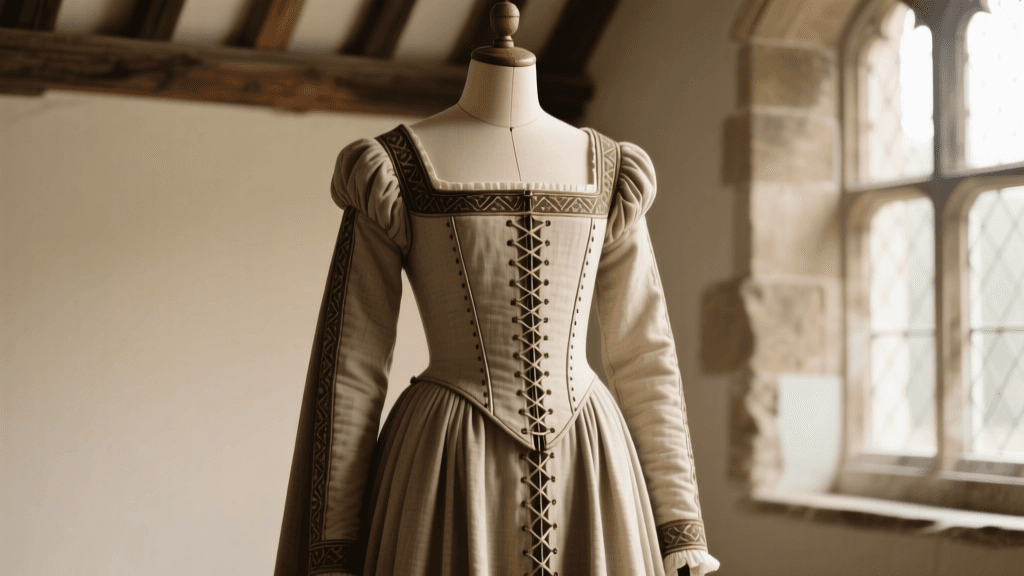
The landscape of historical dress and European folk costume has evolved dramatically. As we move through 2026, the historical reenactment and heritage crafting communities have largely abandoned the inaccurate, heavily boned Victorian corsets of the past in favor of true 16th-century silhouettes. At the heart of this authentic Renaissance wardrobe is the Tudor kirtle. Unlike the later Elizabethan corset or pair of bodies, the early-to-mid 16th-century kirtle served as both the primary bust support and the foundational skirt for women across various social classes. According to the Metropolitan Museum of Art's historical costume archives, the transition from the soft, flowing garments of the late Middle Ages to the structured, geometric silhouettes of the Tudor period represents a pivotal moment in European textile history Met Museum: Tudor Fashion.
For modern artisans, constructing a historically accurate kirtle in 2026 requires navigating a complex market of textiles and structural materials. This guide provides a comprehensive, actionable blueprint for sourcing authentic linens, selecting the correct modern equivalents for historical boning, and executing period-accurate construction techniques.
Anatomy of the 16th-Century Kirtle
Before cutting into expensive Belgian linen, it is crucial to understand the kirtle's architecture. The garment is typically divided into two main components: the fitted, sleeveless (or detachable-sleeve) bodice and the heavily pleated skirt. The bodice is lined and interlined to provide rigid support, lifting the bust and flattening the torso into the conical shape characteristic of the Tudor era. The skirt is attached to the bodice's waistline, usually featuring a flat front panel and dense cartridge pleats at the back and sides to distribute the heavy wool or linen fabric evenly.
The Shift in Patterning Methodologies
In 2026, historical costumers rely heavily on the draping method rather than flat-pattern drafting. The definitive resource for this approach remains the research pioneered by The Tudor Tailor, which continues to set the global standard for 16th-century reconstruction. Draping heavyweight muslin directly onto the wearer (or a custom dress form) allows the artisan to map the precise placement of the side-back seams, which are historically accurate for the period and provide superior bust support compared to modern princess seams.
Selecting Authentic Linens and Wools
The foundation of any European folk dress or historical garment is its textile. In 2026, the market for historically accurate, naturally dyed, and properly woven fabrics has matured, but it requires knowing exactly what to look for. Avoid modern apparel linens, which are often blended with polyester or woven with a synthetic warp.
Bodice Interlining and Outer Fabrics
For the kirtle bodice, you need a sturdy, tightly woven linen to act as the structural canvas. Look for a medium-to-heavyweight linen, specifically in the 5.3 oz/yd² to 7.1 oz/yd² range. A tabby (plain) weave is essential, as it provides the necessary friction to hold the boning channels securely. For the outer fashion fabric, a worsted wool or a heavyweight linen (up to 9 oz/yd²) in a historically appropriate color—such as madder red, weld yellow, or woad blue—is ideal. The Costume Society notes that the study of historical dyes and weaves is paramount for achieving true period accuracy in modern reconstructions The Costume Society.
Skirt Yardage and Weight
The skirt requires significant yardage to achieve the proper drape and volume. A minimum of 4 to 5 yards of 60-inch-wide fabric is standard. If using wool, a lighter twill weave (around 6 oz/yd²) is recommended to prevent the cartridge pleats from becoming too bulky at the waistline. In 2026, premium European-milled wools from the UK and Italy remain the gold standard, though they command a premium price of $45 to $80 per yard.
The Boning Dilemma: Historical Reed vs. Modern Synthetics
The most hotly debated topic in Renaissance dressmaking is bodice boning. Historically, kirtles were stiffened with layers of buckram (linen glued or pasted together), reinforced with bents (dried reeds), or later, with whalebone (baleen). Since baleen is rightfully illegal and unavailable, and reeds can be difficult to source and prone to snapping under modern washing conditions, 2026's artisans have turned to advanced synthetics and specialized steels.
2026 Boning Material Comparison
Below is a detailed comparison of the structural materials available to historical seamstresses today, evaluating their historical accuracy, flexibility, and cost.
| Material | Historical Accuracy | Flexibility & Comfort | Durability & Care | 2026 Avg. Cost (per yard) |
|---|---|---|---|---|
| German Synthetic Whalebone (Wissner) | High (Mimics baleen) | Excellent (Molds to body heat) | Machine washable, won't rust | $8.50 - $12.00 |
| Dried River Reed / Bents | Very High (Period accurate) | Good (Stiff but natural) | Poor (Snaps, hand-wash only) | $15.00 - $25.00 |
| Spiral Steel Boning | Low (Victorian era) | Good (Bends in all directions) | High (Can rust if casing fails) | $4.00 - $7.00 |
| Heavy Cable Ties (Nylon) | Low (Modern hack) | Poor (Too rigid, digs in) | High (Indestructible) | $1.50 - $3.00 |
The 2026 Consensus: German synthetic whalebone (often sold under the Wissner brand) is the undisputed champion for Tudor kirtles. It possesses the exact thermoplastic properties of historical baleen, meaning it softens slightly with body heat and molds to the wearer's torso, providing the conical shape without the bruising associated with rigid steel. For the front center seam, a single, flat steel busk or a wide wooden busk can be inserted into a dedicated channel to maintain a perfectly flat front profile.
Construction Techniques: Cartridge Pleating the Skirt
The hallmark of a professional-grade Renaissance kirtle is the skirt attachment. Gathering or standard knife pleating will not distribute the heavy fabric correctly, nor will it provide the distinct 'bell' shape required for the 1530s to 1560s silhouette. Cartridge pleating is mandatory.
Step-by-Step Cartridge Pleating
- Edge Finishing: Finish the top edge of your skirt fabric. Historically, this was done by folding the edge over once and whipping it, or by binding it with a strip of linen.
- Marking the Grid: Using a water-soluble pen or tailor's chalk, mark a grid on the wrong side of the skirt's top edge. For heavy wool, mark dots every 1/2 inch horizontally and 1/2 inch vertically for two or three rows.
- Running Stitches: Thread a heavy-duty linen or silk buttonhole thread. Run parallel rows of basting stitches directly through your marked dots. Do not knot the end of the thread; leave a long tail.
- Pulling the Pleats: Gently pull the threads simultaneously. The fabric will fold into tight, accordion-like tubes (the 'cartridges').
- Attachment: Pin the pleated edge to the finished bottom edge of your bodice. Using a heavy needle and waxed linen thread, whip-stitch the top of each individual pleat directly to the bodice's waistline edge. This creates a hinge effect, allowing the heavy skirt to fall away from the body gracefully.
Sourcing and Budgeting in 2026
Building a museum-quality Tudor kirtle is an investment in both time and materials. Based on current 2026 textile market prices, here is a realistic budget breakdown for a fully hand-finished, historically accurate garment:
- Outer Fashion Fabric (Wool/Linen): 5 yards @ $40/yd = $200
- Lining & Interlining (Heavy Linen): 4 yards @ $25/yd = $100
- Skirt Lining (Lightweight Linen): 5 yards @ $15/yd = $75
- German Synthetic Whalebone (10 yards): $100
- Notions (Linen thread, silk buttonhole twist, hooks/eyes): $60
Total Estimated Material Cost: $535. This excludes the cost of a custom dress form or professional tailoring shears, but reflects the true cost of premium, natural-fiber historical reconstruction.
Assembly and Finishing for the Modern Artisan
While modern sewing machines can be used for the long, non-visible structural seams of the skirt to save time, the bodice should be treated with extreme care. The outer fashion fabric must be pad-stitched or carefully prick-stitched by hand to the interlining to ensure it lies perfectly flat without puckering. In 2026, the use of historically accurate hand-sewing techniques—such as the backstitch for structural seams and the slip-stitch for linings—is not just about aesthetic purity; it actually allows the natural fibers to stretch and move with the body in a way that rigid machine-lockstitches do not.
Finally, the kirtle is closed at the front using metal hooks and eyes. Avoid modern lacing if you are aiming for a middle-to-upper-class English Tudor look from the 1530s; front lacing was generally hidden or reserved for lower classes and specific regional folk dresses, whereas the visible front-closing kirtle secured with heavy brass hooks was the standard for the fashionable Tudor silhouette.
Conclusion
Constructing a 16th-century Tudor kirtle in 2026 is a deeply rewarding endeavor that bridges the gap between historical research and tangible craftsmanship. By abandoning modern corsetry myths, investing in high-quality natural linens and wools, and utilizing advanced synthetic whalebone that mimics historical baleen, today's artisans can achieve a silhouette that is not only breathtakingly accurate but remarkably comfortable. Whether you are preparing for a high-end heritage festival or contributing to a living history museum, mastering the kirtle is the essential first step into the world of authentic European Renaissance dress.