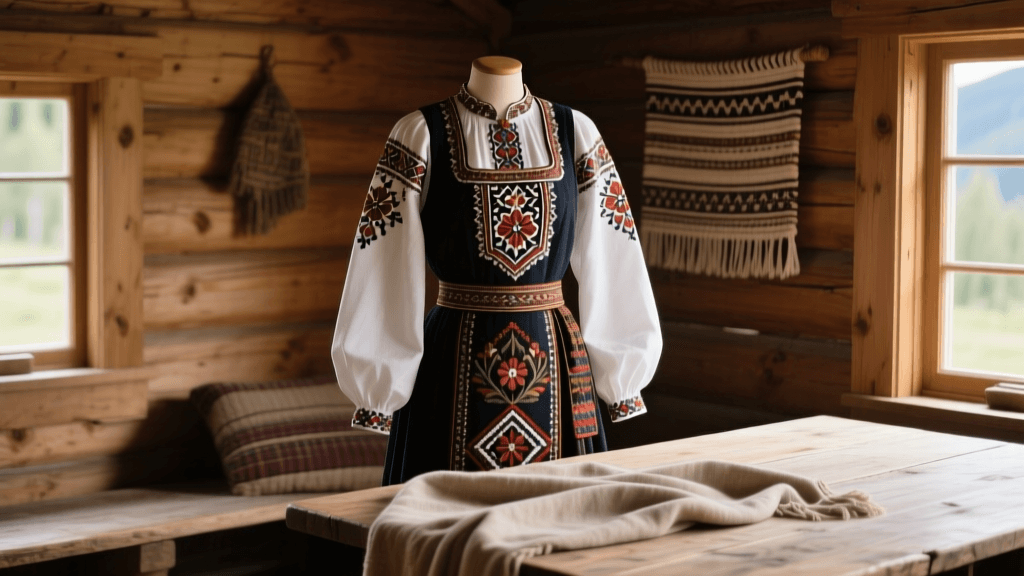
Authentic Viking Smokkr Apron Dress Reconstruction Guide 2026
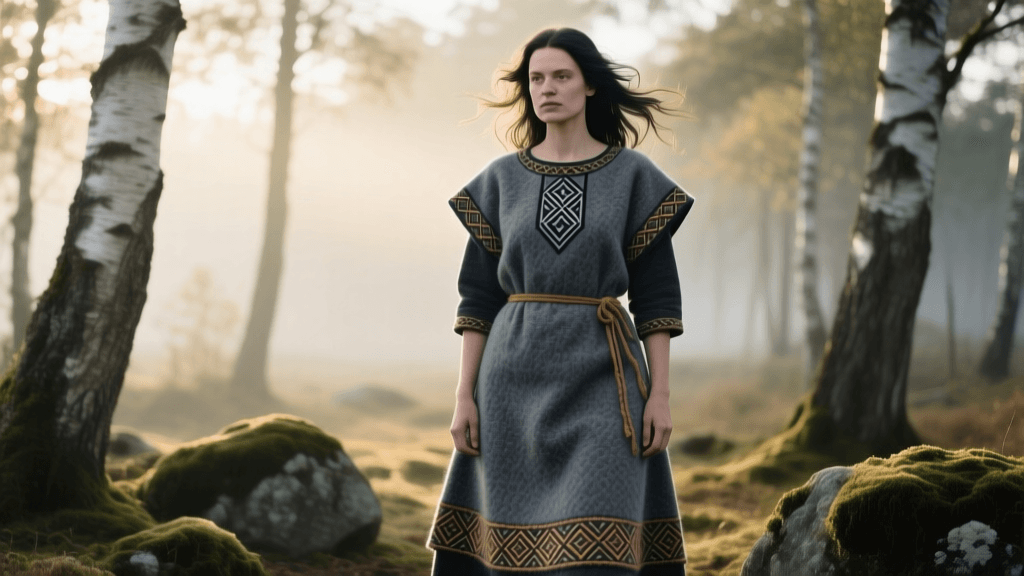
Introduction to the Smokkr in 2026
The landscape of historical European folk dress has undergone a massive transformation by 2026. Gone are the days of inaccurate, fantasy-inspired Viking costumes featuring leather corsets, synthetic fur, and modern metal grommets. Today, the global historical reenactment community demands rigorous archaeological accuracy, especially when preparing for major 2026 events like the Moesgård Viking Moot in Denmark or the Lofotr Viking Festival in Norway. At the center of this authentic revival is the smokkr, commonly known as the Viking apron dress. This garment is the quintessential staple of Norse women's clothing from the 8th to the 11th centuries, and mastering its reconstruction is a rite of passage for serious textile historians, weavers, and reenactors.
Archaeological Foundations: Birka, Hedeby, and Køge
To reconstruct a smokkr accurately in 2026, one must look directly at the surviving textile fragments rather than relying on Victorian-era romanticism. The most crucial evidence comes from the rich graves of Birka (Sweden), Hedeby (Germany/Denmark), and the extraordinary Køge find. According to the National Museum of Denmark, the apron dress was typically suspended from the shoulders by woven loops that were fastened to cast oval brooches, often referred to colloquially as turtle brooches.
The surviving loops, metal corrosion, and textile fragments reveal a complex layering system. The smokkr was worn over a linen or fine wool underdress (the serk). While early 20th-century interpretations suggested a simple wrapped skirt or apron, modern archaeological consensus points to a closed tube, a wrapped garment, or a pleated front panel, heavily dependent on the specific regional and temporal context of the wearer.
Choosing the Right Textile: Diamond Twill vs. Tabby
The soul of any Nordic traditional garment lies in its textile. For the smokkr, the most prestigious and archaeologically supported fabric is diamond twill wool, woven from the fleece of Northern European short-tailed sheep, such as the Spælsau or Icelandic breeds. In 2026, sourcing authentic, undyed, or naturally dyed (using woad for blue, madder for red, or weld for yellow) diamond twill is more accessible than ever, with specialized mills in Scandinavia and the UK catering specifically to the high-end reenactment market.
The Viking Ship Museum in Roskilde emphasizes that experimental archaeology relies heavily on the correct thread count and weave structure. A genuine Viking Age diamond twill typically features a thread count of around 10 to 14 threads per centimeter in both the warp and weft. This creates a dense, water-resistant, and incredibly warm fabric that drapes beautifully while maintaining the structural integrity needed to support heavy bronze or silver oval brooches without tearing at the seams.
Pattern Drafting: Three Dominant Smokkr Styles
When drafting your pattern for the 2026 festival season, you must choose between the three primary silhouettes supported by current archaeological theory. Each style requires different yardage, weaving techniques, and construction methods.
| Smokkr Style | Archaeological Basis | Yardage Required (Approx.) | Best For |
|---|---|---|---|
| Closed Tube | Hedeby harbor finds | 3.5 - 4.5 meters | Everyday wear, active labor, high mobility |
| Pleated Front | Køge and Birka high-status graves | 5.0 - 6.0 meters | Festivals, high-status portrayal, formal events |
| Wrapped / Open | Early interpretations / Celtic-Norse overlap | 2.5 - 3.0 meters | Beginners, warmer climates, layered looks |
The Closed Tube Construction
The closed tube is the most widely accepted model for everyday Norse women. It consists of a single rectangular piece of wool, or multiple panels sewn together, forming a continuous cylinder. The top edge is folded down to create a casing or reinforced hem, and woven tablet-weave bands are attached to form the shoulder loops. This style prevents the dress from slipping and provides excellent warmth, a necessity for the harsh Nordic climate and maritime voyages.
The Pleated Front Panel
Evidence from the Køge grave suggests that high-status women wore a smokkr with a densely pleated front panel. Recreating this in 2026 requires steaming and setting the wool pleats, a technique that mirrors the intricate textile manipulation found in elite Viking Age burials. This style uses significantly more fabric, serving as a visual indicator of wealth and access to abundant resources, as excess cloth was a luxury in the early medieval period.
Tablet Weaving and Celtic-Norse Trim Integration
No smokkr is complete without its trims. The intersection of Celtic and Norse cultures, particularly in regions like the Scottish Isles, the Hebrides, and Viking Age Dublin, resulted in stunning hybrid textile arts. Incorporating tablet-woven trims featuring Celtic knotwork interlaced with Norse geometric motifs elevates a basic smokkr into a masterpiece of European folk dress.
According to research surrounding the Galloway Hoard and related Norse-Celtic finds curated by National Museums Scotland, the blending of Insular Celtic metalwork and art styles with Norse material culture was profound. While the Galloway Hoard is primarily composed of metalwork and rare silks, the artistic motifs found in these hoards directly translate to the geometric patterns used in period tablet weaving. Using 20 to 30 tablets threaded with fine 2/16nm worsted wool or silk, modern weavers can recreate intricate borders that are then whip-stitched to the top hem and bottom edge of the smokkr, reflecting the vibrant cultural exchange of the Viking diaspora.
Constructing the Garment: Stitching and Seams
To maintain strict authenticity for 2026 historical accuracy competitions, machine sewing is entirely prohibited. Every seam must be hand-stitched using waxed linen or wool thread. The most common historical seam is the running stitch, finished by folding the raw edges inward and securing them with a whip stitch or hem stitch. This not only prevents fraying but also creates a remarkably strong seam that can withstand the tension of the heavy wool and the pull of the shoulder loops.
When attaching the loops, ensure they are anchored deeply into the reinforced top hem. The oval brooches will bear the entire weight of the dress, plus any suspended tools (such as a weaving sword, household keys, or a seax knife), so the structural integrity of the loop attachment is paramount. Many reenactors reinforce the loop anchor points with small squares of scrap wool or leather on the inside of the garment to distribute the weight.
2026 Cost and Sourcing Guide
Building an authentic wardrobe is an investment in heritage craftsmanship. Below is a breakdown of the estimated costs for sourcing high-quality, historically accurate materials for a single smokkr in the current 2026 market.
| Material / Component | Specification | Estimated Cost (USD) | Sourcing Notes |
|---|---|---|---|
| Diamond Twill Wool | 4.5 meters, 100% heritage wool | $180 - $260 | Specialty Scandinavian or UK mills |
| Linen Thread | 2-ply, unbleached, beeswaxed | $15 - $25 | Historical textile suppliers |
| Tablet Weave Silk/Wool | 30 tablets worth of 2/16nm yarn | $40 - $65 | Hand-dyed artisan weavers |
| Oval Brooches (Pair) | Cast bronze, historically accurate motifs | $90 - $150 | Verified reenactment metalsmiths |
| Total Estimated Cost | $325 - $500 | Excludes underdress and weaving tools |
Final Thoughts for the 2026 Reenactor
The pursuit of the perfect smokkr is a journey into the heart of European textile history. By respecting the archaeological record, utilizing authentic diamond twill wools, and embracing the meditative process of hand-stitching and tablet weaving, you do more than just create a costume. You resurrect a tangible piece of Celtic and Nordic heritage, ensuring that the legacy of Viking Age artisans continues to be celebrated with dignity, accuracy, and profound respect at festivals around the world in 2026 and beyond.