Norwegian Bunad Guide 2026: Top Regional Styles & Sourcing
The Living Heritage of the Norwegian Bunad in 2026
In the landscape of European folk dress, few garments command the same level of national pride, meticulous craftsmanship, and everyday reverence as the Norwegian bunad. Unlike many traditional costumes across Europe that are relegated to museum archives or occasional tourist performances, the bunad is a thriving, living garment. In 2026, it remains the gold standard for formal wear in Norway, donned with pride at weddings, royal audiences, graduations, and the national Constitution Day (Syttende Mai) celebrations.
For textile enthusiasts, historians, and those looking to invest in a piece of authentic European heritage, understanding the bunad requires a deep dive into its regional variations. Norway’s rugged geography historically isolated its valleys, resulting in highly distinct textile traditions. Today, the Norsk Institutt for Bunad og Folkedrakt (NBF) recognizes over 400 distinct regional bunad patterns, each with strict guidelines regarding fabric, cut, embroidery, and accompanying silver jewelry.
Folkedrakt vs. Bunad: Understanding the Terminology
Before exploring specific regions, it is crucial to distinguish between a folkedrakt (folk costume) and a bunad. A folkedrakt refers to the historical, everyday working and festive clothes worn by rural Norwegians up until the mid-19th century. These garments evolved organically based on local materials and trade routes.
The bunad, conversely, is a 20th-century revival and reconstruction of these older costumes, spearheaded by the National Romanticism movement and figures like Hulda Garborg. While a folkedrakt is a historical artifact, a bunad is a modern, standardized celebration of that regional heritage. When sourcing a garment in 2026, buyers are almost exclusively purchasing bunads—reconstructions approved by heritage committees to ensure historical accuracy in stitching, dye, and tailoring.
Iconic Regional Variations: A Closer Look
The true beauty of the Norwegian bunad lies in its hyper-local identity. Wearing a bunad is a declaration of one’s ancestral roots or deep connection to a specific Norwegian valley. Here are four of the most iconic and highly sought-after regional styles.
1. Hardangerbunaden (The Hardanger Region)
Often considered the 'first' bunad, the Hardangerbunad is deeply rooted in the 19th-century national awakening. The women’s costume is striking, featuring a black wool skirt and bodice paired with a white linen apron and shirt. The defining feature is the intricate krossting (cross-stitch) embroidery in vibrant reds, yellows, and greens, alongside delicate white linen cutwork (Hardanger embroidery). It is a masterclass in contrasting textures and geometric precision.
2. Setesdalsbunaden (The Setesdal Valley)
Setesdal is famous for its isolated, rugged terrain and its remarkably preserved medieval traditions. The Setesdal bunad is heavy, warm, and visually dramatic. The women’s dress features dark, almost black wool with striking white embroidery and elaborate silk ribbon accents. However, the true hallmark of Setesdal is its silver. The region is legendary for its heavy, intricate filigree silverwork, including large belt buckles, neck pins, and ornate crowns that have been passed down through generations.
3. Telemarksbunaden (The Telemark Region)
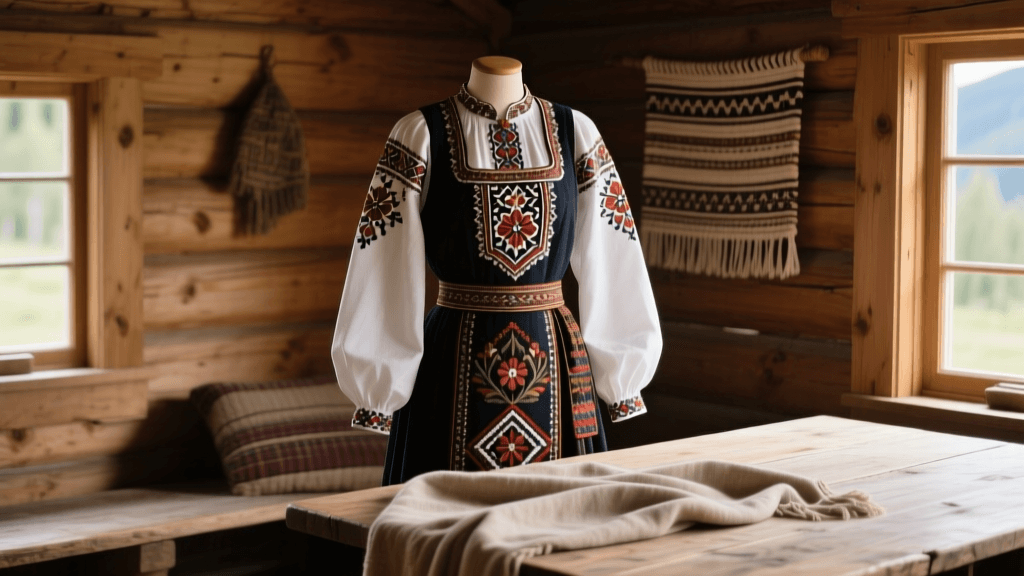
Telemark is the heartland of Norwegian rosemaling (decorative rose painting), and this fluid, curving art form translates directly into the region's textile embroidery. The Telemark bunad is characterized by its vibrant, asymmetrical floral embroidery on deep blue or black wool. The stitches often mimic the brushstrokes of traditional wood and furniture painting, making it one of the most visually dynamic and colorful bunads in the country.
4. Trønderbunaden (The Trøndelag Region)
Hailing from central Norway, the Trønderbunad is a symbol of elegance and historical wealth. The most popular iteration features a deep burgundy or black wool skirt with a bodice of rich velvet or damask. The embroidery is typically executed in silk thread, featuring subtle, tonal floral motifs rather than the high-contrast colors of the southern valleys. It is heavily favored for its sophisticated, formal silhouette.
2026 Regional Bunad Comparison & Sourcing Guide
Investing in a bunad is a significant financial and temporal commitment. In 2026, the demand for authentic, hand-embroidered garments continues to outpace the supply of master artisans. Below is a comparative guide to help you understand the material requirements and current market pricing for these regional styles.
| Region | Primary Materials | Key Embroidery Technique | Silver Style | 2026 Est. Price (Complete Set) | Artisan Wait Time |
|---|---|---|---|---|---|
| Hardanger | Black worsted wool, white linen | Cross-stitch, Cutwork | Traditional filigree, crowns | 45,000 - 55,000 NOK | 8 - 12 Months |
| Setesdal | Dark wool, woven bands | White wool/silk floral | Heavy, oxidized filigree | 50,000 - 65,000 NOK | 10 - 14 Months |
| Telemark | Blue/Black wool, silk ribbons | Rosemaling-inspired silk | Delicate, polished silver | 40,000 - 52,000 NOK | 6 - 10 Months |
| Trøndelag | Burgundy wool, velvet, damask | Tonal silk shading | Ornate belt clasps, pins | 42,000 - 58,000 NOK | 8 - 12 Months |
Note: Prices in 2026 reflect complete sets including the dress, hand-embroidered apron, linen shirt, and essential silver accessories. Prices are approximate and vary based on the complexity of custom tailoring and the karat/weight of the silver chosen.
Sourcing Authentic Garments: Where to Buy in 2026
As the global interest in slow fashion and heritage crafts grows, the market has unfortunately seen an influx of mass-produced, inaccurate 'party bunads' manufactured overseas. For those seeking authentic European folk dress that respects the cultural lineage and supports master artisans, it is vital to purchase from approved sources.
The most authoritative and reliable source for authentic bunads is Norske Husfliden. This nationwide cooperative of craft shops works directly with the NBF to ensure that every stitch, dye lot, and pattern adheres to strict historical documentation. When you order from Husfliden, you are not just buying a garment; you are funding the apprenticeships of the next generation of Norwegian embroiderers and silversmiths.
For buyers outside of Norway, sourcing requires careful planning. Many authorized ateliers offer virtual consultations and detailed measurement guides to ensure a perfect fit across borders. However, international buyers must account for shipping insurance, customs duties, and the extended 12-to-18-month timeline required for international fittings and adjustments.
The Crown Jewel: Regional Silver (Bunadsølv)
No bunad is complete without its regional silver. Historically, silver was a display of a family's wealth and served as a portable bank account that could be melted down in times of hardship. Today, bunad silver is hand-forged by specialized jewelers using centuries-old techniques like filigree, granulation, and oxidization.
The silver you wear must match your specific regional bunad. A Hardanger bride will wear a spectacular, towering silver crown (brudekrone), while a woman in the Trøndelag region might opt for a more understated, elegant silver belt buckle and neck pins. In 2026, the cost of a full silver set ranges from 15,000 NOK to over 40,000 NOK, depending on the weight and intricacy of the handcrafted pieces. Buyers are strongly advised to purchase silver from certified Norwegian silversmiths to ensure the metal purity (typically 830s or 925s sterling) and historical accuracy of the motifs.
Preserving the Thread of History
The Norwegian bunad is a testament to the enduring power of regional identity in a globalized world. Whether you are tracing your ancestry to the deep valleys of Setesdal or simply admiring the unparalleled textile artistry of the Hardanger cross-stitch, investing in a bunad is an act of cultural preservation. By understanding the distinct regional variations and committing to authentic, artisan-made sourcing, you ensure that this magnificent chapter of European folk dress continues to thrive for generations to come.
For further historical research and visual archives of 19th-century rural Norwegian clothing, the Norwegian Folk Museum in Oslo offers extensive digital and physical collections that continue to inform modern bunad reconstructions.