Ancient Greek Chiton & Roman Toga Guide 2026: Sew & Source
The 2026 Revival of Classical Antiquity Garments
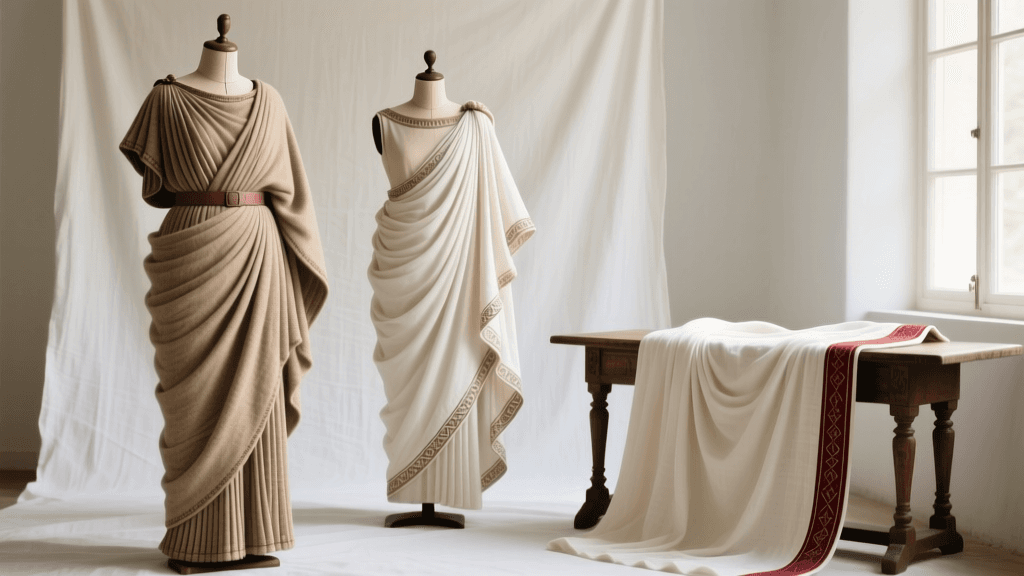
As we navigate the 2026 historical reenactment and theatrical season, the demand for museum-quality classical antiquity garments has reached an all-time high. Modern Hellenic polytheist gatherings, university classics departments, and elite reenactment groups like Nova Roma have moved far beyond the cheap polyester costumes of the past decade. Today, authenticity in drape, textile weight, and natural dyeing is paramount. Whether you are preparing for a summer solstice festival or a university-stage production of Antigone, understanding the precise construction of the Greek chiton and the Roman toga is essential. This comprehensive guide provides actionable measurements, 2026 sourcing data, and step-by-step draping techniques to elevate your classical wardrobe.
Understanding the Greek Chiton: Doric vs. Ionic
The chiton was the foundational garment of ancient Greece, worn by both men and women. However, its construction varied significantly based on the era, region, and available textiles. According to the Metropolitan Museum of Art's Heilbrunn Timeline of Art History, the evolution of Greek dress reflects broader shifts in trade, textile production, and cultural exchange across the Mediterranean.
The Doric Chiton (Peplos)
Often referred to interchangeably as the peplos, the Doric chiton is the older, heavier variant. It is constructed from a single, large rectangular piece of wool or heavyweight linen. The defining feature of the Doric style is the apoptygma—a deep fold-over at the top of the garment that drapes over the chest and back. It is typically pinned at the shoulders with heavy fibulae (brooches) and belted at the waist with a zoni (woven belt), allowing the wearer to blouse the fabric over the belt for adjustable length and volume.
The Ionic Chiton
Emerging later and influenced by Eastern Mediterranean trade, the Ionic chiton is made from much wider, lighter fabrics, typically fine linen or imported silk blends. Instead of a fold-over, the fabric is gathered or pleated along the arms, creating a series of flowing sleeves. The World History Encyclopedia's comprehensive guide on the Chiton notes that the Ionic style required multiple small pins or even sewn seams along the upper arms, reflecting a more complex tailoring approach that prioritized fluid movement and intricate draping over the structural rigidity of the Doric style.
Roman Garments: Tunics, Stolas, and the Complex Toga
Roman dress was deeply codified, serving as a visual language of citizenship, gender, and social status. While Greek garments relied heavily on the art of draping uncut cloth, Roman tailoring introduced more structured, sewn elements, particularly in undergarments.
The Roman Tunic and Stola
The tunica was the universal base layer for all Romans. For men, it was a simple, knee-length T-shaped garment woven to size or sewn from two rectangular panels. For women, the tunic was ankle-length. Over this, respectable married women (matrons) wore the stola, a sleeveless overdress suspended by shoulder straps (instita). The stola was traditionally belted high under the bust and featured a colored border (limbus) at the hem, signaling the wearer's social standing.
Mastering the Roman Toga Drape
The toga remains the most iconic, yet notoriously difficult, garment to recreate. It was strictly reserved for male Roman citizens. As detailed in the World History Encyclopedia's analysis of the Roman Toga, the toga was not a simple half-circle as once believed by early antiquarians, but rather a complex, elongated semicircle or hexagonal shape measuring up to 18 to 20 feet in length and 8 feet in width. Woven from heavyweight wool, the toga required the assistance of a slave (vestiplicus) to achieve the precise, sculptural folds of the sinus (the chest pouch) and the umbo (the central decorative knot).
2026 Material Sourcing and Cost Breakdown
Sourcing historically accurate textiles in 2026 requires navigating global supply chain shifts and a renewed interest in heritage weaving. Below is a current market breakdown for reenactors and costume designers.
| Material Type | Weight / Weave | 2026 Avg Cost (Per Yard) | Best Garment Use | Sourcing Notes & Tips |
|---|---|---|---|---|
| European Flax Linen | Medium (5.3 oz) | $28.00 - $34.00 | Ionic Chiton, Women's Tunics | Look for OEKO-TEX certified heritage mills in Lithuania and Belgium. |
| Worsted Wool | Heavy (10+ oz) | $45.00 - $60.00 | Doric Peplos, Roman Toga | Must be 100% wool; avoid synthetic blends to ensure proper draping and dye uptake. |
| Silk-Linen Blend | Light (3.5 oz) | $55.00 - $75.00 | Elite Ionic Chiton, Stola | Provides the 'crinkled' texture seen in Hellenistic sculpture without pure silk costs. |
| Raw Hemp Canvas | Heavy (8 oz) | $18.00 - $22.00 | Working-class Tunics, Cloaks | Anachronistic for elite wear, but highly accurate for peasant and laborer reenactments. |
Natural Dyeing for Historical Accuracy
In 2026, chemical dyes are heavily frowned upon in high-tier reenactment communities. Achieving the correct classical palette requires natural mordants and dyestuffs. For the iconic Roman toga praetexta (the toga with the purple border worn by magistrates), true Tyrian purple is prohibitively expensive. However, modern historical dyers successfully replicate this using a combination of madder root (Rubia tinctorum) and woad (Isatis tinctorum). For everyday Greek chitons, weld (Reseda luteola) provides a brilliant, colorfast saffron-yellow, while onion skins and cutch yield the warm ochres and terracottas frequently depicted in Attic red-figure pottery.
Step-by-Step Construction and Draping Guide
Constructing a Basic Doric Chiton
To create a historically accurate Doric chiton for a modern wearer, follow these precise measurements and steps:
- Measure the Width: Measure the wearer's wingspan (fingertip to fingertip with arms outstretched). Add 12 inches to this measurement. This width ensures the necessary volume for the side drape.
- Measure the Height: Measure from the wearer's shoulder to the ankle. Add 18 inches to allow for the apoptygma (the 12-inch fold-over) and the blousing over the belt.
- Hemming: Unlike modern garments, classical chitons often utilized the natural selvedge edges of the loom. If you must hem, use a tiny rolled hem. Alternatively, leave the bottom edge fringed and bound with a decorative tablet-woven band.
- Draping: Fold the top 12 inches down (wrong sides together). Wrap the tube around the body. Pinch the back and front layers together at the collarbone and secure with a bronze or iron penannular fibula. Repeat on the other shoulder. Tie a woven wool cord around the waist, then pull the fabric up and over the belt to hide the cord and adjust the hemline to the desired length.
Accessories: Fibulae and Zoni
No classical garment is complete without its hardware. The fibula (brooch) is both functional and decorative. In 2026, custom bronze casting and high-resolution resin 3D printing have made museum-quality fibulae replicas highly accessible. For a Doric chiton, opt for heavy, bow-shaped bronze fibulae. For the Ionic chiton, use a series of small, delicate gold or brass studs along the arm seams. The zoni (belt) should not be a modern leather belt; instead, use a tablet-woven wool sash or a braided linen cord, tied in a simple knot with the ends left to hang as tassels.
'The true mastery of ancient dress lies not in the cutting of the cloth, but in the understanding of gravity, tension, and the human form in motion.' — Principles of Classical Drapery, 2026 Reenactment Symposium.
Conclusion
Recreating the chiton, stola, and toga is a rewarding exercise in experimental archaeology and textile arts. By sourcing appropriate natural fibers, utilizing historically accurate dye methods, and mastering the geometry of the drape, you can achieve a level of authenticity that honors the ingenuity of ancient Greek and Roman artisans. As the 2026 festival and theatrical season unfolds, step into the classical world wrapped in garments that are as historically resonant as they are breathtakingly beautiful.