Miesbacher Tracht Guide 2026: Schuhplattler Dance Costumes
The Intersection of Movement and Textile in Bavarian Folk Dance
When discussing European folk dress, few garments are as globally recognized—or as frequently misunderstood—as Bavarian Tracht. However, for the dedicated folk dancer, traditional clothing is not merely a static costume; it is a highly engineered textile apparatus designed to facilitate, accentuate, and withstand the rigorous demands of the dance. As we enter the 2026 festival season, the Schuhplattler—a traditional Bavarian and Tyrolean folk dance characterized by the rhythmic slapping of thighs, knees, and shoes—remains a cornerstone of Alpine cultural heritage. To perform this dance authentically, one must wear the gold standard of regional dress: the Miesbacher Tracht.
Originating from the Miesbach district in Upper Bavaria, this specific style of Tracht was elevated to national prominence in the 19th century and remains the benchmark for formal folk dance ensembles today. According to the Trachtenkulturzentrum, the preservation of these historical silhouettes and tailoring techniques is vital for maintaining the kinetic integrity of the dance. A mass-produced Oktoberfest costume will tear at the seams during a vigorous Plattler sequence, whereas a bespoke Miesbacher garment is constructed to move seamlessly with the human body.
The Anatomy of a Dancer’s Lederhosen: Built for the Plattler
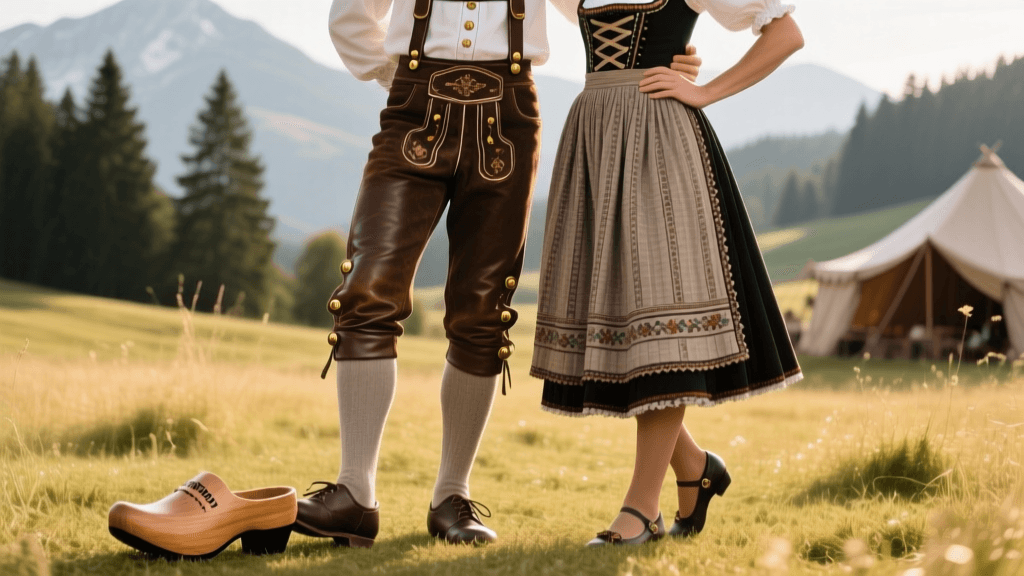
For male dancers, the foundation of the Miesbacher Tracht is the Kurze Lederhose (short leather trousers). Unlike the knee-length Kniebundhosen worn for hunting or formal church events, the short variant stops above the knee, allowing for the high kicks and deep squats required in the Schuhplattler.
Material and Tanning
Authentic 2026 dance Lederhosen are crafted exclusively from sämisches Hirschleder (brain-tanned deer leather). This traditional tanning method uses natural oils, resulting in a leather that is exceptionally soft, breathable, and washable. When a dancer strikes his thigh during the Plattler, the leather must yield slightly to absorb the impact without bruising the muscle, yet retain enough structural density to produce the sharp, resonant 'clap' that defines the dance's rhythm. Cowhide or goat leather alternatives are generally too stiff or too thin, respectively, failing to provide the correct acoustic and protective qualities.
The Säcklernaht and Structural Integrity
The defining visual and structural element of a true Miesbacher Lederhose is the Säcklernaht. This raised, double-stitched seam runs along the outer edge of the leg and the seat. Historically, this technique was used to ensure maximum durability for manual laborers, but for the folk dancer, it provides crucial reinforcement at the garment's highest-stress points. The Bayerischer Trachtenverband strictly mandates the presence of the Säcklernaht for official competitive Gaufeste (regional festivals). In 2026, a master tailor (Massschneider) will charge between €900 and €1,400 for bespoke Hirschleder shorts featuring hand-embroidered Rankenmuster (vine patterns) and the traditional Säcklernaht.
The Dirndl in Motion: Engineering the Perfect Spin
While the male Schuhplattler focuses on percussive strikes, the female counterpart in the Miesbacher Tracht focuses on grace, posture, and the physics of rotational movement. The female dance ensemble is a masterclass in textile engineering, designed to create a spectacular visual bell-shape during the Drehen (spinning).
The Faltenrock (Pleated Skirt)
The most critical metric for a dancer's Dirndl is the skirt circumference. A standard fashion Dirndl might utilize 1.5 to 2 meters of fabric. A proper Miesbacher dance skirt, however, requires a minimum of 3.5 to 4 meters of heavy wool-silk blend or fine cotton. This massive amount of fabric is meticulously cartridge-pleated into a structured waistband. When the dancer spins, centrifugal force forces the heavy hem outward, creating a flawless, gravity-defying circle that is visually captivating and historically accurate. Furthermore, the weight of the hem acts as a stabilizer, keeping the skirt from flying up and ensuring modesty during rapid choreography.
The Mieder (Bodice) and Posture
The bodice of a Miesbacher Dirndl is heavily boned and structured, often featuring a front lacing system secured with silver or horn hooks. This structure acts similarly to a corset, providing essential lumbar support for the dancer. The rigid torso forces an upright, regal posture, which is mandatory for the precise footwork of the Bavarian folk dances. The accompanying Schürze (apron) is tied with a specific bow (Schleife) that traditionally denotes marital status, though for uniform dance troupes, the bow is universally tied on the left or right according to the choreographer's visual symmetry requirements.
Footwear and Accessories: Grounding the Dance
No folk dance costume is complete without the proper footwear and accessories, which serve both functional and aesthetic purposes.
- Haferlschuhe (Men): The traditional Bavarian shoe features a distinctive side-lacing system and a robust, hobnailed or heavily treaded sole. For the Schuhplattler, the shoe must have a rigid enough toe box to withstand the dancer slapping the sole and heel with his hands, while providing ankle support for leaping.
- Dirndlschuhe (Women): Female dancers wear a specific pump with a 3 to 4-centimeter block heel and an ankle strap. The block heel provides the necessary balance for spinning, while the strap ensures the shoe does not fly off during vigorous foot-stamping sequences.
- Loferl (Men's Calf Sleeves): These two-piece calf warmers, consisting of a footless sock and a separate calf band, protect the lower leg from friction and provide a striking visual contrast against the white leather of the Kurze Lederhose.
True Miesbacher Tracht is not merely worn; it is performed. The garment must breathe with the dancer, absorbing the impact of the Plattler while projecting the pride of the Alps.
2026 Sourcing and Pricing Guide
For dancers and cultural enthusiasts preparing for the 2026 Gaufest and Oktoberfest seasons, understanding the tiers of Tracht production is essential. Below is a comparison of what to expect in the current market.
| Production Tier | Primary Materials | Dance Suitability | 2026 Est. Cost (Full Set) |
|---|---|---|---|
| Mass-Market / Party | PU Leather, Polyester Blends | Unsuitable (Restrictive, tears easily) | €100 - €200 |
| Trachtenhaus (Retail) | Goat Leather, Cotton-Wool | Moderate (Good for casual folk dancing) | €400 - €800 |
| Master Tailor (Bespoke) | Brain-Tanned Deer, Silk-Wool, Horn | Optimal (Engineered for competitive Plattler) | €1,500 - €2,800+ |
As documented by the Bayerisches Nationalmuseum, the shift back to bespoke, historically accurate tailoring has surged in the mid-2020s, with younger generations investing in heirloom-quality garments rather than fast-fashion alternatives.
Preparation Timeline for the 2026 Festival Season
Acquiring and breaking in authentic dance Tracht requires careful planning. Leather and structured textiles need time to mold to the dancer's body.
- January 2026: Book consultations with master tailors in the Miesbach, Tegernsee, or Holzkirchen regions. Bespoke Hirschleder takes up to four months to cut, stitch, and embroider.
- March 2026: Final fittings for the Lederhosen and Dirndl bodice. Ensure the Säcklernaht sits perfectly flush against the outer thigh to prevent chafing during rehearsals.
- April 2026: Begin the break-in process for Haferlschuhe. Wear them with thick wool socks indoors to soften the side-lacing leather and mold the cork footbed to your arches.
- June 2026: Commence full-costume dance rehearsals. This allows the heavy Dirndl skirt to settle and the Lederhosen to stretch precisely where the dancer's joints articulate.
- August 2026: Peak Gaufest season. Your garments are now fully personalized, acoustically tuned, and ready for the stage.
By respecting the historical construction and material requirements of the Miesbacher Tracht, dancers in 2026 can ensure their performances are not only visually stunning but deeply rooted in the authentic textile heritage of the European Alps.