Romanian Ie Blouse Construction: Zero-Waste Patterns 2026
The 2026 Revival of the Romanian Ie
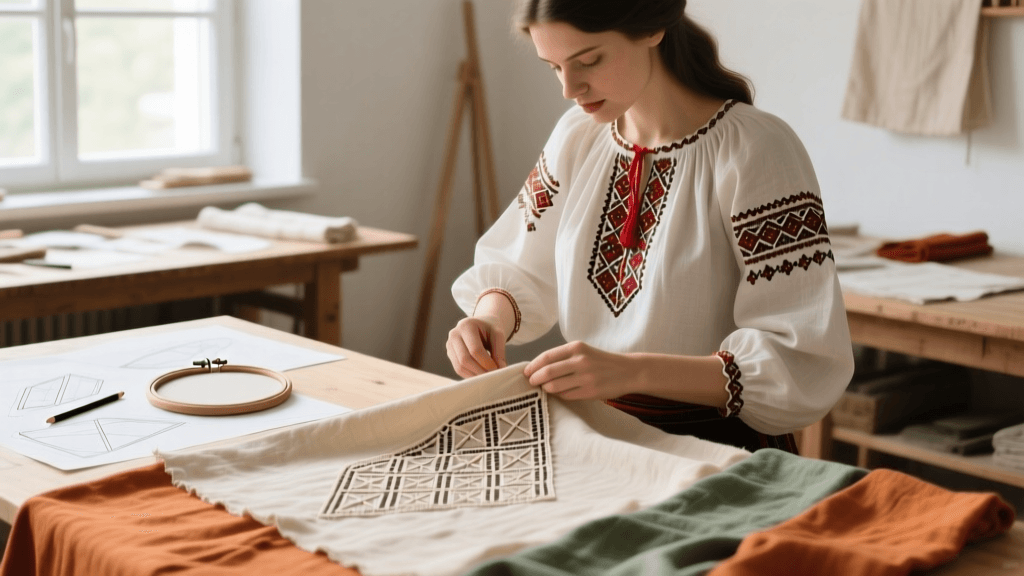
The traditional Romanian blouse, universally known as the Ie, represents one of the most sophisticated examples of zero-waste pattern cutting and geometric textile manipulation in European folk dress. In 2026, the global maker community has seen a massive resurgence in heritage crafting, moving away from fast fashion and toward sustainable, historically grounded garment construction. The Ie is not merely a piece of clothing; it is an architectural marvel of linen, cotton, and wool, engineered without curved seams or discarded fabric scraps.
Recognized for its profound cultural significance, the art of the traditional blouse with embroidery on the shoulder was officially inscribed on the UNESCO Representative List of the Intangible Cultural Heritage of Humanity. For modern sewists and textile historians in 2026, understanding the exact construction patterns, smocking techniques, and embroidery layouts of the Ie offers a masterclass in sustainable fashion design.
The Zero-Waste Pattern Drafting System
Unlike modern commercial patterns that rely on curved armholes, princess seams, and shaped side panels, the traditional Ie is constructed entirely from rectangles and squares. This geometric approach ensures that every single inch of the woven fabric is utilized, leaving zero waste on the cutting room floor. The width of the fabric bolt dictates the width of the garment's components, a hallmark of historical European peasant dress.
Core Rectangles and Measurements
For a standard modern maker creating a women's size medium Ie in 2026, the pattern consists of three primary rectangular components and several smaller square gussets. When working with traditional 60cm (24-inch) wide handwoven linen or cotton, the measurements are laid out as follows:
- The Body (Piept și Spate): Two identical rectangles, each measuring 60cm wide by 75cm long. These form the front and back panels. They are sewn together at the shoulders and down the sides, leaving openings for the neck and arms.
- The Sleeves (Mâneci): Two large rectangles, typically 45cm to 60cm wide (depending on the desired volume) and 55cm long. The top edge of the sleeve rectangle will eventually be gathered or smocked.
- The Neckband (Guler): A narrow rectangle, approximately 40cm long and 8cm wide, which is folded in half to encase the gathered neckline.
The Pavă (Gusset) Insertion Technique
The secret to the Ie's incredible mobility and comfort lies in the pavă, or underarm gusset. Because the body and sleeves are simple rectangles, joining them directly would restrict arm movement. The pavă is a square piece of fabric, usually 15cm by 15cm, inserted at the intersection of the side seam and the sleeve seam. In 2026, pattern drafters emphasize reinforcing the corners of the pavă with a bar tack or a small triangle of interfacing to prevent the high-stress point from tearing during wear.
Deconstructing the Altiță and Râuri
The most visually striking element of the Ie is the altiță, the heavily embroidered shoulder panel. Historically, the altiță was a separate rectangular band sewn between the neckband and the top of the sleeve. In some regional variations, particularly from the Argeș and Muscel counties, the altiță is integrated directly into the upper portion of the sleeve rectangle.
Below the altiță lies the increț (a narrow horizontal band of gathering), followed by the râuri (rivers). The râuri are vertical or diagonal bands of embroidery that flow down the sleeve to the cuff. The spacing of the râuri is mathematically precise, often dictated by the thread count of the base fabric, ensuring perfect symmetry.
Traditional Smocking (Crețuri) Execution
Before the 2026 availability of modern elastic, the Ie relied on intricate hand-smocking, known as crețuri, to gather the voluminous rectangles into the fitted neckband and cuffs. To replicate this authentic technique today, follow these steps:
- Thread Counting: Using a blunt tapestry needle and a strong, waxed linen thread, pick up every 4th or 6th thread of the base fabric along the top edge of the sleeve.
- Running Stitch Grid: Create a grid of running stitches, typically 4 to 6 rows deep, ensuring each stitch aligns perfectly with the one above it.
- Pulling and Securing: Gently pull the gathering threads simultaneously to create tight, uniform pleats. Wrap the threads around a pin in a figure-eight pattern to hold the tension.
- Smocking Stitches: Use a surface honeycomb or trellis smocking stitch with contrasting embroidery floss to lock the pleats in place permanently. This creates a highly elastic, durable cuff or neckline that stretches without the degradation associated with modern rubber elastic.
2026 Material Sourcing and Cost Guide
Sourcing authentic materials is critical for historical accuracy and garment longevity. The table below outlines the recommended materials, current 2026 market pricing, and yardage requirements for a standard size medium Ie.
| Material Component | Recommended 2026 Source / Type | Yardage (Size M) | Est. Cost (USD) | Construction Notes |
|---|---|---|---|---|
| Base Fabric | 100% Handwoven Hemp/Linen Blend (60cm wide) | 3.5 meters | $85 - $110 | Pre-wash in hot water to account for 10% shrinkage before cutting rectangles. |
| Embroidery Floss | DMC Mouliné Spécial or Anchor Marlitt (Vintage Silk) | 12-15 skeins | $25 - $40 | Traditional colors include deep burgundy, black, and indigo, accented with metallic gold. |
| Gathering Thread | Waxed Linen Thread (35/2 weight) | 1 spool | $8 - $12 | Essential for the crețuri smocking base; prevents thread snapping under tension. |
| Finishing Lace | Handmade Bobbin Lace (Cluj or Maramureș style) | 2 meters | $45 - $70 | Sewn to the bottom hem and sleeve cuffs using a microscopic whipstitch. |
Authentic Embroidery Threads and Stitches
The embroidery of the Ie is not merely decorative; it serves a structural and symbolic purpose. According to textile conservation experts at institutions like the Victoria and Albert Museum, historical Eastern European garments utilized embroidery to reinforce high-stress seams and protect the wearer from environmental wear. In 2026, makers are returning to these functional embroidery methods rather than relying solely on machine stitching.
The altiță is typically worked in a dense, continuous pattern using the Romanian Stitch (also known as the Oriental Stitch or Bokhara Couching). This stitch creates a rich, textured surface that covers large geometric areas efficiently while anchoring the thread securely to the linen base. The motifs often feature solar symbols, stylized wheat, and the 'tree of life,' reflecting agrarian cycles and pre-Christian cosmology.
For the râuri (the vertical bands flowing down the sleeve), the Cross-Stitch and Chain Stitch are predominant. The chain stitch, in particular, allows for fluid, curving lines that contrast beautifully with the rigid geometry of the zero-waste pattern cutting. When executing these stitches, it is vital to maintain consistent tension; pulling the embroidery thread too tightly will pucker the zero-waste rectangles and distort the garment's drape.
'The genius of the Romanian Ie lies in its duality: the rigid, mathematical precision of its zero-waste rectangular cut, juxtaposed against the organic, flowing fluidity of its hand-smocked gathers and intricate embroidery. It is a garment that breathes with the wearer.' — Textile Historian Dr. Elena Varga, 2026 Symposium on European Folk Dress.
Conclusion and Heritage Preservation
Constructing a traditional Romanian Ie in 2026 is a profound commitment to slow fashion and cultural preservation. By embracing the zero-waste pattern drafting system, modern sewists can eliminate textile waste while creating garments of unparalleled beauty and functionality. The meticulous processes of cutting rectangles, inserting the pavă gussets, and executing the crețuri smocking connect today's makers directly to centuries of Eastern European textile heritage.
As the demand for sustainable, historically informed wardrobes continues to grow throughout 2026, the techniques used in the Ie offer invaluable lessons for contemporary fashion design. Whether you are a seasoned historical costumer or a modern sewist looking to expand your technical repertoire, mastering the construction of the Romanian blouse ensures that these brilliant, zero-waste engineering techniques will endure for generations to come.