Styling Slavic Vinok Wreaths & Baltic Amber in 2026
The Enduring Legacy of Eastern European Folk Accessories
As we navigate the vibrant cultural renaissance of 2026, traditional European folk dress continues to captivate both heritage enthusiasts and contemporary fashion lovers. Among the most visually striking and deeply symbolic elements of Eastern European attire are the Slavic vinok (floral wreath) and Baltic amber jewelry. These accessories are not merely decorative; they are profound markers of identity, regional pride, and ancestral connection. In 2026, the revival of these pieces has moved beyond simple costume replication, evolving into a sophisticated appreciation of artisanal craftsmanship, sustainable sourcing, and historically accurate styling.
Whether you are attending a midsummer folk festival, participating in a traditional dance ensemble, or simply looking to integrate heritage pieces into your modern wardrobe, understanding the construction, symbolism, and proper styling of the vinok and Baltic amber is essential. This comprehensive guide will walk you through the anatomy of these iconic accessories, how to authenticate them in today's market, and how to wear them with elegance and respect.
The Slavic Vinok: Anatomy of a Floral Crown
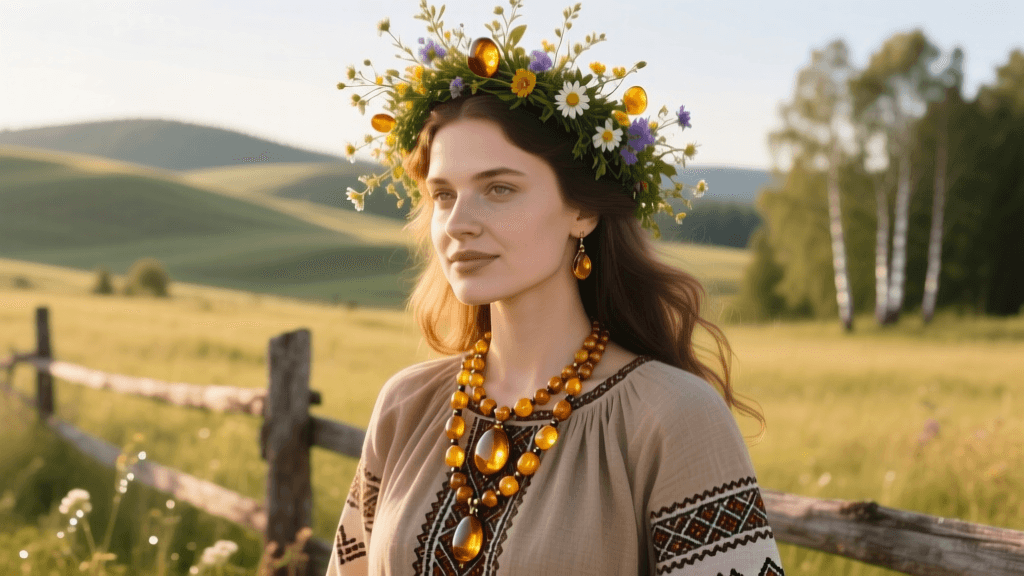
The vinok is a traditional Ukrainian and broader Slavic floral wreath, historically worn by unmarried young women. Far from a simple circle of daisies, a true vinok is a complex, structured headdress governed by strict regional rules regarding flora, color, and construction. In 2026, master artisans and cultural preservationists have placed a renewed emphasis on reviving the exact botanical and structural specifications that were nearly lost during the 20th century.
Traditional Components and 2026 Eco-Innovations
A canonical vinok incorporates up to twelve specific types of flowers and herbs, each carrying distinct symbolic weight. Periwinkle represents eternal love and the resilience of the soul, while chamomile signifies peace and tenderness. Cornflowers are woven for purity, and poppies are included for beauty and youth. Oak leaves, often interspersed among the blooms, denote strength and vitality.
Equally important are the stuzhky (ribbons) that trail down the back from the wreath. Traditionally, these silk ribbons must be precisely measured to reach the wearer's shoulder blades—typically between 35 and 45 centimeters in length, depending on the individual's height. The colors are strictly codified: light blue for the sky and peace, yellow for the sun and wheat, green for youth and life, orange for the harvest, and purple for wisdom.
In 2026, the construction of the vinok has seen a major eco-innovation. Historically, modern adaptations relied on toxic floral foams and synthetic wire. Today, leading folk artisans utilize biodegradable, water-retaining moss bases wrapped in natural hemp twine and flexible willow branches. This ensures that the wreath remains vibrant throughout long summer festivals without leaving a negative environmental footprint, aligning perfectly with the 2026 sustainability mandates of major European heritage festivals.
Baltic Amber: The Sunstone of Folk Jewelry
While the vinok crowns the head, Baltic amber grounds the ensemble with its warm, solar energy. Known as 'Lithuanian gold' or the 'Sunstone,' Baltic amber has been traded along the ancient Amber Road for millennia and remains a cornerstone of Polish, Lithuanian, Latvian, and Ukrainian folk jewelry. In traditional dress, heavy, multi-strand amber necklaces were worn close to the collarbone, believed to protect the wearer from illness and evil spirits while drawing the eye to the intricate embroidery of the linen vyshyvanka (traditional shirt).
Authentication in the 2026 Market
With the surge in popularity of heritage jewelry, the market has unfortunately seen an influx of synthetic imitations, copal (immature resin), and heat-treated composites. According to the Gemological Institute of America (GIA), authenticating Baltic amber requires a multi-sensory approach, as no single test is foolproof. In 2026, reputable dealers provide certificates of authenticity backed by spectroscopic analysis, but knowing how to perform basic field tests remains a vital skill for collectors and enthusiasts.
The International Amber Association emphasizes that true Baltic amber (succinite) contains 3-8% succinic acid, a unique chemical marker not found in younger copal or modern plastics. When shopping for folk-style amber beads, look for the natural inclusions, slight asymmetries, and the distinct, warm feel of the resin against the skin, which warms much faster than glass or crystal.
| Test Method | Authentic Baltic Amber | Synthetic / Copal / Glass |
|---|---|---|
| Saltwater Float | Floats in saturated saltwater (1:4 ratio) | Sinks (except some copal) |
| UV Light Reaction | Glows pale blue, green, or milky white | No glow, or unnatural bright plastic glow |
| Hot Pin Test | Emits a pleasant, piney, resinous smoke | Smells like burnt plastic or sweet synthetic |
| Electrostatic Charge | Attracts small paper pieces when rubbed on wool | Little to no electrostatic attraction |
Styling the Vinok and Amber Together
Pairing the exuberant, multi-colored vinok with the rich, golden tones of Baltic amber requires a careful eye for balance and proportion. In 2026, the trend has shifted away from overly theatrical, maximalist staging toward a more grounded, historically informed elegance.
- Neckline Considerations: Traditional amber necklaces are meant to rest on the skin or a high linen collar. If your vyshyvanka features dense, dark embroidery (such as deep reds or blacks from the Poltava region), opt for a lighter, honey-colored amber strand to create contrast. For white-on-white embroidery, a deep cherry-red amber strand provides a stunning visual anchor.
- Proportion and Scale: A large, heavily structured vinok with wide trailing ribbons commands attention. To balance this, choose an amber necklace composed of graduated beads (ranging from 8mm at the clasp to 15mm at the center). Avoid overly long, dangling amber pendants, which can visually clash with the intricate ribbon work of the wreath.
- Hair Integration: The vinok is traditionally worn on the crown of the head, with the hair braided down the back or flowing loosely. In 2026, stylists recommend weaving small, raw amber chips directly into the braids to create a cohesive link between the headwear and the neck jewelry.
- Makeup and Palette: Keep the makeup fresh and natural. The warm undertones of Baltic amber and the vibrant greens and reds of the vinok should be the focal points. A subtle highlighter and a muted, earthy lip color complement the folk aesthetic without competing with the accessories.
Sourcing Authentic Pieces in 2026
The landscape for sourcing authentic European folk accessories has transformed dramatically. Following the global push to support Eastern European artisans over the past few years, 2026 has seen the maturation of several digital heritage cooperatives. These platforms connect buyers directly with master weavers in Kyiv and amber carvers in Gdańsk and Palanga, ensuring fair compensation and preserving endangered techniques.
When purchasing a vinok, seek out artisans who offer custom sizing and use locally foraged, dried botanicals treated with natural resins for longevity. For amber, always request a certificate of origin. Avoid mass-produced 'festival stalls' that often sell dyed copal or plastic. By investing in verified, handcrafted pieces, you are not just acquiring a beautiful accessory; you are actively participating in the living continuity of European folk dress, ensuring these ancient traditions thrive in the modern era.