Tyrolean Schuhplattler Dance Costumes: 2026 Guide
The Revival of Tyrolean Folk Dance in 2026
The European folk festival circuit in 2026 is experiencing a massive renaissance, with traditional alpine gatherings drawing record crowds from Munich to Innsbruck. At the heart of this cultural revival is the Schuhplattler, the iconic Tyrolean and Bavarian folk dance characterized by its rhythmic stomping, leaping, and percussive slapping of thighs and shoes. For dancers and enthusiasts preparing for the 2026 Gaufest (regional folk festival) season, wearing the correct traditional garment—known collectively as Tracht—is not merely about aesthetics. It is a matter of historical accuracy, physical mobility, and stage endurance.
According to the Tyrolean Folk Art Museum, the evolution of alpine Tracht has always been deeply intertwined with the physical demands of rural life and celebratory dance. Today, as modern artisans merge historical construction techniques with 2026 sustainable tanning standards, understanding the anatomy of these garments is essential for any serious folk dancer. This guide breaks down the precise specifications required for authentic Lederhosen and Dirndls engineered specifically for the rigors of the Schuhplattler.
The Percussive Demands of the Schuhplattler
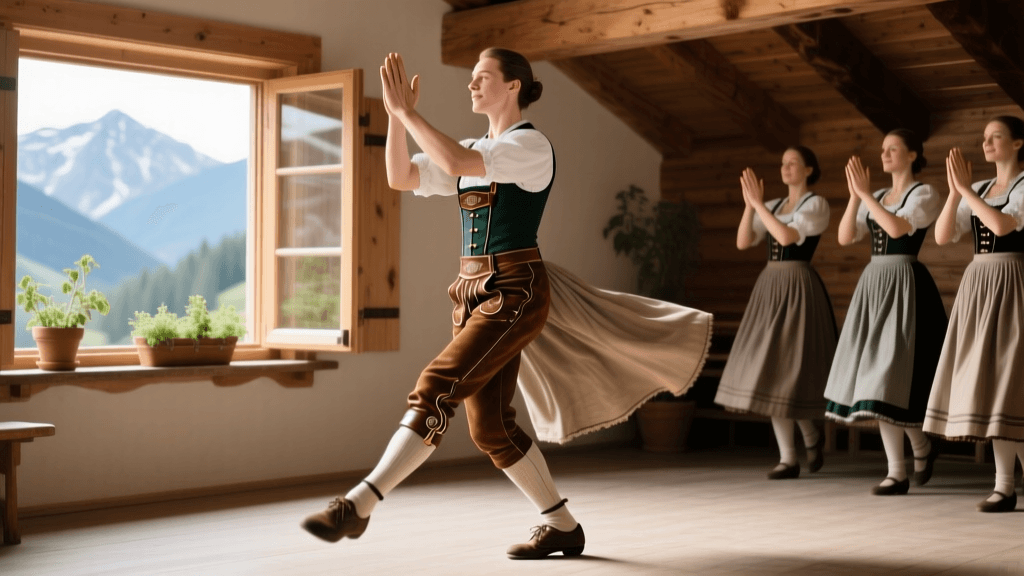
Before selecting fabrics and leathers, one must understand the biomechanics of the dance. The Schuhplattler requires the male dancer to execute rapid, forceful strikes against his leather-clad thighs and the heavy soles of his shoes, while simultaneously maintaining a rigid upper body posture. The female dancer performs the Dreher, a continuous, high-velocity spinning sequence that requires the skirt to flare perfectly without tangling, all while maintaining a grounded, gliding footwork pattern.
Standard commercial 'costume' grade garments will tear at the seams during a genuine Plattler performance. Authentic dance Tracht must be bespoke or sourced from specialized Säckler (leatherworkers) and Schneider (tailors) who understand the kinetic energy involved in alpine folk dance.
Engineering the Authentic Lederhosen for Impact
For the male dancer, the Lederhosen is the primary instrument of percussion. In 2026, the gold standard for festival-grade dance Lederhosen is Hirschleder (deer leather) or high-grade Wildbockleder (chamois). Cowhide (Rindsleder) is generally considered too stiff and heavy for the rapid slapping required in the dance, as it lacks the necessary acoustic 'crack' and flexibility.
Cut and Construction
- Thickness: The leather must be shaved to exactly 0.9mm to 1.1mm. Thinner leather will not produce the resonant sound required when struck; thicker leather will restrict the deep knee bends (Hocken) integral to the choreography.
- The Drop-Front (Latze): Authentic dance Lederhosen feature a buttoned drop-front flap. This is not just decorative; it provides a reinforced double-layer of leather over the lower abdomen and upper thigh, offering protection during aggressive thigh-slapping sequences.
- Säcklerstich (Leather Stitching): Seams must be hand-stitched using a traditional saddle stitch with waxed linen thread. Machine stitching will snap under the repetitive impact of the dance. The iconic raised embroidery along the seams and pockets should be executed in a contrasting silk or heavy cotton thread, typically featuring motifs of edelweiss, alpine roses, or oak leaves.
- Suspenders (Hosenträger): Cross-back suspenders are mandatory. They keep the heavy leather trousers anchored at the natural waist, preventing them from slipping during jumps. The suspenders should be adjustable via horn buttons, never metal clips.
The Pfoad (Linen Shirt)
Worn beneath the Lederhosen is the Pfoad, a collarless or stand-collar linen shirt. For the 2026 festival season, unbleached, heavy-weight raw linen is preferred for its breathability and historical accuracy. The shirt must be cut generously in the shoulders and underarms to allow for the wide, sweeping arm movements used to frame the dancer's posture.
The Dirndl: Aerodynamics of the Dreher Spin
The female counterpart to the Schuhplattler is the Dreher, a spinning dance that transforms the Dirndl skirt into a mesmerizing, flaring bell. A Dirndl designed for folk dance differs vastly from the static, fashion-oriented Dirndls sold in tourist shops. The Austrian Commission for UNESCO notes that the preservation of such intangible cultural heritage relies heavily on the authentic material practices of the garments worn during these communal celebrations.
Skirt Circumference and Weight
The most critical metric for a dance Dirndl is the hem circumference. To achieve the proper aerodynamic flare during a high-speed spin, the skirt must have a minimum hem circumference of 3.5 to 4 meters. In 2026, master tailors are utilizing a specific blend of mercerized cotton and lightweight wool crepe (weighing approximately 250-300 gsm). This fabric weight is heavy enough to swing outward with momentum but light enough to prevent exhaustion during a five-minute continuous performance.
Bodice Structure and Lacing
The bodice (Leiberl) must provide rigid core support without restricting diaphragmatic breathing. Traditional dance bodices are reinforced with internal reed or synthetic baleen boning, encased in cotton channels. The front closure is typically a spiral lacing pattern using a single, continuous silk cord threaded through metal hooks or eyelets. This allows the dancer to customize the tension, ensuring a snug fit that supports the back during the repetitive spinning motions.
The Apron (Schürze)
The apron must be exactly 3 to 5 centimeters shorter than the skirt hem to prevent tripping. It is tied at the front, and according to alpine tradition, the position of the bow indicates the wearer's marital status—a detail that remains strictly observed in conservative folk dance clubs (Trachtenvereine) across Tyrol and Bavaria.
Footwear: Grip, Glide, and Tradition
Folk dance takes place on a variety of surfaces, from polished wooden stages in festival tents to uneven alpine meadows. Footwear must bridge the gap between historical authenticity and modern stage safety.
Men's Haferlschuhe
The traditional Haferlschuh is a sturdy, low-cut leather shoe featuring a distinctive side-lacing system. For the Schuhplattler, the sole is paramount. In 2026, dancers favor a hybrid approach: a traditional stacked leather heel for the authentic acoustic 'clack' during heel-clicks (Zusammenschlagen), paired with a micro-rubber foresole (such as Vibram Topy) to ensure grip on slick wooden stages. The shoes are laced tightly with paracord or heavy waxed cotton to lock the ankle in place, preventing sprains during lateral leaps.
Women's Character Shoes
Female dancers wear traditional alpine character shoes, typically crafted from black or dark brown nappa leather. The heel is a low, broad block (maximum 3.5 centimeters) designed to absorb the shock of constant gliding and stomping. A secure ankle strap with a brass buckle is non-negotiable; slip-on styles are strictly forbidden in professional Trachtenvereine due to the risk of the shoe flying off during a rapid Dreher spin.
2026 Material Comparison for Dance Mobility
Choosing the right materials can make or break a festival performance. Below is a comparison chart detailing the optimal materials for 2026 dance costumes.
| Garment Component | Recommended 2026 Material | Dance Mobility & Performance Benefit |
|---|---|---|
| Lederhosen (Main) | Vegetable-Tanned Hirschleder (0.9-1.1mm) | Provides optimal acoustic resonance for slapping; molds to the thigh for unrestricted deep squats. |
| Dirndl Skirt | Mercerized Cotton/Wool Crepe (280 gsm) | Heavy enough to flare perfectly at 4m circumference; resists wrinkling during long festival days. |
| Men's Socks | Hand-knitted Virgin Wool (Calf length) | Wicks moisture during high-exertion routines; provides slight padding against leather friction. |
| Bodice Boning | Synthetic Baleen / German Plastic Reed | Offers rigid lumbar support for spinning without snapping or warping in high summer heat. |
| Dance Footwear | Full-grain Nappa with Stacked Leather Heel | Delivers authentic percussive sound on wood; ankle straps prevent displacement during jumps. |
Sourcing, Sustainability, and Festival Care
As we navigate the 2026 festival circuit, sustainability has become a major focal point within the European Tracht community. Reputable Säckler are now exclusively utilizing deer and chamois hides sourced from regulated, sustainable alpine culls, tanned using eco-friendly vegetable extracts rather than harsh chromium salts. When investing in a bespoke dance costume—which can range from €1,200 to over €3,500 depending on the complexity of the hand-embroidery—you are investing in a garment meant to last a lifetime.
Stage Care and Maintenance
Proper maintenance is crucial for preserving the acoustic and structural integrity of your dance garments:
- Leather Conditioning: Never use petroleum-based conditioners on Hirschleder, as it will deaden the acoustic 'crack' required for the Plattler. Use a specialized, light lanolin-based leather milk applied sparingly every three months.
- Skirt Storage: Never hang a heavy dance Dirndl skirt by the waistband, as this will distort the pleats and ruin the aerodynamic flare. Store it flat, folded along the natural pleat lines, or rolled around a wide acid-free cardboard tube.
- Footwear Care: After dancing on grassy or damp alpine stages, immediately wipe the leather uppers with a damp cloth and insert cedar shoe trees to draw out moisture and maintain the structural shape of the toe box.
Whether you are preparing for a local Maifest or competing at the prestigious Gaufest in 2026, respecting the construction and history of the Tyrolean Schuhplattler costume ensures that this vibrant, percussive European folk tradition continues to thrive for generations to come.