Sustainable Tussar vs Mulberry Silk for Hanbok and Sari in 2026
The Evolution of Asian Silk Textiles in 2026
As we navigate through 2026, the landscape of Asian traditional garments is undergoing a profound transformation, driven by a renewed focus on sustainable textile sourcing, climate adaptability, and ethical production. For designers, artisans, and enthusiasts of traditional Asian dress, the choice of fabric is no longer just about aesthetic appeal; it is about the integrity of the thread, the environmental footprint of the harvest, and the functional comfort of the wearer. Two of the most prominent silks dominating the contemporary market for Indian Saris and Korean Hanboks are Mulberry silk and Tussar silk. While both are revered for their historical significance and luxurious hand-feel, their distinct biological origins and structural properties make them suited for entirely different draping techniques, climates, and ceremonial purposes.
In this comprehensive guide, we dissect the textile profiles of Mulberry and Tussar silk, evaluating their performance in modern Hanbok construction and Sari draping. Whether you are commissioning a bespoke bridal lehenga, styling a modern eco-Hanbok for a summer festival, or simply expanding your knowledge of Asian textile heritage, understanding these fibers is essential for making informed, future-proof wardrobe decisions in 2026.
Mulberry Silk: The Gold Standard of Cultivated Luxury
Mulberry silk, produced by the domesticated Bombyx mori silkworm, remains the most widely recognized and commercially viable silk in the world. Fed exclusively on the leaves of the white mulberry tree, these silkworms produce a continuous filament that can stretch for hundreds of meters without breaking. This continuous filament structure is what gives Mulberry silk its unparalleled uniformity, high tensile strength, and brilliant, reflective sheen.
Textile Properties and 2026 Market Context
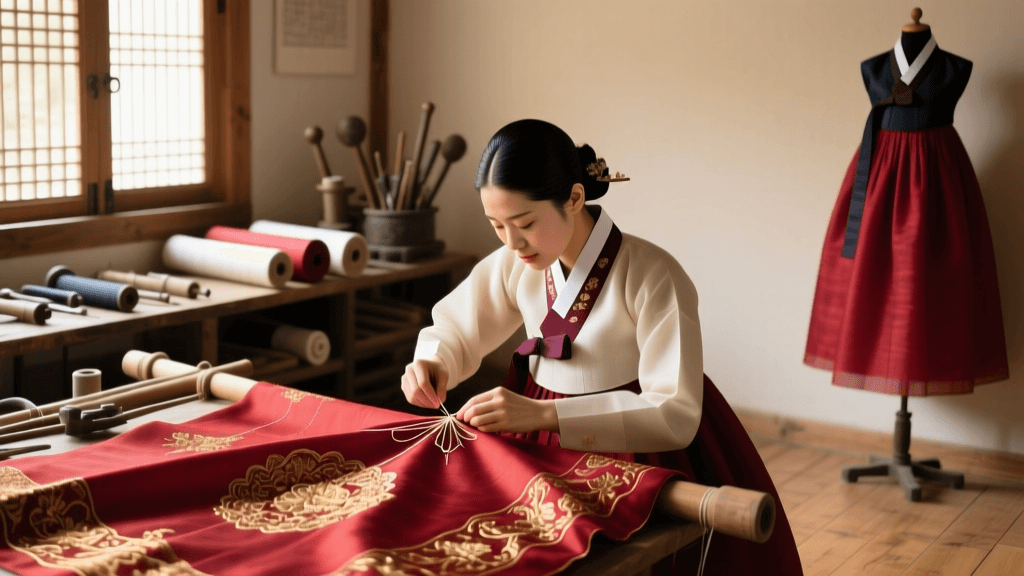
In 2026, premium Mulberry silk is typically measured in momme (mm), with high-end Sari and Hanbok fabrics ranging from 19mm to 25mm. The tight, uniform weave allows for incredibly vibrant, high-contrast dye absorption, making it the preferred canvas for intricate Zari work in Kanjeevaram Saris and elaborate gold-leaf embroidery in traditional Korean court Hanboks. However, the environmental cost of intensive mulberry farming and the energy-heavy climate control required for Bombyx mori rearing have led to a surge in demand for certified organic and traceable Mulberry silk. According to the Silk Mark Organisation of India, consumer demand for authenticated, pure silk with verifiable supply chains has increased by over 40% since 2023, pushing weavers to adopt blockchain-backed authenticity tags for premium Mulberry yardage.
Tussar Silk: The Textured Charm of the Wild
Tussar silk, often referred to as Kosa or wild silk, is produced by several species of wild silkworms belonging to the Antheraea genus, most notably Antheraea mylitta. Unlike their domesticated counterparts, these silkworms feed on the leaves of native forest trees such as Sal, Arjun, and Saja. Because the moths are typically allowed to emerge from their cocoons before the silk is harvested—especially in the rapidly growing Ahimsa (peace) silk sector of 2026—the resulting fiber is a staple fiber rather than a continuous filament. This biological difference fundamentally alters the fabric's texture and behavior.
Breathability, Drape, and the Matte Aesthetic
Tussar silk is characterized by its rich, coarse texture, natural dull gold hue, and highly porous structure. It lacks the mirror-like shine of Mulberry silk, offering instead a sophisticated, earthy matte finish that has become incredibly popular among contemporary Asian fashion designers. The porous nature of the wild silk fiber makes it exceptionally breathable and highly insulating, meaning it keeps the wearer cool in humid summers and warm in dry winters. For modern artisans crafting everyday Hanboks or lightweight, breathable Saris for tropical climates, Tussar has become the undisputed fabric of choice in 2026.
Comparative Analysis: Tussar vs. Mulberry Silk
To help you select the right textile for your specific garment needs, we have compiled a detailed comparison of the two fibers based on current 2026 textile industry standards, pricing, and physical properties.
| Feature | Mulberry Silk (Bombyx mori) | Tussar Silk (Antheraea mylitta) |
|---|---|---|
| Fiber Type | Continuous filament | Staple fiber (spun) |
| Surface Texture | Smooth, uniform, glass-like | Textured, slightly coarse, organic |
| Luster and Sheen | High, reflective shine | Low, subtle matte or dull gold |
| Breathability | Moderate (traps heat in heavy weaves) | High (porous structure allows airflow) |
| Drape and Weight | Fluid, heavy, clings to the body | Structured, lightweight, holds volume |
| Dye Affinity | Excellent for bright, synthetic dyes | Superior for natural, botanical dyes |
| 2026 Avg. Price (USD/meter) | $25 - $85 (depending on weave/Zari) | $15 - $45 (Ahimsa variants cost 20% more) |
Application in Korean Hanbok Construction
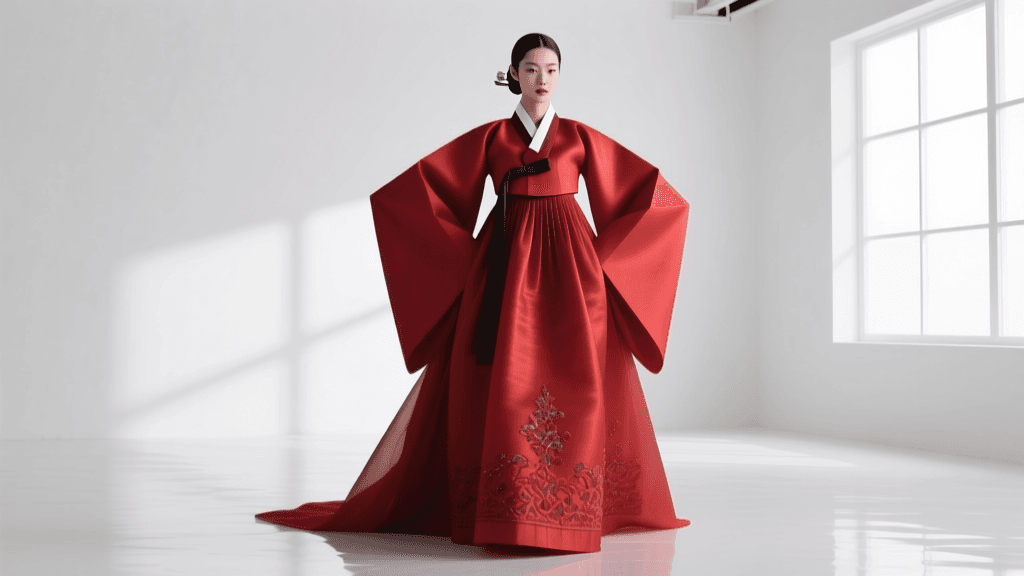
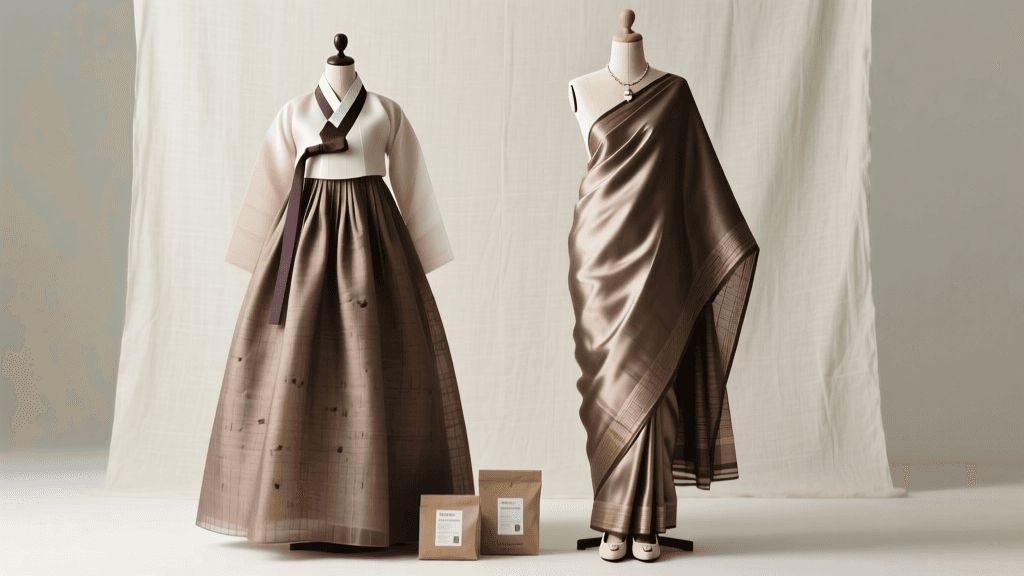
The architecture of the Korean Hanbok relies heavily on the interplay between volume and fluidity. The traditional silhouette features a voluminous skirt (chima) and a short, structured jacket (jeogori), tied together with long, flowing ribbons (goreum). The choice between Tussar and Mulberry silk drastically alters the final silhouette and the wearer's comfort.
The Chima and Jeogori Dynamics
When constructing a modern, everyday Hanbok for the humid Seoul summers of 2026, Tussar silk is highly recommended for the jeogori. Its natural stiffness and breathable weave provide structure without the need for heavy synthetic interlinings, while its matte finish lends a contemporary, understated elegance. Conversely, Mulberry silk is traditionally preferred for the chima and the goreum. The continuous filament of Mulberry silk allows the ribbons to tie into crisp, perfect bows that hold their shape throughout the day, and its fluid drape ensures the skirt gathers beautifully at the waist without adding excessive bulk. Artisans note that attempting to tie complex goreum knots with heavy Tussar silk can result in a bulky, unrefined look, making Mulberry the superior choice for Hanbok accessories and outer ribbons.
Application in Indian Sari Draping
The Indian Sari is an unstitched marvel of engineering, relying entirely on the textile's weight, friction, and drape to maintain its structure. The most common draping style, the Nivi drape, involves intricate pleating at the waist and a flowing pallu (the decorative end) thrown over the shoulder.
Pleat Retention and Pallu Flow
For grand, ceremonial weddings where heavy gold Zari work is paramount, Mulberry silk remains the undisputed king. The heavy weight of a 25mm Mulberry silk Kanjeevaram Sari ensures that the pleats fall perfectly straight and stay anchored at the waist. However, the stiffness of heavily woven Mulberry silk can be uncomfortable for long hours of wear. In 2026, there is a massive trend toward Bhagalpuri Tussar Saris for daytime weddings and festive gatherings. Tussar's natural texture provides excellent friction, meaning the pleats grip each other and rarely slip, even without the use of modern safety pins. Furthermore, the lightweight nature of Tussar makes the pallu float elegantly in the breeze, offering a romantic, ethereal aesthetic that heavy Mulberry silk simply cannot replicate. The Victoria and Albert Museum's Asian Collections frequently highlight the historical use of wild silks in regional Indian textiles, noting that the rustic charm of Tussar has always been prized for its connection to the natural landscape.
Ethical Sourcing and 2026 Certifications
As the global fashion industry faces stricter environmental regulations in 2026, sourcing authentic, ethically produced silk is paramount. The traditional method of harvesting silk involves boiling the cocoon with the pupa inside, a practice that is increasingly being rejected by eco-conscious consumers.
The Rise of Ahimsa and GOTS-Certified Silks
Ahimsa silk, or peace silk, allows the moth to break out of the cocoon naturally before the fibers are harvested. While this process breaks the continuous filament (making it technically a spun silk similar to Tussar), modern textile innovations in 2026 have allowed for Ahimsa Mulberry silk that retains much of its traditional luster. When sourcing fabrics, buyers should look for the Global Organic Textile Standard (GOTS) certification, which ensures that the mulberry trees were grown without synthetic pesticides and that the dyeing processes utilized non-toxic, biodegradable botanical dyes. Additionally, verifying the authenticity of wild-harvested Tussar through regional forestry cooperatives ensures that indigenous forest communities are fairly compensated and that local biodiversity is protected.
Care, Maintenance, and Longevity
Proper care of these delicate protein fibers is essential to preserve their structural integrity and color vibrancy. The maintenance routines for Tussar and Mulberry silk differ slightly due to their distinct fiber structures.
- Washing: Mulberry silk should ideally be dry-cleaned, especially if it features metallic Zari threads that can tarnish in water. Tussar silk, being more robust and porous, can often be hand-washed in cold water using a pH-neutral, enzyme-free detergent specifically formulated for protein fibers.
- Drying: Never wring out either silk. Roll the garment in a clean, dry cotton towel to absorb excess moisture, then lay it flat in the shade. Direct sunlight in 2026's increasingly intense UV climate will rapidly degrade the amino acids in the silk, causing Mulberry silk to yellow and Tussar silk to become brittle.
- Storage: Store both fabrics in breathable cotton muslin bags. Avoid plastic covers, which trap moisture and encourage mildew. For heavy Mulberry Saris, refold them every three months to prevent permanent crease lines that can lead to fiber tearing along the warp and weft.
- Ironing: Always use a low-heat setting and a pressing cloth. Tussar silk requires a slightly higher heat setting and a light misting of distilled water to relax its stubborn, textured wrinkles, whereas Mulberry silk responds to gentle steam.
Conclusion: Choosing Your Silk for 2026
The choice between Tussar and Mulberry silk is not a matter of one being inherently superior to the other; rather, it is a decision rooted in the specific requirements of the garment, the climate, and the ethical values of the wearer. Mulberry silk continues to offer the unmatched luxury, brilliant sheen, and fluid drape required for high-ceremony Hanbok ribbons and heavy, opulent bridal Saris. Meanwhile, Tussar silk has firmly established itself as the premier choice for sustainable, breathable, and structurally innovative everyday Asian wear. By understanding the unique biological and physical properties of these extraordinary fibers, you can curate a traditional wardrobe that honors the rich heritage of Asian textiles while embracing the sustainable, forward-looking ethos of 2026.