Top Seoul Hanbok Sewing Masterclasses & Workshops for 2026
The 2026 Resurgence of Hand-Sewn Hanbok
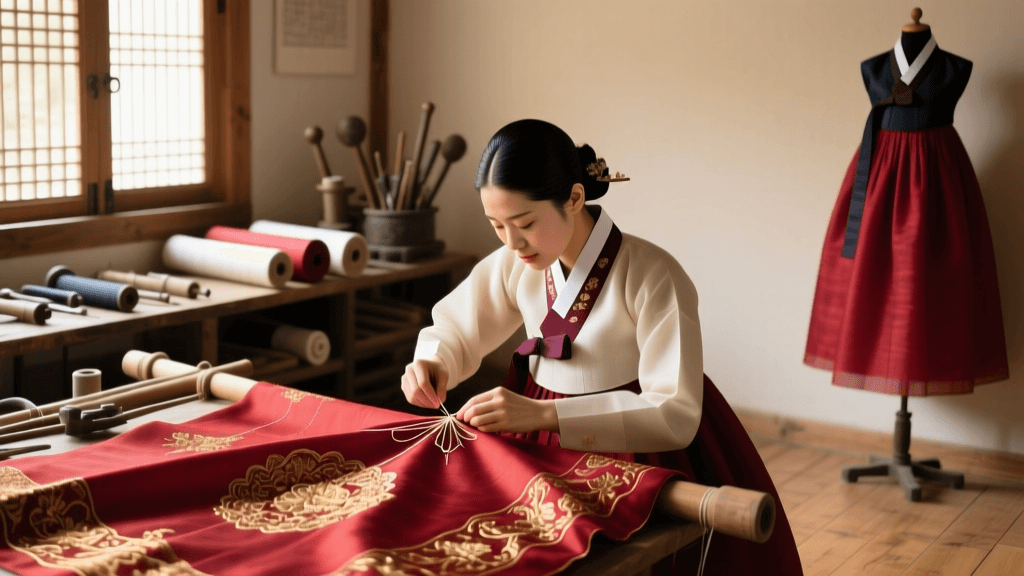
As we move through 2026, the global slow fashion movement has sparked an unprecedented renaissance in traditional Asian garment making. Among the most sought-after skills is the construction of the Korean hanbok. No longer just a garment reserved for holidays like Chuseok or Seollal, the hanbok is being reimagined by contemporary designers and dedicated hobbyists who value its zero-waste geometry and profound cultural heritage. For those looking to move beyond merely wearing these garments to actually constructing them, Seoul remains the undisputed epicenter of education. This year, a new wave of workshops and seminars has emerged, bridging centuries-old techniques with modern pedagogical approaches.
Why Study Traditional Flat-Pattern Construction?
Unlike Western tailoring, which relies heavily on darts, curved seams, and bias cutting to mold fabric to the body's three-dimensional contours, traditional hanbok utilizes a flat-pattern cutting method known as pyeongmyeon-jeodan. This technique uses straight lines and rectangular panels, resulting in a garment that is inherently zero-waste and highly adaptable to different body types. According to the Korea Heritage Service, preserving these intangible cultural techniques is vital, as the structural logic of the hanbok offers sustainable solutions to modern fashion's waste crisis. Learning to sew a hanbok is not just a lesson in history; it is a masterclass in sustainable, geometric design.
Top In-Person Hanbok Sewing Masterclasses in Seoul
Seoul offers a diverse array of learning environments, from intense university seminars to intimate artisan studios. Here are the premier workshops for 2026.
1. DDP Artisan Collaborative: The Jeogori Intensive
Located in the architectural marvel of the Dongdaemun Design Plaza (DDP), this four-week intensive masterclass focuses entirely on the jeogori (the traditional upper garment). The 2026 spring and autumn cohorts are taught by certified Intangible Cultural Heritage artisans. Students learn the precise drafting of the gil (front and back panels), the curved attachment of the somae (sleeves), and the meticulous hand-stitching required for the goreum (the iconic ribbon tie). The course culminates in the creation of a fully lined, custom-fitted silk jeogori.
2. Bukchon Heritage Studio: Natural Dyeing and Assembly
Nestled in the historic Bukchon Hanok Village, this studio offers a holistic weekend seminar that combines textile creation with garment assembly. The 2026 curriculum places a heavy emphasis on cheon-yeon-yeom-saek (natural dyeing) using indigo, persimmon, and gardenia. After dyeing your own myeongju (silk) or mosi (ramie) fabric, you will learn basic assembly techniques to construct a modern, simplified chima (wrap skirt). This seminar is perfect for beginners who want a tactile, end-to-end understanding of the garment's lifecycle.
3. Sejong University Continuing Education: Royal Court Garments
For advanced sewists and fashion design students, Sejong University offers a semester-long certificate program focusing on gungjung hanbok (royal court clothing). This rigorous seminar delves into the complex layering of historical garments, intricate gold-leaf stamping (geumbak), and the heavy, structured silhouettes of the Joseon Dynasty elite. The 2026 syllabus includes exclusive access to the university's textile archives, allowing students to study original 19th-century stitching techniques up close.
Essential Tools and Materials for the 2026 Student
Before enrolling, it is crucial to understand the materials and tools required. While most masterclasses provide a basic kit, serious students often source their own supplies from the textile alleys of Gwangjang Market. Here is what you need to budget for in 2026:
- Traditional Baneul (Needles): Hand-forged Korean needles are longer and finer than Western sharps, designed to pass through tightly woven silk without snagging. A premium set costs around 25,000 KRW ($18 USD).
- Milcho (Beeswax): Essential for conditioning silk thread to prevent tangling and fraying during the long hand-stitching process. Expect to pay 8,000 KRW ($6 USD) per block.
- Mul-ppul (Water-Soluble Starch): Used to stiffen the dongjeong (the white paper-like collar) so it maintains its crisp, curved shape against the neck. A traditional rice-based paste kit costs 15,000 KRW ($11 USD).
- Fabrics: In 2026, there is a massive shift toward sustainable textiles. Cruelty-free peace silk blended with traditional ramie is highly popular. High-grade myeongju silk retails for approximately 65,000 KRW ($48 USD) per yard in Dongdaemun.
Comparison Chart: Seoul Hanbok Workshops
To help you choose the right educational path, we have compiled a comparison of the top seminars available this year.
| Workshop Name | Location | Duration | 2026 Tuition (USD) | Primary Focus |
|---|---|---|---|---|
| DDP Artisan Collaborative | Dongdaemun | 4 Weeks (Intensive) | $330 | Jeogori construction & hand-finishing |
| Bukchon Heritage Studio | Jongno-gu | 2 Days (Weekend) | $135 | Natural dyeing & basic Chima assembly |
| Sejong University CE | Gwangjin-gu | 12 Weeks (Semester) | $850 | Royal court garments & historical drafting |
| Itaewon Modern Hanbok Lab | Yongsan-gu | 6 Weeks (Evening) | $275 | Contemporary adaptations & machine sewing |
Virtual and Hybrid Seminars for Global Learners
Not everyone can travel to South Korea for an in-person masterclass. Fortunately, 2026 has seen a massive expansion in hybrid learning. The Korea Craft & Design Foundation (KCDF) now sponsors a series of live-streamed, interactive seminars where international students can learn foundational stitching techniques via high-definition, multi-angle camera setups. These virtual cohorts ship a physical 'Hanbok Starter Box'—including pre-cut ramie fabric, specialized needles, and instructional manuals in English—directly to your door. The virtual seminars are an excellent, cost-effective alternative, typically priced around $90 USD for a three-session module.
Actionable Tips for Your First Garment-Making Seminar
Transitioning from modern sewing to traditional Asian garment making requires a shift in mindset. Here are practical tips to ensure you succeed in your first workshop:
Master the Blind Stitch (Gamchim-jil)
The hallmark of a high-quality hanbok is the near-invisible hem. The gamchim-jil technique requires you to catch only one or two threads of the face fabric while securing the lining. Practice this stitch on scrap cotton before your seminar begins to build the muscle memory required for consistent thread tension.
Understand the Geometry of the Goreum
The goreum (chest ribbon) is not merely a decorative tie; it is a structural element that secures the jacket. The knot must be asymmetrical, with one loop and one trailing end, and it must lie perfectly flat against the sternum. Pay close attention to the instructor's demonstration on how to press and fold the ribbon edges using a traditional wooden ruler and iron.
Pacing and Hand-Stitching Stamina
Because traditional hanbok relies heavily on hand-sewn seams to allow the fabric to drape naturally without puckering, you will be stitching for hours. Invest in a high-quality, ergonomic thimble and take frequent breaks to stretch your hands. Traditional artisans emphasize a meditative, rhythmic pace rather than rushing to the finish line.
'When you sew a hanbok, you are not forcing the fabric to submit to the body. You are creating a soft, architectural space for the body to inhabit. The thread must hold the fabric securely, yet loosely enough to let it breathe.' — Master Artisan Kim, Bukchon Heritage Studio.
Conclusion
Learning to construct a hanbok is a deeply rewarding journey that connects you to centuries of Asian textile history. Whether you are sitting in a sunlit hanok in Bukchon or joining a hybrid digital seminar from across the globe, the skills you acquire in 2026 will fundamentally change how you view garment construction. Before you make your first cut into a piece of silk, we highly recommend visiting the National Museum of Korea to study the surviving garments of the Joseon period. Observing the impeccable, surviving hand-stitches of the past will provide the ultimate inspiration for your own masterclass journey.