Renaissance Kirtle and Gown Construction Guide 2026
The Resurgence of Authentic 16th-Century Folk Dress in 2026
As we navigate the 2026 historical reenactment and Renaissance festival season, the standard for European folk dress has reached unprecedented heights of authenticity. Gone are the days of relying on synthetic brocades and machine-sewn costumes. Today's makers, historians, and folk enthusiasts demand meticulous accuracy, sustainable textiles, and hand-finished details that honor the garment construction techniques of the 1500s. At the center of this revival is the Tudor kirtle and gown, the foundational silhouette of 16th-century English working-class and middle-class folk dress. Whether you are preparing for a living history exhibition or a high-end historical immersion event, understanding the architecture of the kirtle is essential for any serious student of European textile heritage.
The Anatomy of the Tudor Kirtle
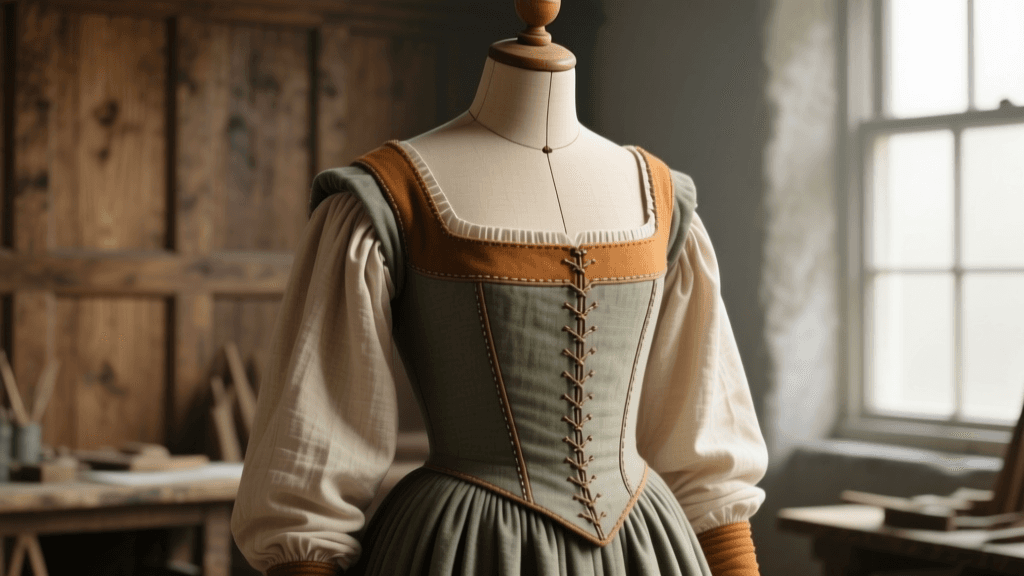
The kirtle was the primary supportive garment for women across various social strata in 16th-century England. Unlike the later Elizabethan corset, which was a separate undergarment, the early-to-mid Tudor kirtle functioned as both the bodice and the skirt, providing structural support and shaping the torso into the fashionable conical silhouette. The bodice was typically stiffened with buckram, reed, or bents (a type of stiff grass), while modern 2026 reproductions often utilize synthetic whalebone or high-density cable ties for durability during long festival weekends. The skirt was attached directly to the bodice waistline, usually featuring deep cartridge pleats at the back and sides to create volume without adding bulk to the waist.
Front-Lacing vs. Back-Lacing Configurations
When drafting your pattern, you must decide on the closure method. Working-class folk dress heavily favored front-lacing kirtles, as they allowed women to dress themselves without the assistance of a maid. The lacing edges were reinforced with strips of linen or leather, and the eyelets were meticulously hand-bound with heavy linen thread. Back-lacing kirtles were more common among the gentry and were often hidden beneath a placard or a separate gown. For a strictly working-class folk impression, a front-lacing bodice with a modest V-neck or square neckline is the most historically accurate choice.
Drafting the Bodice: 2026 Techniques and Tools
While historical tailors relied on complex geometric drafting systems and direct draping on the client, modern makers in 2026 have access to a hybrid approach. Many historical seamstresses now utilize 3D body-scanning applications on their smartphones to capture precise torso measurements, which are then translated into digital patterns using CAD software like CLO 3D. However, the final fit must always be verified with a physical 'toile' or muslin mock-up. When fitting the mock-up, ensure that the bodice provides gentle compression and supports the bust from below, rather than cinching the waist like a Victorian corset. The armscye (armhole) should be cut high and tight against the armpit to allow for a full range of motion, a crucial feature for women performing manual labor in historical folk settings.
Fabric Sourcing and 2026 Market Prices
Sourcing historically accurate textiles remains one of the greatest challenges for modern costumers. The global supply chain shifts of the mid-2020s have made certain heritage fabrics more expensive, but they have also spurred a renaissance in small-batch, European-milled historical textiles. When selecting fabric for your kirtle, prioritize natural fibers that behave as their 16th-century counterparts did. Below is a comprehensive guide to the most appropriate fabrics for a Tudor kirtle, along with their average 2026 market pricing.
| Fabric Type | Historical Precedent | 2026 Avg Cost (per yard) | Best Use in Kirtle Construction |
|---|---|---|---|
| Wool Broadcloth | Primary fabric for working and middle-class kirtles; heavily fulled and sheared to prevent fraying. | $45 - $75 | Skirts and bodice exteriors; provides excellent structure, warmth, and drape. |
| Heavyweight Linen | Used for summer kirtles, linings, and interlinings. Woven on broadlooms. | $25 - $40 | Bodice lining, chemises, and lightweight summer working skirts. |
| Silk Taffeta | Reserved for the upper-middle class and gentry due to strict sumptuary laws. | $60 - $95 | Gown overlays, partlets, and high-status kirtle skirts. |
| Hemp/Cotton Blend | A modern 2026 compromise for those on a budget, mimicking the drape of historical linsey-woolsey. | $18 - $28 | Skirts and mock-ups; lacks the historical accuracy of pure wool or linen. |
Mastering Cartridge Pleats for the Skirt
The defining feature of the Tudor kirtle skirt is the cartridge pleat, also known historically as gauging. This technique allows a massive width of heavy wool fabric (often 4 to 6 yards) to be compressed into a small waistline without adding uncomfortable bulk. To execute this in 2026, begin by finishing the top edge of your skirt fabric with a sturdy linen binding. Next, run three to four parallel rows of heavy gathering stitches, spaced exactly 1/4 inch apart. Use a thick, waxed linen or polyester buttonhole thread to ensure the threads do not snap under the tension of the heavy wool. Pull the threads simultaneously to create tight, uniform pleats that stand out perpendicular to the waistline. Finally, whip-stitch the top edge of each pleat directly to the finished bottom edge of the bodice. This method creates the iconic bell-shaped silhouette seen in the Victoria and Albert Museum's Renaissance collections, which house some of the finest surviving examples of 16th-century European tailoring.
Navigating Sumptuary Laws and Class Accuracy
When recreating European folk dress, it is vital to understand the legal and social constraints of the era. The Tudor government enacted strict sumptuary laws to dictate which social classes could wear specific fabrics, colors, and trims. As documented in the Fordham University Internet Medieval Sourcebook, these laws were designed to maintain the social hierarchy and prevent the merchant class from dressing above their station. For a working-class folk impression, avoid silk velvet, cloth of gold, and the color purple. Stick to madder reds, weld yellows, woad blues, and natural undyed wool tones. Trims should be limited to simple wool braids or narrow linen tapes, rather than elaborate metallic laces.
Accessories and Layering: Completing the 2026 Ensemble
A kirtle is never worn alone. The foundational layer is the linen chemise (or smock), which protects the expensive wool kirtle from body oils and sweat. In 2026, historical accuracy extends to the underlayers, with many makers utilizing hand-smocked chemises with period-accurate blackwork embroidery at the cuffs and neckline. Over the kirtle, a partlet (a sleeveless filler for the neckline) and an apron are essential for a working-class impression. For headwear, the English gable hood or a simple linen coif and flat cap are appropriate, depending on the specific decade and region you are portraying. The Textile Research Centre in Leiden offers extensive digital archives on historical headwear and textile conservation, providing invaluable visual references for these finishing touches.
Conclusion
Constructing a Renaissance kirtle and gown is a rewarding journey into the heart of European folk dress. By combining modern 2026 tailoring tools with rigorous historical research, today's makers are keeping the textile traditions of the 16th century alive. Whether you are hand-stitching cartridge pleats in heavy wool broadcloth or hand-binding your bodice eyelets, every stitch connects you to the generations of women who crafted, wore, and lived in these remarkable garments. Approach your 2026 projects with patience, respect for the historical record, and a commitment to quality, and your historical wardrobe will stand the test of time.