Sardinian Pibiones Weaving & Orbace Wool: Heritage Brands 2026
When discussing Italian regional traditional garments, the conversation often defaults to the lavish silks of Renaissance Florence or the intricate lace of Burano. However, the true heartbeat of Italy’s living textile heritage lies further south, on the rugged, windswept island of Sardinia. In 2026, the global slow fashion movement has cast a well-deserved spotlight on Sardinian heritage textiles—specifically the raised-grain pibiones weaving and the ultra-durable orbace wool. Far from being museum relics, these textiles are actively being reinterpreted by heritage brands and artisan cooperatives, offering modern wardrobes a masterclass in sustainability, durability, and cultural storytelling.
Sardinia’s historical isolation, particularly in the mountainous Barbagia region, acted as a natural fortress for its sartorial traditions. The costume sardo (Sardinian traditional dress) is not a monolith; it varies drastically from the coastal Campidano plains to the inland peaks of Gennargentu. Yet, across these micro-cultures, a profound respect for raw, locally sourced materials unites the island's artisans. Today, investing in Sardinian heritage garments is an investment in intangible cultural heritage, supported by a new generation of weavers who are modernizing ancient looms without compromising historical integrity.
Understanding the Core Materials: Pibiones and Orbace
Pibiones: The 'Grapes' of Sardinian Looms
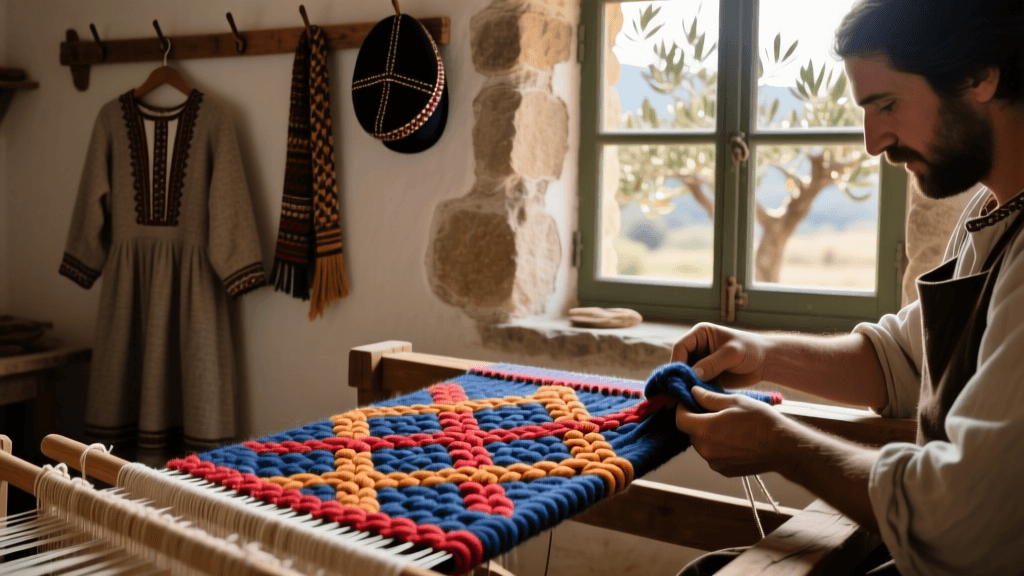
The term pibiones translates roughly to 'grapes' or 'grains' in the Sardinian dialect, perfectly describing the textured, raised bumps that characterize this weaving technique. Originating primarily in the village of Samugheo, pibiones weaving is a painstakingly slow process. The artisan lays a smooth wooden or metal rod across the warp threads, loops the weft yarn over the rod, and then beats the thread tightly into place with a heavy wooden comb. Once the rod is removed, a raised, three-dimensional 'grain' remains on the fabric's surface.
Historically used for fanugas (ceremonial bedspreads) and grain sacks, pibiones textiles in 2026 are heavily featured in high-end interior design and luxury fashion accents. The geometric patterns woven into the pibiones—such as the pavoncella (peahen) representing fertility, or the losanga (diamond) symbolizing the earth—are not merely decorative; they are a woven language passed down through matriarchal lines.
Orbace: The Water-Resistant Armor of the Shepherds
If pibiones represents the decorative soul of Sardinia, orbace (or orbaci) represents its resilient spine. Orbace is a coarse, dense, and naturally water-repellent woolen cloth woven from the fleece of indigenous Sardinian sheep breeds. The most prized orbace in 2026 is sourced from the pecora nera di Arbus (the black sheep of Arbus), a rare breed whose dark, lanolin-rich fleece requires no chemical dyes to achieve its deep, charcoal-brown hue.
The weaving of orbace is exceptionally tight, creating a fabric that is virtually windproof and highly resistant to the damp Mediterranean winters. Historically the domain of shepherds and bandits, orbace has been elevated by contemporary heritage brands into a luxury sustainable textile, prized for its organic origins and unparalleled longevity.
Key Traditional Garments in the Modern Wardrobe
Su Zippone (The Shepherd’s Vest)
The most iconic garment crafted from orbace is su zippone, a heavy, double-breasted vest worn by men across the island. In its traditional form, it features wide armholes and a drop-shoulder construction, designed to allow freedom of movement and to layer over bulky linen shirts. In 2026, bespoke tailors in Nuoro are adapting the zippone for contemporary menswear and womenswear, tapering the waist slightly and introducing hidden interior pockets while maintaining the raw, unlined interior that allows the wool's natural lanolin to regulate body temperature.
Su Mancalori (The Ceremonial Shawl)
For womenswear, the mancalori is a large, fringed shawl often woven with a combination of fine wool and cotton, featuring intricate pibiones borders. While traditionally worn over the head or shoulders during religious processions, modern styling sees the mancalori draped over tailored coats or used as a statement wrap for evening wear, bridging the gap between folk costume and haute couture.
Top Heritage Brands & Ateliers to Watch in 2026
Sourcing authentic Sardinian textiles requires navigating past mass-produced tourist souvenirs. True heritage brands operate with transparency, showcasing their looms, their sheep breeds, and their natural dye vats. Here are the premier ateliers leading the charge in 2026.
Edilana: Based in Guspini, Edilana is arguably the most vital force in the modern orbace revival. Founded by Gianna Bacciu, the brand is fiercely committed to eco-sustainability, using only natural dyes like walnut husk, madder root, and wild chamomile. In 2026, Edilana's 'Orbace Urbano' line offers tailored jackets and capes that bring the rugged shepherd's wool into the metropolitan wardrobe, fully traceable from the pasture to the final stitch.
Tessitura Artigiana di Samugheo: This cooperative of master weavers keeps the pibiones tradition alive. Commissioning a piece from Samugheo means engaging with a centuries-old guild. Their 2026 catalog features stunning, heavy-weight pibiones cushions and runners, but they also accept bespoke commissions for fashion designers looking to incorporate authentic Sardinian grain-weave into structural garments.
Atelier Costumes of Orgosolo: Famous for its vibrant murals, the town of Orgosolo also boasts a fierce dedication to its traditional dress, particularly the heavy, pleated wool skirts and embroidered bodices. Local tailors here offer the most historically accurate zippone vests, utilizing hand-spun yarns and traditional bone buttons.
2026 Buyer’s Comparison & Pricing Table
Commissioning heritage textiles is an investment in slow fashion. Pricing in 2026 reflects the scarcity of skilled weavers and the rising cost of ethically reared, indigenous wool breeds.
| Atelier / Brand | Specialty | 2026 Price Range (EUR) | Lead Time |
|---|---|---|---|
| Edilana | Natural dyed Orbace & Pibiones fashion | €250 - €850 | 3 - 6 Weeks |
| Tessitura Samugheo | Traditional Pibiones home & accent textiles | €180 - €1,200 | 4 - 8 Weeks |
| Nuoro Bespoke Tailors | Custom Su Zippone (Orbace vests) | €450 - €700 | 6 - 10 Weeks |
| Orgosolo Artisans | Ceremonial Shawls & Embroidered Bodices | €600 - €1,500 | 2 - 4 Months |
Actionable Guide: Commissioning and Caring for Orbace
Measurements for Bespoke Garments
If you are commissioning a zippone or an orbace coat from a Sardinian tailor in 2026, standard sizing will not suffice due to the fabric's zero-stretch nature and the garment's traditional drape. You must provide:
- Chest Circumference: Measured at the fullest part. Tailors will add 4 to 6 inches of ease to accommodate the thick wool and allow for layering.
- Shoulder Drop: Crucial for the traditional drop-shoulder silhouette. Measure from the base of the neck to the desired shoulder seam.
- Armhole Depth: Sardinian vests feature deep armholes. Specify if you want a traditional deep cut (for wearing over thick sweaters) or a modernized, higher armhole for a sleeker profile.
Care and Maintenance
Orbace is practically indestructible if treated correctly, but modern cleaning methods will ruin it. Never machine wash or dry clean orbace. The harsh chemicals of dry cleaning strip the wool of its natural lanolin, destroying its water-repellent properties and leaving the fibers brittle.
- Airing: To refresh the garment, hang it outside on a damp, misty morning. The moisture will naturally release odors and relax the fibers.
- Spot Cleaning: Use a soft brush to remove dried dirt. For stains, use cold water and a mild, lanolin-rich wool soap (such as traditional Sardinian olive oil soap). Gently dab, never rub.
- Storage: Store in a breathable cotton garment bag with cedar blocks. Avoid plastic, which traps moisture and invites mold.
Verifying Authenticity in 2026
As the demand for sustainable, heritage fashion grows, so does the market for 'Sardinian-style' textiles woven in industrial factories overseas. To ensure you are supporting the true artisans of the island, look for certification from ISOLA (Istituto Superiore Regionale Etnografico), which actively monitors and protects Sardinian artisan crafts. Additionally, the regional portal Sardegna Cultura maintains updated directories of certified master weavers and recognized heritage cooperatives.
When purchasing pibiones, examine the reverse side of the fabric. True hand-woven pibiones will show the loops and the slight irregularities of human craftsmanship, whereas machine-made imitations will feature a flat, uniform back with the 'grains' merely stitched on top. Authentic orbace should have a distinct, earthy scent of raw wool and lanolin—a scent that fades slightly over time but never entirely disappears, serving as a sensory reminder of the Mediterranean pastures from which it was born.
Embracing Sardinian heritage brands in 2026 is more than a sartorial choice; it is a vital act of cultural preservation. By investing in the meticulous craft of pibiones and the rugged elegance of orbace, you are helping to ensure that the rhythmic clatter of the wooden loom continues to echo through the valleys of Sardinia for generations to come.