Zero-Waste Romanian Ie Blouse Patterns & Techniques 2026
The Renaissance of Zero-Waste: Understanding the Romanian Ie
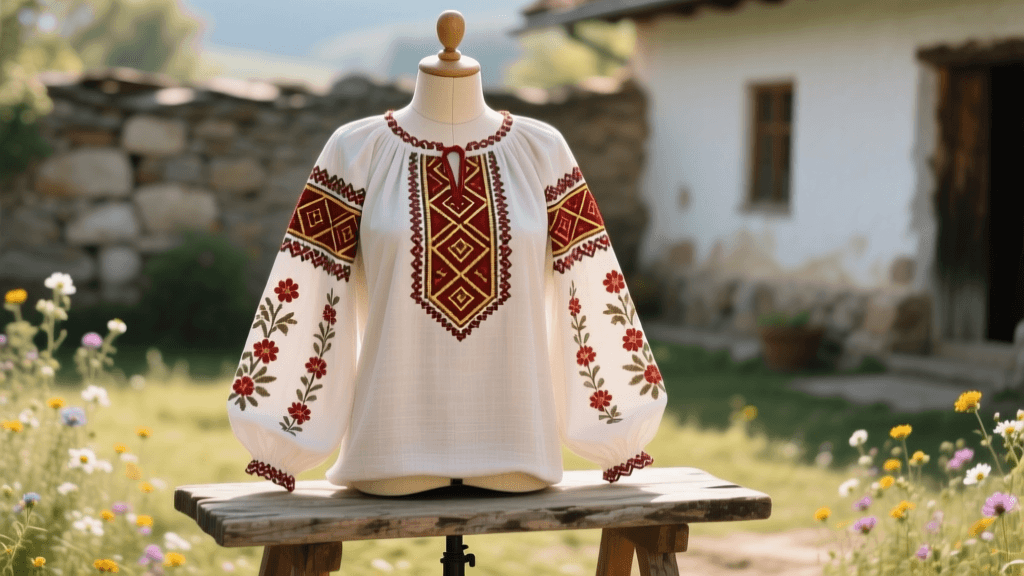
The traditional Romanian ie (pronounced "yeh") is far more than a beautiful folk garment; it is a masterclass in geometric, zero-waste pattern drafting. In 2026, as the global apparel industry faces intense scrutiny over textile waste and environmental degradation, the historical construction methods of Eastern European folk dress offer profound, actionable solutions for modern makers and sustainable fashion designers. The Romanian ie relies entirely on rectangular and square pattern pieces, ensuring that nearly 100% of the woven fabric is utilized in the final garment, leaving virtually no scraps behind.
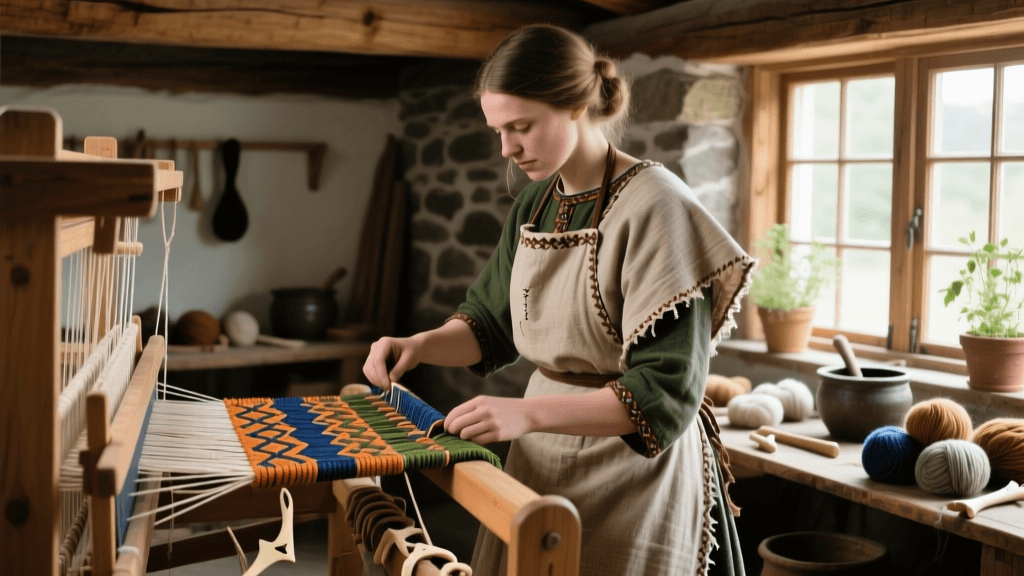
According to the Museum of the Romanian Peasant, this zero-waste philosophy was born not out of modern environmentalism, but out of historical necessity and a deep cultural respect for the labor-intensive process of hand-weaving linen and hemp. Today, we can adapt these ancestral techniques to create contemporary, sustainable wardrobes.
"The geometry of the Romanian ie is not merely an aesthetic choice; it is a profound mathematical dialogue between the weaver's loom and the maker's needle."
Essential Materials and 2026 Textile Sourcing
To draft an authentic ie, the foundation fabric must be an evenweave textile. This allows for precise thread-counting, which is essential for the traditional cross-stitch embroidery and structural smocking techniques. In 2026, premium European flax linen with a 28-count or 32-count evenweave structure typically retails between $40 and $55 per yard. Look for fabrics with a natural ecru or bleached white finish.
Before cutting, it is imperative to scour and block your linen. Commercial linens are often treated with synthetic sizing agents. Wash the fabric at 60°C (140°F) with a pH-neutral detergent, then press it while damp to ensure the warp and weft threads are perfectly perpendicular. This step is non-negotiable for accurate thread-counting and geometric alignment.
For the embroidery and structural smocking, mercerized cotton floss remains the gold standard. Brands like DMC and Anchor have adjusted their 2026 pricing, with individual skeins averaging $1.25 to $1.50. For the structural gathering threads, use a high-tensile polyester or heavy-duty waxed linen thread that will not snap under the extreme tension of the altita (smocked shoulder band).
Geometric Pattern Drafting: The Rectangular Grid System
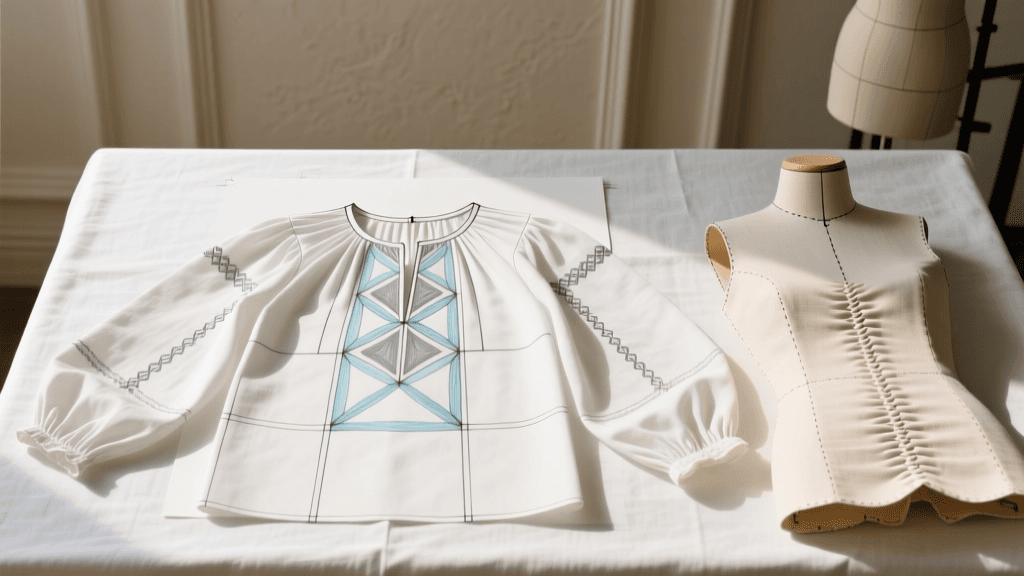
Unlike modern Western pattern drafting, which relies heavily on curved armholes, princess seams, and complex darts to contour the body, the ie is constructed using a strict orthogonal grid. Every piece is cut parallel to the warp and weft of the fabric, eliminating the curved off-cuts that plague modern sewing.
The Core Bodice Panels
The main body consists of the față (front panel) and spate (back panel). These are simple rectangles. The width of these panels is determined by the traditional fabric loom width, historically around 35 to 40 inches (89 to 101 cm). In modern drafting, you can scale this to your personal circumference measurements plus ease, but the rectangular shape remains absolute. The front panel often includes a straight center-front slit for the neckline opening.
The sleeves (mâneci) are also cut as long rectangles. The width of the sleeve rectangle dictates the volume of the gather at the shoulder and cuff. A traditional ie sleeve can be incredibly voluminous, often requiring 20 to 30 inches of fabric width per sleeve to achieve the iconic billowing silhouette.
Standard Measurements for a Modern Size Medium Ie
| Garment Component | Standard Width (Size M) | Standard Length (Size M) | Construction Notes |
|---|---|---|---|
| Front Panel (Față) | 22 inches | 28 inches | Cut on straight grain; includes center front slit. |
| Back Panel (Spate) | 22 inches | 28 inches | Cut on straight grain; matches front panel width. |
| Sleeve (Mânecă) | 24 inches | 22 inches | Rectangular; width dictates smocking volume. |
| Underarm Gusset (Pavă) | 5 x 5 inches | N/A | Cut on true bias (45°) for stretch. |
| Side Godet (Clișeu) | 10 inch base | 14 inches | Triangular; inserted from hip to hem. |
Gusset and Godet Insertions: Engineering Mobility
Because the ie lacks curved armholes, mobility is engineered through the strategic insertion of gussets and godets. These geometric additions allow the flat rectangles to conform to the three-dimensional human body.
The Pavă (Underarm Gusset)
The pavă is a square or diamond-shaped piece of fabric inserted at the underarm intersection where the sleeve meets the front and back bodice panels. Typically measuring 4x4 inches to 6x6 inches, the pavă acts as a hinge, allowing the arm to lift without pulling the entire bodice upward. When drafting, ensure the grainline of the pavă is cut on the true bias (45 degrees) to maximize stretch and durability at this high-stress junction.
The Clișeu (Side Godet)
To provide flare and walking ease without adding bulk to the waist, triangular godets called clișeu are inserted into the side seams of the bodice panels. These are usually inserted starting from the waistline or hip line down to the hem. The base of the triangle can range from 8 to 12 inches, providing a beautiful A-line drape that utilizes the remaining fabric width from the sleeve cuts.
The Altita: Mastering the Smocked Sleeve Cuff and Shoulder
The most visually striking and technically demanding element of the ie is the altita—the densely smocked and embroidered band that sits on the upper shoulder and upper arm. This technique gathers the massive width of the sleeve rectangle down to the circumference of the arm, creating structural volume.
Step-by-Step Smocking Tension and Thread Selection
- Grid Marking: Mark a precise dot grid on the wrong side of the sleeve fabric. For a traditional 28-count linen, mark dots every 1/4 inch (6mm) using a water-soluble fabric pen.
- Running the Gathering Threads: Use a strong, waxed linen thread. Run parallel running stitches through the dots. You will need at least 4 to 6 rows of gathering threads to create the deep, structured pleats characteristic of the altita.
- Pulling and Tensioning: Pull the threads evenly. The goal is to compress the 24-inch sleeve width down to an 8-inch shoulder span. Secure the threads by wrapping them around a pin in a figure-eight pattern.
- Stabilizing the Smocking: Once gathered, the altita is stabilized using intricate surface embroidery stitches, such as the Romanian stem stitch or interlaced herringbone, which lock the pleats permanently in place.
While the altita commands attention, the neckline is finished with an încreț—a narrow, tightly smocked collar band. This requires a finer gathering grid, typically 1/8 inch, and is often embellished with delicate seed stitches or tiny cross-stitch motifs to secure the neck opening.
Assembly Sequence and The Cheița Joining Seams
The assembly of the ie relies on flat-felled seams or traditional joining seams known as cheița. The cheița is a decorative, lace-like seam used to join the rectangular panels together, leaving a slight gap between the fabric edges that is bridged by interwoven embroidery stitches.
In 2026, many contemporary makers utilize the Europeana Fashion and Costume Archive to study high-resolution macro photographs of historical cheița seams. To execute this seam:
- Finish the raw edges of the two panels to be joined using a tight blanket stitch or a narrow rolled hem.
- Baste the two panels together, leaving a 1/4 inch gap between the finished edges.
- Using a contrasting embroidery floss, work a series of interlocking figure-eight or buttonhole stitches across the gap, creating a flexible, decorative bridge.
- Remove the basting threads to reveal the openwork lace seam.
This technique not only provides a beautiful decorative element but also allows the garment to stretch and breathe, a crucial feature for summer festival wear. Organizations like Fashion Revolution frequently highlight these historical zero-waste and modular construction techniques in their 2026 sustainability reports, noting that openwork seams like the cheița extend the lifespan of a garment by allowing for easy panel replacement, repair, and eventual biodegradation.
Conclusion: Integrating Heritage Techniques into Modern Making
Drafting and constructing a Romanian ie is an exercise in patience, geometry, and respect for the material. By embracing the zero-waste rectangular grid, mastering the structural engineering of the pavă gusset, and learning the intricate tension control of the altita smocking, modern sewists can create garments that are not only historically resonant but fundamentally sustainable. As we navigate the textile landscape of 2026, the ancestral wisdom embedded in European folk dress provides a vital, actionable blueprint for the future of conscious garment construction.