Master Romanian Ia Blouse Pattern Drafting & Altita Smocking 2026
The Renaissance of Zero-Waste European Folk Dress in 2026
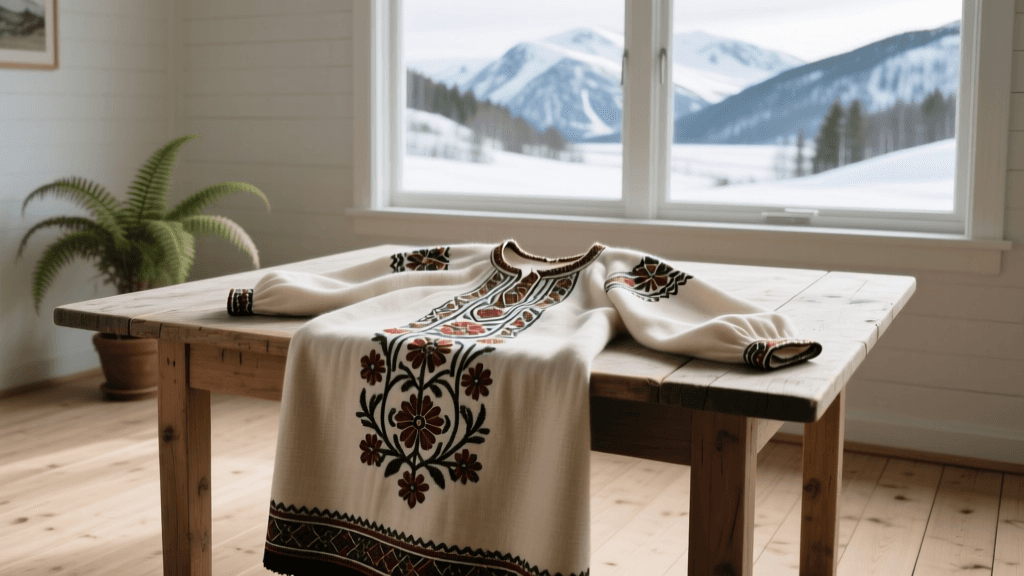
The European folk dress revival has reached a remarkable milestone in 2026, driven by a global pivot toward sustainable, zero-waste garment construction. Among the most technically fascinating and culturally significant garments leading this movement is the Romanian Ia blouse. Celebrated for its intricate shoulder embroidery and mathematically precise geometry, the Ia is a masterclass in traditional pattern drafting. Unlike modern Western tailoring, which relies on curved armholes and shaped seams that generate significant textile waste, the traditional Ia is constructed entirely from rectangles and squares. This ancient zero-waste approach perfectly aligns with the 2026 slow fashion ethos, offering modern sewists a blueprint for sustainable, historically rooted garment creation.
Since its celebrated inscription on the UNESCO Intangible Cultural Heritage list, the Ia has transitioned from a regional artifact to a globally studied textile masterpiece. Today, contemporary makers and historical costumers are moving beyond superficial commercial reproductions, diving deep into the authentic construction patterns, loom-width constraints, and complex smocking techniques that define the true garment.
Decoding the Rectangular Geometry: Pattern Drafting
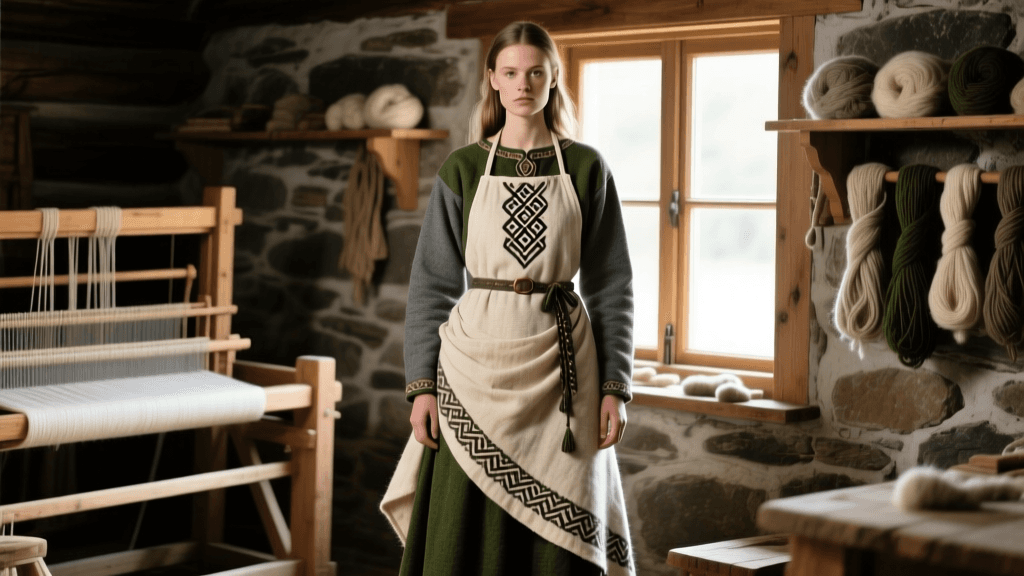
The foundation of the Romanian Ia lies in its strict adherence to the physical limitations of the traditional loom. Historically, handwoven hemp, linen, or cotton fabrics were produced in narrow widths, typically ranging from 40 to 50 centimeters. Rather than cutting curved shapes into these narrow panels and discarding the remnants, village seamstresses engineered a garment using purely orthogonal cuts. Every single scrap of the woven fabric was utilized, achieving a literal zero-waste pattern.
In 2026, while modern commercial fabrics are available in 150cm widths, authentic Ia construction still honors the narrow-panel geometry to maintain the correct drape, weight, and structural integrity of the smocked areas. The garment is essentially a T-tunic modified with underarm gussets (known as pavă) to provide mobility without altering the straight grainline of the sleeves or body panels.
Standard Pattern Allocation Table
Below is the standard zero-waste cutting layout for a modern, medium-sized Ia blouse, utilizing traditional 50cm wide handwoven fabric or modern equivalents cut to mimic loom widths.
| Pattern Piece | Quantity | Dimensions (cm) | Function & Grainline |
|---|---|---|---|
| Front Panel | 1 | 50 x 75 | Main body, straight warp grain |
| Back Panel | 1 | 50 x 75 | Main body, straight warp grain |
| Sleeve Panels | 2 | 50 x 65 | Wide bishop sleeves, straight warp |
| Gussets (Pavă) | 2 | 15 x 15 (Diamond) | Underarm mobility, bias cut |
| Neckline Binding (Bentiță) | 1 | 8 x 45 | Casing for gathering cord, cross-grain |
| Cuff Bindings | 2 | 6 x 25 | Wrist casing, cross-grain |
By utilizing these exact rectangular dimensions, the maker ensures that the warp threads run perfectly vertical down the body and sleeves, providing the necessary structural stability for the heavy, tension-based smocking techniques applied to the shoulders.
Material Sourcing: 2026 Fabric and Thread Markets
Constructing an authentic Ia requires specific materials that can withstand the intense tension of smocking and heavy embroidery. In 2026, the European textile market has seen a massive resurgence in heritage fiber cooperatives. Makers are increasingly sourcing organic hemp-cotton blends from Transylvanian and Moldovan weaving cooperatives. These fabrics, typically priced between €45 and €65 per meter in 2026, offer the slightly stiff, textured 'tooth' required for counting threads during embroidery.
For the embroidery itself, traditionalists avoid standard modern stranded cotton, which can be too glossy and soft. Instead, highly twisted mercerized cotton threads, such as specialized Mouline brands or heavily tensioned DMC/Anchor equivalents, are preferred. According to historical textile archives and Britannica's comprehensive guide to embroidery, the twist and ply of the thread directly impact the durability and raised texture of the folk motifs, a crucial factor when executing the dense satin stitches of the shoulder band.
Mastering the Altita and Increț Smocking Techniques
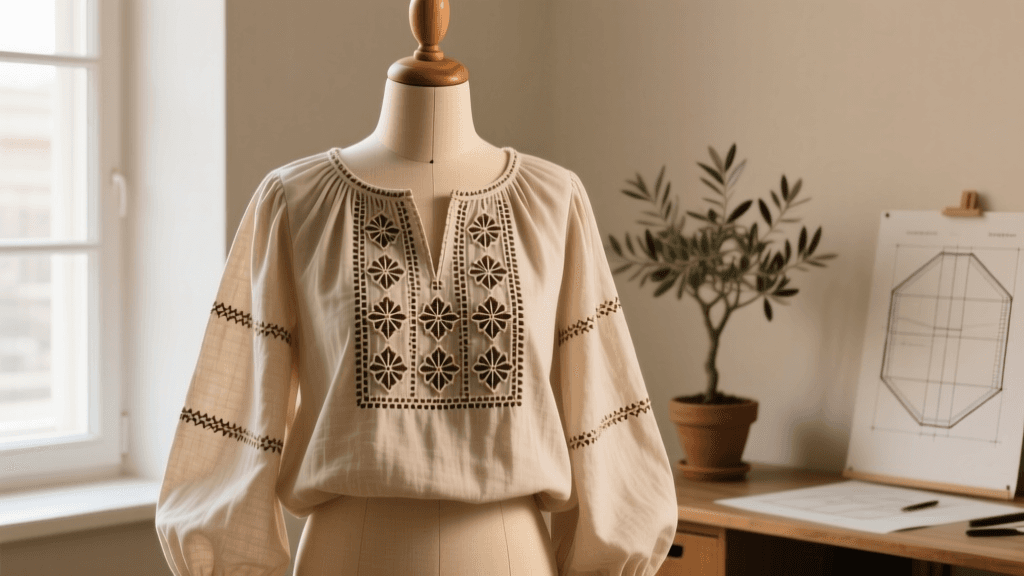
The defining characteristic of the Romanian Ia is the shoulder architecture, which consists of three distinct zones: the Altita (the wide, heavily embroidered shoulder band), the Increț (the smocked gathering below the Altita), and the Râuri (the 'rivers' of embroidery flowing down the sleeve). Understanding the transition between the rigid Altita and the fluid Increț is the most challenging aspect of Ia construction.
Step 1: The Altita (Shoulder Band)
The Altita is a rectangular band of dense embroidery that acts as a structural yoke. It is typically 8 to 12 centimeters wide and spans the top of the sleeve. Because it must bear the weight of the gathered fabric below it, the Altita is worked with a high density of stitches—often complex geometric cross-stitch, satin stitch, or the traditional lănțișor (chain stitch). In 2026, digital pattern generators can help map out the complex geometric motifs, but the execution remains entirely by hand, counting the warp and weft threads of the woven fabric to ensure perfect symmetry.
Step 2: The Increț (Smocked Gathering)
Directly below the Altita lies the Increț, a masterful application of traditional smocking that transitions the wide sleeve panel into the narrower shoulder profile. Unlike modern elastic gathering, the Increț is created using a grid of hand-sewn running stitches.
- Grid Marking: Using a water-soluble pen or traditional tailor's chalk, mark a grid of dots spaced exactly 5mm apart horizontally and 10mm apart vertically across a 15cm section of the sleeve panel.
- Running the Threads: Thread a needle with strong, waxed linen or heavy cotton thread. Sew horizontal rows of running stitches, picking up exactly one thread of the fabric warp at each marked dot.
- Pulling the Gathers: Once all rows are stitched, gently pull the threads simultaneously. The fabric will collapse into deep, uniform, honeycomb-like pleats. Tie off the threads securely around a pin to maintain tension.
- Stabilization: In authentic construction, the back of the smocked area is often stabilized with a secondary row of decorative stitches or a lightweight linen backing to prevent the gathers from stretching out over decades of wear.
Step 3: The Râuri (Sleeve Rivers)
Below the smocked Increț, the sleeve flares out into a wide bishop shape. The Râuri are diagonal or vertical bands of embroidery that flow down the sleeve toward the cuff. These motifs are typically floral or abstract geometric representations of nature, worked in a lighter, more open stitch pattern than the Altita to allow the fabric to drape softly. For further study on historical stitch preservation and motif adaptation, the Victoria and Albert Museum's embroidery resources offer excellent visual references for Eastern European textile evolution.
Assembly, Gussets, and Finishing
Once the front, back, and sleeve panels are fully embroidered and smocked, the assembly process begins. Because the fabric is woven and prone to fraying, traditional seamstresses avoided simple overcast edges. Instead, the Ia utilizes flat-felled seams or extremely narrow French seams to enclose all raw edges within the seam allowance itself.
Inserting the Pavă (Gussets)
The most technically demanding seam in the Ia is the insertion of the diamond-shaped underarm gusset, or pavă. The pavă connects the side seam of the front panel, the side seam of the back panel, and the underarm seam of the sleeve. Because the body panels are cut on the straight grain and the pavă is cut on the bias, this single diamond piece provides the three-dimensional articulation required for the arm to move freely. Setting a bias-cut gusset into straight-grain rectangular panels requires precise pinning, easing, and a very narrow seam allowance (typically 3mm to 5mm) to prevent puckering at the points of the diamond.
The Bentiță (Neckline Binding)
The neckline of the Ia is not cut into a curve; it is simply the top edge of the rectangular front and back panels, gathered tightly to form a rounded opening. A narrow strip of fabric, the bentiță, is sewn around the raw top edge to form a casing. A braided cotton cord or a narrow woven ribbon is threaded through this casing. When pulled tight, the straight top edges bunch into a dense, ruffled collar that sits elegantly at the base of the neck. This gathering technique completely eliminates the need for complex curved neckline drafting.
Conclusion
The construction of the Romanian Ia blouse is a profound lesson in the marriage of mathematical geometry, material constraints, and artistic expression. By embracing the zero-waste rectangular pattern drafting and mastering the tension-based Altita and Increț smocking techniques, modern makers in 2026 are doing more than just sewing a historical costume; they are participating in a living, breathing textile tradition. Whether you are sourcing heritage hemp-cotton from European cooperatives or adapting the geometric principles to modern sustainable linens, the Ia remains a timeless testament to the ingenuity of European folk dress construction.