Baltic Amber & Silver Filigree Folk Jewelry 2026 Guide
The Enduring Legacy of Baltic and Slavic Folk Accessories
As we navigate the fashion landscape of 2026, the intersection of heritage craftsmanship and sustainable, slow fashion has propelled traditional European folk accessories into the global spotlight. Discerning collectors and modern style enthusiasts are increasingly turning away from mass-produced fast fashion, seeking instead the profound historical narratives embedded in regional folk dress. Among the most coveted of these heritage items are the intricate silver filigree metalworks and the luminous Baltic amber jewelry native to the Slavic and Baltic regions. These accessories are not merely decorative; they are tangible links to centuries of cultural identity, spiritual belief, and masterful artisanal techniques that have survived the test of time.
In 2026, the revival of these traditional crafts is being spearheaded by a new generation of artisans who are utilizing historical methods while adapting to contemporary aesthetic sensibilities. Whether you are a historian, a collector of ethnic textiles, or a fashion-forward individual looking to incorporate meaningful heritage pieces into your modern wardrobe, understanding the nuances of Baltic amber, silver filigree, and traditional headwear is essential. This comprehensive guide will explore the techniques, authentication methods, and modern styling applications for these exquisite European folk accessories.
Silver Filigree: Techniques and the 2026 Artisan Revival
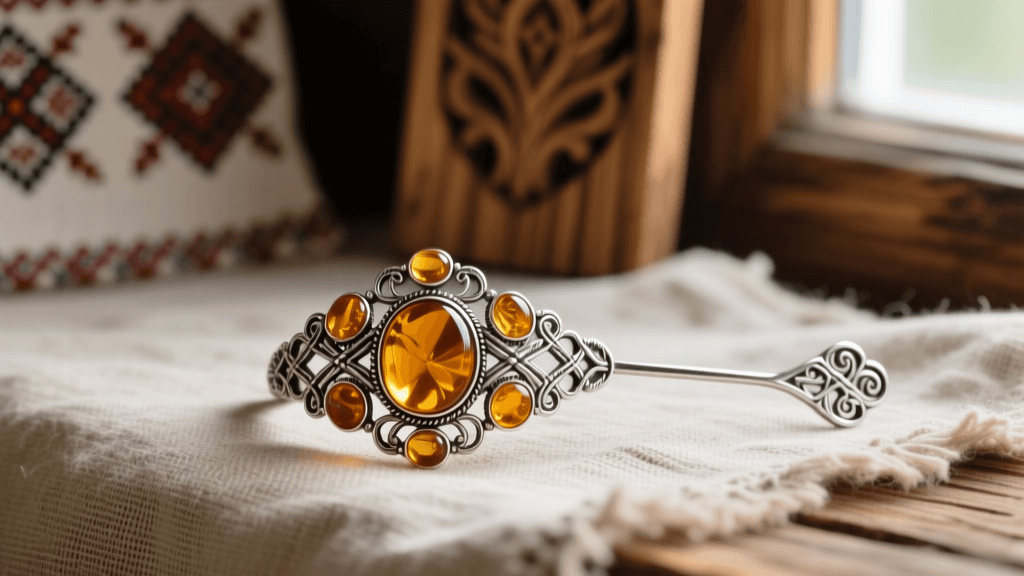
Filigree is a delicate kind of jewelery metalwork, historically crafted from gold and silver, involving the meticulous twisting and curling of fine wire into intricate, lace-like patterns. According to Britannica's guide to filigree metalwork, the technique relies on soldering these fine wires onto a solid metal base or joining them together to form openwork designs. In the Baltic and Slavic traditions, silver filigree was often used to create elaborate pendants, brooches, and the structural frameworks for traditional headdresses.
The creation of authentic folk filigree requires immense patience and a steady hand. Artisans begin by drawing silver into threads as fine as a human hair. These threads are then twisted, flattened, and shaped into tiny spirals, teardrops, and floral motifs. In 2026, there is a distinct market shift away from cast 'filigree-style' jewelry—which is poured into molds and lacks the structural integrity and light-catching facets of true wirework—toward genuine, hand-soldered pieces. Master silversmiths in Vilnius, Riga, and Novgorod are currently experiencing a surge in commissions, with waitlists for bespoke, hand-woven silver collars and pendants extending several months into the future.
The pricing for genuine artisan filigree has adjusted to reflect the true cost of labor and the rising spot price of silver in 2026. A moderately complex, hand-soldered silver filigree pendant from a recognized heritage artisan now typically ranges from €250 to €600, while elaborate, multi-tiered ceremonial necklaces can easily command upwards of €2,500. Collectors are advised to examine the joints under a loupe; true filigree will show minute, precise solder points, whereas cast imitations will appear uniformly melted and lack the sharp, defined edges of drawn wire.
Baltic Amber: Grading and Authenticating in 2026
Often referred to as 'Baltic Gold,' amber is the fossilized resin of ancient coniferous trees that flourished in the region over 40 million years ago. Encyclopedia Britannica's overview of Baltic amber notes that succinite, the specific variety found in the Baltic Sea region, is prized not only for its warm, honeyed hues but also for the prehistoric inclusions—such as insects and plant matter—that it occasionally traps. In the context of European folk dress, amber was historically believed to possess healing properties and was a staple in the bridal trousseaus of Lithuanian, Latvian, and Polish women.
The amber market in 2026 is heavily focused on transparency and ethical sourcing. With the depletion of easily accessible surface deposits, modern mining and diving operations in the Baltic are highly regulated. Consequently, the trend has shifted dramatically toward 'raw' or 'minimally polished' amber. Rather than the perfectly symmetrical, highly polished beads that dominated the late 20th century, contemporary folk jewelry designers are highlighting the natural, rugged inclusions and asymmetric shapes of the resin, celebrating the organic imperfections that prove the stone's natural origin.
Authenticating Baltic amber has become increasingly sophisticated due to the proliferation of advanced synthetic resins and copal (young, unfossilized resin). In 2026, the most reliable non-destructive tests for consumers include the UV light test and the saltwater buoyancy test. Genuine Baltic amber will fluoresce a pale blue or green under a standard UV flashlight, while most synthetic plastics will not. Furthermore, true amber is remarkably lightweight and will float in a saturated saltwater solution (one part salt to two parts water), whereas glass and many heavy plastics will sink. Buyers should always request a certificate of authenticity from reputable guild members when purchasing high-value, inclusion-heavy specimens.
Traditional Headwear: From Vainikas to Kokoshniks
Headwear in European folk traditions was never merely decorative; it was a strict visual indicator of a woman's marital status, regional origin, and social standing. The Victoria and Albert Museum's jewellery archives frequently highlight how regional headdresses served as the most valuable and heavily embellished items in a traditional wardrobe, often representing a family's entire accumulated wealth.
The Vainikas and Floral Wreaths
In Lithuanian and Latvian traditions, unmarried women wore the 'vainikas'—a wreath traditionally woven from fresh rue (rūta) or oak leaves during midsummer festivals. For formal and ceremonial occasions, these floral wreaths were translated into permanent, precious metal versions. The 2026 revival of the metal vainikas features delicate silver wire frameworks adorned with freshwater pearls, red coral beads, and suspended metallic ribbons that catch the light during traditional circle dances. These pieces are increasingly being adopted by modern brides seeking an alternative to the conventional diamond tiara, favoring the deep cultural resonance and botanical motifs of their ancestors.
The Kokoshnik and Pearl Netting
Further east, the Russian 'kokoshnik' remains one of the most iconic silhouettes in European folk dress. Worn exclusively by married women, the kokoshnik is a crested headdress that frames the face like a halo. The most luxurious versions, originating from the northern provinces, were encrusted with river pearls and intricate metallic embroidery. A defining feature of the formal kokoshnik is the 'podniz'—a delicate net of pearls and seed beads that drapes over the forehead and temples. In 2026, artisan milliners are recreating the podniz using ethically sourced freshwater pearls and hand-twisted silver wire, offering bespoke fittings that adapt the heavy, historical silhouette into wearable, balanced pieces for contemporary gala and cultural festival settings.
2026 Buyer's Comparison Chart: Authentic Folk Jewelry
To assist collectors and enthusiasts in navigating the current market, the following table outlines the primary categories of Baltic and Slavic folk accessories, their origins, and current 2026 market expectations.
| Accessory Type | Regional Origin | Primary Materials | 2026 Avg. Price Range | Best Modern Styling Context |
|---|---|---|---|---|
| Silver Filigree Pendant | Lithuania / Latvia | Sterling Silver, Garnet | €250 - €600 | Minimalist linen blouses, dark turtlenecks |
| Raw Amber Drop Earrings | Poland / Kaliningrad | Unpolished Succinite, Silver | €80 - €180 | Everyday workwear, bohemian layering |
| Metal Vainikas (Wreath) | Lithuania | Silver Wire, Freshwater Pearl | €400 - €1,200 | Bridal wear, midsummer cultural festivals |
| Pearl Podniz (Forehead Net) | Northern Russia | River Pearls, Silk Thread | €800 - €2,500 | High-fashion editorial, formal galas |
| Amber Rosary (Korale) | Ukraine / Poland | Graduated Baltic Amber | €300 - €900 | Statement neckpieces over dark wool coats |
Styling Traditional Accessories for Modern Wardrobes
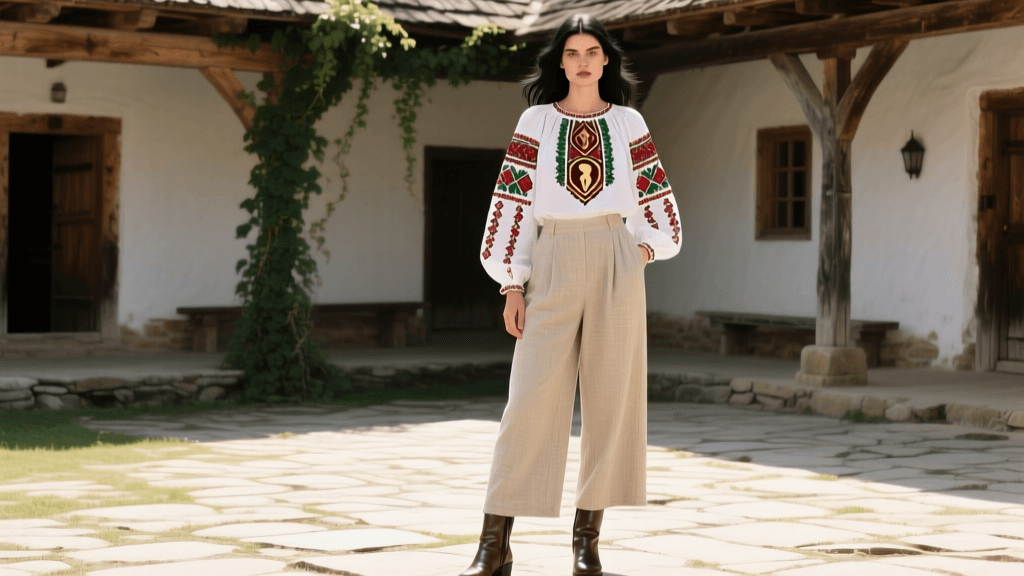
The key to integrating heavy, historically significant folk jewelry into a 2026 wardrobe lies in the principle of juxtaposition. Because traditional Slavic and Baltic pieces are inherently ornate and carry substantial visual weight, they are best showcased against clean, modern, and unstructured silhouettes. Pairing a heavy, multi-strand amber necklace with a tailored, charcoal-grey wool blazer or a crisp, oversized white poplin shirt allows the organic warmth of the resin and the intricate metalwork to serve as the undisputed focal point of the outfit.
For silver filigree, which often features darkened, oxidized crevices to highlight the wirework, consider the neckline of your garment. Open, sweeping necklines such as boatnecks or deep V-necks provide the necessary canvas for a sprawling filigree collar. Avoid pairing these heritage pieces with busy prints or heavily textured fabrics like chunky cable knits, which will compete with the intricate lace-like patterns of the silver and diminish the visual impact of the craftsmanship.
Sourcing and Caring for Heritage Pieces
When sourcing authentic folk accessories in 2026, it is imperative to bypass generic tourist shops and seek out certified artisan cooperatives, specialized ethnographic auction houses, and direct-to-consumer heritage guilds. Many master jewelers now operate via verified digital ateliers, providing video consultations and detailed macro-photography of their soldering and stone-setting techniques before a purchase is finalized.
Caring for these organic and historical materials requires specific attention. Amber is remarkably soft, rating only a 2 to 2.5 on the Mohs hardness scale. It must never be cleaned in an ultrasonic jewelry cleaner or exposed to harsh chemicals, perfumes, or alcohol, which can cause the surface to cloud or crack. Instead, simply wipe amber with a soft, lint-free cloth slightly dampened with warm water. Silver filigree, particularly when intentionally oxidized for contrast, should not be aggressively polished with abrasive dips. Use a soft-bristled jeweler's brush to gently remove dust from the intricate wire spirals, preserving the dark patina that gives the piece its depth and historical character. By respecting the materials and the immense skill required to shape them, collectors ensure that these vital pieces of European cultural heritage will endure for generations to come.