Romanian Ie Blouse Trends 2026: Styling Heritage Embroidery Today
The global fashion landscape of 2026 is defined by a profound shift toward 'heritage luxury' and conscious consumption. As consumers move away from fleeting micro-trends, traditional European folk dress has reclaimed its position at the forefront of sophisticated, meaningful wardrobes. Among the most celebrated garments in this revival is the Romanian Ie (pronounced 'yeh'), a traditional blouse renowned for its intricate, hand-stitched embroidery and profound cultural symbolism. Once relegated to museum archives or seasonal folk festivals, the Ie has been fully integrated into contemporary 2026 streetwear, high fashion, and minimalist office attire.
The Resurgence of the Altăiță in 2026
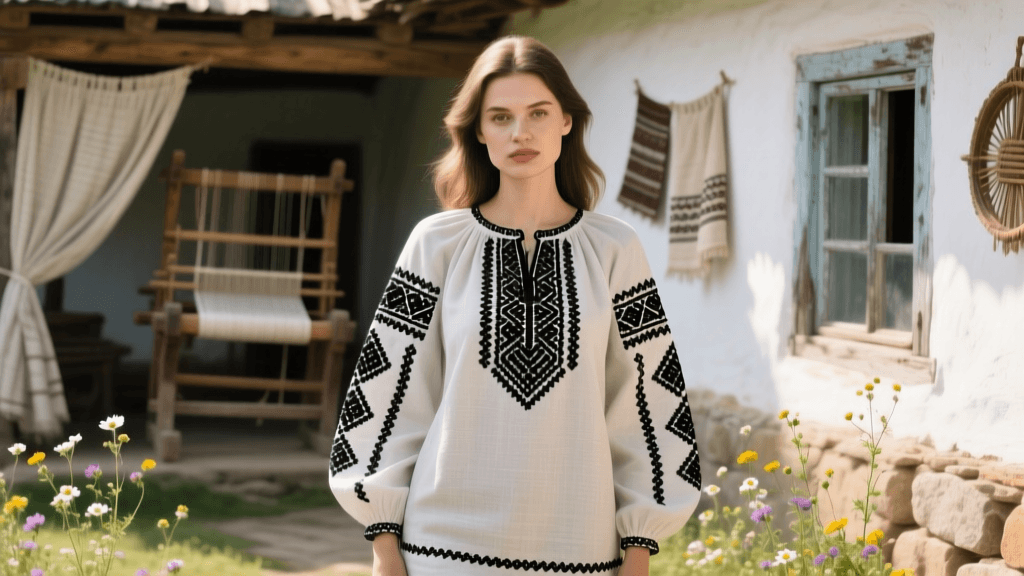
The defining feature of the authentic Romanian Ie is the altăiță—the dense, rectangular block of embroidery located on the shoulder. According to the UNESCO Intangible Cultural Heritage list, the traditional techniques of making the blouse with embroidery on the shoulder represent a vital link to ancestral knowledge, cosmology, and community identity. In 2026, the appreciation for this specific garment has surged, driven by a desire for slow fashion and artisanal authenticity. Designers and stylists are no longer treating the Ie as a costume piece; instead, they are leveraging its architectural silhouette and rich textures to elevate modern ensembles.
Anatomy of the Ie: Decoding the Embroidery
To style the Ie effectively in a contemporary context, one must first understand its structure. The blouse is not merely decorative; it is a wearable manuscript. Curators at the National Museum of the Romanian Peasant emphasize that every stitch serves a protective or symbolic purpose.
- Altăiță (The Shoulder): The most complex and dense part of the embroidery. It historically denoted the wearer's region, social status, and age. In 2026 styling, the altăiță acts as a natural statement piece, drawing the eye upward and providing a structured shoulder line that pairs beautifully with modern tailoring.
- Râuri (The Rivers): Vertical bands of embroidery that flow down the sleeves from the altăiță to the cuff. They symbolize the flow of water and life, creating a striking visual elongation of the arm.
- Ciupag (The Neckline): A delicately gathered and embroidered collar that frames the face. Modern interpretations often feature subtle metallic threads that catch the light in evening settings.
- Încreț (The Gathering): The intricate smocking technique used to gather the fabric at the neck and cuffs, providing the blouse with its signature voluminous, romantic silhouette.
Regional Color Palettes: A 2026 Styling Guide
While the classic white-on-white or red-and-black motifs remain iconic, the 2026 fashion scene embraces the diverse regional palettes of the Ie, aligning perfectly with this year's trend of 'grounded earth tones' and 'muted botanicals'.
1. Argeș and Muscel: The Monochromatic Elegance
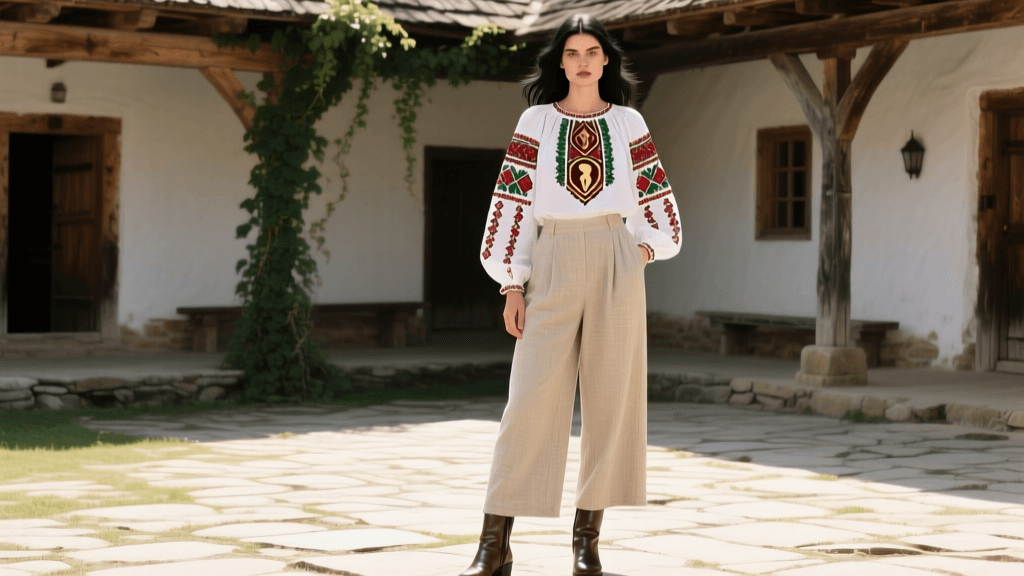
Originating from the southern Carpathians, blouses from Argeș are famous for their black and red geometric patterns on pristine white cotton or hemp. 2026 Styling Tip: Pair an Argeș Ie with high-waisted, wide-leg charcoal wool trousers and pointed-toe leather ankle boots. The stark contrast of the black embroidery against the white fabric provides a graphic, almost avant-garde edge suitable for a modern creative office.
2. Vrancea: Earthy and Botanical
The Vrancea region favors earthy tones—deep greens, ochres, and muted browns—often featuring stylized floral and vine motifs. 2026 Styling Tip: Lean into the 'quiet luxury' aesthetic by tucking a Vrancea Ie into a slip skirt made of heavy, bias-cut silk in a matching olive or bronze tone. Add minimalist gold hoop earrings and a structured leather tote for an elevated weekend brunch look.
3. Oltenești: Geometric Precision
Oltenia blouses are characterized by tight, rhythmic geometric patterns, often utilizing indigo and deep crimson. 2026 Styling Tip: Contrast the traditional volume of the sleeves with sleek, modern denim. A pair of rigid, dark-wash straight-leg jeans and a tailored blazer thrown over the shoulders creates a masterful juxtaposition of rural heritage and urban sophistication.
Contemporary Wardrobe Integration: Three 2026 Looks
The key to wearing folk dress in 2026 without appearing costumey is the principle of juxtaposition. The Ie is inherently romantic, voluminous, and heavily textured. To modernize it, you must anchor it with structured, minimalist, or utilitarian pieces.
Look 1: The Executive Heritage
Replace the standard silk button-down with a finely woven, lightweight cotton Ie featuring a subtle, tonal white-on-white altăiță. Tuck it into a sharp, pleated midi skirt in navy or black. The smocked neckline provides a sophisticated alternative to a traditional collar, while the structured skirt balances the blouse's volume. Finish with architectural leather loafers.
Look 2: The Artisan Weekend
Layer a slightly oversized, hemp-blend Ie over a fitted, ribbed turtleneck in a contrasting color (such as deep burgundy under a black-embroidered white blouse). Pair with raw-hem denim cutoffs or tailored cargo trousers. This look embraces the 'craftcore' trend of 2026, highlighting the tactile nature of the hand-stitched threads.
Look 3: Evening Gala Elegance
For formal events, seek out an Ie crafted from silk-blend fabrics with metallic silver or gold thread integrated into the râuri. Wear it with high-waisted, flowing palazzo pants and delicate strappy heels. Allow the sleeves to drape naturally; the movement of the embroidered fabric mimics high-end contemporary evening wear.
Sourcing Authentic Pieces: The 2026 Market Landscape
As demand for the Ie has grown, so has the market for mass-produced replicas. In 2026, conscious consumers are prioritizing ethical sourcing, directly supporting artisan cooperatives in Romania and Moldova. The Romanian Cultural Institute has been instrumental in promoting authentic artisans globally, helping buyers distinguish between genuine heritage pieces and factory-made imitations.
Below is a comparative guide to help you navigate the 2026 market:
| Feature | Authentic Artisan Ie (2026) | Fast-Fashion 'Boho' Replica |
|---|---|---|
| Material | Hand-woven cotton, hemp, or silk; natural dyes | Synthetic blends, mass-produced chemically dyed cotton |
| Embroidery | Hand-stitched (requires 40-100+ hours per blouse) | Machine-embroidered, uniform and flat |
| Price Range | €300 - €700+ | €40 - €90 |
| Cultural Accuracy | Region-specific motifs, correct altăiță proportions | Randomized, mixed patterns lacking regional logic |
| Longevity | Heirloom quality; increases in value over time | Degrades quickly; threads fray after few washes |
When purchasing online in 2026, look for sellers who provide the name of the artisan, the specific village of origin, and photographic proof of the 'wrong side' of the embroidery. Authentic hand-stitched Ie blouses will show a nearly identical pattern on the reverse side, a hallmark of the traditional point counting technique that machines cannot replicate.
Care and Maintenance for Heritage Textiles
Investing in an authentic Ie requires proper maintenance to preserve the integrity of the hand-spun fibers and natural dyes. The 2026 standard for textile care heavily favors eco-friendly, pH-neutral methods.
- Washing: Never machine wash an authentic Ie. Hand wash in cool water (below 30°C) using a specialized delicate detergent or traditional olive-oil-based soap. Avoid wringing the fabric; instead, press the water out gently between two clean, dry towels.
- Drying: Lay the blouse flat on a drying rack away from direct sunlight, which can fade natural dyes and yellow the white cotton or hemp over time.
- Ironing: Iron the blouse while it is still slightly damp. Always iron on the reverse side using a medium heat setting and a pressing cloth to protect the raised embroidery threads from being crushed.
- Storage: Store the Ie flat or rolled in acid-free tissue paper inside a cedar-lined drawer. Avoid wire hangers, as the weight of the heavy embroidery can distort the delicate hand-woven fabric at the shoulders over time.
Conclusion: A Living Tradition
The Romanian Ie is a testament to the enduring power of European folk dress. In 2026, it transcends its historical roots to offer a sustainable, deeply personal alternative to homogenized global fashion. By understanding its anatomy, respecting its regional variations, and styling it with contemporary intentionality, you do more than wear a beautiful garment—you participate in the living continuation of an ancient, protected cultural heritage.