Borshchiv Black Vyshyvanka Guide 2026: Sourcing & Styling Tips
The Striking Allure of Borshchiv Blackwork
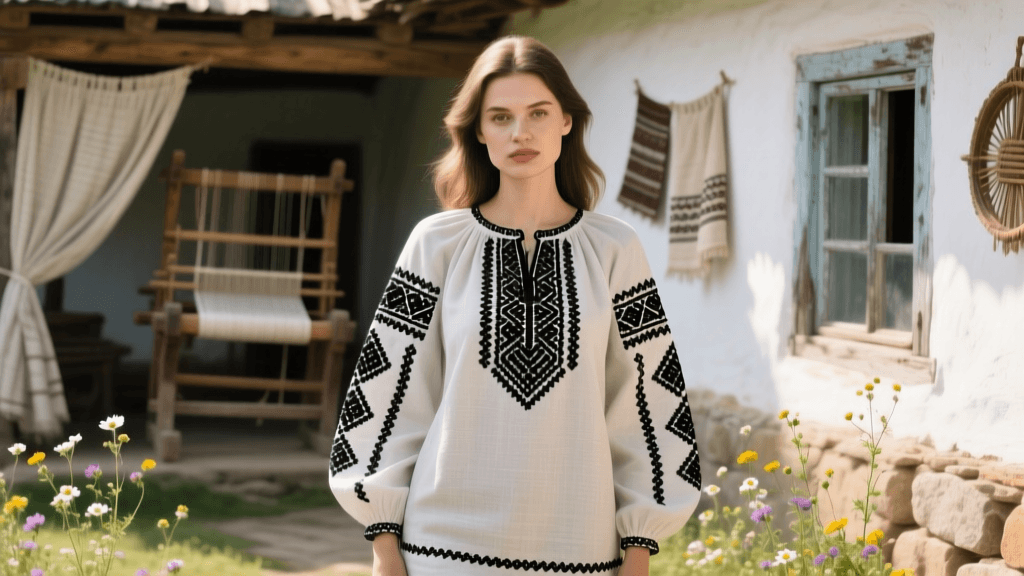
When discussing the rich tapestry of Eastern European folk dress, few garments command immediate visual reverence quite like the Borshchiv vyshyvanka. Originating from the Ternopil region of western Ukraine, this traditional blouse is globally renowned for its dense, intricate black embroidery set against stark white or unbleached linen. As we navigate the slow fashion and heritage revival movements of 2026, the Borshchiv blackwork blouse has transcended its status as a mere regional artifact. It has become a cornerstone of contemporary sustainable wardrobes, celebrated by textile collectors, fashion historians, and modern consumers alike for its graphic boldness and profound cultural resonance.
At The Garment Atlas, we recognize that integrating historical garments into a modern 2026 lifestyle requires more than just an appreciation for aesthetics; it demands an understanding of construction, regional variations, and ethical sourcing. This comprehensive guide will walk you through the history, techniques, and current market landscape of the Borshchiv vyshyvanka, ensuring your next acquisition is both authentic and beautifully styled.
Historical Roots and the 'Mourning' Myth
A pervasive legend surrounding the Borshchiv region's black embroidery suggests that the dark thread was originally adopted as a symbol of mourning. According to local folklore, after a devastating series of historical conflicts and raids in the 18th and 19th centuries, the women of the region embroidered their garments in black to mourn the loss of their husbands and sons. While this narrative adds a layer of romantic tragedy to the garment, textile historians and curators at the Ivan Honchar National Centre of Folk Culture note that the reality is more nuanced.
Black thread, historically derived from organic dyes like alder bark, oak galls, and iron mordants, was actually a marker of wealth and regional identity. The process of achieving a colorfast, deep black dye that would not bleed into the pristine white linen was incredibly labor-intensive and expensive. Therefore, a heavily black-embroidered vyshyvanka was a testament to the wearer's prosperity and the artisan's supreme mastery of natural dyeing and counted-thread embroidery. Today, the preservation of these natural dyeing techniques is a focal point for Ukrainian artisan cooperatives, aligning perfectly with the 2026 global demand for eco-friendly, botanically dyed textiles.
Decoding the Motifs: Geometry and Nature
The visual language of the Borshchiv vyshyvanka is distinctly geometric, yet it is deeply rooted in the agrarian cycles and natural world of the Podillia and Ternopil landscapes. Unlike the lush, sprawling floral patterns found in central Ukrainian embroidery, Borshchiv blackwork relies on tight, mathematical precision.
- The Rhombus (Diamond): The most ubiquitous motif, representing a sown field, fertility, and the earth. Often, a small dot is placed in the center of the rhombus, symbolizing a sprouting seed.
- The Eight-Pointed Star (Rozha): A complex geometric rosette that serves as a solar symbol, offering protection against malevolent spirits and bringing light to the wearer.
- The Tree of Life: Stylized and highly geometric in the Borshchiv tradition, this motif connects the underworld (roots), the earthly realm (trunk), and the heavens (branches), often flanked by protective bird motifs.
- Hops and Periwinkle: While floral motifs are rare, stylized vines of hops (symbolizing youth and vitality) and periwinkle (symbolizing eternal life and marriage) are occasionally woven into the dense black borders of the sleeves.
Core Embroidery Techniques
To truly appreciate a Borshchiv piece, one must understand the stitches that create its signature textured, almost three-dimensional appearance. The embroidery is not merely applied to the surface; it is integrated into the very weave of the fabric.
Nyzynka (Surface Darning)
This is the hallmark of authentic Borshchiv blackwork. Nyzynka is a counted-thread technique executed on the reverse side of the fabric, creating a dense, raised pattern on the front. Because the artisan must calculate the pattern backward while working on the underside, it requires immense mathematical skill. The resulting texture is thick, durable, and visually striking, catching the light differently than flat cross-stitch.
Zavolikannia (Running Stitch)
Often used to create horizontal bands or framing borders, zavolikannia involves a running stitch that mimics the woven structure of the linen itself. It creates a ribbed, rhythmic effect that complements the dense blocks of nyzynka.
2026 Sourcing Guide: Where to Buy Authentic Pieces
The market for Eastern European folk dress has matured significantly. In 2026, consumers are moving away from mass-produced, synthetic festival wear and seeking out heritage pieces that support local artisans and utilize sustainable materials. When sourcing a Borshchiv vyshyvanka, you will generally encounter three market tiers.
| Market Tier | Price Range (USD) | Material & Thread | Turnaround Time | Best For |
|---|---|---|---|---|
| Mass-Market / Factory | $65 - $140 | Blended linen/cotton; machine-made viscose thread | Immediate (In-stock) | Budget-conscious buyers; casual wear |
| Boutique / Hand-Finished | $220 - $450 | 100% European flax linen; mercerized cotton thread | 2 - 4 Weeks | Heritage enthusiasts; slow fashion wardrobes |
| Master Artisan (Bespoke) | $600 - $1,500+ | Hand-loomed hemp/linen; naturally dyed silk or wool thread | 3 - 8 Months | Textile collectors; museum-grade investments |
For those seeking authentic boutique pieces, platforms like Etnodim and Folkmotif have streamlined international shipping in 2026, offering verified artisan-made garments with detailed provenance cards. For bespoke commissions, connecting directly with cooperatives in the Ternopil oblast via the Ukrainian Institute's cultural directories ensures your investment directly supports the preservation of intangible heritage, a concept heavily championed by UNESCO's Intangible Cultural Heritage initiatives.
How to Authenticate Hand-Embroidered Blackwork
As the popularity of the vyshyvanka has grown, so has the sophistication of machine embroidery. However, true nyzynka is incredibly difficult for automated multi-head embroidery machines to replicate perfectly. Here is how you can authenticate a piece in 2026:
- The Reverse Side Test: Turn the sleeve or collar inside out. Machine embroidery will show a chaotic web of bobbin thread and jump stitches. Authentic nyzynka will look almost as neat on the back as it does on the front, with deliberate, parallel horizontal floats.
- Thread Texture: Run your fingers over the blackwork. Hand-spun or naturally dyed artisan threads have slight irregularities and a matte, organic finish. Machine thread is often overly glossy and uniformly smooth.
- Pattern Interruptions: Human artisans occasionally make micro-adjustments in complex geometric patterns to fit the weave count of hand-loomed linen. A pattern that is mathematically flawless to the single millimeter across a massive sleeve panel is often a hallmark of digital machine programming.
Styling the Borshchiv Blouse in 2026
The graphic nature of black-on-white embroidery makes the Borshchiv vyshyvanka surprisingly versatile for contemporary styling. The key to wearing folk dress in a modern context is contrast—pairing the voluminous, historical silhouette of the blouse with sharp, minimalist, and structured modern pieces.
Spring & Summer Styling
For warmer months, opt for a vyshyvanka made from lightweight, slub linen with a relaxed, boxy cut. Pair it with high-waisted, wide-leg linen trousers in charcoal or navy. Tuck the blouse in slightly at the front to define the waist, and accessorize with modern leather slides and a structured woven tote. The black embroidery will act as a neutral anchor, allowing you to wear bold, contemporary jewelry, such as chunky silver cuffs or matte black ceramic earrings.
Autumn & Winter Layering
In cooler weather, the dense blackwork shines when layered under structured outerwear. Wear a heavier hemp-cotton vyshyvanka beneath a sharply tailored, oversized blazer or a sleek leather trench coat. Allow the heavily embroidered cuffs and the collar to peek out. Pair with dark denim or tailored wool trousers and Chelsea boots. The juxtaposition of the traditional, intricate handwork against the sleek, industrial lines of modern outerwear creates a striking, fashion-forward silhouette that honors the garment's heritage without looking costumey.
Garment Care: Preserving Black Thread on Linen
Investing in an authentic Borshchiv vyshyvanka requires a commitment to proper textile care. Black thread, especially if dyed using traditional organic methods, is susceptible to UV fading and friction wear.
- Washing: Never machine wash a hand-embroidered piece. Hand wash in cool water (below 30°C / 86°F) using a pH-neutral, specialized textile detergent. Avoid soaking for prolonged periods to prevent any potential dye migration.
- Drying: Never wring or twist the linen, as this can distort the counted-thread geometry and break the fibers. Roll the garment in a clean, dry towel to press out excess water, then lay it flat on a drying rack away from direct sunlight.
- Ironing: Linen should be ironed while slightly damp. Always iron on the reverse side of the embroidery, placing a thick, clean cotton pressing cloth between the iron and the fabric. This prevents the iron from crushing the raised nyzynka stitches and protects the black thread from heat-induced shine or scorching.
- Storage: Store the garment flat or rolled in acid-free tissue paper inside a breathable cotton garment bag. Avoid wire hangers, which can distort the shoulder seams and stretch the heavy embroidered sleeves over time.
'The Borshchiv vyshyvanka is not merely a garment; it is a woven archive of resilience, mathematics, and regional pride. When we wear it today, we are participating in a living dialogue between the artisans of the past and the conscious consumers of the future.' — Textile Conservation Department, Ivan Honchar Museum.
By understanding the profound history, mastering the authentication process, and styling these pieces with modern intentionality, you ensure that the legacy of Borshchiv blackwork continues to thrive in the global wardrobe of 2026 and beyond.