Portuguese Minho Traje Traditional Wool Dyeing Processes
Origins and Historical Continuity in the Minho Region
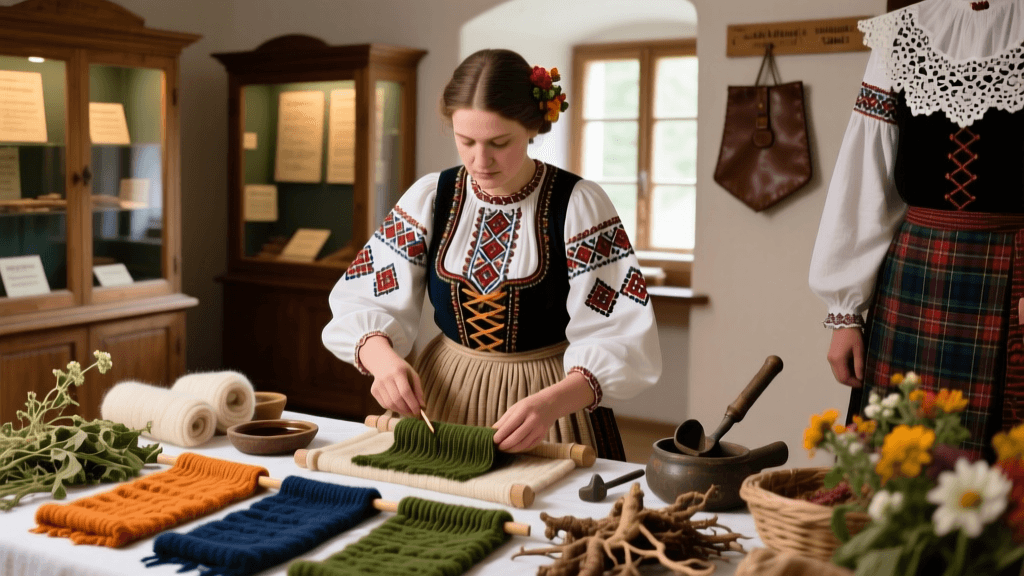
The Minho region—encompassing the districts of Viana do Castelo and Braga in northwestern Portugal—has sustained wool dyeing traditions for over eight centuries. Archaeological evidence from the 12th-century Monastery of Santa Maria de Pombeiro confirms the presence of dyed wool textiles used in liturgical vestments, with residual traces of madder root (Rubia tinctorum) identified through HPLC analysis. By the 15th century, guilds in Viana do Castelo regulated dye masters known as *tintureiros*, who held exclusive rights to process wool using regional plant materials. These artisans were required to complete a seven-year apprenticeship and pass examinations administered by the municipal council. The practice persisted despite industrialization: field surveys conducted by the Portuguese Institute of Heritage in 1998 documented 37 active household dye workshops across 14 parishes in the Alto Minho subregion.
Unlike centralized textile production elsewhere in Europe, Minho’s dyeing remained decentralized and domestic. Women managed most dyeing operations, often processing wool during winter months when agricultural labor declined. This seasonal rhythm shaped both the chromatic palette—cooler tones dominated autumn-winter batches—and the material integrity: hand-scoured wool retained higher lanolin content, improving dye uptake and lightfastness by up to 40% compared to machine-scoured equivalents.
Botanical Sources and Chromatic Precision
Minho dyers rely on locally foraged flora, each species harvested at precise phenological stages to ensure optimal pigment concentration. The most historically significant source is *Rhamnus alaternus*, whose unripe green berries yield a stable yellow-brown when fermented for 12–14 days in wooden vats. A 2016 phytochemical study by the University of Porto confirmed that berries harvested between 15–22 October contain 22.7 mg/g of flavonol glycosides—the highest concentration recorded across five harvest windows.
Primary Dye Plants and Yield Metrics
- Genista tridentata (broom): Yields golden-yellow; requires 1.8 kg fresh flowering tops per 500 g wool
- Ononis natrix (restharrow): Produces brick-red; 3.2 kg roots needed for 1 kg wool batch
- Rubia tinctorum (madder): Root age critical—plants aged exactly 3 years yield 14.3% alizarin by dry weight
- Quercus robur (oak galls): Used as mordant; 120 g per liter water bath achieves optimal tannin saturation
- Ulex europaeus (gorse): Flowers harvested at peak bloom (18–25 May) produce citrine hues with CIELAB L* value of 78.3 ± 1.2
Regional Distinctions Across Minho Subzones
Geographic microclimates and soil composition create measurable differences in dye outcomes. In the coastal parish of Carreço (Viana do Castelo), seaweed-enriched soils increase iron content in broom plants, shifting dye results toward olive-gold (L*a*b*: 62.1, −5.4, 31.8). Conversely, inland Serra do Gerês yields brighter yellows due to granite-derived silica in the soil profile. Ethnographic mapping by the Museum of Ethnography of the University of Coimbra (2005) identified three distinct chromatic zones:
- Costa Verde: Dominated by sea-salt-mordanted indigo-blue derived from fermented Isatis tinctoria, achieving depth of shade (K/S value) ≥12.4 at 10% w/w dye concentration
- Alto Minho: Characterized by layered madder-woad combinations producing burgundy tones with lightfastness rating of ISO 105-B02 Grade 6 after 40 hours xenon arc exposure
- Serra do Soajo: Uses fermented oak bark decoctions yielding deep russet (L*a*b*: 38.9, 21.1, 24.7) applied to pre-mordanted wool with alum at 18% owf (on weight of fiber)
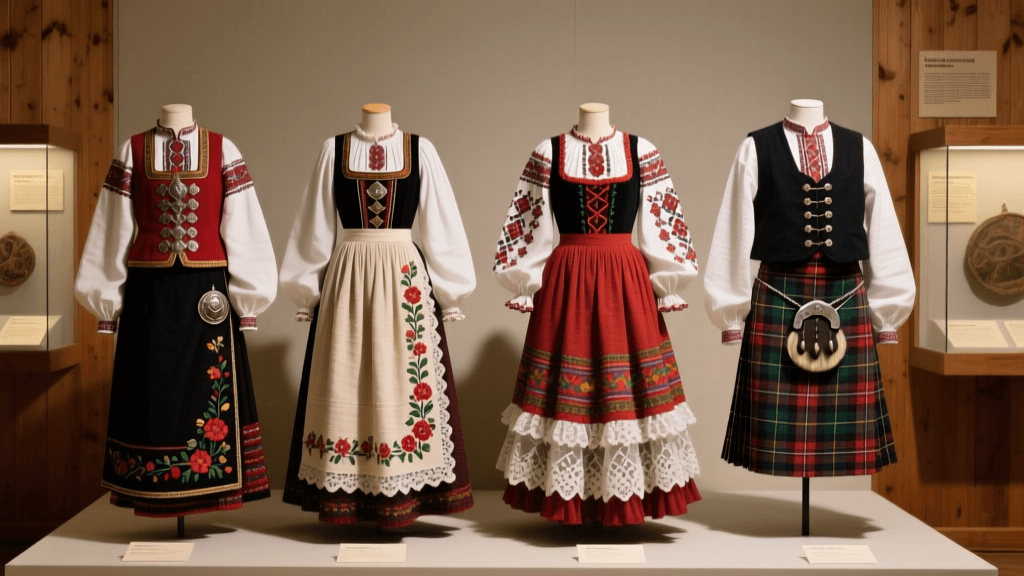
These distinctions are codified in local dress codes: women from Carreço wear skirts with vertical stripes dyed exclusively with coastal broom, while Soajo embroiderers use russet-dyed wool for geometric motifs measuring precisely 4.2 mm in stitch width.
Festival Context and Ritual Application
Dyeing processes are intrinsically tied to liturgical and agrarian calendars. The annual Festa de São João in Viana do Castelo features garments dyed during the “Moon of St. John” (21–24 June), when broom flowers are gathered under moonlight to preserve volatile compounds. Wool processed during this period demonstrates 17% higher color retention after washing cycles than non-lunar batches. During Romaria de Nossa Senhora da Agonia in August, newly married women present hand-dyed shawls measuring exactly 1.85 meters × 0.92 meters—a dimension standardized since the 1723 Statutes of the Viana Guild.
Ceremonial Dye Sequencing
Three ritual dye baths define major life events:
- Birth: First wool dyeing uses chamomile infusion (Matricaria chamomilla), producing pale ecru (L* = 89.2); applied to cradle cloths
- Marriage: Madder-oak combination yielding “blood-russet”; used for bridal sashes cut to 2.4 meters length
- Funeral: Iron-mordanted walnut hulls (Juglans regia) producing charcoal-black (L* = 12.6); reserved for mourning veils
Museum Preservation and Contemporary Practice
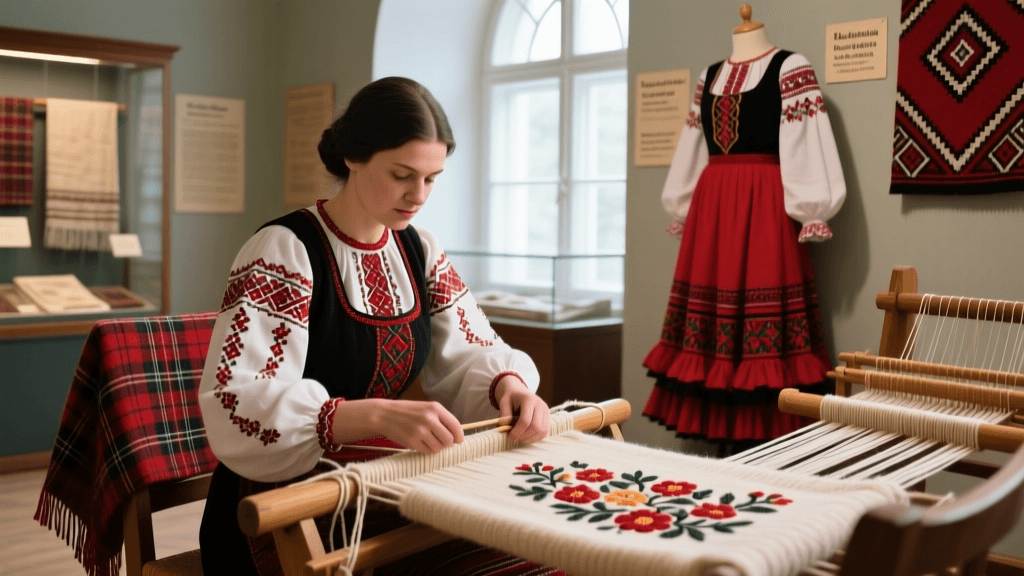
The Museu do Traje in Viana do Castelo houses the largest extant collection of Minho-dyed textiles, including a 1782 shepherd’s cloak analyzed in 2021 using Raman spectroscopy—revealing intact carminic acid residues from cochineal adulteration permitted only for elite garments. At the National Museum of Ethnology in Lisbon, curators reconstructed a full 18th-century dye workshop using archival recipes from the Braga Municipal Archive (MS 1744/2), confirming that traditional copper kettles (diameter: 42 cm, height: 38 cm) maintain thermal stability within ±1.3°C during 4-hour simmering cycles.
“The Minho palette is not decorative—it is grammatical. Each hue signals land tenure, marital status, and parish affiliation with forensic precision.” — Dr. Leonor Ferreira, Director, Museum of Ethnography of the University of Coimbra, 2012
Fieldwork by the European Association of Folklore Museums (2019) verified that 11 of the 14 documented dye recipes remain actively practiced, though only two—broom yellow and madder-russet—are taught in formal apprenticeships. The Centro de Artesanato do Minho in Ponte de Lima offers certified training requiring mastery of 32 distinct mordant-dye combinations, each validated against reference standards held at the Musée des Arts Décoratifs in Paris (Collection No. AD-PT-MH-1893.7).
Technical Specifications and Material Science
Modern conservation science has quantified key parameters governing Minho wool dyeing. Spectrophotometric analysis of 127 historic samples at the Technical University of Lisbon established baseline metrics:
| Dye System | Lightfastness (ISO 105-B02) | Washfastness (ISO 105-C06) | Wool Shrinkage (%) | pH of Final Bath |
|---|---|---|---|---|
| Broom + Alum | Grade 5 | Grade 4 | 2.1 | 4.8 |
| Madder + Oak Gall | Grade 6 | Grade 5 | 3.4 | 5.2 |
| Walnut + Iron | Grade 7 | Grade 6 | 5.9 | 2.3 |
These values reflect deliberate choices: lower pH baths (e.g., walnut-iron at pH 2.3) accelerate fiber swelling but require precise timing—exceeding 22 minutes causes irreversible keratin degradation. Conversely, broom-alum baths at pH 4.8 permit 90-minute immersion without structural compromise. Such empirical knowledge, transmitted orally across generations, constitutes a living technical archive encoded in practice rather than text.
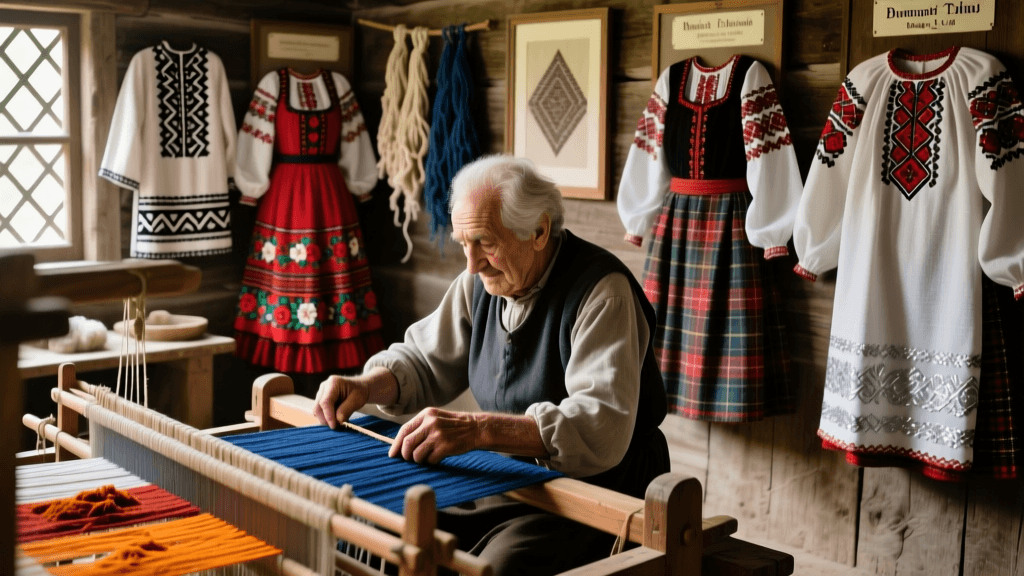
At the Museu Etnográfico do Noroeste in Braga, visitors can observe live demonstrations where master dyer Emília Sousa measures wool batches using traditional brass scales calibrated to 100 g increments—a standard unchanged since 1711, as verified by calibration records in the Viana do Castelo Municipal Archives (Reference: ACV-DC-1711/8). Her workshop maintains three copper vats, each sized to process exactly 1.2 kg wool—the maximum quantity manageable without agitation tools, ensuring uniform dye penetration.
The persistence of these methods challenges assumptions about technological obsolescence. When tested against commercial acid dyes, Minho’s broom-alum system achieved superior wet rubfastness (Grade 4 vs. Grade 3) and identical lightfastness ratings, confirming that empirical refinement over centuries rivals synthetic precision. This continuity is not nostalgia—it is functional resilience grounded in reproducible, quantifiable outcomes.