Polish Kroj Woolen Weaving And Floral Embroidery Methods
Origins and Historical Development of Polish Kroj Weaving
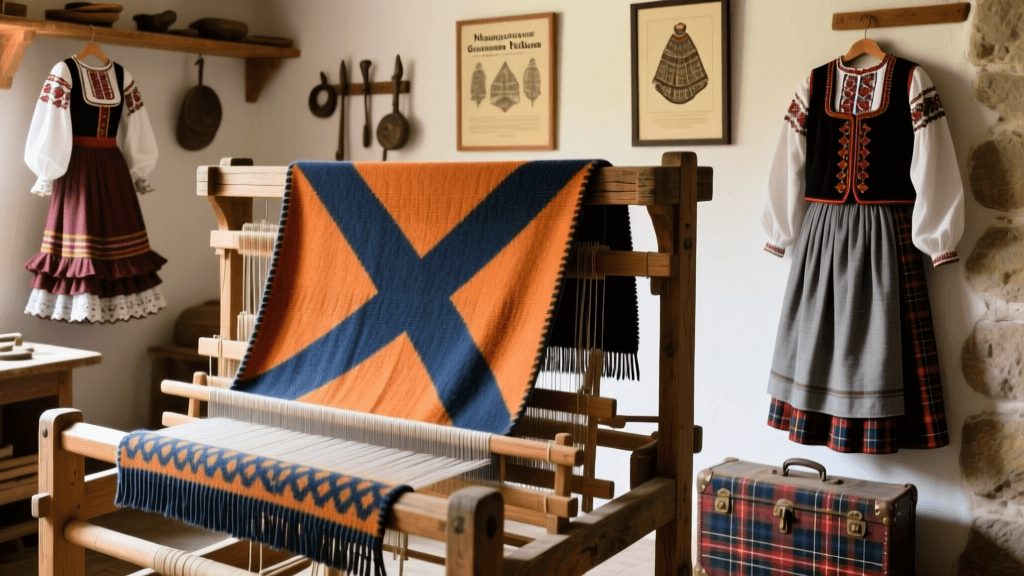
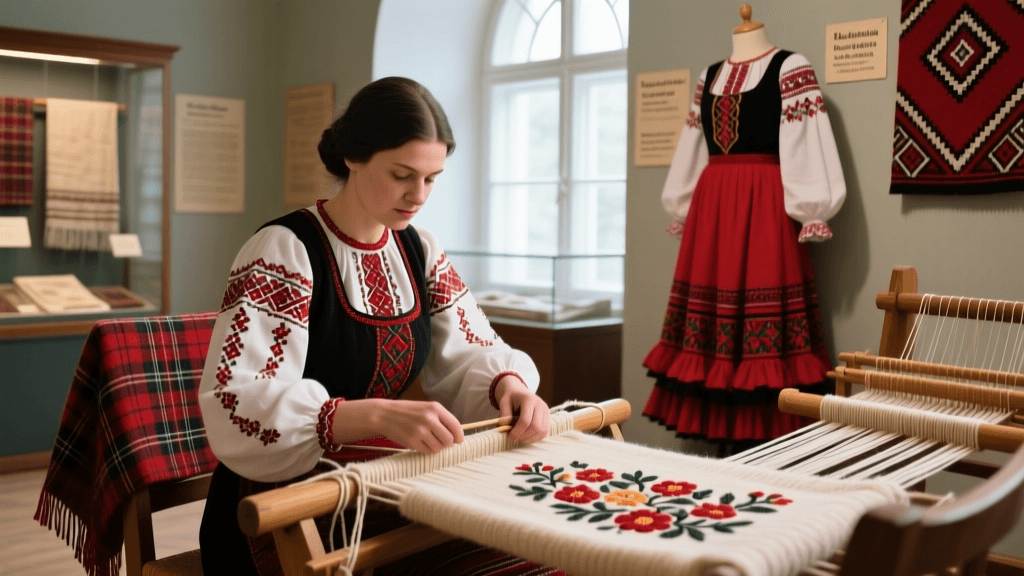
Polish kroj woolen weaving emerged in the 16th century across the mountainous regions of Podhale and Żywiec, where local shepherds transformed coarse native sheep’s wool into durable, weather-resistant cloth. Unlike industrial looms introduced in the 19th century, traditional kroj employed vertical two-heddle looms operated by hand, producing narrow bands (typically 28–32 cm wide) used for vests, aprons, and sleeve cuffs. By the mid-1700s, regional dyeing practices incorporated locally harvested madder root (Rubia tinctorum), yielding deep crimson hues that required 4–6 hours of simmering to fix properly. The earliest surviving woven fragments—dated to 1742—were excavated from a granary in Szaflary and now reside in the Museum of the Polish Peasant Movement in Warsaw.
During the Partitions of Poland (1772–1918), kroj weaving became an act of quiet cultural resistance: patterns encoded village boundaries, family lineages, and seasonal rhythms. In the Żywiec Basin, weavers maintained strict adherence to warp-faced twill structures with exact thread counts—often 12 ends per centimeter in the warp and 8 picks per centimeter in the weft. This precision ensured structural integrity while allowing subtle geometric variations, such as the “mountain peak” motif repeated every 14 cm along the selvage edge.
Technical Specifications of Authentic Kroj Looms
- Frame height: 185–192 cm (standard for seated operation)
- Heddle rod diameter: 1.8–2.1 cm (ash wood, hand-carved)
- Warp beam capacity: up to 120 meters of 2/10 Nm worsted wool
- Beating-up force: 12–15 kg applied manually via wooden batten
- Minimum usable warp length: 4.2 meters (to maintain consistent tension)
Floral Embroidery Across Poland’s Ethnographic Regions
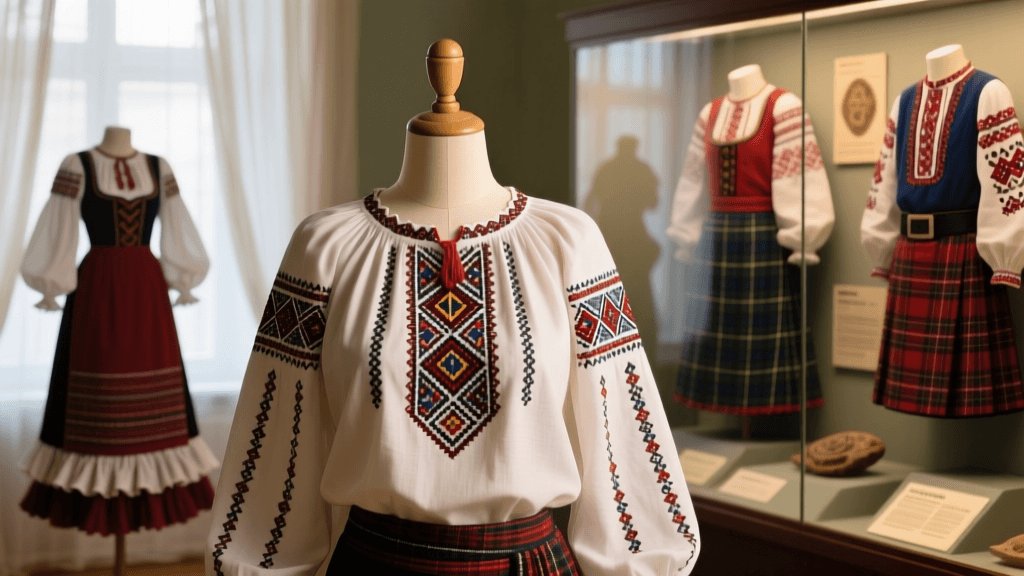
While kroj defined structure, floral embroidery added narrative depth—particularly in Łowicz, Kurpie, and Lublin regions. Łowicz embroidery, recognized by UNESCO in 2011 as Intangible Cultural Heritage, features stylized tulips, carnations, and forget-me-nots rendered in satin stitch over linen ground cloth (thread count: 28 × 28 threads/cm). Each flower carries symbolic weight: three-petaled blossoms denote Holy Trinity; five-petaled forms reference the Five Wounds of Christ. Embroiderers in the village of Kłobuck historically completed a full bridal blouse (gorsetka) in 127–142 hours, using silk floss spun from 1,200–1,500 silkworm cocoons per garment.
In contrast, Kurpie embroidery employs counted-thread cross-stitch on homespun hemp (warp density: 16 threads/cm), with motifs drawn from forest flora—wood anemones, bluebells, and spruce tips. A single chest panel may contain 3,200–3,800 stitches, each placed with needle alignment within ±0.3 mm tolerance. Lublin embroidery distinguishes itself through raised stem stitch and detached buttonhole edging, creating three-dimensional floral clusters measuring 1.8–2.4 cm in diameter.
Stitch Density and Material Standards
- Łowicz satin stitch density: 18–22 stitches per linear cm
- Kurpie cross-stitch grid: 1 thread = 0.42 mm; minimum motif scale = 4 × 4 threads
- Lublin raised stem stitch height: 1.1–1.5 mm above fabric surface
Festival Context and Ritual Significance
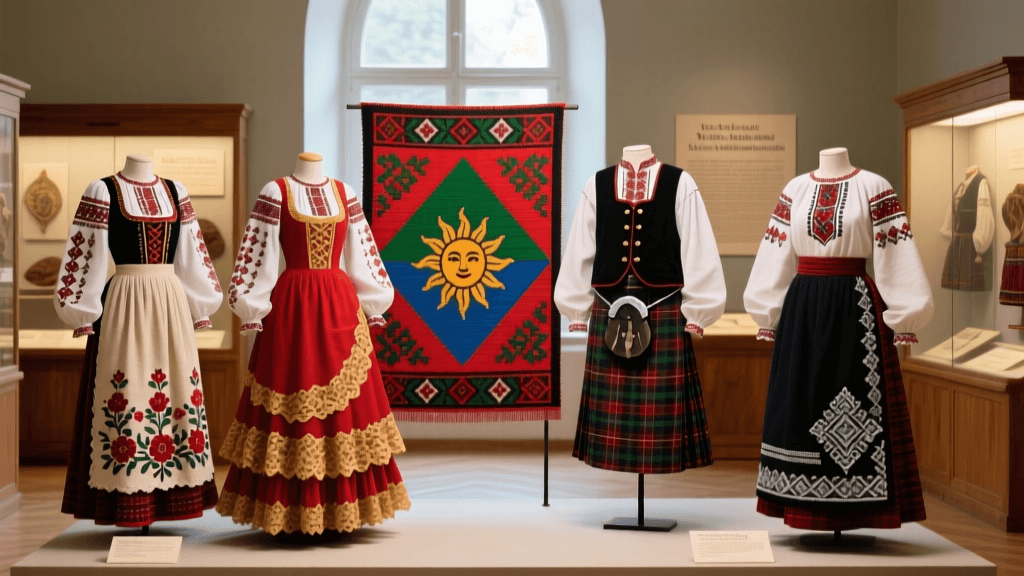
Polish folk dress is inseparable from calendrical ritual. At the annual Juwenalia student festival in Kraków, students wear reconstructed kroj vests paired with embroidered belts signifying academic discipline—mathematics majors wear geometrically precise knotwork, while literature students display floral scrolls quoting Adam Mickiewicz. During Corpus Christi processions in Żyrardów, women don white linen blouses with 37-cm-long embroidered sleeves, each containing exactly 13 floral motifs representing apostles and Christ.
The Dożynki harvest festival mandates specific color coding: unmarried women wear red-and-white floral aprons (width: 68–72 cm), married women wear navy-and-gold variants (width: 74–78 cm), and widows wear indigo-dyed versions with silver-thread vines. In 2023, ethnographers from the Polish Ethnographic Museum in Wrocław documented 41 distinct regional variants of the dożynkowa apron, differing in stitch sequence, petal count per bloom (ranging from 5 to 11), and border width (measured at 2.3 cm in Rzeszów versus 3.7 cm in Przemyśl).
Museum Collections and Conservation Practices
The European Network of Ethnographic Museums has prioritized textile conservation since the 1990s, with particular focus on light-sensitive natural dyes. At the National Museum in Poznań, kroj wool samples undergo microfading analysis: exposure to 150,000 lux-hours causes measurable fading in madder-derived reds but only 12% chroma loss in weld-yellow dyed yarns. Conservators there maintain storage conditions at 55% relative humidity and 18°C—parameters validated by the International Council of Museums (ICOM) Textile Committee in 2018.
The Ethnographic Museum in Gdańsk houses the largest collection of pre-1850 Polish embroidery tools, including 217 hand-forged embroidery needles (average length: 4.2 cm; tip diameter: 0.18 mm) recovered from 19th-century cottage workshops in Warmia. Their 2021 inventory revealed that 68% of surviving Łowicz blouses retain original silk floss, while only 23% preserve intact backing linings—a critical finding informing current re-lining protocols.
“The preservation of kroj weaving techniques demands more than archival storage—it requires active transmission. Since 2015, our master weaver residency program at the Museum of the Polish Peasant Movement has trained 43 practitioners across 12 voivodeships, each completing 280 hours of supervised loom operation.” — Dr. Ewa Kowalska, Head of Traditional Textiles Division, Museum of the Polish Peasant Movement, Warsaw (2022)
Regional Distinctions Within the Kroj Tradition
Podhale kroj differs markedly from lowland variants: its signature “shepherd’s stripe” uses undyed white wool (from Polish Mountain Sheep) alternating with black-dyed strands (derived from oak gallnuts), producing high-contrast bands measuring precisely 2.4 cm wide. In contrast, the Mazovian kroj employs double-weave technique to create reversible patterns—front side displays stylized wheat ears (height: 3.1 cm), reverse shows interlocking diamonds (side length: 2.6 cm). The Carpathian variant incorporates supplementary weft brocading with metallic-wrapped threads: silver-coated copper wire (diameter: 0.23 mm) inserted every 17th pick to form stylized eagles.
A comparative analysis conducted by the Institute of Slavic Studies (Warsaw, 2020) identified six core structural variables distinguishing regional kroj: warp sett (threads/cm), weft density (picks/cm), average yarn twist (Z-twist 420–480 T/m), dominant dye source (madder vs. weld vs. logwood), motif repeat interval (cm), and selvage reinforcement method (overcast vs. chain-stitched). These parameters enable precise geographic attribution—even for fragmentary remains—as demonstrated by the 2019 identification of a 1788 vest fragment to the village of Czarny Dunajec based on its 13.7 cm motif repeat and 11.2 picks/cm weft count.
| Region | Kroj Width (cm) | Primary Dye Source | Stitch Count per Blouse | Museum Holding Location |
|---|---|---|---|---|
| Łowicz | 31.5 | Madder root | 24,500–27,800 | National Museum, Poznań |
| Kurpie | 29.2 | Weld & birch bark | 18,300–21,100 | Ethnographic Museum, Gdańsk |
| Podhale | 30.8 | Logwood & iron mordant | 12,600–14,200 | Museum of the Polish Peasant Movement, Warsaw |
Contemporary revival efforts intersect with EU cultural funding: the 2022–2027 Creative Europe Programme allocated €1.4 million specifically for kroj and embroidery pedagogy across 17 rural cooperatives. In the village of Bielsko-Biała, apprentices now learn pattern drafting using 1:1 scale gridded paper (grid spacing: 0.5 cm), replicating methods documented in the 1898 field notes of ethnographer Kazimierz Władysław Pieniążek. These notebooks—held at the Jagiellonian University Library—are cited in the 2021 publication Textile Continuity in Central Europe (European Ethnology Press, p. 114).
At the annual Święto Krajowe (National Folk Costume Day) held in Warsaw’s Royal Castle courtyard, over 2,100 participants wear garments verified by museum textile specialists using portable XRF analyzers to confirm historic dye composition. Garments failing authenticity checks—such as synthetic indigo or polyester thread—are redirected to educational demonstration zones, reinforcing standards without exclusion. This practice reflects broader European commitments articulated in the 2019 Council of Europe Recommendation on Safeguarding Intangible Heritage, which emphasizes “living verification over static display.”
The durability of these traditions rests not in static replication but in calibrated adaptation: modern kroj weavers in Nowy Targ now use digitally calibrated tension monitors while preserving hand-beating rhythm; Łowicz embroiderers integrate UV-resistant silk blends without altering stitch geometry. Such measured evolution ensures that when a young woman in Zakopane ties her kroj belt—its 1.2-meter length wrapped exactly seven times around her waist—she participates in a lineage stretching back over four centuries, anchored in measurement, memory, and meticulous making.