2026 Norwegian Bunad Guide: Regional Styles & Authentic Silver
The Enduring Legacy of the Norwegian Bunad in 2026
When discussing traditional European folk dress, few garments command as much respect, financial investment, and cultural devotion as the Norwegian bunad. Unlike many European folk costumes that were relegated to museum archives or theatrical performances by the mid-20th century, the bunad remains a vibrant, living garment. In 2026, it is estimated that over 80% of Norwegian women and a rapidly growing percentage of men own at least one bunad, wearing them for Constitution Day (Syttende Mai), weddings, baptisms, and milestone anniversaries.
The bunad movement traces its roots to the National Romanticism of the late 19th and early 20th centuries, spearheaded by cultural figures like Hulda Garborg, who sought to elevate rural Norwegian peasant clothing (drakt) into a symbol of national identity. Today, the The Norwegian Bunad Council (Bunadrådet) oversees the historical accuracy and development of these garments, ensuring that modern interpretations remain faithful to their regional origins. As we navigate 2026, the bunad stands at the intersection of heritage preservation and sustainable fashion, offering a masterclass in regional textile traditions, intricate embroidery, and masterful silversmithing.
Decoding Regional Variations: Hardanger, Telemark, and Rogaland
Norway’s dramatic topography—isolated fjords, deep valleys, and towering mountain ranges—historically limited cross-regional communication. This geographical isolation allowed highly distinct textile traditions, weaving techniques, and embroidery styles to flourish in specific valleys. While there are over 450 distinct bunad variations documented today, three regional styles stand out for their historical significance and technical complexity.
The Hardangerbunad: The Mother of All Bunads
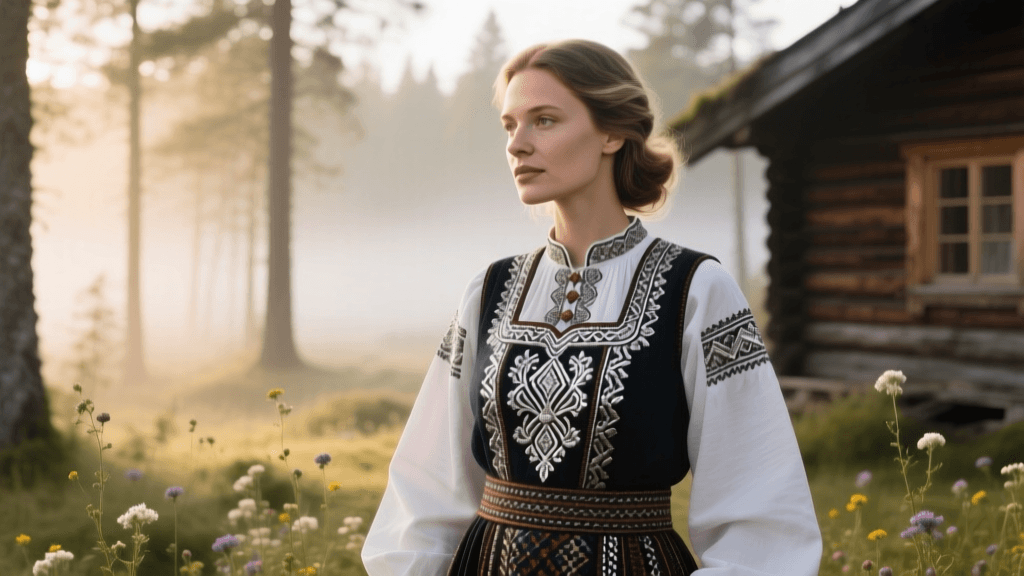
Originating from the Hardanger fjord region, the Hardangerbunad is widely considered the first official bunad, developed around 1905. It is characterized by its striking contrast and elegant simplicity. The women’s costume features a black wool skirt and bodice, paired with a pristine white linen apron and shirt adorned with hardangersøm (a meticulous form of cutwork and drawn-thread embroidery). The geometric precision required for hardangersøm is immense; a single misplaced thread can unravel the structural integrity of the cutwork. In 2026, authentic hand-embroidered Hardangerbunads remain highly sought after, with master artisans charging a premium for the hundreds of hours required to complete the collar, cuffs, and apron borders.
The Telemarksbunad: A Canvas of Rosemaling and Smøyg
Telemark is a region renowned for its vibrant folk art, particularly rosemaling (decorative rose painting) and intricate woodcarving. The Telemark bunad translates these visual motifs into textile form. The most defining feature of the Telemark bunad is the use of smøyg, a traditional Holbein stitch that creates reversible, densely packed geometric and floral patterns in vibrant reds, greens, and yellows against a white linen background. The wool skirts are often deep red or black, featuring elaborate woven bands at the hem. According to the Norwegian Museum of Cultural History, the preservation of Telemark's specific smøyg patterns has been crucial in maintaining the region's distinct visual identity within the broader European folk dress landscape.
The Rogalandsbunad: Maritime Influences and Cross-Stitch
Located in southwestern Norway, Rogaland’s coastal geography influenced its traditional dress. The Rogalandsbunad is famous for its intricate cross-stitch embroidery, often featuring motifs inspired by local flora and maritime history. The women’s bodice is heavily embroidered and laced with silver chains, while the men’s version features a distinctive knitted vest and a woolen jacket with brass or silver buttons. The regional caps (skaut) worn by married women in Rogaland are masterpieces of stiffened linen and lace, requiring specialized blocking techniques that very few artisans still practice in 2026.
Bunadsølv: The Silver That Defines the Costume
A bunad is considered incomplete without its accompanying silver jewelry, known as bunadsølv. Historically, silver was a display of a farming family’s wealth and served as a portable bank account that could be melted down in times of economic hardship. Today, bunad silver is a thriving artisanal industry. The jewelry is not merely decorative; it serves functional purposes, securing collars, holding capes together, and fastening belts.
In 2026, the global fluctuation in precious metal markets has significantly impacted the cost of newly cast bunad silver. Consequently, there has been a massive surge in the restoration and resale of vintage bunad silver, with specialized silversmiths in Voss and Oslo reporting record waitlists for refurbishment services. Below is a breakdown of the essential silver pieces and their estimated market costs in 2026.
| Silver Piece | Function & Placement | 2026 Est. Price (NOK) | 2026 Est. Price (USD) |
|---|---|---|---|
| Sølje (Neck Brooch) | Secures the shirt collar; often features hanging spoons or discs. | 4,500 - 9,000 | $420 - $840 |
| Vespestøl (Purse Clasps) | Decorative clasps for the traditional velvet or wool belt purse. | 2,200 - 4,000 | $205 - $375 |
| Beltestøler (Belt Buckles) | Large, ornate buckles for the leather or woven wool belt. | 5,000 - 12,000 | $465 - $1,120 |
| Brystknapper (Bodice Buttons) | Used to lace the front of the bodice; sold in sets of 12-20. | 6,000 - 15,000 | $560 - $1,400 |
| Kniven (Decorative Knife) | A sheathed knife worn on the belt, symbolizing self-reliance. | 3,500 - 8,500 | $325 - $795 |
Note: Prices reflect newly cast, hand-finished sterling silver (925S) from certified Norwegian silversmiths in 2026. Antique or inherited pieces may vary wildly in value based on provenance and condition.
Commissioning Your Bunad in 2026: A Step-by-Step Guide
You cannot simply walk into a store and buy a high-quality, authentic bunad off the rack. Because these garments are tailored to the millimeter and require extensive hand-embroidery, they must be commissioned. The primary retailer and certification body for bunads is Norges Husflidslag (Husfliden), a network of craft shops dedicated to preserving Norwegian folk art. If you are planning to acquire a bunad in 2026, expect the process to take between 12 and 18 months.
- Step 1: Heritage Research and Selection. Traditionally, Norwegians wear the bunad from their ancestral region or the region where they grew up. Consult with a Husfliden specialist to determine which regional variation you are entitled to wear and select the specific historical era (e.g., 1850s vs. 1920s reconstruction) your garment will replicate.
- Step 2: The Initial Measurement Session. A certified bunadtilvirker (bunad maker) will take over 20 distinct body measurements. Unlike modern fashion, bunad patterns are drafted using traditional geometric cutting methods that require precise posture and shoulder alignment measurements.
- Step 3: Embroidery and Weaving. While the tailor cuts the wool, specialized embroiderers begin the hand-stitching. If your bunad requires custom woven bands (bandveving), this is outsourced to a master weaver. This phase alone can take up to six months.
- Step 4: The First Fitting (Prøving). You will be pinned into the raw, unhemmed wool garment. The tailor checks the drape of the skirt, the tension of the bodice, and the placement of the silver buttonholes. Adjustments are marked with chalk and pins.
- Step 5: Final Assembly and Silver Matching. After the final fitting, the garment is finished. You will then work with a silversmith to select your bunadsølv, ensuring the oxidization level (darkened silver vs. bright polished silver) matches the historical period of your specific regional costume.
Caring for Wool, Linen, and Silver Textiles
A complete bunad, including silver, can easily cost between 50,000 and 80,000 NOK ($4,600 to $7,500 USD) in 2026, making proper maintenance essential. The wool used in authentic bunads is heavily fulled and naturally lanolin-rich, making it somewhat resistant to stains and odors. Never dry clean a bunad. The harsh chemicals strip the lanolin, fade the natural dyes, and ruin the structural stiffness of the bodice.
Instead, air the garment outside on a damp, foggy morning—a traditional Norwegian method that allows the wool fibers to open, release odors, and naturally shed dust. For pest control, particularly against clothes moths which remain a persistent threat to heritage textiles, freeze the folded bunad in a sealed, airtight plastic bag for 72 hours at -18°C (0°F) before storing it in a breathable cotton garment bag with untreated cedar blocks.
Silver requires equal care. Bunadsølv is often intentionally oxidized to highlight the intricate filigree and cast details. Do not use abrasive commercial silver dips, as they will strip the dark patina from the crevices, leaving the piece looking flat and historically inaccurate. Instead, use a soft, untreated microfiber cloth to gently polish only the raised, high-friction areas of the silver, leaving the recessed oxidation intact. By respecting these traditional care methods, you ensure that your European folk dress remains a pristine, wearable heirloom for generations to come.