Alpine Trachten 2026: Dirndl & Lederhosen For Folk Dance Festivals
The 2026 Landscape of Alpine Folk Dance Festivals
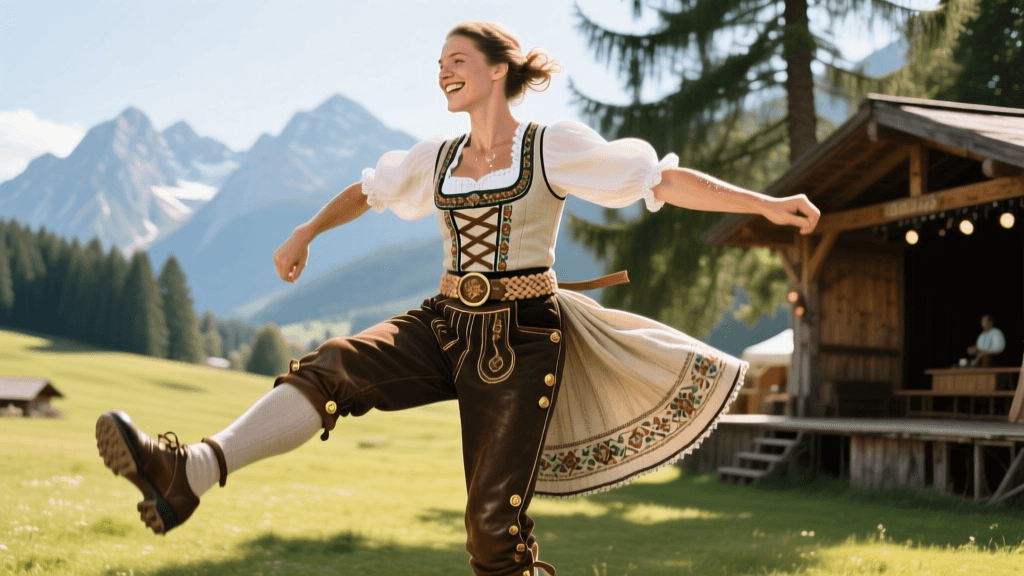
As the 2026 Alpine festival season approaches, the demand for authentic, dance-ready traditional garments has reached unprecedented levels. Across Bavaria, Austria, and South Tyrol, regional Gaufeste (folk festivals) and Trachtenvereine (traditional costume associations) are preparing for a year of rigorous competition and celebration. Unlike the commercialized costumes sold to tourists, the garments worn by folk dance troupes must adhere to strict historical and functional guidelines. For the Schuhplattler—the iconic Alpine folk dance characterized by leaping, stomping, and the rhythmic slapping of thighs, knees, and shoe soles—standard fashion garments simply will not suffice. Dancers require specialized tailoring, premium materials, and precise measurements to ensure both mobility and historical accuracy.
The distinction between Tracht (authentic, regionally specific traditional dress) and Trachtenmode (modern fashion inspired by tradition) is heavily enforced in 2026 by organizations like the Bayerischer Trachtenverband. Registered dance troupes competing in official 2026 events must present garments that reflect the specific valley or region they represent, down to the exact stitch count on the bodice and the tanning method of the leather. This guide provides a comprehensive, actionable breakdown of how to source, fit, and maintain authentic Alpine dance costumes for the current festival circuit.
Lederhosen for the Schuhplattler: Mobility and Tradition
For male dancers, the Lederhosen is not merely a garment; it is a vital instrument of the dance. The Schuhplattler requires the dancer to strike their thighs and knees with force. Therefore, the leather must be thick enough to protect the skin and produce a sharp, resonant smack, yet supple enough to allow for deep squats and high leaps. In 2026, the gold standard for authentic dance Lederhosen remains Hirschleder (deer nappa leather), specifically brain-tanned or traditionally chrome-tanned to achieve a soft, velvety finish that does not stiffen when exposed to sweat and festival rain.
While knee-breeches (Kniebundhose) are common for formal occasions, most Schuhplattler troupes prefer the Säckelhose or Plattlerhose. This is a shorter, above-the-knee cut that ends mid-thigh, allowing unrestricted movement for the slapping sequences. The waistband must sit precisely at the natural waist, secured by a drop-front (Latz) fastened with horn or antler buttons. Suspenders (Hosenträger) are mandatory and are typically embroidered with regional motifs, such as the Edelweiß or Enzian flowers, or the hunter's oak leaf patterns.
Actionable Fitting Advice for 2026 Bespoke Orders
- Waist Measurement: Measure at the narrowest point of the torso. Authentic Lederhosen do not sit on the hips like modern jeans.
- Inseam & Thigh: For a Plattlerhose, the hem should fall exactly 4 to 6 inches above the top of the kneecap. The thigh circumference must allow for a 2-inch pinch of excess leather to accommodate muscle expansion during leaps.
- Embroidery (Stickerei): Specify the exact regional variant. For example, a Miesbacher Tracht requires specific floral vine patterns in silk thread, whereas a Zillertaler Tracht might feature more geometric or hunting motifs.
The Dirndl: Engineering the Perfect Spin
The female counterpart to the Alpine folk dance costume is the Dirndl, but the dance version is an engineering marvel compared to its static, beer-tent counterparts. The primary mechanical requirement of a dance Dirndl is the Drehen (the spin). When a dancer executes a rapid turn, the skirt must flare out into a perfect, symmetrical bell shape. To achieve this in 2026, master tailors utilize a technique called Faltenrock (pleated skirt), where the fabric is tightly cartridge-pleated or knife-pleated into the waistband.
According to archives preserved at the Deutsches Trachtenmuseum, the traditional dance skirt must have a hem circumference of at least 3.5 to 4.5 meters. The length is strictly regulated by folk associations; it must fall mid-calf to just above the ankle, completely covering the knee to maintain modesty during high kicks and leaps. The fabric of choice for 2026 remains high-quality wool crepe, cotton damask, or heavy linen, often featuring hand-woven regional stripes (Streifen) or subtle floral block prints.
Anatomy of the Dance Dirndl
- Mieder (Bodice): Must be heavily boned or reinforced to provide back support during vigorous dancing. It is fastened with a silver or brass hook-and-eye chain, or laced with a silk ribbon.
- Bluse (Blouse): Typically white cotton or linen with a square or round neckline. Sleeves can be short, puffed, or three-quarter length, but must not restrict arm movement when holding a partner.
- Schürze (Apron): The apron is tied at the front. In folk dance, the bow's placement is less about marital status and more about security; it is tied tightly in a double knot to prevent unraveling during spins.
Regional Variations: Miesbacher vs. Zillertaler Tracht
When ordering garments for the 2026 season, dancers must align their costumes with their troupe's specific regional heritage. The Tiroler Volkskultur institute emphasizes that mixing regional elements is a major faux pas in competitive folk dance.
The Miesbacher Tracht (from Upper Bavaria) is characterized by its dark, muted colors. Men wear grey or charcoal deer leather with intricate, tonal embroidery. Women wear deep blue or green skirts with black velvet bodices adorned with silver coin chains (Kropfkette). The Zillertaler Tracht (from the Tyrolean Zillertal Valley), by contrast, is vibrant. Men's Lederhosen often feature bright, contrasting silk embroidery (red, green, and yellow), and women's Dirndls incorporate striking silk brocade fabrics and elaborate lace collars.
2026 Sourcing, Pricing, and Lead Times
Sourcing authentic, competition-grade Trachten requires significant financial investment and forward planning. Due to the scarcity of skilled leatherworkers and traditional weavers, lead times for bespoke garments in 2026 are longer than ever. Below is a structured comparison of current market rates for dance-ready garments.
| Garment Component | Quality Tier | 2026 Estimated Price (EUR) | Typical Lead Time |
|---|---|---|---|
| Lederhosen (Plattlerhose) | Premium Off-the-Rack | €750 - €950 | In-Stock / 2 Weeks |
| Lederhosen (Plattlerhose) | Bespoke Artisan (Hirschleder) | €1,600 - €2,400 | 5 - 8 Months |
| Dirndl (Dance Rock & Mieder) | Custom Tailored (Wool/Silk) | €900 - €1,500 | 3 - 5 Months |
| Haferlschuhe (Men's Dance Shoes) | Custom Cobbler (Calfskin) | €380 - €550 | 6 - 10 Weeks |
| Trachtenhut (Hat with Gamsbart) | Authentic Badger Hair Tuft | €250 - €600 | 1 - 2 Months |
Footwear and Hosiery: The Foundation of the Dance
The Schuhplattler relies heavily on the acoustic impact of the footwear. Men wear Haferlschuhe, traditional Alpine brogues characterized by their side-lacing system and heavy, nailed leather soles. The side lacing is crucial as it prevents the laces from coming undone when the dancer strikes the top of the shoe with their hands. The soles must be reinforced with metal hobnails (Nägel) to produce a sharp, percussive click when stomping on wooden dance floors.
Women wear Dirndlschuhe, which are sturdy, low-heeled lace-up shoes or slip-ons made of soft nappa leather. The heel must be broad and no higher than 4 centimeters to ensure stability during rapid spins. Hosiery is equally regulated: men wear Loferl (calf warmers) consisting of a separate calf band and an ankle sock, leaving the knee bare. Women wear white, knee-high cotton or wool stockings, often featuring subtle hand-embroidered clocks (patterns) at the ankle.
Garment Care and Preservation for the 2026 Season
Investing over €2,000 in a bespoke dance costume necessitates rigorous maintenance. Lederhosen should never be machine washed or dry-cleaned, as harsh chemicals strip the leather of its natural oils, causing it to crack during physical exertion. Instead, spot clean with a damp cloth and a specialized leather soap, and brush the nap regularly with a suede brush. Store the Lederhosen rolled, not folded, to prevent permanent creases in the leather.
Dirndl skirts must be hung on wide, padded hangers to maintain the integrity of the pleats. After a dusty outdoor festival, the wool or cotton fabric should be aired out in a shaded, well-ventilated area. Silver bodice hooks and jewelry should be polished with a non-abrasive cloth after every wear to remove sweat oxidation. By adhering to these care protocols, your 2026 Trachten investment will remain structurally sound and historically resplendent for decades of future festival seasons.