Norwegian Bunad Sølje & Brudkrona: 2026 Sourcing Guide
The Living Tradition of Norwegian Folk Accessories in 2026
The Norwegian Bunad is far more than a historical costume; it is a living, breathing expression of regional identity, family heritage, and master craftsmanship. As we navigate the folk dress revival of 2026, the global appreciation for traditional European garments has surged, bringing intense focus to the intricate accessories that complete these ensembles. Among the most coveted and culturally significant of these accessories are the sølje (traditional silver jewelry) and the brudkrona (bridal crown). These pieces are not merely decorative; they are historical artifacts, financial investments, and vital components of regional storytelling.
For collectors, heritage enthusiasts, and those commissioning their own Bunad in 2026, understanding the nuances of Norwegian metalwork and headwear is essential. The market has seen a shift toward hyper-authenticity, with buyers demanding historically accurate metallurgy, region-specific designs, and ethically sourced materials. This comprehensive guide will walk you through the anatomy, sourcing, styling, and maintenance of Norwegian Bunad silver and bridal headwear, ensuring your collection meets the highest standards of contemporary heritage preservation.
Understanding the Sølje: Anatomy and Silver Purity
The term sølje broadly refers to the silver jewelry worn with the Bunad, but it most famously denotes the large, ornate neck brooch worn at the collar of the linen shirt (skjorte). A traditional sølje is a masterpiece of filigree, granulation, and cast silverwork, often featuring dangling spoon-shaped leaves (skjeer) or small teardrop pendants that catch the light and create a gentle chiming sound with movement.
In 2026, discerning buyers must pay close attention to silver purity. While international jewelry standards typically dictate 925 Sterling Silver, traditional Norwegian Bunad silver is historically crafted in 830 Silver (83% pure silver, 17% copper alloy). The 830 standard was adopted in Norway because the slightly higher copper content provides greater durability and structural integrity for the complex filigree wirework and delicate dangles. When sourcing vintage or newly commissioned pieces, verifying the hallmark is critical. Look for the stamp 830S alongside the maker’s mark and the town assay mark.
Hallmarks and Maker Marks
Authenticating a sølje requires familiarity with historical and contemporary maker marks. Legendary silversmiths like David Andersen and Marius Hammer dominate the antique market, but contemporary master smiths in regions like Voss and Telemark are producing exceptional work in 2026. Always request a certificate of authenticity that details the silversmith, the year of creation, and the specific regional design motif (e.g., the Hardanger rosette or the Setesdal cross).
The Brudkrona: Bridal Crowns and Regional Headwear
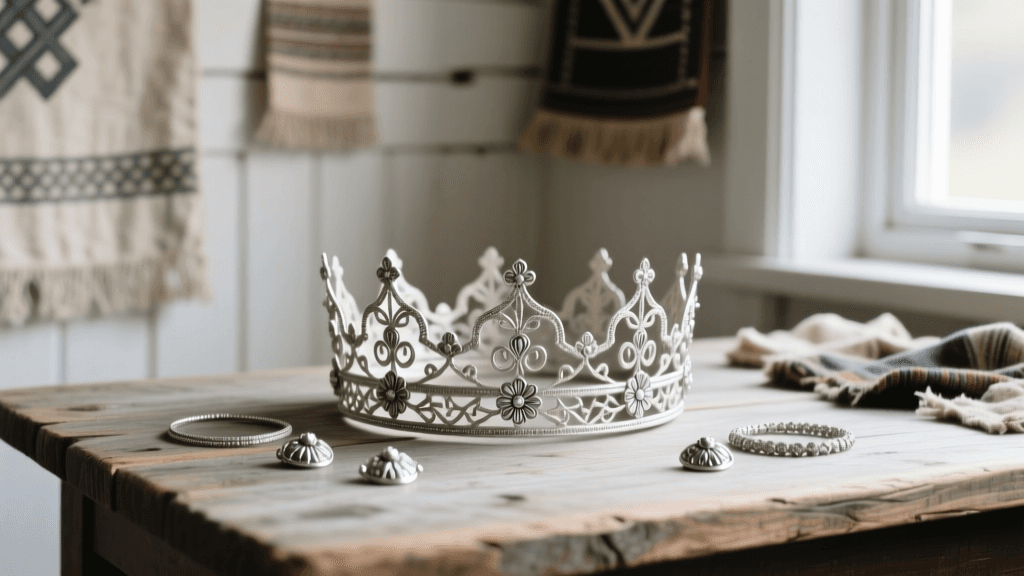
While the sølje is worn by unmarried and married women alike to signify regional belonging, the brudkrona (bridal crown) is a highly specialized piece of headwear reserved strictly for the wedding day. Historically, these crowns were owned by the local church or wealthy farming families and lent to brides, symbolizing purity, status, and the blessing of the community.
In 2026, the tradition of the brudkrona remains vibrant, though the mechanics of acquisition have evolved. Brides can choose to purchase a custom-forged heirloom or rent a historically significant piece from local heritage societies. The anatomy of a brudkrona varies wildly by region. A Telemark crown might feature towering, intricate silver spires and mirrored glass to ward off evil spirits, while a Voss crown is typically lower to the head, heavily adorned with brass, silver-gilt, pearls, and silk ribbons.
Weight, Dimensions, and Fitting
When commissioning or renting a brudkrona, physical ergonomics are just as important as aesthetics. A fully embellished bridal crown can weigh anywhere from 250 grams to over 600 grams. The interior circumference must be meticulously measured over the bride’s specific updo (usually a tight, braided bun). Modern makers in 2026 often incorporate hidden, padded velvet bands and adjustable silver clasps to ensure the crown sits securely without causing tension headaches during the multi-hour traditional wedding ceremonies.
2026 Sourcing and Pricing Comparison Chart
The cost of traditional Norwegian accessories fluctuates based on raw silver markets and the availability of master artisans. Below is a comparative overview of average market prices and sourcing avenues for essential Bunad accessories as of early 2026.
| Accessory Type | Traditional Material | Average 2026 Price (USD) | Primary Sourcing Region |
|---|---|---|---|
| Halsknapp (Neck Button) | 830 Sterling Silver | $120 - $280 | Telemark, Hardanger |
| Sølje (Large Neck Brooch) | 830 Sterling Silver, Glass | $650 - $2,400 | Voss, Setesdal, Gudbrandsdal |
| Beltespenne (Belt Buckle) | Brass, Silver, Pewter | $180 - $550 | Hordaland, Trøndelag |
| Brudkrona (Bridal Crown - Purchase) | Silver-gilt, Pearls, Glass | $3,500 - $9,000+ | Telemark, Voss, Sunnmøre |
| Brudkrona (Bridal Crown - Rental) | Mixed Metals, Silk Ribbons | $150 - $400 (per weekend) | Local Husflidlag (Craft Guilds) |
Styling, Pinning, and Textile Care
Properly attaching your sølje is vital to protect the delicate, hand-woven linen of the Bunad shirt. The traditional method involves passing the linen through the central pin of the halsknapp (neck button) or the large sølje. In 2026, textile conservators strongly advise against using standard safety pins as secondary anchors, as they can snag and tear the historic weave. Instead, utilize the small, integrated eyelets found on authentic reproduction shirts, securing the jewelry with small, forged silver cotter pins or traditional linen thread ties.
When styling the brudkrona, the hair must be prepared days in advance. The traditional bridal updo requires a foundation of braids wrapped tightly against the scalp. Modern hairstylists specializing in European folk dress recommend using untexturized, natural hair products; heavy aerosol sprays can degrade the silk ribbons and tarnish the lower bands of the silver crown upon contact.
Maintenance and Archival Storage
Silver is a reactive metal, and the 830 alloy used in Norwegian folk jewelry requires specific care to maintain its luster without damaging the oxidized detailing that gives filigree its depth. Never use harsh chemical dips or abrasive polishing cloths on a vintage sølje, as this will strip the intentional black oxidation from the crevices, leaving the piece looking flat and historically inaccurate.
For routine maintenance in 2026, use a mild, phosphate-free dish soap and lukewarm water with a soft-bristled baby toothbrush to gently lift skin oils and environmental pollutants. Dry immediately with a microfiber cloth. For storage, wrap each piece individually in acid-free, unbuffered tissue paper, and place them in airtight anti-tarnish ziplock bags equipped with 3M anti-tarnish strips. Store the brudkrona in a custom-fitted archival box, ensuring the silk ribbons are laid flat to prevent permanent creasing or fiber degradation.
Authoritative Resources for Folk Dress Enthusiasts
To ensure your sourcing and styling align with historical accuracy, it is crucial to consult established heritage organizations. The Norwegian Museum of Cultural History offers extensive digital archives and physical exhibitions detailing the evolution of regional metalwork and headwear from the 17th century to the modern era. Their conservation guidelines are considered the gold standard for private collectors.
Furthermore, the National Institute of Bunad and Folk Costume serves as the official state advisory body in Norway. They provide invaluable documentation on regional variations, ensuring that the silver and headwear you acquire perfectly match the specific geographic valley or parish your Bunad represents. For those looking to connect with verified, contemporary artisans and regional craft guilds, Norges Husflidslag (The Norwegian Crafts Institute) maintains a comprehensive directory of certified silversmiths and textile artists actively taking commissions in 2026.
Final Thoughts on Heritage Preservation
Investing in Norwegian Bunad accessories is an act of cultural preservation. Whether you are fastening a 19th-century heirloom sølje passed down through generations or commissioning a brand-new brudkrona for your upcoming wedding, these pieces carry the weight of history. By prioritizing authentic materials, respecting regional nuances, and practicing meticulous archival care, you ensure that the brilliant silver and towering crowns of European folk dress will continue to shine for centuries to come.