Ancient Greek Chiton & Roman Toga Guide 2026: Draping & Fabrics
The 2026 Revival of Classical Antiquity Dress
As we navigate the 2026 historical reenactment season and the growing global interest in Mediterranean heritage festivals, the demand for historically accurate ancient garments has never been higher. Moving away from the cheap, synthetic costumes of the past, today's enthusiasts, theater costumers, and cultural historians are prioritizing authentic draping techniques, period-accurate textiles, and sustainable sourcing. Whether you are preparing for a Panathenaic festival recreation or studying the evolution of European folk dress, understanding the foundational garments of ancient Greece and Rome—the chiton, the toga, and the stola—is essential. This comprehensive guide explores the construction, fabric requirements, and precise draping methods for classical antiquity dress in 2026.
Understanding the Greek Chiton: Doric vs. Ionic
The chiton was the fundamental body garment for both men and women in ancient Greece. Unlike modern tailored clothing, the chiton was not cut or sewn into shape; rather, it consisted of a single large rectangle of fabric draped and pinned around the body. According to the World History Encyclopedia, the elegance of Greek dress relied entirely on the quality of the textile and the skill of the draper. There are two primary styles of the chiton that you must master for accurate historical representation.
The Doric Chiton
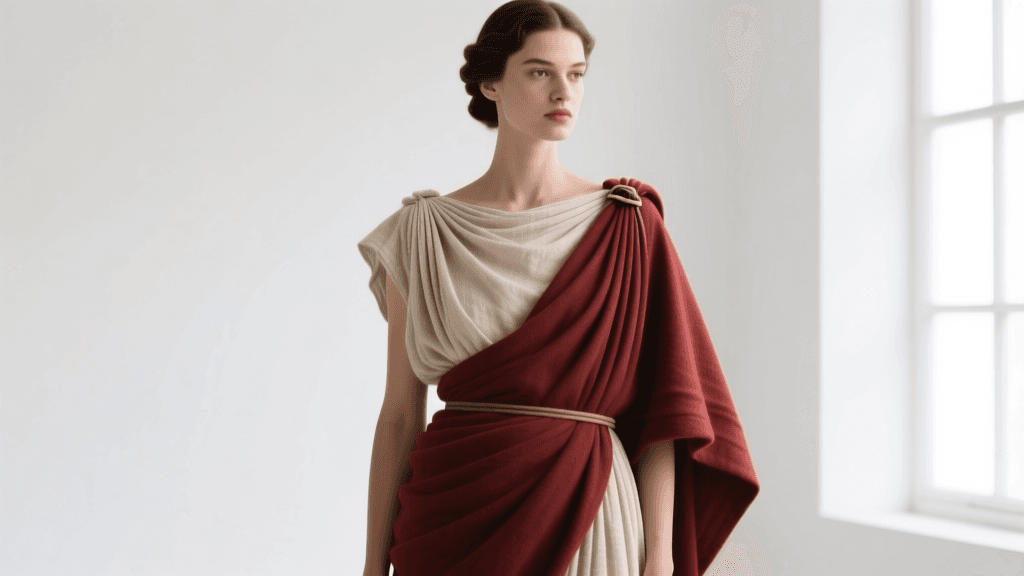
The Doric chiton is the older, heavier, and more structured of the two styles. Traditionally made from wool, it features a characteristic overfold known as the apoptygma. To create a Doric chiton, you need a rectangular piece of heavy woolen fabric. The width should be equal to your arm span plus an additional 30 to 40 centimeters for ease of movement, while the length should be your height plus 40 centimeters to allow for the overfold and the blousing effect (kolpos) over the belt. The top edge is folded down by about 30 centimeters before the garment is wrapped around the body. It is then pinned at the shoulders using heavy bronze or iron fibulae (brooches) and belted at the waist. In 2026, historical weavers recommend a tightly spun, 250 GSM (grams per square meter) tabby-weave wool for the most authentic Doric drape, as it holds the sharp, sculptural folds seen in classical marble statuary.
The Ionic Chiton
Emerging later and favoring lighter materials, the Ionic chiton is crafted from linen or fine silk. It lacks the heavy overfold of the Doric style and instead relies on multiple pins or small sewn seams along the upper arms to create a sleeve-like effect. The fabric required is much wider—often twice the width of the wearer's arm span—and significantly longer, sometimes pooling at the feet for women. Because linen does not cling to the body the way wool does, the Ionic chiton creates a cascading, fluid silhouette. For modern recreations, a 140 to 180 GSM pure European flax linen is ideal, providing enough weight to drape beautifully without being overly cumbersome in warm weather.
Roman Garments: The Toga and the Stola
While Greek dress emphasized fluidity and natural body contours, Roman clothing was deeply tied to social status, citizenship, and rigid societal structures. The transition from Greek to Roman dress marks a shift from simple rectangular wraps to complex, status-signifying ensembles.
The Toga: A Masterclass in Draping
The toga is perhaps the most iconic, yet misunderstood, garment of the ancient world. As detailed by Britannica, the toga was strictly reserved for male Roman citizens and was a symbol of civic duty and peace. It was not a simple semi-circle, as often depicted in early 20th-century cinema, but a massive, complexly shaped piece of woolen cloth. By the Imperial period, the toga was an elongated oval or heavily truncated ellipse, measuring up to 6 meters in length and 2.5 meters in width. Draping a toga requires assistance. The fabric is folded lengthwise, with one end draped over the left shoulder down to the calves. The bulk of the fabric is then wrapped around the back, under the right arm, across the chest, and finally thrown back over the left shoulder, creating the distinctive sinus (a deep curved pouch) and umbo (a decorative knot of folds). Due to its immense weight and restrictive nature, the toga was entirely impractical for manual labor, reinforcing its status as the garment of the elite politician and orator.
The Stola and Palla for Roman Women
Respectable Roman citizen women did not wear the toga; instead, they wore the stola over a basic tunica. The stola was a long, sleeveless, woolen or linen dress suspended from the shoulders by straps or small fibulae. Its defining feature was the instita, a decorative woven border or flounce at the hem, which signaled the wearer's modesty and matronly status. When venturing outdoors, a Roman woman would wrap herself in a palla, a large rectangular mantle draped over the head and shoulders, functioning as both a cloak and a modesty veil. For 2026 historical interpretations, sourcing naturally dyed wool in madder red, weld yellow, or woad blue for the stola's instita adds a vital layer of authenticity that distinguishes amateur costumes from serious historical dress.
Garment Comparison Chart
To help you select the appropriate garment for your specific historical portrayal or textile study, refer to the comparison table below:
| Garment | Origin | Primary Wearer | Ideal 2026 Fabric | Draping Complexity |
|---|---|---|---|---|
| Doric Chiton | Greece | Men & Women | 250 GSM Wool | Moderate |
| Ionic Chiton | Greece | Men & Women | 150 GSM Linen | Low |
| Toga | Rome | Male Citizens | 300 GSM White Wool | Very High |
| Stola | Rome | Female Citizens | Wool/Linen Blend | Low (Sewn/Pinned) |
| Himation / Palla | Greece / Rome | Both (Outerwear) | Heavy Wool Twill | Moderate |
2026 Fabric Sourcing and Authenticity
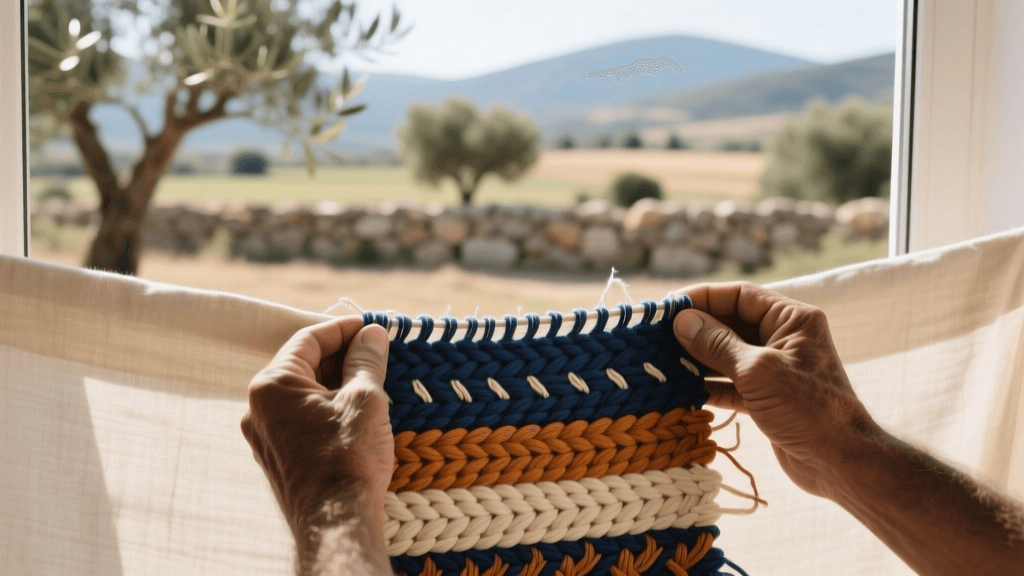
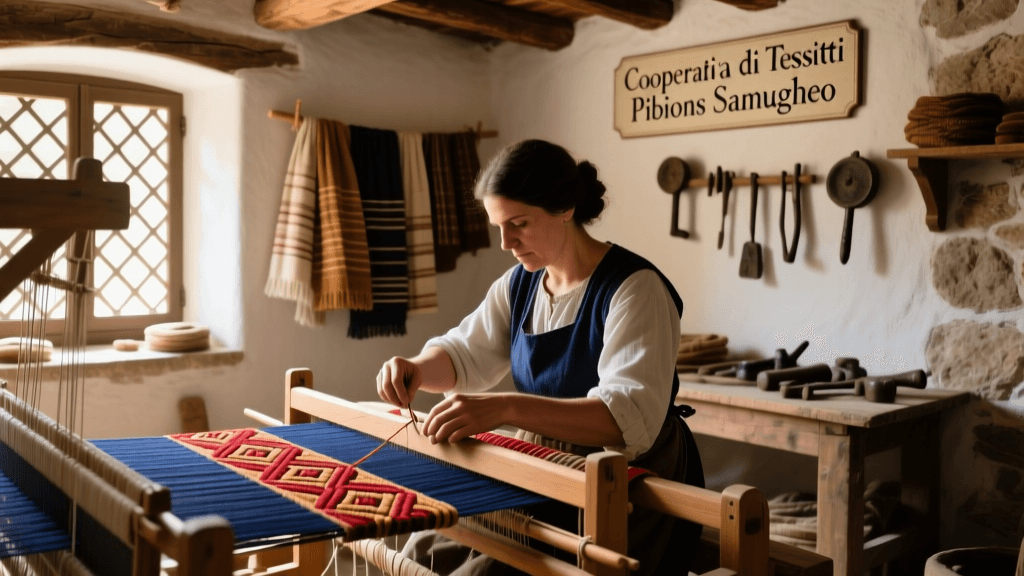
The success of any ancient garment relies entirely on the textile. In 2026, the historical reenactment community has largely rejected synthetic blends and modern chemical dyes in favor of heritage agriculture and traditional looming. When sourcing fabric for a chiton or stola, look for mills that specialize in 'shuttle-loomed' textiles. Modern projectile looms create fabrics with perfectly uniform, tightly packed selvedges that look distinctly machine-made. Shuttle-loomed fabrics possess slight, natural irregularities that mimic ancient hand-woven cloth.
For the Ionic chiton, seek out 'half-bleached' or 'unbleached' linen. Pure, blinding white linen was incredibly difficult to achieve in antiquity without harsh chemical processes; most ancient linen was a natural ecru, oatmeal, or pale grey. If you require color, ensure your supplier uses botanical dyes. Madder root (Rubia tinctorum) for reds and oranges, and indigo or woad for blues, are the historically accurate choices. Avoid any fabric labeled as 'mercerized,' as this 19th-century chemical treatment gives cotton and linen an unnatural, synthetic sheen that completely ruins the classical silhouette.
Step-by-Step Chiton Draping Guide
Mastering the Doric chiton requires practice and an understanding of how gravity interacts with wool. Follow these precise steps for a flawless drape:
- Prepare the Fabric: Lay your 2m x 4m wool rectangle flat on a clean surface. Fold the top edge down by 35 centimeters to create the apoptygma (overfold).
- Wrap the Body: Wrap the fabric around your body, starting from the left side. The open edge should fall at your right side or slightly towards the back.
- Pin the Shoulders: Gather the front and back layers (including the overfold) at your left shoulder. Pinch the fabric together and secure it with a heavy penannular or omega-shaped bronze fibula. Repeat this process on the right shoulder, leaving enough space in the center for your head and neck.
- Create the Kolpos: Tie a woven wool or leather cord tightly around your natural waist. Pull the fabric above the belt up and over the cord, allowing it to blouse outward. This creates the kolpos, which adjusts the hemline to your desired length (knee-length for active men, ankle-length for women and elders).
- Secure the Side: If the open side of the chiton gaps too much when walking, you can loosely stitch the side seam from the hem up to the hip, or use small, hidden pins. Historically, the side was often left open to reveal the leg during movement, a feature highly celebrated in classical Greek art.
Accessories: Fibulae, Belts, and Footwear
No classical garment is complete without its functional accessories. The fibula (brooch) is not merely decorative; it bears the structural weight of the garment. For a heavy wool Doric chiton, you must use robust bronze or iron fibulae with a strong spring mechanism and a deep catch plate. Flimsy, modern jewelry pins will bend and tear the historic wool.
Footwear also plays a critical role in the overall silhouette. Indoors, Greeks and Romans wore soleae (simple leather sandals or slippers). Outdoors, they transitioned to calcei (enclosed leather shoes) or cothurni (laced boots). In 2026, custom shoemakers specializing in historical footwear utilize vegetable-tanned leather and hand-welted soles to replicate the flexible, ground-hugging feel of ancient sandals, which drastically changes the wearer's posture and gait compared to modern rubber-soled shoes.
Conclusion
Recreating the garments of ancient Greece and Rome is an exercise in understanding the intersection of textile physics, social hierarchy, and classical aesthetics. By abandoning modern tailoring conventions and embracing the generous, uncut rectangles of wool and linen, we connect directly with the sartorial traditions that laid the groundwork for all subsequent European folk dress. Whether you are meticulously draping a 6-meter Roman toga or pinning a simple Ionic chiton, the dedication to authentic materials and techniques ensures that the legacy of classical antiquity continues to be worn, studied, and celebrated with the utmost respect in 2026 and beyond. For further academic research on the evolution of these garments, the Roman Clothing archives remain an indispensable resource for serious historians and costumers alike.