Sardinian Pibiones Textiles: 2026 Heritage Brand Guide
The Renaissance of Sardinian Pibiones Weaving in 2026
Sardinia, an island steeped in ancient Mediterranean history, possesses one of the most vibrant and meticulously preserved folk dress traditions in all of Europe. At the very heart of this sartorial heritage is the Pibiones weaving technique, a highly specialized textile art form that creates a distinct, raised 'grain' or 'berry' texture on the fabric surface. As we move through 2026, the global appreciation for slow fashion and authentic European folk dress has triggered a remarkable renaissance for Sardinian artisanal textiles. Supported by recent cultural preservation grants from the Italian Ministry of Culture, the number of active traditional looms operating on the island has seen a significant resurgence, allowing heritage brands to meet the surging international demand for authentic, handmade garments.
For collectors, historians, and enthusiasts of Italian regional traditional garments, understanding the nuances of Pibiones weaving is essential. This comprehensive 2026 guide explores the technique, its integration into traditional Sardinian folk dress, the top heritage brands keeping the craft alive, and actionable advice on how to source or commission your own authentic pieces today.
Integration into Traditional Sardinian Folk Dress
To truly appreciate Pibiones textiles, one must understand their foundational role in the abito tradizionale sardo (traditional Sardinian dress). Historically, the raised texture of the Pibiones weave was not merely decorative; it served as a tactile indicator of wealth, status, and regional identity. In the mountainous Barbagia region, the heavy, textured weave provided essential insulation during harsh winters, while in the coastal south, lighter linen variations were prized for their breathability and intricate geometric patterns.
In traditional women's folk dress, Pibiones textiles are most prominently featured in the fazzoletto (a large, ornate shawl or headscarf) and the pannedda (the heavy, pleated ceremonial skirt). The fazzoletto di coppola, often draped elegantly over the head and shoulders during festivals like the Cavalcata Sarda in Sassari, relies heavily on the contrasting textures of the Pibiones grain against a smooth linen background. In 2026, contemporary Sardinian women continue to wear these meticulously woven garments during major religious processions and cultural festivals, ensuring that the textile remains a living, breathing component of regional identity rather than a mere museum artifact. For a deeper dive into the cultural significance of these regional festivals and their traditional attire, the Sardinia Tourism Board offers extensive documentation on local heritage events.
Decoding the Pibiones Technique
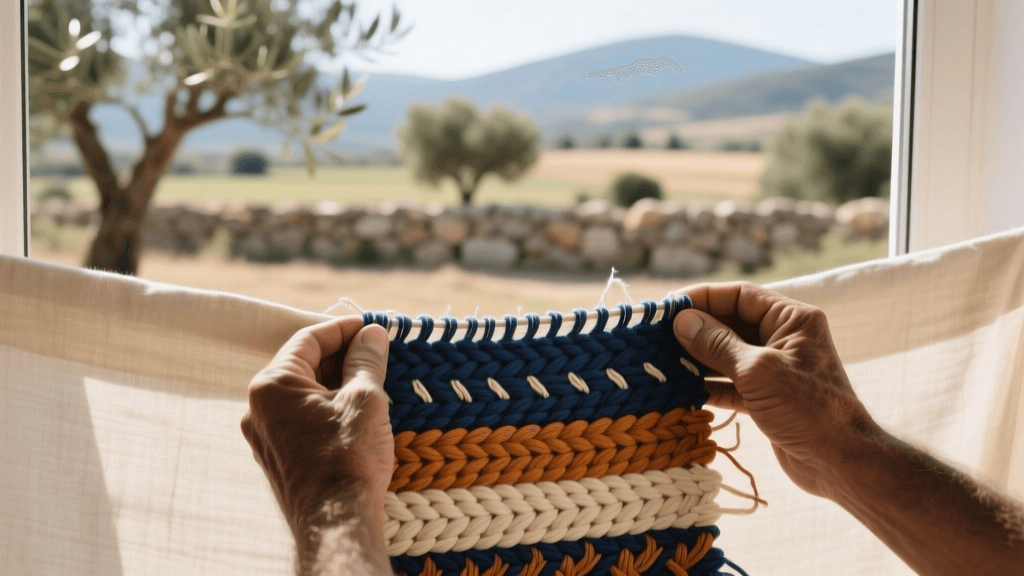
The word 'Pibiones' translates to 'grains' or 'berries' in the Sardinian dialect, perfectly describing the tactile, three-dimensional bumps that characterize the fabric. This effect is achieved on a traditional wooden floor loom using a supplementary weft technique. The weaver places a long, smooth rod—traditionally made of brass, wood, or bone—across the warp threads. The weft yarn is then wrapped over this rod, creating a raised loop. Once the row is complete, the rod is removed, leaving a perfectly uniform, raised 'grain' on the surface of the textile.
Mastering this technique requires extraordinary manual dexterity and mathematical precision. A single misplaced thread can disrupt the geometric harmony of the pattern, which often features ancient motifs such as the sa pavonedda (the little peacock), the sa rana (the frog, symbolizing fertility), and the su pibione (the grape cluster). In 2026, the most prestigious heritage workshops maintain a warp density of 24 to 28 threads per centimeter, ensuring a dense, durable fabric that can last for generations. The rhythmic clatter of the wooden loom and the rapid, practiced movements of the weaver's hands remain unchanged from centuries past, a fact celebrated by institutions like UNESCO Intangible Cultural Heritage which continuously monitor and support such traditional craftsmanship.
Top Heritage Brands and Artisan Cooperatives in 2026
Sourcing authentic Pibiones textiles requires navigating a landscape of genuine artisan cooperatives and heritage brands. In 2026, the following three organizations represent the pinnacle of Sardinian textile craftsmanship, offering verified authenticity and ethical labor practices.
Cooperativa Tessitori di Sarule
Located in the historic weaving village of Sarule, this cooperative was founded in the late 1970s by a group of local women determined to save their village's textile heritage from industrialization. Today, in 2026, the cooperative employs over thirty master weavers. They specialize in large-scale ceremonial pieces, including traditional bedspreads (tapinu) and the heavy, dark wool skirts used in the Barbagia folk dress. Their commitment to using locally sourced, hand-spun Sardinian sheep wool makes their garments highly sought after by serious collectors of European folk dress. A standard ceremonial shawl from the cooperative currently requires a lead time of approximately four months due to the meticulous hand-warping process.
Tessitura Artigiana Sarda (TAS)
Based in Cagliari, TAS bridges the gap between ancient technique and modern sartorial elegance. While they produce traditional folk garments, their 2026 collection has focused heavily on integrating Pibiones accents into contemporary outerwear, such as structured wool coats and tailored blazers featuring traditional geometric borders. TAS is renowned for its rigorous quality control and its use of premium Egyptian cotton blended with native Sardinian linen. They offer a 'bespoke heritage' service, allowing clients to work directly with a master weaver to customize the color palette and motif of a traditional fazzoletto, ensuring the piece aligns perfectly with modern wardrobe requirements while respecting historical accuracy.
Murene Contemporary
Murene represents the avant-garde of Sardinian textile design. Founded by a new generation of weavers who studied at the prestigious Accademia di Belle Arti, Murene experiments with scale and material. In 2026, they have introduced metallic threads and upcycled silk into the traditional Pibiones weave, creating striking, luminous textiles that catch the Mediterranean light. While their pieces are less strictly 'traditional' in the historical sense, they are vital to the survival of the craft, proving that Sardinian weaving can evolve and remain economically viable in the modern luxury market.
2026 Buyer’s Guide: Pricing, Lead Times, and Materials
Investing in authentic, hand-woven Sardinian textiles is a significant financial commitment. The pricing reflects the hundreds of hours of skilled manual labor required to produce each piece. Below is a structured comparison chart detailing what buyers can expect when commissioning or purchasing Pibiones garments and textiles in 2026.
| Brand / Cooperative | Specialty Item | Primary Material | 2026 Starting Price (EUR) | Estimated Lead Time |
|---|---|---|---|---|
| Cooperativa Tessitori di Sarule | Ceremonial Pannedda (Skirt) | 100% Native Sardinian Wool | €1,450 | 16 - 20 Weeks |
| Tessitura Artigiana Sarda (TAS) | Traditional Fazzoletto (Shawl) | Linen and Cotton Blend | €680 | 10 - 14 Weeks |
| Murene Contemporary | Modern Accent Stole | Silk and Metallic Thread | €850 | 8 - 12 Weeks |
| Independent Artisan (Nuoro Region) | Custom Table Runner / Loom End | Raw Organic Cotton | €320 | 6 - 8 Weeks |
Note: Prices are current as of early 2026 and may fluctuate based on the complexity of the requested geometric motifs and the cost of raw, naturally dyed materials.
The Revival of Natural Dyes and Sustainable Practices
A major trend defining the Sardinian textile market in 2026 is the strict return to botanical and natural dyes. Driven by a global demand for sustainable, eco-conscious fashion, heritage brands are abandoning synthetic aniline dyes in favor of historical, plant-based alternatives. The rich, earthy color palettes seen in contemporary Pibiones collections are derived entirely from the Sardinian landscape.
- Nutgall and Walnut Husks: Used to achieve deep, colorfast browns and rich blacks, traditionally reserved for mourning attire or the heavy skirts of the Barbagia region.
- Madder Root (Rubia tinctorum): Cultivated locally to produce vibrant terracotta reds and soft pinks, often used in the intricate borders of ceremonial shawls.
- Weld (Reseda luteola) and Saffron: Harvested in the spring to yield brilliant, enduring yellows and golds that symbolize the Mediterranean sun and agricultural prosperity.
The Cultura Italia portal frequently highlights these sustainable dyeing workshops, noting that the revival of botanical dyeing not only reduces the environmental footprint of the textile industry but also supports local agricultural cooperatives that grow these specialized dye plants.
How to Commission a Custom Pibiones Garment
For those seeking a highly personalized piece of European folk dress, commissioning a custom garment directly from a Sardinian workshop is a deeply rewarding process. Here is a step-by-step guide to navigating a bespoke commission in 2026:
- Initial Consultation: Most heritage brands now offer high-definition virtual consultations. You will discuss the intended use of the garment, select your base material (linen for summer drape, wool for winter structure), and review historical pattern books to choose your motifs.
- Design and Warping: The master weaver translates your chosen motifs into a technical drafting pattern. The loom is then warped—a process that can take up to two weeks for a complex, wide piece like a pannedda.
- The Weaving Phase: A skilled weaver produces only 8 to 12 centimeters of intricate Pibiones fabric per day. During this phase, some cooperatives provide weekly photo updates, allowing you to watch your garment come to life thread by thread.
- Finishing and Washing: Once removed from the loom, the textile is hand-washed in natural, pH-neutral soaps, pressed, and sometimes lightly brushed to enhance the wool's natural loft. It is then shipped in archival, acid-free packaging.
Caring for Your Sardinian Textiles
Proper maintenance is crucial to preserving the structural integrity and vibrant colors of Pibiones textiles. Because of the raised grain texture, these fabrics should never be machine washed or aggressively wrung out. For wool pieces, professional dry cleaning with a specialist who understands heritage textiles is recommended once every few years. For linen and cotton shawls, gentle hand washing in cool water with a mild, eco-friendly detergent is appropriate. Always dry the textiles flat, away from direct sunlight, to prevent the botanical dyes from fading. When storing your Sardinian folk garments for the off-season, wrap them in unbleached muslin cloth and include natural cedar blocks to deter moths, ensuring your investment remains pristine for decades to come.