Hardanger & Telemark Bunad: 2026 Sourcing and Authenticity Guide
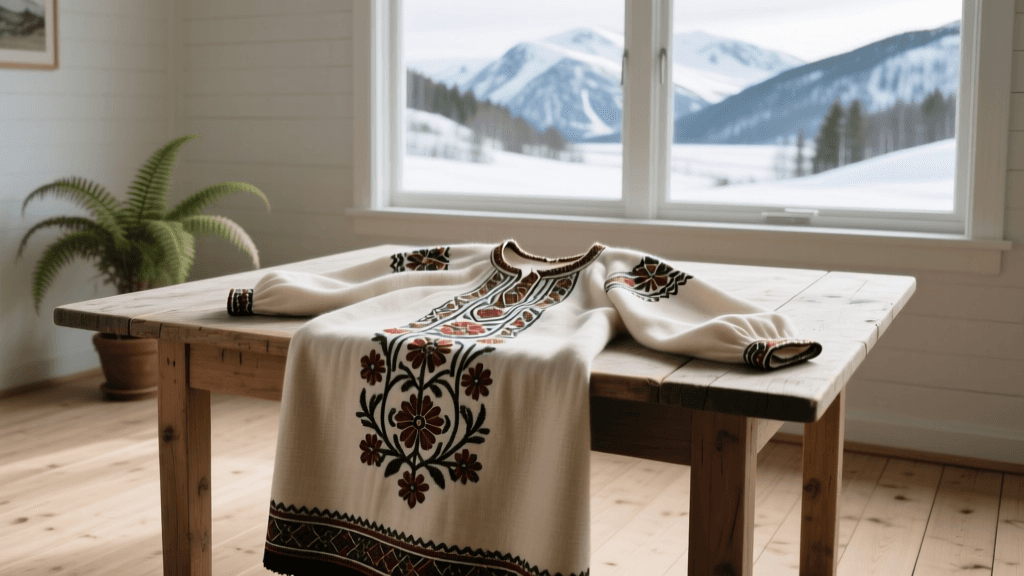
The 2026 Resurgence of Norwegian Regional Folk Dress
The year 2026 marks a significant milestone in the European folk dress revival, with traditional garments transitioning from ceremonial heirlooms to highly sought-after symbols of cultural identity and sustainable fashion. In Norway, the bunad—a meticulously reconstructed regional folk costume—remains the gold standard of heritage dress. Unlike generalized national costumes, the Norwegian bunad is strictly tied to specific geographic regions, with each valley and fjord boasting distinct textile traditions, embroidery techniques, and silverwork.
For collectors, diaspora Norwegians, and textile enthusiasts, sourcing an authentic bunad in 2026 requires navigating a complex landscape of artisan waitlists, fluctuating silver prices, and a market increasingly saturated with mass-produced imitations. This guide provides an in-depth, actionable comparison of two of Norway's most iconic regional costumes: the Hardanger bunad and the Telemark bunad. We will cover construction details, 2026 pricing metrics, official certification standards, and precise measurement protocols to ensure your investment is both historically accurate and impeccably tailored.
The Hardanger Bunad: Whitework and Fjord Heritage
Often referred to as the 'Queen of Norwegian Bunads,' the Hardanger bunad traces its lineage directly back to the traditional rural clothing of the Hardangerfjord region in Vestland county. It holds a unique place in Norwegian history; it was one of the first regional costumes to be championed during the national romantic movement of the early 20th century, heavily influenced by the pioneering folk dancer Hulda Garborg.
Key Garment Components and Embroidery
The women's Hardanger bunad is instantly recognizable by its striking color palette and intricate needlework. The ensemble typically features a deep red wool bodice (liv), a vibrant green wool skirt (stakk), and a pristine white apron (forkle) adorned with Hardangersaum—a traditional form of drawn-thread whitework embroidery. The underlying blouse (skjorte) is crafted from crisp linen, featuring blackwork embroidery on the collar and cuffs, a technique that requires immense precision.
In 2026, the Bunad- og folkedraktrådet (National Council for Folk Costumes) continues to enforce strict guidelines regarding the placement and execution of Hardangersaum. Authentic aprons must be hand-embroidered by certified artisans, a process that takes upwards of 300 hours per garment. This dedication to handcraft is what sustains the bunad's status as a luxury heritage garment rather than a mere costume.
The Telemark Bunad: Dark Wool and Rosemaling Motifs
While Hardanger relies on high-contrast whitework, the Telemark bunad represents a different aesthetic lineage, deeply rooted in the inland valleys of southern Norway. The Telemark region is historically famous for rosemaling (traditional rose painting), and this decorative folk art is directly translated into the bunad's textile embroidery.
Regional Variations and Textile Construction
The Telemark bunad is not a single monolith; it is divided into several sub-regional variations, most notably the Aust-Telemark (East) and Vest-Telemark (West) styles. The Aust-Telemark women's bunad is characterized by a dark blue or black wool skirt and bodice, heavily embroidered with vibrant, asymmetrical floral motifs in silk and wool threads. The bodice often features intricate silver lacing rings and a contrasting brocade front panel.
According to the archives at the Norwegian Museum of Cultural History, the Telemark bunad's dark base was historically practical for inland winters, while the vibrant embroidery served as a display of the wearer's wealth and the artisan's skill. In 2026, the demand for hand-embroidered Telemark bodices has created an 18-to-24-month waitlist among master artisans, as the complex floral shading requires specialized training in traditional Norwegian stitch techniques.
2026 Comparison Chart: Hardanger vs. Telemark
When budgeting for a complete bunad ensemble in 2026, it is crucial to account for the base garment, the hand-embroidered elements, the linen undergarments, and the obligatory silver accessories. The following table outlines the current market averages for women's ensembles sourced through official channels.
| Feature | Hardanger Bunad | Telemark Bunad (Aust) |
|---|---|---|
| Base Wool Color | Red bodice, Green skirt | Dark Blue or Black |
| Primary Embroidery | Hardangersaum (Whitework) | Rosesøm (Floral Silk/Wool) |
| Apron Style | White linen with drawn-thread | Black/Dark Blue wool with floral |
| Silver Requirements | Neck ring, brooch, cufflinks, belt | Heavy belt, bodice lacing, brooches |
| 2026 Base Price (NOK) | 45,000 - 55,000 NOK | 55,000 - 75,000 NOK |
| 2026 Silver Cost (NOK) | 20,000 - 35,000 NOK | 30,000 - 50,000 NOK |
| Artisan Lead Time | 6 - 9 Months | 18 - 24 Months |
Note: Prices are estimates based on early 2026 market data from authorized retailers. Silver prices fluctuate based on global precious metal markets.
Sourcing Authentic Garments: Avoiding the 2026 Knockoff Market
As the global interest in European folk dress has surged, so has the proliferation of inaccurate, mass-produced 'bunads' manufactured overseas. These garments often utilize synthetic blends, machine-embroidered approximations of regional patterns, and historically inaccurate colorways. To ensure your garment is a true cultural artifact, you must source through authorized networks.
The gold standard for purchasing a Norwegian bunad is through Norges Husflidslag (Husfliden), the national craft organization. Husfliden shops operate under strict mandates to use historically accurate materials, including Norwegian-spun wool, European linen, and locally forged sterling silver. When ordering in 2026, expect a multi-step consultation process. You will not simply select a size off a rack; you will undergo a detailed measurement session, select your specific regional variant, and place a deposit to secure your place in the artisan queue.
'A bunad is not merely clothing; it is a geographic coordinate woven in wool and silver. To wear a Hardanger or Telemark bunad is to carry the history of that specific valley on your shoulders.' — Textile Historian, Norsk Folkemuseum Archives.
Practical Guide: Measuring for Your Bunad
Because bunads are tailored to be worn over specific undergarments and are designed to last a lifetime (often with extra seam allowance built in for future alterations), precise measurements are non-negotiable. If you are ordering remotely in 2026 and cannot visit a Husfliden shop in person, you must have a professional tailor take the following measurements:
- Bust (Brystvidde): Measured around the fullest part of the chest, wearing the specific linen blouse you intend to use.
- Waist (Midjevidde): Measured at the natural waistline (the narrowest part of the torso), not the modern low-rise waist.
- Hips (Hoftevidde): Measured around the fullest part of the hips to ensure the wool skirt drapes correctly without pulling.
- Back Width (Ryggvidde): Measured across the shoulder blades to ensure the bodice allows for proper arm movement.
- Skirt Length (Skjørtelengde): Measured from the natural waist down to the mid-calf. Traditional bunad skirts should never touch the ankle; they are historically cut to show the embroidered stockings and silver shoe buckles.
- Arm Length (Ermelengde): Measured from the shoulder seam to the wrist bone, ensuring the blouse cuffs sit perfectly beneath the bodice armhole.
Silverwork: The Crown of the Folk Costume
No Norwegian bunad is complete without its accompanying silver (sølv). The silverwork is often the most expensive component of the ensemble, frequently passed down through generations as family heirlooms. For the Hardanger bunad, the silver includes a large neck ring (halssmykke), a front bodice brooch, cufflinks, and a delicate silver belt. The Telemark bunad requires heavier, more ornate pieces, including a wide silver belt with intricate filigree and multiple bodice clasps.
In 2026, all authentic bunad silver must bear the official Norwegian silver hallmark, alongside the maker's mark. When purchasing new silver, ensure it is 925 sterling silver, traditionally oxidized to highlight the intricate filigree and korsanger (cross-stitch style silverwork). Avoid silver that is overly polished or lacks the deep, dark oxidation in the crevices, as this is a hallmark of modern, mass-produced jewelry rather than traditional Norwegian silversmithing.
Caring for Your 2026 Investment
Proper storage and maintenance are critical to preserving the structural integrity and historical value of your bunad. Wool garments should never be dry-cleaned with harsh modern chemicals, as this can strip the natural lanolin and cause the vibrant dyes to fade. Instead, air the garments out in a cool, dry environment after use. Spot clean with a damp cloth and mild wool detergent if necessary.
Store the wool components in a breathable cotton garment bag inside a cedar chest to protect against moths. The silver should be removed from the garment before storage to prevent the metal from reacting with the wool dyes and causing permanent black stains. Polish the silver only with specialized, non-abrasive silver cloths, taking care never to rub away the intentional oxidation that gives traditional Norwegian filigree its depth and character.
By understanding the distinct regional nuances, adhering to strict sourcing protocols, and committing to proper garment care, your Hardanger or Telemark bunad will serve as a flawless, historically accurate representation of European folk dress for decades to come.