16th-Century Tudor Kirtle Construction: 2026 Sewing Guide
Introduction to the Tudor Kirtle
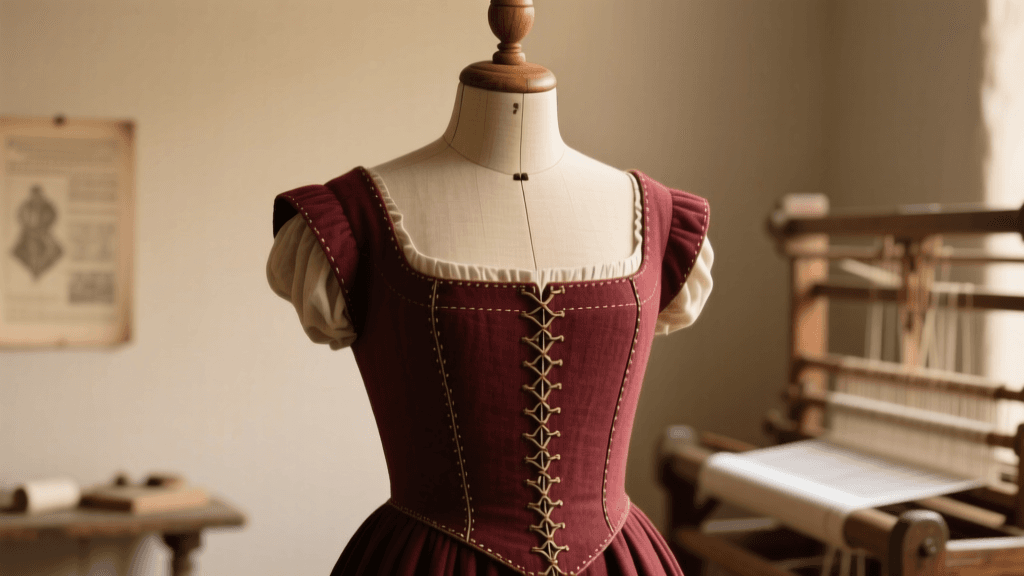
The 16th-century Tudor kirtle remains one of the most foundational garments in the history of European folk, working-class, and court dress. As we navigate the historical costuming landscape in 2026, the demand for accuracy in regional English and Northern European folk dress has never been higher. Unlike the flowing, unstructured gowns of the late medieval Burgundian era, the Tudor kirtle introduced a rigid, structured silhouette that supported the outer layers of a woman's wardrobe. Whether worn as a standalone working-class garment in the countryside or as a supportive base layer for the elite, the kirtle is the cornerstone of 16th-century dress. This comprehensive guide will walk you through the precise methods of drafting, sourcing, and constructing an authentic Tudor kirtle using modern 2026 standards for historical accuracy.
Historical Context: From Medieval Gowns to Tudor Structure
Before taking your shears to fabric, it is crucial to understand the evolution of this garment. According to the Victoria and Albert Museum, the transition from the late 15th to the early 16th century marked a dramatic shift in European textile culture and tailoring. The soft, high-waisted lines of medieval folk dress gave way to a natural waistline and a stiffened bodice. In regional folk contexts, the kirtle was often made of sturdy wool, dyed with locally sourced woad or madder, and served as the primary dress for laboring women. For the nobility, it was crafted from rich silks and served as the structural foundation for the gown. Understanding this duality is essential for modern makers attempting to recreate specific social classes within 16th-century European folk dress.
Sourcing Authentic Materials in 2026
The historical costuming community in 2026 has largely abandoned synthetic blends in favor of heritage textiles. To achieve an authentic drape and silhouette, you must source 100% natural fibers. For a working-class English folk kirtle, a mid-weight wool flannel or fulled wool is ideal. The Metropolitan Museum of Art notes that wool was the backbone of the English textile economy during the Tudor period, heavily regulated and widely exported. For the bodice lining, you will need a heavy, tightly woven linen (often referred to as 'canvas weight' or 'heavy shirting') to provide structural support without relying on modern plastic boning. Avoid modern upholstery fabrics; instead, seek out specialist historical textile merchants who commission custom weaves based on extant 16th-century fabric analyses.
Essential Tools for Historical Hand-Sewing
While modern sewing machines are tempting, true historical accuracy requires hand-sewing techniques that mimic the tension and durability of 16th-century tailoring. Your 2026 toolkit should include:
- Hand Needles: High-carbon steel between needles and sharps. Modern needles are often too flexible; seek out heritage needle brands that replicate historical stiffness.
- Linen Thread: Unbleached, waxed linen thread for structural seams. Waxing your thread with pure beeswax prevents tangling and increases tensile strength.
- Silk Thread: For visible topstitching and finishing edges, as it catches the light beautifully and was historically preferred for exterior stitches.
- Awl: A sharp, tapered awl is strictly necessary for piercing hand-bound eyelets without breaking the warp and weft threads of your fabric.
- Wooden Tailor's Clapper: Essential for pressing wool seams flat without scorching the fibers.
Drafting the Fitted Bodice Pattern
The Tudor kirtle bodice is remarkably simple in its geometry but requires precise fitting. Unlike later Victorian corsets, the 16th-century bodice relies on the tension of heavy linen layers and strategic seam placement rather than steel boning. As popularized by experts at The Tudor Tailor, the most accurate method for drafting this bodice is through direct draping on a dress form or a fitting mockup. Start with a rectangular block of heavy linen. Pin it snugly around the torso, ensuring the side seams sit slightly toward the back of the ribcage. The armscye (armhole) should be cut high and tight, sitting right at the hinge of the shoulder joint, which allows for a full range of motion despite the rigid bodice. The neckline is typically square and low, designed to be covered by a linen chemise and a partlet. Once the linen mockup fits perfectly without wrinkling, transfer the pattern to your fashion fabric and lining.
Skirt Construction and Cartridge Pleating Mathematics
The skirt of a Tudor kirtle is where the garment truly gains its historical volume. Rather than modern knife pleats or gathers, the 16th-century tailor utilized cartridge pleats (also known as gauging). This technique allows a massive width of heavy wool to be compressed into a small waistline while forcing the fabric to flare out dramatically. To calculate your pleating ratio in 2026, measure your finished bodice waistline. A standard cartridge pleat uses a grid system. Mark your fabric with dots spaced exactly 1/4 inch apart horizontally and 1/2 inch apart vertically. Using a heavy, waxed linen thread, run parallel rows of running stitches through these dots. When you pull the threads taut, the fabric will fold into tight, uniform accordion pleats. For a historically accurate folk dress skirt, aim for 3 to 4 yards of wool, which will yield a hem circumference of roughly 108 to 144 inches, providing the necessary weight and swing for period-correct movement.
2026 Fabric Yardage and Budget Breakdown
Budgeting for historical garments requires an understanding of current heritage textile markets. Below is an estimated breakdown for constructing a mid-tier, historically accurate working-class Tudor kirtle in 2026.
| Material | Yardage | 2026 Est. Cost | Notes |
|---|---|---|---|
| Heritage Wool Flannel | 5 yards | $185.00 | Main skirt and bodice fashion fabric |
| Heavy Canvas Linen | 3 yards | $95.00 | Bodice interlining and structural layer |
| Lightweight Linen | 2 yards | $45.00 | Skirt lining and bodice facing |
| Waxed Linen Thread | 2 spools | $28.00 | For structural seams and cartridge pleating |
| Silk Buttonhole Twist | 1 spool | $18.00 | For hand-bound eyelets and visible stitching |
Assembly, Eyelets, and Finishing Techniques
Assembling the kirtle requires a specific order of operations. First, construct the bodice lining and fashion fabric separately, then baste them together with the wrong sides facing. The seams should be finished using a historical technique such as flat-felling or binding the raw edges with narrow strips of linen. The front closure of a Tudor kirtle is typically laced. Do not use modern metal grommets; they are historically inaccurate and will tear through natural fibers over time. Instead, use your steel awl to gently push apart the threads of the fabric to create a hole. Then, use your silk buttonhole twist to sew a dense, circular whipstitch around the hole, creating a hand-bound eyelet. Space these eyelets roughly 1 inch apart in a spiral lacing pattern, which was the most common and efficient lacing method for working women in the 16th century. Finally, whipstitch the cartridge-pleated skirt directly to the bottom edge of the finished bodice, ensuring the pleats are securely anchored to the heavy linen lining.
Common Mistakes to Avoid in Modern Reconstructions
Even experienced seamstresses fall into modern sewing traps when attempting 16th-century folk dress. The most common error in 2026 is over-stiffening the bodice with modern synthetic whalebone or steel. The Tudor kirtle should support the bust and smooth the torso through the tension of multiple layers of heavy linen and wool, not through rigid, uncomfortable boning. Another frequent mistake is placing the waist seam too low. The 16th-century natural waist sits higher than the modern anatomical waist, often resting just below the floating ribs. Finally, avoid hemming the skirt with modern blind-stitch tape. Historical hems were either faced with a wide band of linen to protect the wool from mud and wear, or simply rolled and whipstitched by hand.
Caring for Your Historical Garment
Proper storage and maintenance are vital for preserving your investment in heritage textiles. Never hang a heavy wool kirtle by the shoulders, as the weight of the cartridge-pleated skirt will distort the bodice over time. Instead, store the garment flat in a breathable cotton garment bag, layered with acid-free tissue paper to support the pleats. For cleaning, avoid modern dry cleaning chemicals, which can strip the natural lanolin from heritage wool. Spot clean with a damp cloth and a mild, pH-neutral wool wash, and air the garment out in a shaded, well-ventilated area after each wear. By respecting the materials and the methods of the past, your 2026 Tudor kirtle will remain a durable, historically accurate testament to European folk dress for decades to come.