2026 Feria de Abril Guide: Choosing Your Traje de Flamenca
The Cultural Heartbeat: Feria de Abril and Flamenco Dance
Spring in Andalusia brings an explosion of color, music, and deeply rooted cultural traditions, culminating in the world-famous Feria de Abril. For the 2026 season, Seville prepares to welcome millions of visitors and locals to its sprawling fairgrounds, where the air is thick with the scent of orange blossoms and the rhythmic clapping of palmas. At the center of this vibrant festival is the traditional folk dress of the region: the Traje de Flamenca, also widely known as the Traje de Gitana.
Unlike many European folk costumes that are relegated to museum displays or occasional parades, the Andalusian flamenco dress is a living, breathing garment. It is intrinsically linked to the Sevillanas, the traditional folk dance performed in the casetas (marquees) of the Feria. The dress is engineered not just for visual splendor, but for the dynamic, sweeping movements of Andalusian folk dance, making it a masterpiece of functional cultural textile design.
The Evolution of the Traje de Gitana
To understand the garment's significance in 2026, one must look at its origins. The dress traces its roots back to the 19th and early 20th centuries, originally worn by Romani women and the wives of livestock merchants who attended the Seville livestock fair. These women wore simple, ruffled dressing gowns made from inexpensive cotton calico. As the fair evolved from a commercial livestock market into a premier social and cultural festival, the upper classes adopted and elevated the Romani dress, transforming it into a symbol of Andalusian identity.
According to cultural archives documented by the Andalucía Tourism and Culture Board, the dress is one of the few traditional folk costumes in Europe that continuously evolves with contemporary fashion while maintaining its core structural identity. Every year, including the current 2026 season, new silhouettes, neckline variations, and ruffle placements are introduced by local designers, yet the garment remains instantly recognizable.
Anatomy of the 2026 Traje de Flamenca
The modern flamenco dress is a marvel of textile engineering, designed to accentuate the dancer's movements. When a dancer executes a vuelta (turn), the weighted hem of the skirt flares outward, creating a spectacular bell shape that is essential to the visual language of the dance.
The Bodice (Cuerpo)
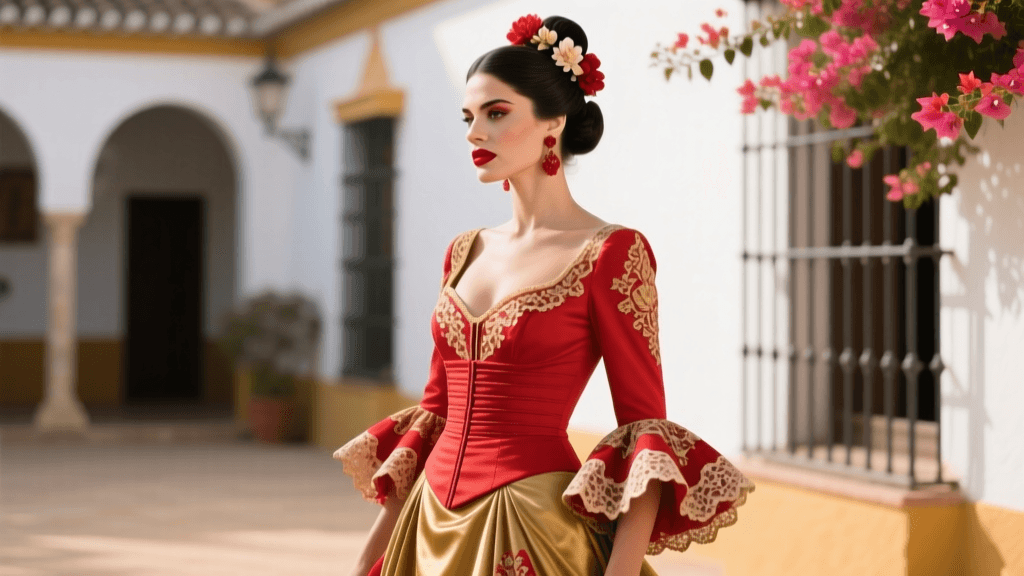
The bodice is tailored to fit like a second skin, providing support and emphasizing the posture required for flamenco dancing. In 2026, we are seeing a resurgence of the classic V-neckline, which elongates the neck and provides a perfect canvas for traditional jewelry. The bodice typically ends at the high hip or natural waist, seamlessly transitioning into the skirt.
The Sleeves (Mangas)
Sleeves in Andalusian folk dress are highly expressive. While sleeveless and short-sleeved variants exist for the daytime heat of the Feria, the most iconic styles feature long sleeves adorned with cascading ruffles. For the 2026 festival season, designers are favoring the manga de farol (lantern sleeve) and asymmetrical ruffle placements that catch the air during the intricate arm movements (braceo) characteristic of Sevillanas.
The Skirt and Ruffles (Volantes)
The skirt is the defining feature of the Traje de Flamenca. It is cut on the bias or with strategic godets to allow for maximum flare. The volantes (ruffles) are not merely decorative; they add weight to the hem, which is crucial for the centrifugal force required in folk dance turns. This year's trends showcase a mix of traditional concentric circular ruffles and avant-garde, asymmetrical draped layers that mimic the architecture of Seville's historic buildings.
2026 Fabric Trends and Sustainable Textiles
Historically, the dress was made from cotton poplin or calico, often featuring the iconic lunares (polka dots) or floral prints. However, the 2026 market reflects a growing demand for sustainable and breathable textiles. While traditional cotton poplin remains a staple for its durability and crisp ruffle structure, many top Seville boutiques are now offering dresses crafted from Tencel, sustainable viscose, and organic cotton blends. These fabrics offer superior drape and breathability, essential for the warm Andalusian spring afternoons.
'The Traje de Flamenca is unique in Europe; it is a folk dress that refuses to be frozen in time. It dances, it breathes, and it adapts to the woman wearing it.' — Curatorial notes from the Museo del Baile Flamenco.
Measurement Guide for the Perfect Fit
Whether you are ordering a custom-made garment from a boutique in the Triana neighborhood or purchasing an off-the-rack piece from a major department store like El Corte Inglés, precise measurements are non-negotiable. A poorly fitted bodice will restrict the arm movements required for the dance, while an incorrect hem length can be a tripping hazard during footwork (zapateado).
Below is the standard measurement chart required by Andalusian dressmakers for the 2026 season:
| Measurement Point | Description & Technique | Fit Standard |
|---|---|---|
| Bust (Pecho) | Measure around the fullest part of the bust, keeping the tape level. | Snug, allowing for 1cm of ease for breathing. |
| Waist (Cintura) | Measure the natural waistline, usually the narrowest part of the torso. | Firm, as the bodice must anchor the heavy skirt. |
| High Hip (Cadera Alta) | Measure around the hip bones where the skirt typically begins to flare. | Exact measurement; no ease, to prevent skirt sagging. |
| Hollow to Hem | Measure from the base of the neck to the desired hemline, wearing dance shoes. | Must clear the floor by 2-3cm to prevent tripping. |
| Armhole (Sisa) | Measure around the shoulder joint and underarm. | High and tight to allow full overhead arm extension. |
Essential Accessories for Festival and Dance
The Traje de Flamenca is never worn in isolation; it is part of a comprehensive ensemble that completes the folk costume. For the 2026 Feria de Abril, the following accessories are essential:
- Mantón de Manila: A large, square silk shawl featuring intricate embroidery and long fringe. Originating from the silk trade routes between Manila and Seville, it is draped over the shoulders or tied at the waist. The fringe adds kinetic energy to the dancer's movements.
- Zapatos de Flamenco: Traditional character shoes with a sturdy heel. For dancers performing Sevillanas, the shoes are fitted with small nails in the toe and heel to produce the percussive sounds of zapateado. In 2026, ergonomic insoles are increasingly common to support dancers through marathon festival days.
- La Flor: A large fabric flower, typically a rose or dahlia, worn in the hair. The placement is significant: worn on the right side if the wearer is single, and on the left if married or in a committed relationship.
- Peineta: A decorative tortoiseshell or metallic comb placed in the updo to secure the flower and add height to the silhouette.
- Pendientes: Large, dramatic earrings, often featuring coral, pearls, or intricate filigree metalwork, designed to frame the face and draw attention to the dancer's head movements.
Purchasing, Renting, and Budgeting for 2026
Acquiring a Traje de Flamenca is an investment in cultural heritage. According to the Official Spanish Tourism Portal, the Feria de Abril generates a massive local economy centered around fashion and textiles. For the 2026 season, buyers have several options depending on their budget and commitment to the festival.
Off-the-Rack and Department Stores
For attendees who want a beautiful, dance-ready dress without the bespoke price tag, major retailers and local markets offer ready-to-wear options. In 2026, expect to pay between €150 and €350 for a high-quality, mass-produced dress. These are ideal for tourists or those attending the Feria for the first time.
Custom and Couture Boutiques
For locals and flamenco enthusiasts, a custom-made dress from a specialized flamenca designer is the gold standard. The process begins in January, with final fittings in March. Prices for bespoke 2026 designs range from €500 to over €1,500, depending on the complexity of the ruffles, the quality of the silk, and the amount of hand-embroidery.
Rental Services
Sustainability and circular fashion have heavily influenced the 2026 festival market. Numerous boutiques in Seville now offer high-end rental services. Renting a designer Traje de Flamenca typically costs between €80 and €150 for a four-day period, which includes professional dry cleaning and minor alterations. This is an excellent option for those who wish to wear a different designer piece each year without the environmental impact of fast fashion.
Caring for Your Garment
Proper maintenance ensures the longevity of the dress. The heavy ruffles can easily lose their shape if stored improperly. After the 2026 Feria, the dress should be professionally dry-cleaned. When storing, never hang the dress by the shoulders, as the weight of the ruffles will stretch the bodice. Instead, fold the skirt carefully with acid-free tissue paper between the ruffles to maintain their crispness, and store the garment flat in a breathable cotton garment bag.
Conclusion
The Traje de Flamenca is far more than a festive outfit; it is a vital component of Andalusian folk dance and a testament to the enduring power of regional European textiles. As you prepare for the Feria de Abril in 2026, understanding the history, anatomy, and proper fit of this magnificent garment will ensure you not only look the part but can fully participate in the rhythmic, joyous traditions of the Seville spring.