Authentic Slavic & Balkan Embroidered Blouses: 2026 Sourcing Guide
The 2026 Revival of Eastern European Heritage Textiles
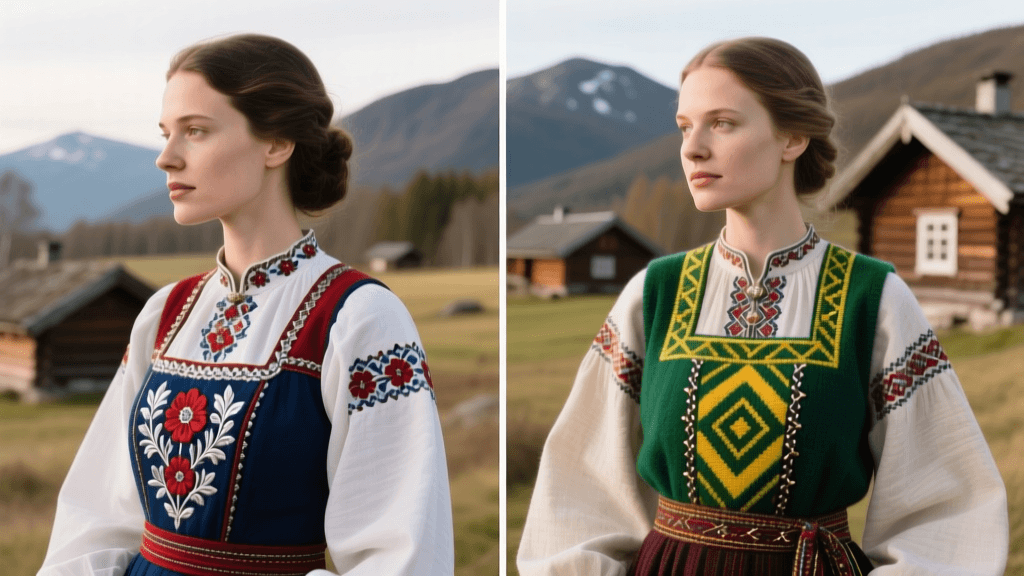
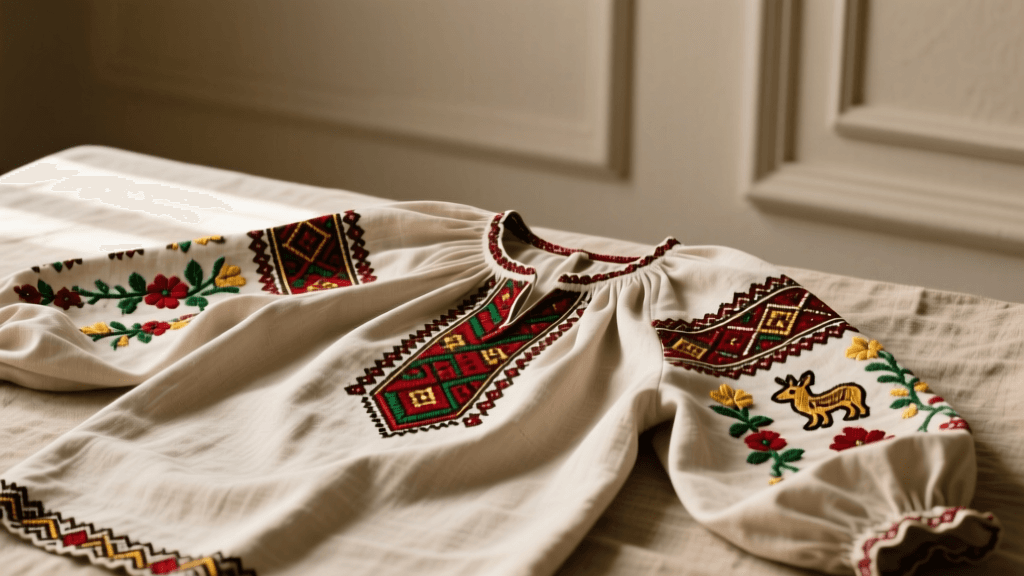
The landscape of European folk dress has experienced a monumental renaissance over the last decade, culminating in a highly sophisticated collector and wearer market in 2026. Among the most sought-after garments are the traditional embroidered blouses of the Slavic and Balkan regions—most notably the Ukrainian vyshyvanka and the Romanian ie (pronounced 'ee-eh'). Once relegated to museum archives or worn exclusively during rural festivals, these masterpieces of textile engineering are now celebrated globally for their intricate geometry, sustainable hand-loomed construction, and profound cultural symbolism.
For enthusiasts, collectors, and cultural historians, navigating the 2026 market requires a discerning eye. The proliferation of fast-fashion knockoffs and machine-embroidered imitations has made authentication more critical than ever. According to the frameworks established by the UNESCO Intangible Cultural Heritage initiatives, preserving the traditional techniques of these garments is not just about saving old cloth; it is about maintaining a living, breathing lineage of ancestral knowledge. This comprehensive guide will walk you through the anatomy, regional variations, and modern sourcing strategies for authentic Slavic and Balkan embroidered blouses in 2026.
Deconstructing the Vyshyvanka and the Ie
At the core of Eastern European folk dress is a profound respect for the integrity of the fabric. Unlike Western European tailoring, which evolved to cut and shape fabric to the contours of the body using curved seams and darts, traditional Slavic and Balkan garments are constructed using rectangular geometry. This zero-waste approach ensures that not a single thread of the precious hand-loomed linen is wasted.
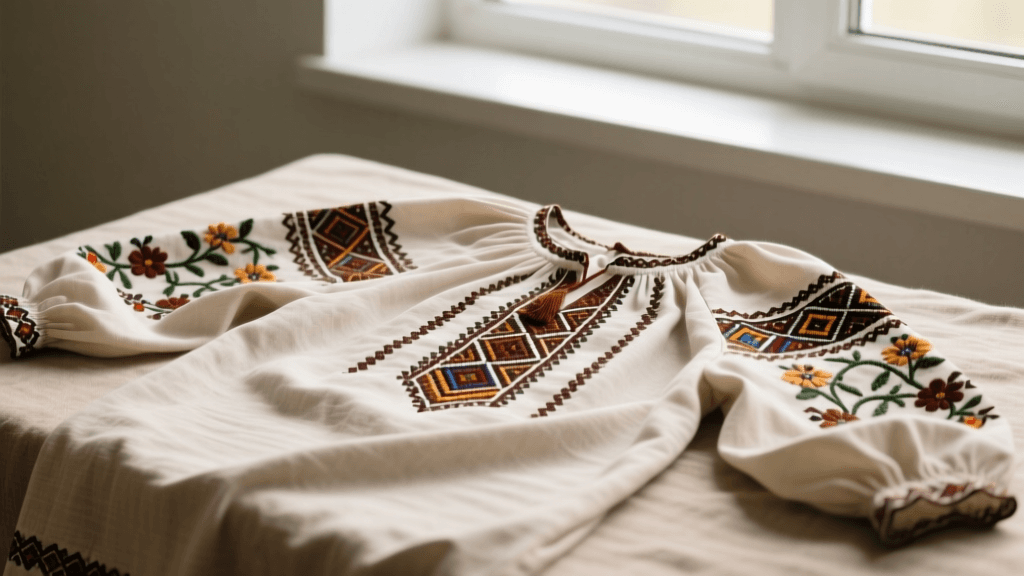
The base fabric of an authentic vyshyvanka or ie is traditionally hand-woven linen or hemp. In 2026, true artisan cooperatives in regions like Maramureș and Hutsulshchyna still utilize wooden floor looms to create textiles characterized by 'slubs'—natural, slight irregularities in the yarn thickness that give the fabric a beautiful, organic texture. The cut of the shirt typically features a continuous body and sleeve piece, gathered at the neck with a drawstring or a narrow embroidered collar known as a bentiță. Gussets are inserted under the arms to provide mobility, a hallmark of ancient European garment construction that allows the shirt to drape elegantly while maintaining structural durability.
The Architecture of the Sleeve: Understanding the Altița
When examining a traditional Romanian ie, the sleeve is the undisputed focal point. The sleeve is not merely embroidered; it is architecturally zoned into three distinct sections, each carrying specific symbolic weight and requiring different stitching techniques.
- The Altița (The Shoulder Block): This is the crown of the blouse. It is a dense, rectangular or square panel of embroidery located on the upper shoulder. Historically, the altița was believed to protect the wearer's vital energy centers. It is the most complex part of the garment, often featuring intricate solar motifs, rhombuses, and geometric hooks.
- The Increț (The Gather): Directly below the altița, the fabric is tightly gathered or smocked. This section acts as a visual and structural transition, creating the voluminous puff of the sleeve.
- The Râuri (The Rivers): Flowing down the length of the arm from the gather to the cuff, the râuri consists of vertical or diagonal stripes of embroidery. These 'rivers' symbolize the flow of life, water, and ancestral lineage, guiding the eye downward and elongating the silhouette.
Regional Motifs and Symbolic Geometries
The embroidery on these garments is never purely decorative; it is a codified language of protection, fertility, and cosmic order. The motifs vary drastically depending on the specific micro-region. Below is a comparison of dominant regional styles recognized by textile historians in 2026.
| Region | Garment Name | Dominant Motifs | Primary Colors | Key Stitch Technique |
|---|---|---|---|---|
| Hutsulshchyna (Ukraine) | Vyshyvanka | Dense geometric stars, rhombuses, solar crosses | Black, deep red, orange, yellow | Cross-stitch, Smyrna stitch, nyzynka (darning) |
| Bukovina (Ukraine/Romania) | Vyshyvanka / Ie | Stylized florals, tree of life, horn motifs | Black and white, metallic thread accents | Satin stitch, cutwork, buttonhole stitch |
| Olt (Romania) | Ie | Abstract geometric hooks, meandering lines | Monochromatic black or deep indigo on white | Puntul în cruciuliță (cross-stitch), ajur (hemstitch) |
| Maramureș (Romania) | Cămașă | Minimalist geometric borders, small shoulder accents | Subtle red, natural unbleached linen tones | Whitework, drawn thread work, subtle chain stitch |
For a deeper understanding of how these regional variations reflect broader historical migrations and cultural exchanges, the Britannica guide to Eastern European folk art provides excellent contextual background on the intersection of Slavic, Balkan, and Carpathian textile traditions.
Natural Dyes and the Language of Color
Authentic heritage garments rely on a strict palette derived from local flora and minerals. In 2026, the most prestigious artisan workshops have returned entirely to natural dyeing methods, abandoning the harsh aniline dyes of the 20th century. Red, derived from madder root or kermes insects, is the most prevalent color, symbolizing life force, blood, and protection against the evil eye. Black, achieved through walnut hulls or oak galls mixed with iron, represents the fertile earth and ancestral wisdom. White, the color of the unbleached linen base, stands for spiritual purity and light. Yellow (weld or onion skins) and blue (woad) are used more sparingly, often to denote specific marital statuses or regional affiliations.
Sourcing Authentic Garments in 2026
Finding a genuine, hand-embroidered, hand-loomed blouse requires moving beyond standard commercial marketplaces. In 2026, the most reliable sourcing channels are verified artisan cooperatives, specialized cultural NGOs, and direct-to-consumer platforms that utilize blockchain or NFC (Near Field Communication) tagging to prove provenance. Many cooperatives in Ukraine and Romania now embed washable NFC threads into the hem of their garments, allowing buyers to scan the shirt with a smartphone and view the exact village, the name of the weaver, and the number of hours spent on the embroidery.
When evaluating a piece, always inspect the reverse side of the embroidery. In traditional hand-stitching, particularly the nyzynka or counted-thread techniques, the back of the fabric should look almost as neat and patterned as the front. Machine embroidery, conversely, leaves a chaotic web of bobbin threads and jump-stitch cut-offs on the reverse side. Furthermore, authentic hand-loomed linen will feel cool to the touch and possess a distinct, slightly crisp drape that softens beautifully over years of wear, unlike the limp, uniform feel of factory-milled cotton blends.
2026 Pricing Guide for Collectors and Enthusiasts
The market for authentic Eastern European folk dress has matured, with prices reflecting the immense labor and specialized skills required. Below are the expected price ranges for authentic pieces in 2026:
- Vintage/Antique (Pre-1950s): €400 – €2,500+. Highly dependent on condition, region, and rarity. Pieces from Bukovina with metallic thread or beadwork command the highest premiums at auction.
- Contemporary Artisan (Hand-loomed linen, hand-spun thread, natural dyes): €600 – €1,200. These are museum-quality reproductions or traditional pieces made by master artisans in rural cooperatives. They often require a waitlist of 3 to 6 months.
- Contemporary Semi-Artisan (Factory-woven linen, hand-embroidered with commercial cotton/silk floss): €250 – €500. Excellent for everyday wear and cultural festivals, offering a balance of authenticity and accessibility.
- Machine-Embroidered Imitations: €40 – €120. Mass-produced, usually on synthetic blends. While affordable, these hold no cultural or collector value and are discouraged by heritage preservationists.
Archival Care and Preservation of Heritage Linen
Owning a piece of Eastern European textile history comes with the responsibility of proper preservation. Heritage linens and natural dyes are highly sensitive to modern washing chemicals and environmental factors. Textile conservation guidelines from institutions like the Victoria and Albert Museum emphasize the importance of gentle, non-invasive care for historical garments.
Never machine-wash an authentic vyshyvanka or ie. The agitation can break the delicate hand-spun threads and cause natural dyes to bleed into the pristine white linen. Instead, hand-wash the garment in cool water using a pH-neutral, conservation-grade detergent specifically formulated for protein and cellulose fibers. Avoid wringing or twisting the fabric; instead, gently press the water out and roll the garment in a clean, dry cotton towel to absorb excess moisture. Always dry the blouse flat, away from direct sunlight, as UV radiation will rapidly degrade both the linen fibers and the natural botanical dyes.
For long-term storage, never use plastic bags or wire hangers. Plastic traps moisture and off-gasses chemicals that yellow linen, while wire hangers distort the rectangular shoulder seams. Fold the garment carefully, padding the folds with acid-free tissue paper to prevent hard creases that can eventually snap the fibers. Store the piece in a breathable cotton pillowcase or an archival textile box in a cool, dark, and climate-controlled environment.
Conclusion: Wearing History in the Modern Era
The Slavic and Balkan embroidered blouse is far more than a beautiful garment; it is a wearable archive of Eastern European history, cosmology, and artisanal brilliance. As we move through 2026, the conscious decision to source, support, and preserve authentic folk dress ensures that the rhythmic clack of the wooden loom and the quiet dedication of the embroiderer's needle will not be silenced by the noise of fast fashion. By understanding the anatomy, respecting the symbolism, and practicing meticulous care, collectors and wearers alike become active participants in the ongoing story of Europe's rich textile heritage.