Norwegian Bunad Guide 2026: Hardanger vs Telemark Regions
The Living Archive: Norwegian Bunads in 2026
The Norwegian bunad is far more than a simple folk costume; it is a wearable archive of regional history, genealogy, and textile mastery. As we navigate the cultural landscape of 2026, the bunad remains a vital staple of Norwegian identity, worn proudly during Constitution Day (Syttende Mai), weddings, and milestone anniversaries. Unlike generic historical garments that fade into museum displays, the bunad is a living, breathing tradition governed by strict regional councils. However, the intricate rules governing regional authenticity, material sourcing, and construction often confuse newcomers and those tracing their Scandinavian heritage. This comprehensive guide dives deep into two of the most iconic and visually distinct regional variations: the Hardangerbunad and the Telemark bunads. By understanding the construction, embroidery, and 2026 market realities of these garments, you can make an informed investment into a masterpiece of European folk dress.
The Hardangerbunad: The Romantic Ideal
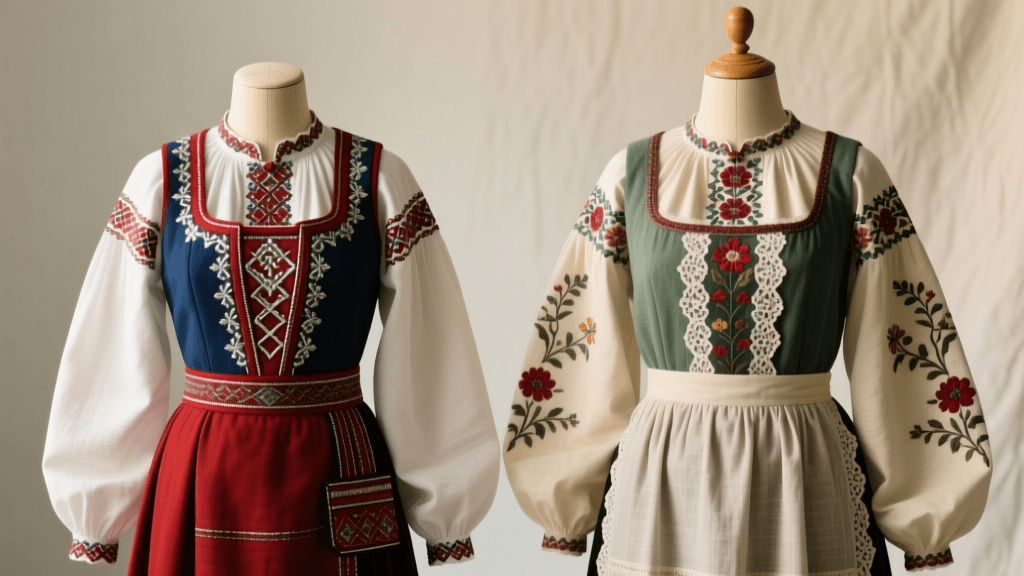
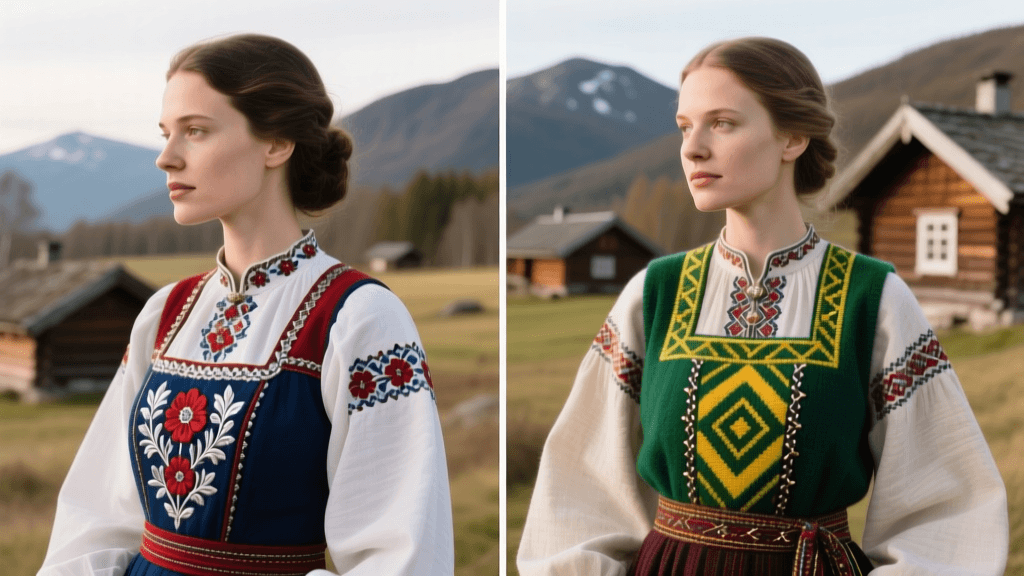
Often romantically referred to as the “national bunad,” the Hardangerbunad originates from the breathtaking Hardanger fjord region in Vestland county. Its aesthetic played a massive role in the early 20th-century bunad movement, spearheaded by cultural preservationists who sought to elevate rural crafts to national symbols. The classic women’s Hardangerbunad features a meticulously tailored black wool skirt and bodice, contrasted by a vibrant silk or wool damask bodice front (livstykke) in deep red, emerald green, or navy blue. The defining feature of this regional dress is the apron. Traditional Hardanger aprons are crafted from fine white linen or cotton, adorned with hardangersaum—a meticulous whitework embroidery technique that involves drawn thread work, cutwork, and satin stitching. In 2026, authentic hand-embroidered Hardanger aprons remain highly sought after, though machine-assisted bases with hand-finished details are common to manage the rising costs of artisanal labor. The men’s Hardangerbunad is equally striking, featuring a black wool jacket with intricate red and green floral embroidery, paired with knee-breeches and hand-knitted patterned stockings.
The Telemark Bunads: Viking Roots and Bold Wool
Moving east to the inland county of Telemark, the textile traditions shift dramatically from the delicate whitework of the fjords to bold, heavy wools and vibrant colors. Telemark is renowned for its embroidery that closely mirrors the region’s famous rosemaling (rose painting) woodcraft. The Telemark bunads are generally divided into Aust-Telemark (East) and Vest-Telemark (West), each with distinct silhouettes and color palettes. The Aust-Telemark bunad is characterized by its rich, dark blue or black wool base, heavily embroidered with vibrant, multi-colored wool yarns in asymmetrical, flowing floral motifs. The apron is typically woven in intricate geometric patterns or embroidered to match the skirt. The Vest-Telemark bunad often features a striking red skirt with a green or black bodice, and the embroidery incorporates more structured, symmetrical baroque influences. For men, the Telemark bunads include heavily embroidered velvet jackets, wide-brimmed hats, and distinctive silver button details. In 2026, the Telemark bunads are celebrated for their warmth, durability, and bold visual impact, making them exceptionally popular for outdoor winter weddings and rural heritage festivals.
2026 Regional Comparison: Materials, Costs, and Lead Times
Ordering a bunad is the ultimate commitment to slow fashion. In 2026, the global supply chain has impacted the availability of specific traditional natural dyes and high-grade European linen for aprons, driving prices up by approximately 12% compared to pre-2024 levels. Below is a comparative breakdown of what to expect when commissioning these regional garments today.
| Feature | Hardangerbunad (Women's) | Aust-Telemark Bunad (Women's) |
|---|---|---|
| Base Fabric | Black Wool, Linen Apron | Dark Blue/Black Heavy Wool |
| Embroidery Type | Hardangersaum (Whitework Cutwork) | Wool Thread Rosemaling Motifs |
| Average 2026 Cost (NOK) | 32,000 - 38,000 NOK | 35,000 - 42,000 NOK |
| Average 2026 Cost (USD) | $3,000 - $3,550 USD | $3,280 - $3,950 USD |
| Artisan Lead Time | 8 - 12 Months | 10 - 14 Months |
| Primary Silver Style | Oxidized Filigree | Bright Silver with Dangling Elements |
According to the Norwegian Institute of Bunad and Folk Costume, the extended lead times in 2026 are largely due to a surge in demand from the Norwegian diaspora and a well-deserved bottleneck in the availability of certified master embroiderers. It is highly recommended to begin the consultation and measurement process at least 18 months before your intended wear date.
The Crucial Role of Regional Silver (Sølje)
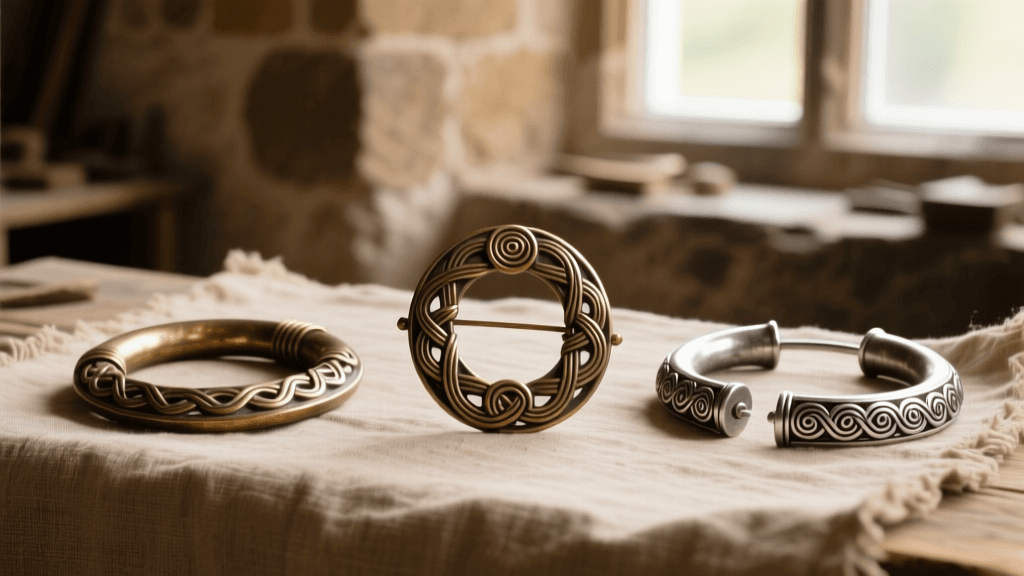
No European folk dress is complete without its regional jewelry, and in Norway, the bunad silver (sølje) is paramount. Historically, silver served as a portable bank account for farming families, and the quantity and quality of silver worn indicated a family's wealth and social standing. For the Hardangerbunad, the silver is typically oxidized and features intricate filigree work, including the iconic skjortesølje (shirt brooch), halssølje (neck brooch), and elaborate belt buckles. Telemark silver, conversely, is often brighter, heavier, and features dangling elements that chime softly with movement, reflecting a more exuberant regional personality. In 2026, with the fluctuating cost of precious metals, a complete, authentic set of Norwegian bunad silver can range from 15,000 to 45,000 NOK. Many contemporary buyers opt for sterling silver dipped in rhodium to prevent tarnishing, a modern adaptation widely accepted by current bunad councils. When purchasing, always ensure the silver is stamped with the maker’s mark and the 925S sterling guarantee, as verified by the Norges Husflidslag (Norwegian Folk Art and Craft Association).
2026 Best Practices for Bunad Care and Storage
A properly maintained bunad is an heirloom designed to be passed down through multiple generations. Modern care techniques have evolved, and the days of harsh chemical cleaning are behind us. Here are the actionable best practices for maintaining your garment in 2026:
- Airing Over Washing: Never machine wash or submerge your wool bunad. After wearing, hang the garment outside in a shaded, breezy area for 24 hours. The natural lanolin in the Norwegian wool will release odors and minor stains.
- Moth Prevention: The Norsk Folkemuseum recommends storing wool bunads in breathable cotton garment bags with natural cedar blocks and dried lavender. Avoid plastic covers, which trap moisture and promote mildew.
- Silver Maintenance: For oxidized Hardanger silver, do not use abrasive polishing cloths, as they will strip the intentional dark patina from the filigree crevices. Use a soft-bristled jewelry brush and a specialized non-abrasive silver foam. For bright Telemark silver, a microfiber polishing cloth is sufficient for routine maintenance.
- Professional Alterations: Bodies change over time. Bunads are constructed with generous seam allowances specifically for this reason. Always take your garment to an authorized Husflid tailor for alterations; standard dry cleaners do not possess the specialized knowledge to handle the structural boning and embroidery placement.
Conclusion: Investing in European Textile Heritage
Choosing between the delicate, romantic whitework of the Hardangerbunad and the bold, vibrant wool embroidery of the Telemark bunads is a deeply personal decision, often dictated by family lineage or a profound connection to a specific Norwegian landscape. As of 2026, investing in a bunad is not merely a fashion purchase; it is an act of cultural preservation. By supporting authorized artisans, understanding the historical context of your regional dress, and committing to proper heirloom care, you ensure that these magnificent examples of European folk dress will continue to tell their stories for centuries to come.