Celtic Penannular Brooches & Torcs: 2026 Replica Sourcing Guide
The Enduring Legacy of Celtic Metalwork in Modern Folk Dress
The resurgence of traditional European folk dress has reached new heights in 2026, with enthusiasts, historical reenactors, and cultural preservationists demanding unprecedented levels of authenticity. When curating a traditional Celtic or Norse-inspired wardrobe, the garments themselves—such as hand-woven wool plaids, heavy linen tunics, and cloaks—are only half the equation. The true hallmark of historical accuracy lies in the accessories. Specifically, Celtic penannular brooches and torcs serve as the crowning elements of any traditional folk ensemble, transforming a simple outfit into a historically grounded representation of ancient European heritage.
In 2026, the market for historical jewelry has shifted dramatically. Mass-produced, lightweight costume jewelry is being rejected by serious folk dress aficionados in favor of artisan-crafted, museum-quality replicas. Whether you are preparing for the upcoming Highland games season, attending a pan-Celtic folk festival, or simply integrating heritage pieces into a modern wardrobe, understanding the history, materials, and sourcing methods for these iconic accessories is essential. This comprehensive guide will walk you through everything you need to know about acquiring authentic Celtic metalwork this year.
Understanding the Penannular Brooch: Function Meets Artistry
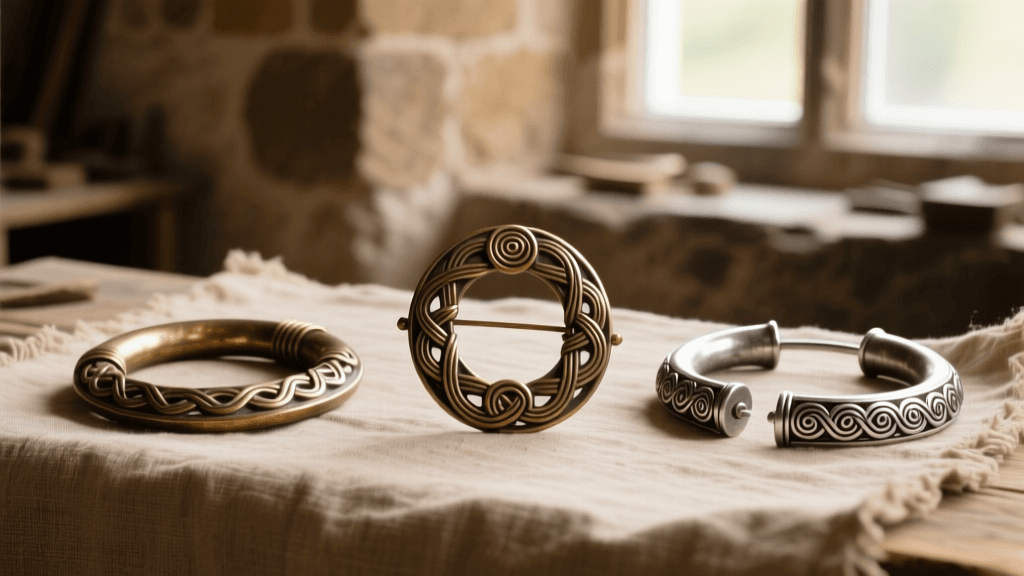
The penannular brooch is one of the most recognizable and functional artifacts of the Celtic and early medieval worlds. Unlike a modern safety pin or a solid ring brooch, a penannular brooch features a complete ring with a small gap (the penannular opening) and a long, straight pin. This ingenious design allowed the wearer to fasten heavy, voluminous wool cloaks—known as brats—securely at the shoulder without damaging the dense textile. The pin is pushed through the fabric, and the ring is twisted so that the pin rests securely against the gap, held in place by the tension of the heavy cloth.
Historically, these brooches were not merely functional; they were profound indicators of social status. According to the extensive archives at National Museums Scotland, high-status brooches like the famous Hunterston Brooch were masterpieces of early medieval metalworking, featuring intricate gold filigree, amber inlays, and complex interlacing patterns. For the 2026 folk dress enthusiast, commissioning or purchasing a replica of a pseudo-penannular or true penannular brooch offers a tangible connection to this rich history. Modern artisans are now utilizing advanced 3D laser scanning of museum artifacts to create exact wax models for traditional lost-wax casting, ensuring that the intricate knotwork and zoomorphic designs are perfectly preserved in solid bronze or silver.
The Torc: Ancient Symbolism in Modern Folk Dress
While the brooch secured the garments, the torc adorned the body and signaled nobility, strength, and divine favor. A torc is a rigid neck ring, typically made from twisted strands of metal, featuring ornate terminal ends at the front. Worn by both men and women across various Celtic, Gallic, and Germanic tribes, the torc was so revered that it was frequently offered to the gods in votive hoards and depicted on statues of deities.
The most spectacular examples of this craft are found in the Snettisham Hoard, a massive collection of Iron Age metalwork. As documented by The British Museum Collection, the Great Torc from Snettisham showcases the incredible skill of ancient goldsmiths who could twist and weave electrum and gold into flexible, yet sturdy, neck rings. In the context of 2026 European folk dress, torcs are highly sought after for ceremonial wear, festival attendance, and high-end historical reenactments. Because original torcs were often made of precious metals, modern replicas are frequently crafted in solid bronze, brass, or sterling silver to provide an accessible yet historically respectful alternative for contemporary wearers.
2026 Sourcing Guide: Materials and Manufacturing
Sourcing authentic replicas requires a keen eye for materials and manufacturing techniques. The current year has seen a rise in specialized blacksmiths and jewelers who focus exclusively on historical European metalwork. When evaluating a piece for your folk dress collection, the material dictates not only the price but also the historical accuracy, weight, and longevity of the item.
Modern 2026 manufacturing techniques have allowed small-batch artisans to compete with larger foundries. Lost-wax casting remains the gold standard for intricate penannular brooches, capturing the finest details of Celtic knotwork. For torcs, traditional forging and twisting methods are still employed by master smiths to ensure the metal possesses the correct tensile strength and authentic visual texture. Below is a comparison chart to help you navigate the 2026 market for Celtic replica jewelry.
2026 Material Comparison Chart for Celtic Replicas
| Material | 2026 Avg. Price Range | Weight & Feel | Maintenance Level | Historical Accuracy |
|---|---|---|---|---|
| Cast Bronze | $120 - $350 | Heavy, substantial | Medium (Requires oiling) | High (Everyday historical use) |
| Sterling Silver | $400 - $950 | Medium, premium | High (Tarnishes easily) | High (Nobility and elite) |
| 14k Gold / Electrum | $1,800+ | Medium, luxurious | Low (Highly resistant) | Very High (Royalty and deities) |
| Zinc Alloy / Pewter | $25 - $60 | Light, fragile | Low | Low (Modern costume grade) |
How to Spot Authentic Replicas vs. Mass-Produced Costumes
As the popularity of heritage festivals continues to grow in 2026, the market has been flooded with cheap, mass-produced alternatives. To ensure you are investing in a piece that respects the tradition of European folk dress, watch out for several common red flags. First, examine the pin mechanism on penannular brooches. Authentic replicas will feature a forged or cast pin that moves freely but maintains tension against the ring. Mass-produced costume pieces often use flimsy, stamped metal pins that bend under the weight of a real wool cloak.
Second, look at the terminals of the torc or the decorative faces of the brooch. Genuine artisan pieces will have crisp, deep relief in their knotwork and zoomorphic designs. If the details look soft, muddy, or possess visible seam lines from cheap rubber molds, the piece is likely a low-grade factory casting. Finally, verify the metal. As noted by historians at Historic UK - The Celts, the ancient Celts were master metallurgists who prized the luster and durability of bronze and gold. Avoid pieces labeled as 'antique silver plated' over unspecified base metals, as these will quickly wear down and ruin the aesthetic of your traditional garments.
Styling Celtic Accessories for Contemporary Folk Wardrobes
Integrating heavy metalwork into a modern or historically inspired wardrobe requires an understanding of proportion and textile weight. A massive, 8-inch bronze penannular brooch is designed to hold together layers of heavy, fulled wool. If you attempt to pin it to a lightweight linen shirt or a modern cotton tunic, the weight of the bronze will tear the fabric and cause the garment to hang awkwardly. For lighter summer folk dress, opt for smaller, 3-to-4-inch silver or bronze ring brooches that provide the historical aesthetic without overwhelming the textile.
Torcs offer incredible versatility for 2026 festival styling. A twisted bronze torc pairs beautifully with a simple, unbleached linen tunic, providing a striking contrast between the rough, organic fabric and the gleaming, structured metal. For formal folk dress or evening gatherings, a polished sterling silver torc worn over a dark, finely woven wool garment creates an elegant, regal silhouette that honors the aristocratic roots of the accessory.
Care and Maintenance for Historical Metals
Proper care is vital to maintaining the beauty and structural integrity of your Celtic jewelry. Bronze and brass are highly susceptible to oxidation and, in humid environments, 'bronze disease'—a destructive form of corrosion. To prevent this, wipe your bronze brooches and torcs with a soft cloth after wearing them to remove skin oils and moisture. Many museum conservators and historical reenactors in 2026 recommend applying a microcrystalline wax, such as Renaissance Wax, to seal the metal and provide a soft, historically appropriate sheen that prevents rapid tarnishing.
Silver requires a different approach. While it does not suffer from bronze disease, it tarnishes quickly when exposed to sulfur in the air. Store your silver penannular brooches in anti-tarnish cloth bags when not in use, and use a gentle silver polishing cloth to maintain their luster. Avoid harsh chemical dips, as these can strip the intentional antiquing or patina that artisans apply to highlight the intricate Celtic knotwork.
Conclusion
The accessories you choose define the authenticity and impact of your European folk dress. By investing in high-quality, historically accurate penannular brooches and torcs, you are not merely buying jewelry; you are participating in the preservation of Celtic artistry and metalworking traditions. As you navigate the 2026 sourcing landscape, prioritize solid materials, traditional casting methods, and reputable artisans. Whether fastening a heavy wool cloak against the Highland chill or adorning yourself for a midsummer festival, these timeless pieces will serve as a powerful, beautiful link to Europe's rich cultural past.