Romanian Ia Blouse Revival: 2026 Styling & Ethical Sourcing Guide
The Global Resurgence of the Romanian Ia in 2026
The landscape of contemporary fashion in 2026 is defined by a radical return to heritage, sustainability, and slow craftsmanship. At the forefront of this European folk dress revival is the Romanian Ia (pronounced 'ee-ah'), a traditional hand-embroidered peasant blouse that has transcended its rural origins to become a cornerstone of modern, ethical wardrobes. No longer confined to museum archives or occasional folk festivals, the Ia is now a highly sought-after garment among global style connoisseurs who value narrative-rich textiles and artisanal construction.
Following its landmark inscription on the UNESCO Intangible Cultural Heritage registry, the cultural and monetary value of authentic Ia blouses has surged. In 2026, consumers are actively rejecting mass-produced 'boho-chic' knockoffs, opting instead for genuine vintage pieces or newly commissioned blouses crafted by rural artisan cooperatives. This guide explores the anatomy of the Ia, how to ethically source one in today's market, and how to seamlessly integrate this masterpiece of Eastern European folk art into your contemporary 2026 wardrobe.
Decoding the Altita: Embroidery Patterns and Meanings
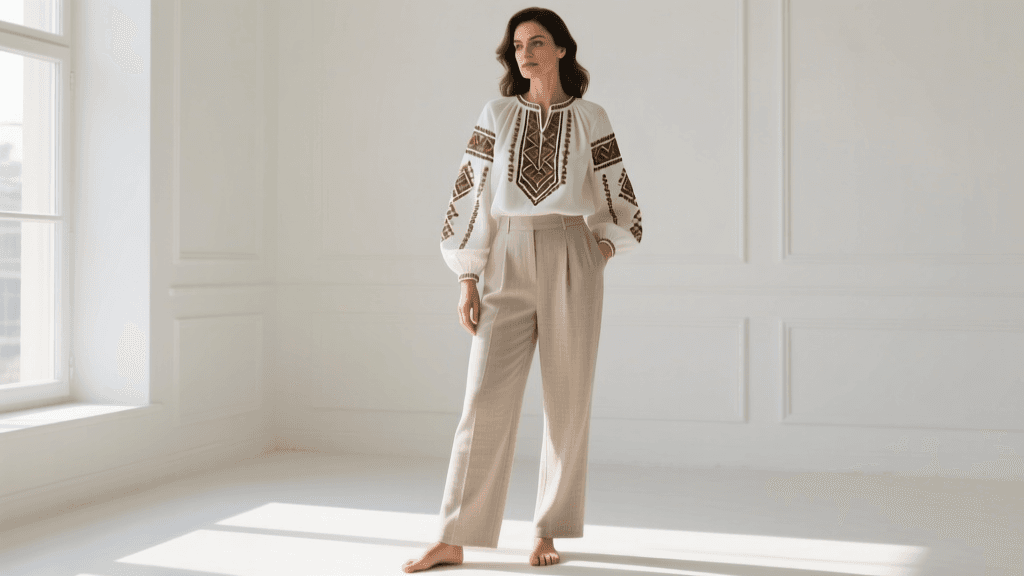
To style the Ia with respect and intention, one must first understand its anatomy. The traditional blouse is not merely decorative; it is a wearable manuscript detailing the wearer's region, social status, and spiritual beliefs. The embroidery is strictly structured into three main components:
- The Altiţă: The defining feature of the authentic Ia. This is the dense, rectangular block of embroidery located on the shoulder. Historically, the altiţă served as a spiritual shield, protecting the wearer from the 'evil eye.' In 2026, contemporary designers often use the altiţă as the focal point of minimalist outfits, allowing the shoulder detailing to act as natural jewelry.
- The Increţ: A narrower, horizontal band of embroidery just below the altiţă, which gathers the fabric of the sleeve. It represents the earth and the grounding forces of nature.
- The Râuri (Rivers): Vertical or diagonal stripes of embroidery that flow down the sleeve from the increţ to the cuff. These 'rivers' symbolize the flow of life, time, and the natural waterways of the Carpathian landscape.
Regional variations are vast. Blouses from Muscel feature intricate gold and silver metallic thread woven into black silk, while those from Olt are famous for their vibrant, geometric red and black cotton thread on raw hemp. Digital heritage platforms such as Europeana's fashion collections provide incredible reference points for identifying these regional motifs before making a purchase.
Ethical Sourcing: Authentic Vintage vs. 2026 Artisan Reproductions
The 2026 market for European folk dress is heavily scrutinized for cultural appropriation and ethical labor practices. Sourcing an Ia requires navigating three distinct market tiers. Below is a comprehensive comparison to help you make an informed, ethical investment.
| Category | 2026 Price Range (USD) | Material & Dyes | Ethical & Cultural Rating | Longevity & Care |
|---|---|---|---|---|
| Authentic Vintage (Pre-1960s) | $450 - $1,500+ | Hand-spun hemp/linen, natural dyes (madder, indigo, walnut) | Excellent (Preserves heritage) | Fragile; requires specialist textile conservation |
| Modern Artisan Cooperatives | $180 - $350 | Organic linen/cotton, eco-certified or natural dyes | Excellent (Supports rural economies) | High; durable for regular contemporary wear |
| Mass-Market 'Boho' Brands | $40 - $90 | Synthetic blends, chemical dyes, machine embroidery | Poor (Cultural dilution, fast fashion) | Low; degrades quickly, lacks structural integrity |
Sourcing Tip for 2026: When purchasing from modern artisan cooperatives, look for certifications from the Romanian Ministry of Culture or recognized fair-trade textile guilds. True hand-embroidery takes between 40 to 120 hours to complete; if a brand-new, 'handmade' Ia is priced under $100, it is almost certainly machine-made or produced under exploitative conditions.
Contemporary Styling: How to Wear the Ia Today
The beauty of the Ia lies in its voluminous silhouette and striking textural contrasts. In 2026, the styling paradigm has shifted away from 'costume' pairings (like wearing it with traditional peasant skirts) toward high-contrast, modern juxtapositions. Here is how to style the Ia for various contemporary settings.
1. The Modern Office & Smart Casual
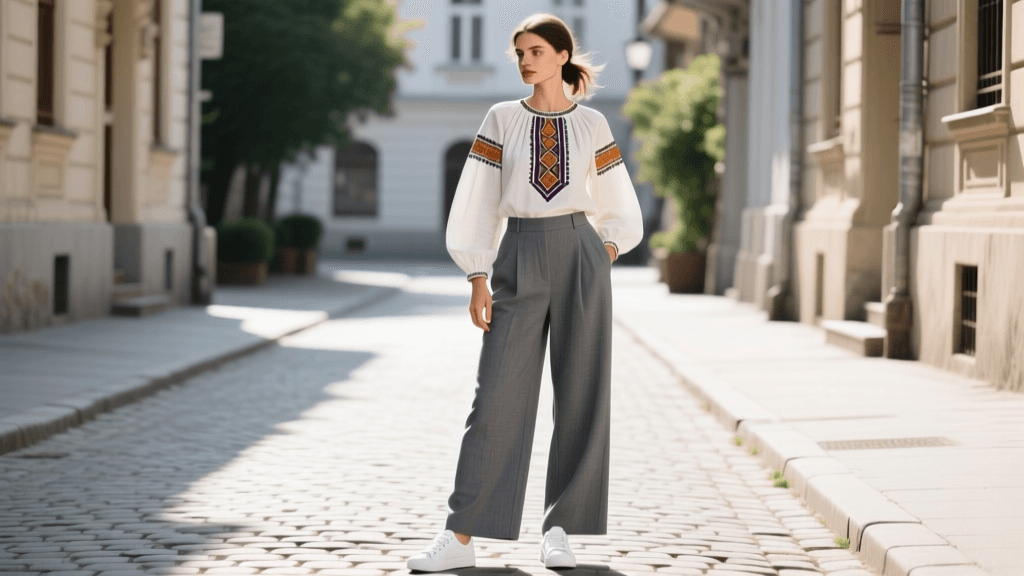
For a sophisticated daytime look, contrast the romantic volume of the Ia with sharp, architectural tailoring. Choose an Ia from the Vâlcea region, which typically features subtle, monochromatic black-on-white embroidery. Tuck the blouse into high-waisted, wide-leg wool trousers in charcoal or deep navy. Cinch the waist with a minimalist leather belt and finish with structured, square-toe loafers. The key is to let the altiţă (shoulder embroidery) peek out elegantly from beneath a slightly unbuttoned, oversized blazer.
2. Elevated Weekend Streetwear
The streetwear scene in 2026 embraces heritage textiles as ultimate statement pieces. Pair a heavily embroidered, vibrant Ia (such as the striking red-and-black motifs of Olt) with upcycled, relaxed-fit vintage denim. Allow the blouse to sit untucked but use the traditional drawstring neckline to create a structured, off-the-shoulder look. Ground the outfit with chunky, sustainable sneakers and a crossbody bag made from vegan cactus leather. This look bridges the gap between ancestral craftsmanship and urban utility.
3. Evening & Gallery Openings
For evening wear, lean into the luxurious textures of the Muscel Ia, which incorporates metallic threads. Tuck the blouse into a bias-cut silk slip skirt in a complementary jewel tone (emerald green or deep burgundy). The metallic threads will catch the ambient light beautifully. Accessorize sparingly—avoid heavy necklaces, as the neckline embroidery is meant to stand alone. Opt instead for sculptural, modernist ear cuffs and a sleek, low chignon to keep the focus entirely on the shoulder detailing.
Caring for Hand-Embroidered Linen and Hemp
Owning an authentic piece of European folk dress comes with the responsibility of proper garment care. The natural fibers and dyes used in traditional Ias are highly sensitive to modern chemical detergents and high heat.
- Washing: Never machine wash an authentic or artisan Ia. Hand wash in cool water (below 30°C) using a pH-neutral, enzyme-free detergent specifically formulated for delicate natural fibers.
- Drying: Never wring the fabric, as this can distort the intricate embroidery and cause the increţ (gathers) to lose their shape. Gently press the water out between two clean, dry towels and lay the garment flat to dry in the shade. Direct sunlight will rapidly fade natural dyes like madder root and weld.
- Ironing: Iron the blouse while it is still slightly damp, using a low-to-medium heat setting. Always iron on the reverse side, placing a clean cotton pressing cloth over the embroidery to prevent crushing the three-dimensional texture of the stitches.
- Storage: Store your Ia flat in a breathable cotton garment bag with acid-free tissue paper stuffed in the sleeves to maintain their volume. Avoid wire hangers, which can stretch the delicate shoulder seams and distort the altiţă.
The Future of Folk Dress in the Modern Wardrobe
The revival of the Romanian Ia in 2026 represents a broader, vital shift in how we consume fashion. By choosing to invest in authentic, ethically sourced folk garments, we are not merely buying clothes; we are acting as custodians of human history. Institutions like the Victoria and Albert Museum's textile archives continually remind us of the profound technical skill embedded in these historical garments. When you wear an Ia, you are wearing a testament to the resilience, artistry, and enduring spirit of European textile heritage, seamlessly woven into the fabric of contemporary life.