Kimono Extreme Weather Guide 2026: Rain, Snow, Heat
The Resilience of the Kimono in a Changing Climate
The kimono is often perceived by the uninitiated as a fragile, static garment reserved for climate-controlled interiors or mild spring days. However, as The Metropolitan Museum of Art notes in its extensive textile archives, the kimono has historically been a dynamic, living garment designed to navigate Japan's four highly distinct and often extreme seasons. In 2026, with shifting global climate patterns bringing more intense summer heatwaves, sudden torrential downpours, and unpredictable winter storms to cities like Tokyo and Kyoto, adapting traditional Japanese clothing to extreme weather is more crucial than ever. This comprehensive guide explores the intersection of heritage craftsmanship and modern 2026 textile innovations, ensuring you can wear your kimono confidently, no matter what the sky decides to do.
Navigating Heavy Rain: The Art of the Kimono Raincoat
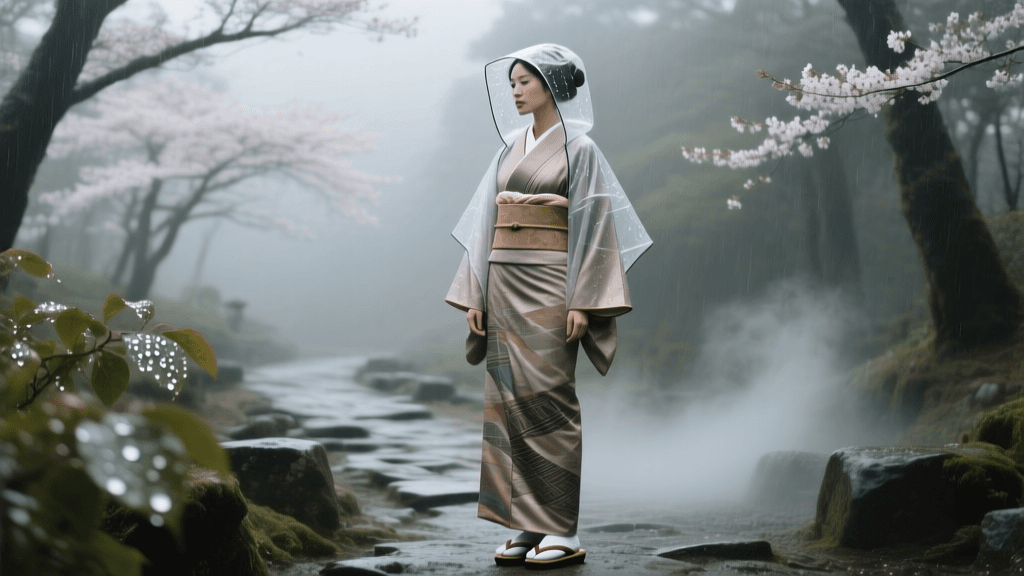
Sudden summer downpours, known as guu, can be disastrous for untreated silk. The traditional defense against rain is the kappa (raincoat) and the michiyuki (travel coat). While a michiyuki is typically worn for warmth and modesty during travel, a true kappa is specifically engineered for wet weather. In 2026, the market has seen a remarkable fusion of old and new. Artisans are now offering vintage-style kappa treated with eco-conscious, fluorine-free nano-coatings that repel water without altering the drape or breathability of the silk. A professional nano-treatment for an existing silk coat costs approximately 8,500 JPY at specialized cleaners in Kyoto and Tokyo.
The Karin Technique and Waterproof Footwear
When caught in the rain without a coat, practitioners use the karin technique. This involves using a specialized, discreet clip to gather the excess fabric of the kimono skirt at the hips, raising the hemline by exactly 15 to 20 centimeters. This prevents the hem from dragging in puddles and mud. For footwear, traditional zori sandals are highly slippery when wet. Modern 2026 adaptations include tabi (split-toe socks) woven with waterproof, breathable membranes similar to Gore-Tex, priced around 6,000 JPY. Additionally, silicone zori covers have become a staple in the modern kimono bag, providing instant traction and water resistance for your footwear.
Braving the Snow: Footwear and Layering Secrets
Winter in northern Japan and the mountainous regions can be unforgiving. Silk offers virtually no insulation against freezing winds, making strategic layering and specialized footwear mandatory. According to the Victoria and Albert Museum, the historical layering of the kimono (such as the juni hitoe) was as much about thermal regulation as it was about aesthetic color combinations. Today, we rely on hidden modern layers to preserve the traditional silhouette while trapping body heat.
Thermal Underlayers and Wool Textiles
The foundation of winter kimono dressing in 2026 is the thermal nagajuban (under-kimono). Modern versions utilize advanced contact-warming fibers that generate heat through moisture absorption, allowing wearers to stay warm without adding bulk that would ruin the clean lines of the obi (sash). Over this, a haramaki (traditional belly warmer) made from merino wool or cashmere is worn to protect the core. For the outer garment, winter calls for heavy crepe (chirimen) or wool tapestry weaves (tsuzure-ori). Wool kimonos are naturally water-resistant and provide exceptional insulation, making them the premier choice for snowy excursions.
Yuki-Geta: Conquering Ice and Snow
Standard sandals are useless in the snow. Enter the yuki-geta (snow clogs). Traditional yuki-geta feature metal spikes on the soles for gripping ice. In 2026, modern iterations feature vulcanized rubber soles with micro-cleats and insulated, fleece-lined tabi boots that zip up the calf. These modern snow boots are designed to mimic the aesthetic of traditional footwear while providing the necessary arch support and thermal protection required for walking through snowdrifts. Expect to invest around 18,000 JPY for a high-quality pair of modern insulated tabi boots.
Surviving Summer Heat: Breathability and Cooling Textiles
Summer heatwaves in Japan frequently push temperatures past 35°C (95°F) with oppressive humidity. Wearing a standard lined silk kimono in these conditions is not just uncomfortable; it is a health risk. The traditional solution lies in the weave of the fabric. Ro (leno weave) and sha (gauze weave) are sheer, lightweight silks where the warp threads are twisted, creating tiny, uniform gaps that allow for maximum airflow. As noted by Britannica, the seasonal transition to these sheer fabrics is a hallmark of Japanese sartorial elegance, signaling the height of summer.
Shijira-Ori and Cooling Accessories
For cotton garments like the yukata, shijira-ori (Awa seersucker) is the gold standard. The puckered texture of the fabric prevents it from clinging to sweaty skin, promoting evaporation and cooling. In 2026, the use of cooling accessories has become highly refined. Koshihimo (the sashes used to tie the kimono) are now frequently made from breathable, moisture-wicking mesh rather than solid cotton. Furthermore, igusa (rush grass) inserts are placed between the obi and the back to absorb sweat and create a ventilated air gap, preventing the dreaded 'back sweat' that can stain delicate silks. Handheld uchiwa (flat fans) made from sustainable bamboo and washi paper remain an essential, elegant tool for personal climate control.
2026 Kimono Weather Adaptation Matrix
To help you prepare your wardrobe for the year's most challenging weather, refer to the adaptation matrix below. This chart outlines the essential gear, modern innovations, and estimated costs for extreme conditions.
| Weather Condition | Traditional Garment/Accessory | Modern 2026 Innovation | Estimated Cost (JPY) |
|---|---|---|---|
| Heavy Rain | Kappa (Silk Raincoat) | Fluorine-free nano-coating treatments | 8,500 (Treatment) |
| Snow & Ice | Yuki-geta (Spiked Clogs) | Insulated, fleece-lined tabi boots with micro-cleats | 18,000 |
| Extreme Cold | Tsuzure-ori (Wool Tapestry) | Moisture-activated thermal nagajuban underlayers | 6,500 |
| Oppressive Heat | Ro / Sha (Sheer Silk) | Igusa (rush grass) obi ventilation inserts | 2,500 |
| High Humidity | Shijira-ori (Seersucker Cotton) | Moisture-wicking mesh koshihimo tying sashes | 1,200 |
Post-Exposure Care: Drying and Storage
Surviving the elements is only half the battle; proper post-exposure maintenance is what preserves the garment for future generations. If your kimono is exposed to rain or snow, it must never be folded while damp, as this will immediately lead to mold growth and permanent water spotting on silk. Always use an ikou (a traditional wide wooden kimono hanger) to air out the garment in a well-ventilated, shaded room. Direct sunlight will cause the dyes to fade and the fibers to become brittle.
For sweat removal after a hot summer day, the garment should be gently pressed with a dry, clean towel to absorb moisture before hanging. If water spots do appear on vintage silk, do not attempt to rub them out with water, as this will only spread the stain and disturb the sizing. Instead, take the garment to a specialized arai-hari (traditional kimono cleaning) specialist. In 2026, these specialists utilize advanced ozone-cleaning chambers that neutralize odors and lift stains without the use of harsh chemicals that degrade antique threads.
Conclusion: Embracing the Elements
The true beauty of the kimono lies in its profound connection to nature and the changing seasons. By understanding and utilizing both time-honored techniques and cutting-edge 2026 textile innovations, wearers can honor this connection without sacrificing comfort or risking damage to their garments. Whether you are navigating a sudden Tokyo downpour, walking through a snowy Kyoto garden, or attending a sweltering summer festival, the right adaptations ensure that your traditional attire remains a source of pride, resilience, and elegance.