Discovering Authentic Traditional Irish Clothing: A Cultural Guide and Store Finder
The quest to find 'traditional Irish clothing stores near me' is often driven by a desire to connect with a rich, storied heritage. Whether you are a member of the global Irish diaspora seeking a tangible link to your ancestry, or simply an admirer of masterful textile craftsmanship, searching for authentic Irish garments is a journey into a culture that has clothed the world in both warmth and artistry. From the rugged, windswept cliffs of the Aran Islands to the misty, rolling hills of County Donegal, the island of Ireland has cultivated a sartorial legacy that transcends mere fashion. It is a language of survival, identity, and profound cultural pride.
In this comprehensive cultural guide, we will explore the deep historical roots of traditional Irish dress, the defining characteristics of its world-renowned textiles, and the regional variations that make each garment unique. Furthermore, we will provide you with the knowledge needed to identify authentic heritage boutiques and local importers, ensuring that when you search for an Irish clothing store in your local area, you know exactly how to distinguish genuine artisan craftsmanship from mass-produced souvenirs.
The Ancient Origins of Irish Dress
Long before the iconic Aran sweater or the tailored tweed jacket became global staples, the indigenous people of Ireland wore garments deeply suited to their environment and social structures. The earliest recorded traditional Irish attire consisted primarily of two items: the Léine and the Brat. The Léine was a long, loose-fitting tunic, typically crafted from linen and dyed a vibrant saffron yellow using native plants and imported spices. It was heavily pleated and gathered at the waist, providing both freedom of movement and insulation against the damp Celtic climate.
Over the Léine, both men and women wore the Brat, a heavy, fringed woolen cloak. The Brat was a vital survival tool, serving as a blanket, a weather shield, and a symbol of social status. The wealth and rank of an individual were often denoted by the number of colors woven into the Brat's fringes, a concept deeply tied to early Celtic Brehon Law. However, the traditional Irish wardrobe faced severe disruption during the Tudor and Elizabethan conquests. Sumptuary laws were enacted to suppress Irish cultural identity, famously banning the wearing of saffron dyes and the traditional mantle. This forced a gradual shift toward the woven wools, linens, and regional tweeds that would eventually come to define the Irish sartorial identity we recognize today.
Defining Characteristics of Heritage Irish Garments
When you step into a genuine heritage clothing store, the garments you encounter will share several defining characteristics: durability, natural material sourcing, and intricate, symbolic craftsmanship. The global reputation of Irish clothing rests on three primary pillars of textile mastery.
The Aran Sweater
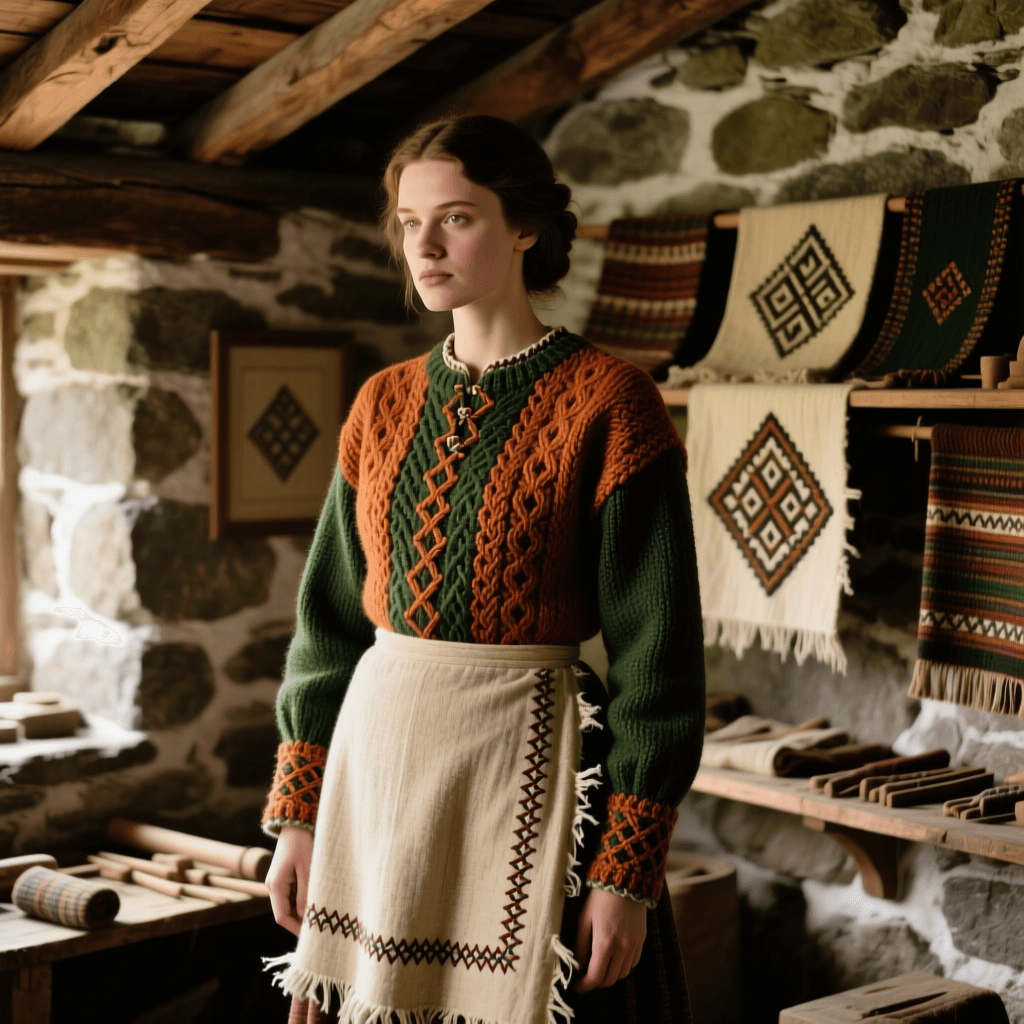
Perhaps the most globally recognized symbol of Irish heritage is the Aran sweater. Originating from the Aran Islands off the west coast of Galway, these garments were traditionally knit from bainín (pronounced baw-neen), an undyed, cream-colored wool that retained its natural lanolin oils. This lanolin made the sweaters virtually water-resistant, a crucial feature for the island's fishing communities. The intricate cable patterns are not merely decorative; they are a complex visual language. To understand the deep meanings behind the honeycomb, diamond, and tree of life stitches, we highly recommend exploring our detailed guide on Aran sweater patterns and their meanings. Today, an authentic Aran sweater remains a masterpiece of structural knitting, offering unparalleled warmth and a profound connection to coastal Irish life.
Donegal Tweed
Donegal tweed is celebrated worldwide for its distinctive 'salt-and-pepper' fleck and its incredibly resilient, weather-beaten texture. Unlike the smoother worsted wools of neighboring regions, Donegal tweed is spun from coarse, short-fibered fleece and dyed using the very landscape of the county. Traditional weavers historically harvested local heather, moss, blackberries, and bog oak to create a palette of earthy greens, deep purples, and rich browns. The resulting fabric is a literal tapestry of the Irish countryside. For a deeper dive into the weaving techniques and the cottage industry that birthed this fabric, read our extensive piece on the history of Donegal tweed.
Irish Linen
While wool provided warmth, Irish linen provided elegance and breathability. Cultivated from the flax plant, the production of linen in Ireland dates back centuries, with the damp climate proving ideal for the 'retting' process required to separate the flax fibers. Irish linen is renowned for its crisp hand-feel, exceptional durability, and natural luster. It has been the fabric of choice for everything from peasant undergarments to the finest aristocratic lace. Our article on Irish linen production details the painstaking, multi-step process from flax seed to finished textile.
Regional Variations Across the Emerald Isle
Ireland's diverse topography and historical provincial divisions have given rise to distinct regional variations in traditional dress and textile production. Understanding these regional nuances is key to appreciating the garments you find in specialty stores.
- The West Coast (Galway and the Aran Islands): This region is the undisputed heartland of heavy knitwear. The harsh Atlantic gales necessitated the creation of the dense, multi-layered Aran sweaters and the thick, hand-spun woolen socks and shawls that protected fishermen and farmers alike.
- The Northwest (County Donegal): The rugged, boggy terrain of Donegal birthed the famous tweed industry. Here, the tradition of the 'weaver's cottage' remains strong, and the region is also famous for its heavy, hand-woven woolen blankets and the iconic Donegal flat cap, a staple of rural Irish menswear.
- The South and East (Cork, Limerick, and Dublin): Historically, these more urbanized and agriculturally rich regions became the centers of the linen trade and fine lace-making. Limerick lace and Carrickmacross lace are exquisite, delicate textiles that contrast sharply with the heavy wools of the west, showcasing the refined, artisanal side of Irish garment history.
Occasions for Wearing Traditional Irish Attire
Traditional Irish clothing is not relegated to museum displays; it is a living, breathing part of the culture, worn with pride at specific occasions and increasingly integrated into everyday heritage wear.
Cultural Festivals and Step Dancing: At gatherings such as the Fleadh Cheoil (a massive celebration of Irish music) or local ceilis, you will often see traditional garments in active use. Irish step dancers, particularly in competitive settings, frequently wear elaborate dresses featuring intricate Celtic knotwork embroidery, or kilts adorned with Irish county tartans. If you are curious about how these patterns differ from their Scottish counterparts, our guide on the differences between Scottish and Irish tartans provides a fascinating historical breakdown.
Weddings and Ceremonial Events: Irish heritage frequently takes center stage at weddings. Grooms may opt for a tailored tweed suit featuring a subtle herringbone weave, paired with a linen shirt and a silk tie adorned with Celtic jewelry symbols like the Trinity Knot. Brides often incorporate vintage Irish lace veils or carry handkerchiefs woven from pure Irish linen, honoring the superstition that a linen hanky brings good luck to the marriage.
Everyday Heritage Wear: In contemporary times, the most common way people wear traditional Irish clothing is through high-quality, everyday staples. A well-tailored tweed blazer, a lightweight merino wool sweater featuring a subtle cable stitch, or a crisp linen button-down shirt allows individuals to carry a piece of Irish heritage into the office or out for a casual evening, blending historical craftsmanship with modern silhouettes.
How to Find Authentic Irish Clothing Stores Near You
When you type 'traditional Irish clothing stores near me' into a search engine, the results can be a mixed bag of genuine heritage importers and generic souvenir shops. To ensure you are investing in authentic, high-quality garments, you must know what to look for in a local boutique.
1. Check the Labels and Origins: The most crucial step is examining the garment's tag. Look for the 'Made in Ireland' designation. Be wary of tags that say 'Designed in Ireland' or 'Celtic Inspired,' as these often indicate that the garment was mass-produced overseas. Authentic stores will proudly stock heritage brands with verifiable manufacturing roots in the country, such as Magee 1866, Blarney Woollen Mills, or Carraig Donn.
2. Look for Artisan Certifications: Genuine Irish clothing boutiques often display certifications or memberships related to the Design & Crafts Council Ireland (DCCI). Stores that partner directly with rural weaving cooperatives or independent Aran knitters will usually have signage or literature explaining the provenance of their stock and the names of the artisans who crafted them.
3. Assess the Material Quality: Authentic Irish wool has a distinct, robust feel, and genuine Irish linen possesses a natural slub (slight irregularities in the thread) and a cool, crisp drape. A knowledgeable shop owner or staff member in a true heritage store will be able to explain the difference between worsted and woolen yarns, or the specific flax-retting processes used in their linens. If the staff cannot speak to the origins and materials of the garments, it is likely a novelty shop rather than a cultural retailer.
4. Explore Local Heritage Societies and Festivals: Sometimes the best 'stores' are not permanent brick-and-mortar locations but rather pop-up vendors at local Celtic heritage festivals, Highland games, or university cultural fairs. These vendors are frequently small-batch importers or traveling artisans who bring authentic, high-quality textiles directly to the diaspora communities.
The Cultural and Economic Significance of Irish Textiles
The story of traditional Irish clothing is inextricably linked to the socio-economic survival of the Irish people. During the 19th and early 20th centuries, the textile cottage industry became a vital lifeline for rural communities, particularly along the impoverished western seaboard. Weaving and knitting were not merely domestic chores; they were essential economic engines.
For women in the Aran Islands and the rural west, knitting complex sweaters and shawls provided a rare source of independent income. They would sell their garments to local merchants or trade them for essential goods, effectively sustaining their families during times of severe economic hardship and agricultural failure. Similarly, the hand-weaving of tweed in Donegal allowed crofters to pay their rent and survive the harsh winters. The rhythmic clack of the loom and the clicking of knitting needles were the sounds of resilience.
Today, purchasing from authentic Irish clothing stores is a direct way to support the continuation of these ancient crafts. As globalization and fast fashion threaten traditional manufacturing methods, the patronage of heritage boutiques ensures that the skills of the hand-loom weaver and the master knitter are passed down to the next generation. Wearing these garments is an act of cultural preservation, keeping the tangible history of the Emerald Isle alive in the modern world.
Frequently Asked Questions
What is considered traditional Irish clothing?
Traditional Irish clothing encompasses garments rooted in the island's history and textile heritage. This includes the hand-knitted Aran sweater, Donegal tweed jackets and caps, crisp Irish linen shirts and dresses, and ceremonial wear such as step-dancing costumes featuring Celtic embroidery or Irish county tartans. Historically, it also refers to the ancient Léine (tunic) and Brat (cloak), though these are now primarily seen in historical reenactments rather than everyday wear.
How can I tell if an Aran sweater is authentic?
An authentic Aran sweater is traditionally made from 100% pure new wool, often retaining some natural lanolin, and features complex, multi-layered cable patterns that are structurally integrated into the knit, not merely printed or sewn on afterward. While modern authentic versions may use treated merino wool for softness, a genuine sweater will still feature the intricate, raised relief stitches like the honeycomb, diamond, and blackberry. Checking the label for 'Made in Ireland' and purchasing from a reputable heritage store are the best ways to ensure authenticity.
Are Irish tartans the same as Scottish tartans?
No, they are distinct. While Scottish tartans are historically tied to specific clans and families, Irish tartans are generally associated with the historical counties and districts of Ireland (such as the Cork, Dublin, or Tara tartans). Irish tartans tend to feature different color palettes, often incorporating deep saffrons, rich greens, and earthy browns that reflect the Irish landscape. They are frequently worn as kilts by Irish pipe bands and step dancers.
Where is the best place to buy authentic Donegal tweed?
The absolute best place to buy Donegal tweed is directly from the weavers or heritage mills in County Donegal, Ireland. However, if you are searching locally outside of Ireland, look for specialty Celtic import stores or high-end menswear boutiques that carry verified heritage brands like Magee 1866 or Studio Donegal. Always verify that the fabric was actually woven in Ireland, as the term 'tweed' is not strictly protected, and many mass-market retailers sell synthetic blends labeled as tweed.
Can I wear traditional Irish clothing for everyday use?
Absolutely. While highly ornate step-dancing dresses or full ceremonial kilts are reserved for specific events, the core textiles of Irish heritage are incredibly versatile. A Donegal tweed blazer, a lightweight merino wool sweater with a subtle cable stitch, or an Irish linen button-down shirt are timeless, durable pieces that integrate seamlessly into a modern, everyday wardrobe, allowing you to carry a piece of Celtic heritage with you wherever you go.