The Rich History of Traditional Irish Clothing: A Cultural Guide
When exploring the rich tapestry of global textiles, few regions boast a heritage as deeply intertwined with their landscape and history as Ireland. The story of traditional Irish clothing is not merely a chronicle of fashion; it is a profound narrative of survival, identity, and an unyielding connection to the earth. At The Garment Atlas, we believe that to understand a culture, one must examine the garments that shield its people from the elements while simultaneously broadcasting their social standing, regional roots, and spiritual beliefs. The history & culture of Ireland are woven into every thread of its traditional attire, reflecting a society that has weathered centuries of hardship, colonization, and eventual cultural renaissance.
Irish clothing history is defined by the island's damp, temperate climate and its agrarian roots. From the ancient, saffron-dyed tunics of the early Celts to the heavy, water-resistant woolens of the Aran Islands, every garment was born of necessity. Yet, beyond mere utility, these textiles evolved into powerful symbols of Irish resilience. In this comprehensive guide, we will journey through the centuries to uncover the origins, defining characteristics, and enduring legacy of traditional Irish clothing, separating historical fact from romanticized myth.
Ancient Origins and Celtic Influences
The earliest records of Irish dress date back to the ancient Celtic period, long before the island was divided into modern counties or influenced by continental European fashion. The foundational garment for both men & women was the léine (pronounced lay-nuh), a voluminous, knee-length tunic typically crafted from linen. The léine was renowned for its incredibly wide, flowing sleeves, which were often gathered or pleated at the wrists. This garment was a testament to the early Irish mastery of flax cultivation and linen weaving, skills that would later become the backbone of the nation's economy.
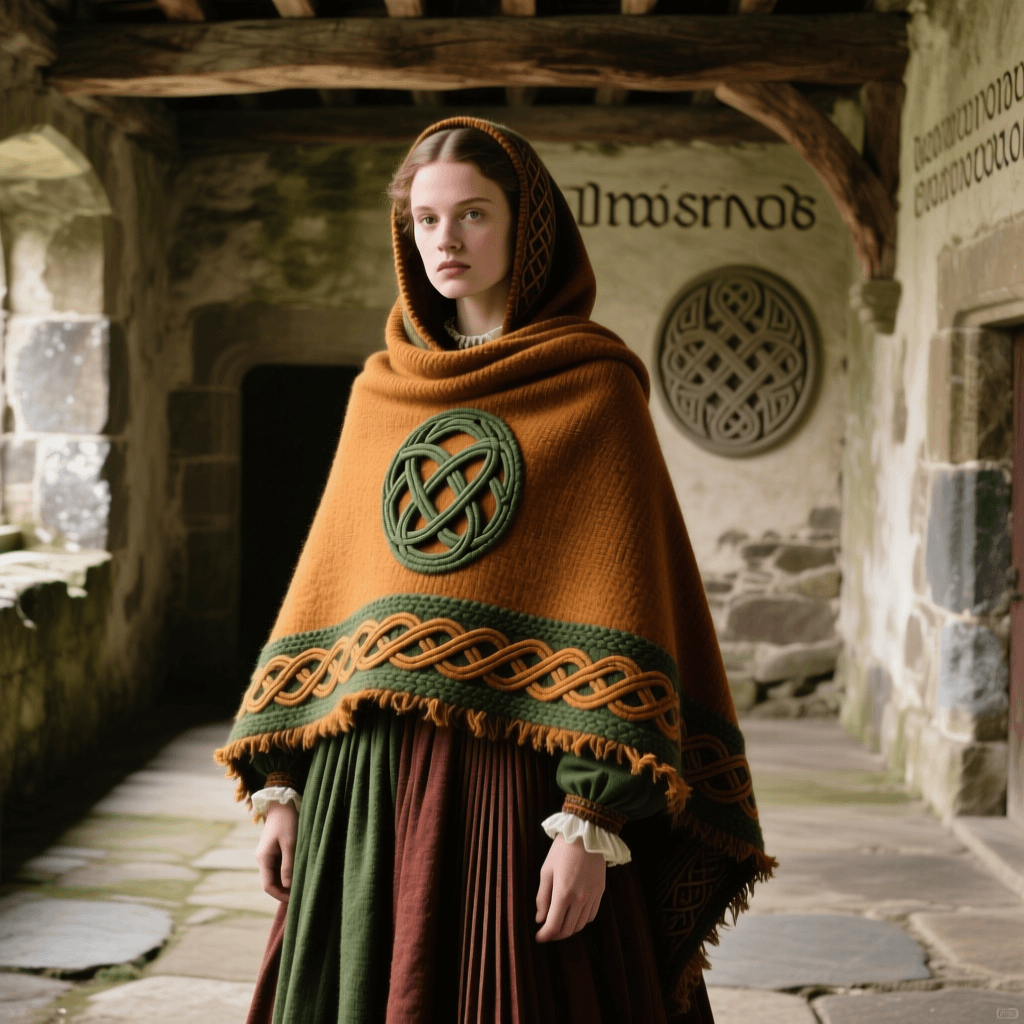
Over the léine, the Irish wore the brat, a heavy, woolen cloak that served as a vital shield against the relentless Atlantic winds and rain. The brat was much more than a simple outer layer; it was a versatile tool for survival. It could be used as a blanket during long journeys, a makeshift tent, or a pouch for carrying goods. Furthermore, the brat was a significant status symbol. The quality of the wool, the complexity of the fringe, and the vibrancy of the dye all communicated the wearer's wealth and social standing within the clan.
Color played a pivotal role in ancient Irish society, governed by strict sumptuary laws known as the Brehon Laws. These laws dictated how many colors a person could wear based on their rank in society. While royalty and high-ranking chieftains could wear garments featuring up to seven distinct colors, commoners and slaves were restricted to drab, undyed wools or simple single-color garments. The most famous of these early dyes was 'saffron'—though historians note it was often derived from the weld plant or safflower rather than true, expensive saffron—yielding a vibrant, mustard-yellow hue that became synonymous with early Irish warriors and nobility.
The arrival of the Vikings and later the Anglo-Normans introduced new tailoring techniques and heavier fabrics, but the core elements of the léine and brat persisted for centuries. It was not until the Tudor conquest of Ireland that traditional dress faced its first existential threat. English authorities enacted strict sumptuary laws forbidding the Irish from wearing their native clothing, viewing the brat and léine as symbols of rebellion and 'uncivilized' behavior. This forced assimilation marked a turning point, driving traditional Irish garments underground and into the remote, rural western counties where English influence was weakest.
Defining Characteristics of Irish Garments
The defining characteristic of traditional Irish clothing is its profound reliance on native, natural materials. The interplay of warp & weft in Irish textiles was dictated by what the land could provide. Linen and wool were the undisputed pillars of the Irish wardrobe. The damp, mild climate of the island was exceptionally well-suited for growing flax, the raw material for linen. By the 18th and 19th centuries, the linen industry, particularly in the northern province of Ulster, had become a global powerhouse. Irish linen was prized across Europe for its fine weave, durability, and brilliant white finish, achieved through traditional sun-bleaching methods on coastal grasses.
Wool, however, was the true workhorse of the Irish rural population. Sheep farming was ubiquitous, and the processing of wool—from shearing and carding to spinning and weaving—was a central aspect of domestic life. The resulting fabrics were incredibly dense, naturally lanolin-rich, and highly water-resistant. This practical approach to textile creation is a hallmark of Irish heritage, a theme we explore further in our traditional weaving techniques collection. The garments were designed to be mended, patched, and passed down through generations, reflecting a culture that valued resourcefulness and longevity over fleeting trends.
Another defining trait is the use of natural, locally sourced dyes, which gave rural Irish clothing its distinct, earthy palette. Before the advent of synthetic aniline dyes in the late 19th century, rural weavers and knitters relied on the flora around them to color their yarns. The resulting hues were deeply connected to the Irish landscape:
- Yellow and Gold: Derived from weld, onion skins, and bog rosemary.
- Reds and Purples: Extracted from lichens (such as cudbear) and the roots of the lady's bedstraw plant.
- Blues and Greens: Achieved through woad, elderberries, and various types of moss and heather.
- Browns and Blacks: Sourced from oak bark, alder, and the naturally dark fleece of native black sheep.
These natural dyes yielded soft, muted tones that allowed the wearer to blend seamlessly into the rugged bogs, mountains, and coastlines of the Emerald Isle. The beauty of these garments lay not in ostentatious decoration, but in the texture of the weave, the warmth of the wool, and the subtle, organic variations in color.
Clothing for Occasions and Daily Life
When examining historical Irish clothing, it is crucial to distinguish between the garments worn for daily survival and those reserved for special occasions. For the vast majority of the rural population, particularly during the 18th and 19th centuries, daily life was defined by grueling agricultural labor and, often, profound poverty. Everyday wear consisted of heavy, homespun woolen skirts for women, paired with simple linen or cotton blouses and sturdy, hobnailed boots. Men typically wore heavy woolen trousers (often corduroy or tweed), simple shirts, and flat caps. The clothing was dark, practical, and designed to withstand the mud, rain, and physical demands of farming and fishing.
Special occasions, such as weddings, christenings, and pattern days (local religious festivals), provided a rare opportunity to showcase finer garments. Women would don their best linen shifts, sometimes adorned with intricate, hand-stitched lace—a craft that became a vital source of income for many Irish families during times of economic hardship. The Galway shawl, a heavy, beautifully woven and fringed woolen shawl, was a prized possession often passed from mother to daughter as a wedding gift or heirloom. Men might wear a finer, tailored waistcoat or a specially woven tweed jacket, signaling their respectability and pride.
It is also necessary to address a widespread modern misconception regarding 'traditional' Irish dress: the elaborate, heavily embroidered costumes seen in competitive Irish step dancing. The stiff, sequined dresses with rigid skirts, accompanied by curly wigs and bright green sashes, are not historical garments. They are a theatrical invention of the late 20th century, designed to catch the stage lights and project a specific, romanticized vision of Irishness to global audiences. While these costumes are a significant part of modern Irish cultural export, they bear almost no resemblance to the authentic, historical clothing worn by the Irish people of the past.
Regional Variations Across the Emerald Isle
Ireland's diverse geography gave rise to distinct regional variations in clothing, with isolated communities developing unique textile traditions to cope with their specific environments. Nowhere is this more evident than in the iconic garments of the western seaboard, where the Atlantic Ocean dictates the rhythm of life.
The Aran Islands: Off the coast of County Galway, the Aran Islands are world-renowned for their heavy, cream-colored woolen sweaters. As detailed in our guide to the complete history of the Aran sweater, these garments were born of necessity. The unscoured wool retained its natural lanolin, making the sweaters virtually waterproof—a vital feature for the island's fishermen. The intricate cable, diamond, and honeycomb stitches were not merely decorative; they provided extra insulation and structural integrity to the garment, while also serving as a canvas for the knitter's creativity.
County Donegal: In the rugged northwest, the tradition of Donegal Tweed emerged as a masterclass in blending utility with breathtaking aesthetics. Donegal Tweed is characterized by its distinctive 'flecks' of color—tiny neps of dyed wool woven into a base of undyed or lightly dyed yarn. These flecks were traditionally dyed using local heather, moss, and berries, mimicking the speckled appearance of the Donegal landscape. The resulting fabric was incredibly warm, windproof, and durable, making it the ideal material for suits, caps, and outerwear in the harsh northern climate.
Connemara and Galway: In the west, women were famous for wearing striking red flannel petticoats beneath their outer skirts. This vibrant splash of color was a bold contrast to the generally drab outer garments and was believed to possess protective qualities, warding off evil spirits and the 'evil eye.' The region was also known for its heavy, hooded cloaks, which provided essential protection against the driving coastal rains.
County Kerry: The Kerry cloak was a distinct regional variation of the ancient brat. It was a heavy, hooded, woolen cloak, often black or dark brown, worn by both men and women well into the 19th and early 20th centuries. It was so deeply associated with the region that it became a symbol of rural Kerry identity, often referenced in local folklore and literature.
The Cultural Significance and Modern Revival
The history of Irish clothing is inextricably linked to the struggle for national identity. During the centuries of British rule, the suppression of native dress was a deliberate tactic to erode Irish culture. Consequently, the act of wearing Irish-made textiles, or garments that evoked a 'Celtic' aesthetic, became a quiet but powerful form of resistance. This sentiment culminated in the Gaelic Revival of the late 19th and early 20th centuries, a movement that sought to reclaim the Irish language, sports, and cultural heritage.
During this revival, organizations like the Gaelic League encouraged the wearing of 'national dress' to foster a sense of unity and pride. While they sometimes relied on romanticized or historically inaccurate interpretations of ancient Celtic garb, the movement successfully re-established a pride in Irish craftsmanship. The promotion of homespun tweeds, hand-knitted wools, and Irish lace helped sustain rural economies and kept ancient crafting techniques alive in the face of rapid industrialization.
The Irish diaspora also played a monumental role in elevating traditional Irish clothing to a global stage. As millions of Irish men & women emigrated across the world, they took their cultural touchstones with them. In the mid-20th century, the Aran sweater transitioned from a localized fisherman's garment to an international fashion icon, championed by Hollywood stars and high-fashion designers alike. Today, the preservation of these textile traditions is a point of immense national pride. Artisans, weavers, and knitters continue to practice their crafts, ensuring that the heritage & history of Irish clothing remains a living, breathing art form. We celebrate these enduring legacies in our Irish heritage collection, which highlights the timeless appeal of these masterfully crafted garments.
Frequently Asked Questions
Do Irish people traditionally wear kilts?
The association of kilts with Ireland is largely a modern misconception. While the kilt is the undisputed national dress of Scotland, it is not historically native to Ireland. The 'saffron kilt' sometimes worn by Irish pipe bands and step dancers was actually popularized in the late 19th and early 20th centuries by Irish nationalists seeking a distinct 'Celtic' uniform to rival Scottish cultural exports. Historically, Irish men wore the léine (tunic) and brat (cloak), and later, heavy woolen trousers. For a deeper dive into this topic, read our comparative guide on the differences between Scottish and Irish kilts.
What is the true traditional color of Ireland?
While green is globally recognized as the color of Ireland today, this association is relatively modern, stemming from the 19th-century nationalist movement and the island's lush landscape. Historically, the color most strongly associated with ancient Irish nobility and warriors was saffron (a deep mustard-yellow). Furthermore, 'St. Patrick's Blue'—a specific shade of sky blue—was historically associated with the patron saint and appears on ancient Irish flags and royal standards. The shift to green as the dominant national color was a deliberate political and cultural choice made in more recent centuries.
How did the Aran sweater get its unique patterns?
A pervasive myth suggests that the intricate cable and diamond patterns of the Aran sweater were designed to identify the bodies of drowned fishermen. Historians and textile experts have thoroughly debunked this romantic but morbid theory. In reality, the patterns evolved in the early 20th century as a way for knitters to showcase their skill, create thicker, more insulating fabrics, and differentiate their work for commercial sale. The stitches are deeply inspired by the environment and Celtic textile patterns, with the honeycomb representing hard work, the cable symbolizing the fisherman's ropes, and the diamond representing the small fields of the islands.
Is traditional Irish clothing still worn today?
Authentic, historical Irish clothing—such as the ancient léine or the heavy, hooded Kerry cloaks—is no longer worn as everyday attire. However, the textiles and crafts that define traditional Irish clothing are very much alive. Donegal tweed jackets, Aran sweaters, and fine Irish linen shirts remain staple pieces in both rural and urban Irish wardrobes, as well as in global fashion. Modern Irish designers frequently draw upon these historical silhouettes and traditional weaving techniques, blending ancient heritage with contemporary style to ensure the legacy of Irish craftsmanship endures for generations to come.