Top Kimono & Hanbok Tailoring Workshops in Asia 2026
The Renaissance of Traditional Asian Garment Making in 2026
As the global fashion industry continues its aggressive pivot toward sustainability and slow fashion in 2026, the art of traditional Asian garment making has experienced an unprecedented renaissance. Discerning creators, fashion students, and cultural enthusiasts are no longer satisfied with merely wearing heritage garments; they want to understand the intricate geometry, historical context, and meticulous hand-sewing techniques that define them. From the sweeping curves of the Korean hanbok to the precise, straight-line construction of the Japanese kimono, traditional tailoring workshops across Asia are reporting record enrollment numbers for their 2026 spring and autumn cohorts.
According to the UNESCO Intangible Cultural Heritage frameworks, preserving these textile and tailoring techniques is vital for maintaining cultural identity in a rapidly homogenizing world. For international students and traveling artisans, immersive workshops in Seoul, Kyoto, and Kanazawa offer a rare opportunity to learn directly from master artisans. This comprehensive guide breaks down the top kimono and hanbok tailoring workshops available in 2026, providing actionable advice on curriculum, costs, essential toolkits, and logistical planning for your educational journey.
Mastering the Hanbok: Seoul’s Premier Sewing Workshops
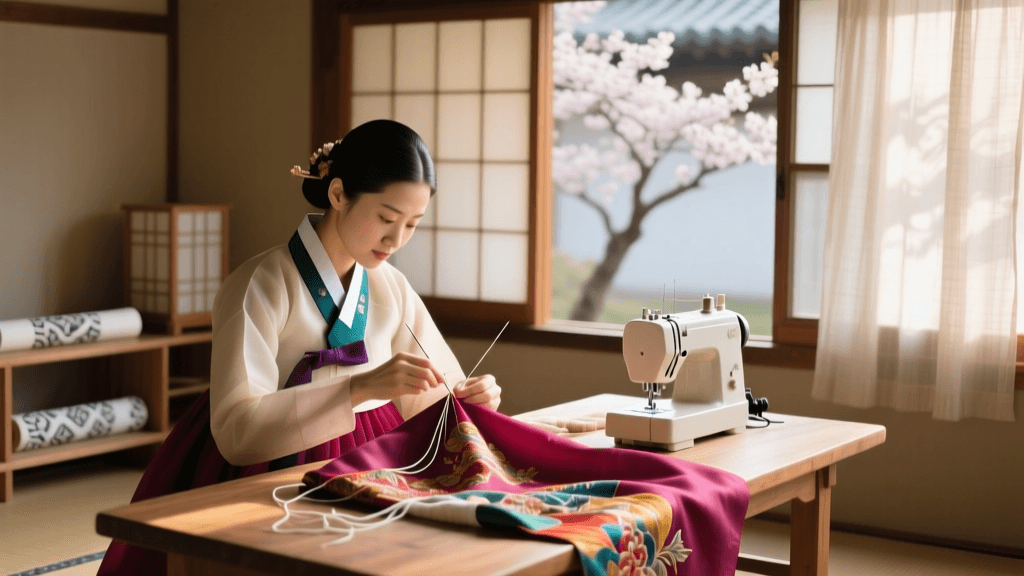
The traditional Korean hanbok is celebrated for its vibrant colors, elegant lines, and unique structural elements that prioritize fluid movement and comfort. Unlike Western tailoring, which relies heavily on darts and complex curved seams to contour the body, the hanbok utilizes a sophisticated system of flat pattern cutting, strategic gathering, and structural ties. In 2026, Seoul remains the undisputed epicenter for learning these techniques, with several prestigious institutions offering intensive, English-friendly programs.
The Architecture of the Jeogori and Chima
A core focus of any reputable hanbok workshop is the construction of the jeogori (the upper garment) and the chima (the wrap-around skirt). Students learn to draft the baerae, the distinctive curved underside of the sleeve that mimics the shape of a traditional Korean roof eave. Achieving the perfect baerae requires mastering the subtle easing of silk and ramie fabrics, a skill that takes weeks of guided practice to perfect.
Furthermore, workshops place immense emphasis on the goreum (the long, tying ribbons) and the dongjeong (the stiff, white paper-lined collar). The goreum is not merely a functional closure; its precise length, width, and the specific knotting technique dictate the overall visual balance and formality of the garment. Many 2026 seminars now incorporate digital tension-testing tools alongside traditional hand-basting methods to ensure the collar sits perfectly against the neckline without buckling.
For those seeking institutional backing, the Korean Craft and Design Foundation (KCDF) frequently sponsors masterclasses and provides directories of certified artisans who accept international apprentices. These KCDF-affiliated workshops often include excursions to the Dongdaemun Comprehensive Market, teaching students how to source authentic myeongju (silk) and mosi (ramie) directly from heritage weavers.
The Precision of Washa: Kimono Tailoring in Kyoto and Kanazawa
Japanese kimono construction, known as wasa, is a masterclass in geometric precision and fabric conservation. The fundamental philosophy of wasa is that a kimono is constructed from straight lines (chokusen-dachi) cut from a single bolt of fabric (tanmono), approximately 36 centimeters wide and 12 meters long. This means that, unlike Western garments, a kimono can be entirely unpicked, washed, re-dyed, and resewn without wasting a single scrap of textile.
The Art of the Unshin Stitch
In Kyoto and Kanazawa, 2026 workshops focus heavily on the unshin (running stitch), the backbone of kimono assembly. While it appears simple, the unshin requires the sewer to manipulate the fabric with their left hand while guiding the needle with their right, creating a perfectly even, flexible seam that allows the heavy silk to drape flawlessly. Students spend their first week simply practicing this stitch on cotton muslin before they are permitted to touch the delicate tango chirimen (silk crepe) used for the final garment.
Advanced seminars in Kanazawa often pair sewing instruction with yuzen dyeing or shibori (tie-dyeing) techniques. The Japan Foundation frequently highlights these regional cultural exchange programs, noting that understanding the dyeing process is crucial for a tailor to know how to align patterns across the back seam (se-iro) and the hem. Aligning a continuous floral motif across the flat panels of a kimono is a spatial puzzle that challenges even experienced Western tailors.
Mastering the straight-line cut is not just about geometry; it is about respecting the integrity of the woven thread. Every seam in a kimono is a promise that the garment can be reborn in the next generation.
2026 Workshop Comparison Chart
To help you choose the right program for your skill level and schedule, we have compiled a comparison of the most sought-after traditional garment workshops operating in 2026. Tuition fees reflect the current market rates and typically include materials, studio access, and translation services.
| Program Name | Location | Duration | 2026 Tuition (USD) | Garment Focus |
|---|---|---|---|---|
| Seoul Heritage Hanbok Intensive | Seoul, South Korea | 4 Weeks | $1,850 | Jeogori, Chima, and Goreum tying |
| Kyoto Washa Masterclass | Kyoto, Japan | 6 Weeks | $2,600 | Komon Kimono and Haori construction |
| Traditional Jogakpo Patchwork Seminar | Seoul, South Korea | 2 Weeks | $950 | Patchwork Bojagi and Jogakpo vests |
| Kanazawa Yuzen & Sewing Retreat | Kanazawa, Japan | 3 Weeks | $1,900 | Yukata assembly and Yuzen dyeing |
Essential Toolkits for the 2026 Artisan
Walking into a traditional Asian tailoring studio requires a specific set of tools that differ vastly from Western sewing kits. While most workshops provide basic equipment, serious students in 2026 are expected to curate their own personal toolkits to ensure consistency in their practice.
For the Hanbok Student
- Golmu (Brass Thimble): Unlike Western leather or dimpled metal thimbles, the Korean golmu is a smooth, dome-shaped brass cap worn on the middle finger. It is used to push the needle through thick, layered silk collars.
- Hera Markers: Made from bone or agate, these spatula-like tools are used to crease fabric temporarily without leaving ink or chalk residue on delicate silks.
- Silk Basting Thread: Specially spun, low-twist cotton thread that breaks easily when removed, preventing damage to the fragile myeongju silk during the fitting process.
For the Kimono Student
- Shozaburo Fabric Shears: Hand-forged in Tokyo, these heavy carbon-steel shears are the industry standard for cutting tanmono. The weight of the shears does the work, ensuring a perfectly straight edge without fraying the silk crepe.
- Kote (Traditional Iron): While modern steam irons are used for final pressing, learning to use a traditional charcoal or temperature-controlled electric kote is essential for creating the sharp, permanent creases required at the hem and sleeve edges.
- Unshin Needles: Longer and finer than standard sharps, these needles are designed to carry multiple stitches on the shaft before being pulled through the fabric, enabling the rapid, rhythmic motion of the running stitch.
Logistics, Visas, and Accommodation
Planning a multi-week educational trip in 2026 requires careful navigation of local immigration and housing markets. For stays under 90 days, many international students utilize standard tourist visas, provided the workshop does not offer a formal, accredited diploma that requires a student visa. However, for the 6-month intensive apprenticeships, both Japan and South Korea offer specific 'Cultural Activities' visas. You must secure a Certificate of Eligibility (COE) sponsored by the hosting institution at least three months before your intended departure.
Accommodation is an extension of the cultural immersion. In Seoul, students increasingly opt for long-term rentals in hanok (traditional houses) in the Bukchon or Seochon districts. Living in a space with ondol (underfloor heating) and low tables naturally influences your understanding of how the hanbok drapes when sitting on the floor. In Kyoto, securing a room in a restored machiya (traditional wooden townhouse) near the Nishijin weaving district provides daily inspiration and proximity to the city's best vintage textile markets, where you can study historical seam finishes up close.
Conclusion: Investing in Heritage
Enrolling in a traditional kimono or hanbok tailoring workshop in 2026 is more than an educational endeavor; it is an act of cultural preservation. The patience required to execute a flawless unshin stitch or to shape the perfect baerae curve fundamentally alters how you perceive clothing, textiles, and the human body. Whether you aim to integrate these heritage techniques into a modern sustainable fashion label or simply wish to sew a garment for your own family, the master artisans of Seoul and Kyoto are ready to pass down centuries of wisdom to the next generation of dedicated makers.