Geta & Zori Craft Guide 2026: Traditional Japanese Footwear
The Renaissance of Japanese Footwear in 2026
The rhythmic karan-koron of wooden geta echoing through the historic streets of Kyoto or the bustling avenues of Tokyo is a sound that defines the sensory experience of Japanese culture. In 2026, traditional Japanese footwear—specifically geta and zori—has transcended its historical roots to become a cornerstone of sustainable, global slow fashion. As consumers increasingly reject mass-produced synthetic footwear, the meticulous craft of Japanese sandal-making offers a masterclass in durability, ergonomics, and artisanal heritage.
Whether you are a collector of Asian traditions, a practitioner of Zen mindfulness, or a fashion enthusiast looking to integrate authentic Japanese garments into your wardrobe, understanding the nuances of geta and zori is essential. This comprehensive guide explores the anatomy, craftsmanship, and 2026 buying landscape of traditional Japanese footwear.
Anatomy of Traditional Japanese Footwear
To appreciate the craft, one must first understand the architecture of these iconic sandals. While Western shoes are designed to encase and protect the entire foot, Japanese geta and zori are designed to free the foot, promote natural posture, and connect the wearer to the ground.
The Dai (Base)
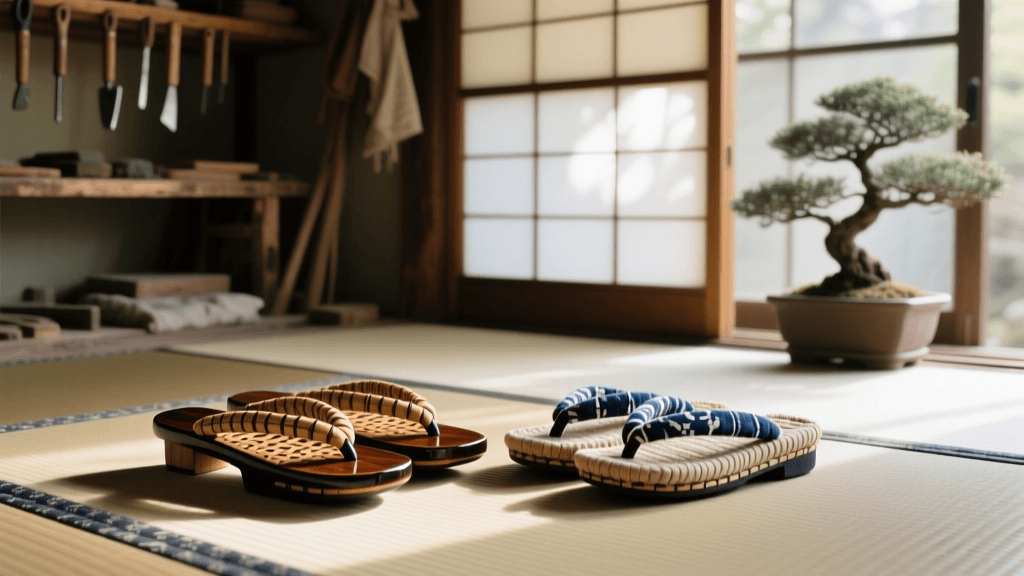
The dai is the main body or base of the footwear. For geta, this is a solid piece of wood, traditionally carved from Paulownia (Kiri) or Hinoki cypress. In 2026, sustainably harvested and reclaimed Paulownia is the industry standard among top-tier artisans, prized for its lightweight nature, moisture resistance, and beautiful pale grain. For zori, the base is typically a woven core of bamboo, straw, or modern sustainable EVA foam, covered in fabric, leather, or vinyl.
The Ha (Teeth)
Geta are elevated by wooden blocks called ha (teeth) attached to the bottom of the dai. The standard geta has two teeth, which historically kept the hem of expensive silk kimonos clean from muddy streets. Today, artisans also craft ashida (rain geta) with taller teeth, and modern ippon-ba (single-tooth geta) which require immense balance and are often used for physical therapy and core strengthening.
The Hanao (Thong)
The hanao is the Y-shaped strap that secures the foot. In traditional craftsmanship, the hanao is not merely glued; it is pulled through the dai and knotted securely by hand using specialized tools. In 2026, there is a massive trend toward upcycled hanao, where master weavers repurpose vintage kimono silk and obi sashes, giving new life to historical textiles while providing unparalleled comfort.
Geta vs. Zori: A Comprehensive Comparison
Choosing between geta and zori depends on the occasion, the garment you are wearing, and the environment. Below is a structured comparison to help you navigate your purchase.
| Feature | Geta (Wooden Clogs) | Zori (Flat Sandals) |
|---|---|---|
| Base Material | Solid wood (Paulownia, Hinoki, Cedar) | Woven straw, bamboo, leather, vinyl, EVA |
| Elevation | Elevated on wooden teeth (ha) | Flat, no teeth |
| Acoustic Profile | Distinctive clacking (karan-koron) | Silent or soft shuffling |
| Formality | Casual to semi-formal (Yukata, casual Kimono) | Semi-formal to highly formal (Tomesode, Furisode) |
| Weather Use | Excellent for rain (keeps hems dry) | Dry weather only (unless wearing rain covers) |
2026 Craftsmanship: Sustainability and Innovation
The year 2026 marks a pivotal moment for Japanese artisanal crafts, driven by a global demand for eco-conscious luxury. The Japanese Ministry of Economy, Trade and Industry (METI) continues to support and designate Traditional Craft Products, ensuring that ancient techniques survive in the modern market. However, today's master craftsmen are innovating within these traditions.
- Reclaimed Hinoki Cypress: Artisans in the Hida-Takayama region are increasingly sourcing reclaimed Hinoki from decommissioned traditional ryokans (inns) to carve premium geta bases, infusing the footwear with decades of historical patina.
- Vegan and Plant-Based Zori: While traditional leather and silk remain popular, 2026 has seen the rise of high-end vegan zori utilizing Piñatex (pineapple leather) and woven rush grass (igusa), catering to international buyers seeking cruelty-free Asian traditions.
- Ergonomic Carving: Modern geta makers are utilizing 3D foot-scanning technology in their Tokyo and Kyoto ateliers to carve the wooden dai to the exact arch and heel contour of the client, merging ancient woodworking with 2026 biomechanical science.
The Sensory Experience: Karan-Koron and Zen Mindfulness
Wearing geta is not merely a fashion choice; it is a sensory and spiritual practice. The sound of geta, often described in Japanese onomatopoeia as karan-koron, forces the wearer to adopt a mindful, deliberate walking pace. This aligns closely with the Zen Buddhist practice of kinhin (walking meditation).
When wearing geta, you cannot rush. The elevated center of gravity requires you to engage your core, straighten your spine, and strike the ground with a flat foot rather than a heel-to-toe rolling motion. This natural gait correction is why many holistic health practitioners in 2026 recommend lightweight Paulownia geta for indoor or garden use to alleviate lower back pain and improve posture.
How to Measure and Fit Geta and Zori
One of the most common mistakes international buyers make is purchasing Japanese footwear using Western sizing logic. In Western shoemaking, the shoe should be slightly longer than the foot to allow for toe movement. In traditional Japanese footwear, the exact opposite is true.
The Golden Rule of Sizing
Your heel should intentionally overhang the back edge of the geta or zori by approximately 1 to 2 centimeters (about 0.5 inches). If your foot is completely enclosed by the dai, the footwear is too large, and you will trip over the front edge while walking. The hanao (thong) should sit snugly between your first and second toe without requiring you to grip the strap with your toes.
Measuring Steps for 2026 Online Purchases
- Place a piece of paper on a hard floor against a wall.
- Stand on the paper with your heel lightly touching the wall.
- Mark the longest point of your foot (usually the big toe or second toe).
- Measure the distance in centimeters. This is your exact Japanese foot size.
- When ordering from an artisan, provide this exact measurement. The artisan will then craft the dai to be 1-2 cm shorter than your foot measurement to ensure the proper aesthetic and functional overhang.
2026 Pricing and Artisan Tiers
Investing in authentic Japanese footwear is an investment in wearable art. Pricing in 2026 reflects the scarcity of master woodworkers and the cost of premium textiles. Below is a general pricing guide for authentic, artisan-crafted footwear.
| Tier | Description | Estimated Price (JPY) | Estimated Price (USD) |
|---|---|---|---|
| Entry-Level Artisan | Machine-assisted base, hand-finished hanao, standard Paulownia wood. | ¥12,000 - ¥18,000 | $80 - $120 |
| Mid-Tier Craft | Fully hand-carved dai, premium vintage silk hanao, custom lacquering. | ¥25,000 - ¥45,000 | $170 - $300 |
| Master Bespoke | 3D-scanned ergonomic carving, rare Hinoki wood, bespoke obi-silk hanao woven on-site. | ¥60,000+ | $400+ |
Where to Buy Authentic Footwear in 2026
While global e-commerce platforms offer mass-produced imitations, true enthusiasts should seek out dedicated ateliers. The Japan National Tourism Organization (JNTO) frequently highlights heritage shopping districts where multi-generational shops thrive.
- Asakusa, Tokyo: The streets surrounding Senso-ji Temple remain the epicenter of geta craftsmanship. Shops like Tsujiya offer both ready-to-wear options and bespoke fittings, allowing you to select your wood grain and hanao fabric in person.
- Gion, Kyoto: For high-end, formal zori designed to accompany silk kimonos, Kyoto's historic geisha district offers unparalleled elegance. The artisans here specialize in brocade fabrics and subtle, refined lacquering techniques.
- Direct-to-Consumer Artisans: In 2026, many independent woodworkers in rural prefectures like Oita and Niigata have launched direct-to-consumer portals, allowing international buyers to commission custom geta via video consultations, bridging the gap between rural Japanese heritage and global accessibility.
Care and Maintenance for Longevity
Proper care ensures that your geta and zori can last for decades, often outliving the garments they are paired with.
- Wood Conditioning: Untreated Paulownia and Hinoki can dry out or absorb excess moisture. Once a year, lightly rub the wooden dai with a small amount of natural tung oil or camellia oil (tsubaki oil) to preserve the grain and prevent cracking.
- Hanao Replacement: The fabric thong is considered a consumable part of the footwear. A high-quality hanao should last 3 to 5 years with regular use. When it frays, do not throw the geta away; take them to a cobbler specializing in Japanese footwear (or mail them back to the original artisan) to have a new hanao pulled and knotted.
- Storage: Store your footwear in a cool, dry place away from direct sunlight, which can bleach the wood and fade vintage silk hanao. Use silica gel packets in your storage boxes during humid summer months to prevent mold on woven zori bases.
Conclusion
The survival and evolution of geta and zori in 2026 is a testament to the enduring appeal of Japanese craftsmanship. By understanding the anatomy, respecting the fitting traditions, and supporting sustainable artisanal practices, you are not just buying a pair of sandals—you are participating in a living, breathing Asian tradition. Whether you are stepping into a tranquil Zen garden or navigating a modern metropolis, traditional Japanese footwear offers a grounded, mindful connection to every step you take.
For more insights into the preservation of Asian textile and garment traditions, explore our comprehensive archives on Japanese cultural heritage and traditional arts.