The Traditional Dress of Men & Women in Haryana: A Complete Style Guide
Haryana, a state steeped in agrarian roots, martial history, and robust folklore, boasts a cultural heritage that is vividly reflected in its traditional attire. The traditional dress of men and women in Haryana is not merely a matter of covering the body; it is a profound expression of identity, social standing, and regional pride. From the sun-drenched fields of Rohtak to the bustling cultural hubs of Kurukshetra, the garments worn by the Haryanvi people tell a story of resilience, artistry, and deep-rooted traditions. In this comprehensive style guide, we explore the intricate details of Haryanvi clothing, offering practical styling tips, accessory pairings, and modern adaptations for the contemporary wardrobe. For a deeper dive into the broader context of regional textiles, explore our archive on North Indian heritage textiles.
The Essence of Haryanvi Womenswear: Ghagra, Choli, and Odhni
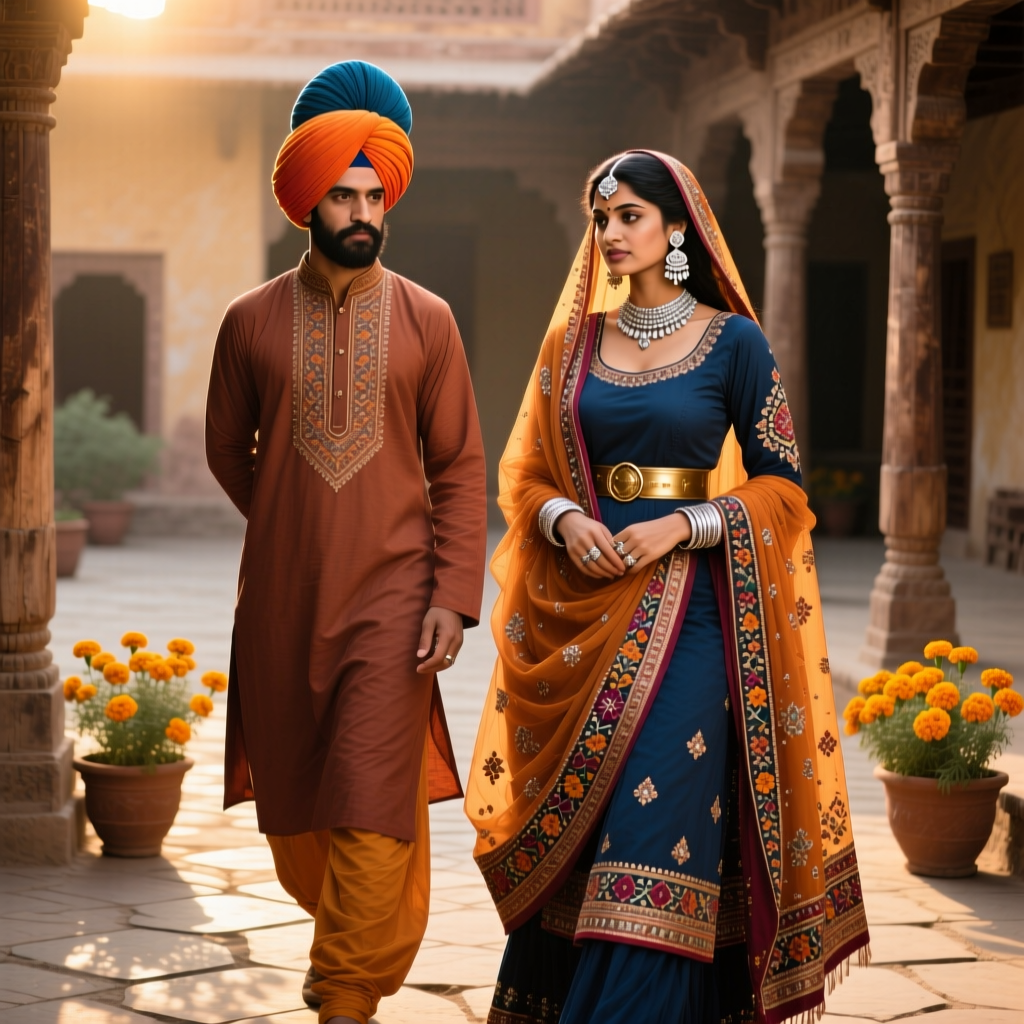
The traditional attire for women in Haryana is a vibrant, three-piece ensemble consisting of the Ghagra (a long, flowing skirt), the Choli (a fitted blouse), and the Odhni (a long veil or scarf). This silhouette is designed not only for aesthetic appeal but also for the practical demands of a historically agrarian lifestyle, allowing for ease of movement while maintaining modesty and grace.
The Ghagra and Choli
The Ghagra is typically a voluminous skirt that flares out from the waist, often featuring intricate pleats and a thick, decorative border at the hem known as the gotapatti or kinari. Traditionally made from cotton for daily wear and silk or heavily embroidered fabrics for festivities, the Ghagra is paired with a Choli. The Choli is a snug-fitting bodice that ends just below the bust or at the waist, often featuring tie-back strings (dori) adorned with decorative tassels. The color palette for Haryanvi womenswear is unapologetically bold, favoring auspicious and vibrant hues like crimson red, bright orange, sunflower yellow, and vivid magenta.
The Odhni and Phulkari Embroidery
No Haryanvi ensemble is complete without the Odhni. Draped gracefully over the head and shoulders, the Odhni serves as a mark of respect, especially in the presence of elders. The most iconic variation of the Odhni is the Phulkari dupatta, which literally translates to 'flower work.' This spectacular embroidery style involves long, darning stitches worked from the reverse side of the fabric, creating geometric and floral motifs that catch the light beautifully. To understand the meticulous craftsmanship behind these pieces, read our detailed guide to Phulkari embroidery. Another popular variant is the Chundri, a tie-dye Odhni featuring intricate dot patterns, usually in red and yellow, worn extensively during weddings and religious ceremonies.
Menswear in Haryana: Dhoti, Kurta, and the Proud Pagri
Traditional Haryanvi menswear is characterized by its simplicity, functionality, and understated elegance. Rooted in the need for comfort during long hours of agricultural labor and the region's martial traditions, the male wardrobe relies heavily on breathable, handwoven fabrics and dignified silhouettes.
The Dhoti and Kurta
The foundational garment for men is the Dhoti (often referred to locally as the Tehmat or Churidar depending on the draping style and region). The Dhoti is an unstitched piece of cloth, usually white or off-white cotton, wrapped around the waist and legs. The traditional Haryanvi drape is distinct, often featuring a tight wrap around the waist with the remaining fabric tucked securely in the back or draped over the shoulder for a regal look. For a step-by-step tutorial on achieving the perfect drape, consult our traditional dhoti tying methods. The Dhoti is paired with a Kurta, a loose, collarless shirt that falls to the knees. While white and khadi are standard for daily wear, festive occasions call for kurtas in pastel shades, adorned with subtle mirror work or silk thread embroidery.
The Angarkha and the Pagri
For weddings and grand festivals, men often upgrade from the standard Kurta to an Angarkha, a traditional upper garment that wraps around the body and is tied at the side with ornate strings. However, the most defining element of Haryanvi menswear is the Pagri (turban), also known as a Safa. The Pagri is far more than a head covering; it is a potent symbol of honor, self-respect, and social identity. The style, color, and length of the Pagri can indicate a man's village, caste, and the specific occasion he is attending. Brightly colored safas in saffron, pink, and red are prominently worn during wedding seasons.
Essential Accessories: Completing the Traditional Look
Accessories in Haryanvi culture are deeply symbolic, often passed down through generations as family heirlooms. They elevate the traditional dress from simple garments to a fully realized cultural statement.
Women's Jewelry and Footwear
Haryanvi jewelry is traditionally bold, heavy, and crafted primarily in silver and gold. The Nath (a large, ornate nose ring) is a quintessential bridal and festive accessory, often connected to the hair via a delicate gold chain. The Borla or Maang Tikka rests on the forehead, while the Hansli (a rigid silver or gold choker) and Kathla (a multi-layered necklace) adorn the neck. For the feet, women wear Juttis or Mojari—handcrafted leather slip-ons embroidered with vibrant threads, zari, or small mirrors. Discover more about styling these timeless pieces in our guide to traditional Indian footwear.
Men's Shawls and Accents
While men's jewelry is minimal, their accessories are no less significant. During the cooler months, men drape a Khandua or Doshala (a traditional handwoven shawl) over one shoulder. These shawls often feature subtle geometric borders and are woven from coarse wool or fine cotton. A beautifully crafted walking stick (Lathi) is also a traditional accessory for older men, symbolizing authority and wisdom within the community.
Modern Adaptations: Blending Heritage with Contemporary Fashion
As global fashion evolves, the traditional dress of men and women in Haryana has seamlessly adapted to modern sensibilities without losing its cultural soul. Contemporary styling allows you to incorporate Haryanvi heritage into everyday wardrobes, whether you are attending a fusion wedding or simply want to add an ethnic touch to your daily outfit.
- Phulkari Fusion: The vibrant Phulkari dupatta is incredibly versatile. Drape a vintage, heavily embroidered Phulkari over a crisp white button-down shirt and tailored denim jeans for a striking Indo-western look. Alternatively, use it as a statement scarf over a solid-colored maxi dress.
- Contemporary Silhouettes: Designers are reimagining the Ghagra by pairing it with crop tops, peplum blouses, or even structured blazers. The voluminous skirt can be swapped for a sleek, A-line lehenga cut that flatters modern silhouettes while retaining the traditional gotapatti borders.
- Dhoti Pants and Indo-Western Kurtas: For men, the traditional dhoti has been tailored into pre-stitched 'dhoti pants' or harem-style trousers. These offer the regal drape of the Tehmat with the convenience of modern tailoring. Pair them with a short, structured Nehru jacket and a bandhgala collar kurta for a sophisticated evening ensemble. For more inspiration, browse our Indo-western fusion styling guide.
- Everyday Chundri: The tie-dye Chundri pattern has found its way into modern resort wear, including flowy kaftans, wrap skirts, and wide-leg palazzos, bringing a splash of Haryanvi sunshine to vacation wardrobes.
A Buyer's Guide to Authentic Haryanvi Garments
Investing in traditional Haryanvi clothing is an investment in artisanal heritage. However, the rise of power-loom imitations means buyers must be discerning to ensure they are supporting genuine craftsmanship. Here is how to source authentic pieces:
Identifying Authentic Phulkari
True Phulkari is hand-embroidered on a handspun, handwoven cotton base called khaddar. To verify authenticity, turn the fabric over. In genuine hand-embroidered Phulkari, the reverse side will show the intricate grid of the darning stitches, and the pattern will look slightly different from the front. Machine-made imitations will have a uniform, flat backing with loose threads or a manufactured mesh. Always look for the Handloom Mark or Silk Mark certifications when purchasing from established boutiques.
Where to Shop
For the most authentic experience, purchase directly from state emporiums, Khadi Gramodyog centers, or recognized artisan cooperatives in cities like Chandigarh, Hisar, and Rohtak. These outlets guarantee fair wages for the artisans and ensure the preservation of traditional techniques. If you are shopping online, prioritize platforms that partner directly with rural women's cooperatives. Learn more about ethical sourcing in our sustainable handloom shopping guide.
Care and Maintenance
Handwoven cottons and delicate silk threads require gentle care. Always dry clean heavily embroidered Phulkari dupattas and Angarkhas to prevent the colors from bleeding and the threads from snagging. Everyday cotton kurtas and dhotis can be hand-washed in cold water with a mild, pH-neutral detergent. Store your garments wrapped in unbleached muslin cloth to allow the natural fibers to breathe and to protect them from moisture and pests.
Frequently Asked Questions
What is the most common traditional dress for women in Haryana?
The most iconic and traditional dress for women in Haryana is the Ghagra Choli paired with an Odhni. While the Salwar Kameez has become the standard for everyday, practical wear in modern urban and rural settings, the Ghagra Choli remains the definitive cultural attire worn during festivals, weddings, and traditional folk dances like the Ghoomar.
How do men style the traditional Pagri in Haryana?
The Pagri (or Safa) is styled by wrapping a long, unstitched piece of cloth—often up to 15 meters in length—tightly around the head in specific, layered folds. The style of the wrap, the angle of the crest, and the trailing end (the tail or shamla) vary by district and occasion. During weddings, the Safa is often brightly colored and may feature decorative brooches or pearls pinned to the front.
Can Phulkari embroidery be incorporated into modern western wear?
Absolutely. Phulkari is highly adaptable to contemporary fashion. You can drape a Phulkari dupatta over a denim jacket, use it as a statement scarf with a trench coat, or even have vintage Phulkari panels upcycled into modern garments like bomber jackets, tote bags, or tailored blazers. The vibrant geometric threads add a stunning, bohemian texture to minimalist western outfits.
What fabrics are best for Haryanvi traditional clothing in summer?
Given Haryana's intense summer heat, breathable, natural fibers are essential. Handspun and handwoven Khadi cotton is the premier choice for both men's dhotis and women's everyday Ghagras and Cholis. Khadi's unique porous texture allows for excellent air circulation and absorbs sweat efficiently. For dupattas, lightweight mulmul (muslin) or fine chiffon are preferred to provide coverage without adding thermal weight.
What is the significance of the colors worn in Haryanvi attire?
Colors in Haryanvi attire are deeply symbolic and often tied to the seasons, festivals, and marital status. Red and orange are considered highly auspicious, predominantly worn by brides and married women during religious ceremonies to signify prosperity and fertility. Yellow is heavily associated with the spring festival of Teej and the harvesting season, representing joy and the blooming mustard fields. Conversely, widows traditionally wore muted, unbleached white or dull earth tones, though these strict societal norms have relaxed significantly in contemporary times.
Embracing the traditional dress of men and women in Haryana is a beautiful way to connect with a rich, enduring cultural legacy. Whether you are draping a hand-embroidered Phulkari for a festive celebration or incorporating a tailored dhoti pant into your modern wardrobe, these garments offer a timeless elegance that transcends passing fashion trends. For further exploration of regional adornments, be sure to visit our comprehensive directory on Indian regional jewelry and accessories.