Traditional Chinese Footwear 2026: Cloud Shoes And Boots Guide
The 2026 Renaissance of Traditional Chinese Footwear
As the global fashion landscape embraces the Xin Zhongshi (New Chinese Style) movement in 2026, the focus has shifted from standalone garments to complete, head-to-toe cultural styling. While the mamianqun (horse-face skirt) and modernized qipao have dominated headlines over the past few years, 2026 is undeniably the year of traditional Chinese footwear. Heritage brands and contemporary indie designers are collaborating to reimagine ancient silhouettes, blending centuries-old embroidery techniques with modern ergonomic science. Today, traditional footwear is no longer reserved for cosplay, theatrical performances, or weddings; it is a staple of the modern, culturally conscious wardrobe.
This comprehensive guide explores the most iconic styles of traditional Chinese footwear—specifically Cloud Shoes, traditional boots, and embroidered slippers—detailing their historical significance, 2026 market innovations, and practical advice for styling and maintenance.
Cloud Shoes (Yuntou Xie): Elegance Meets Ergonomics
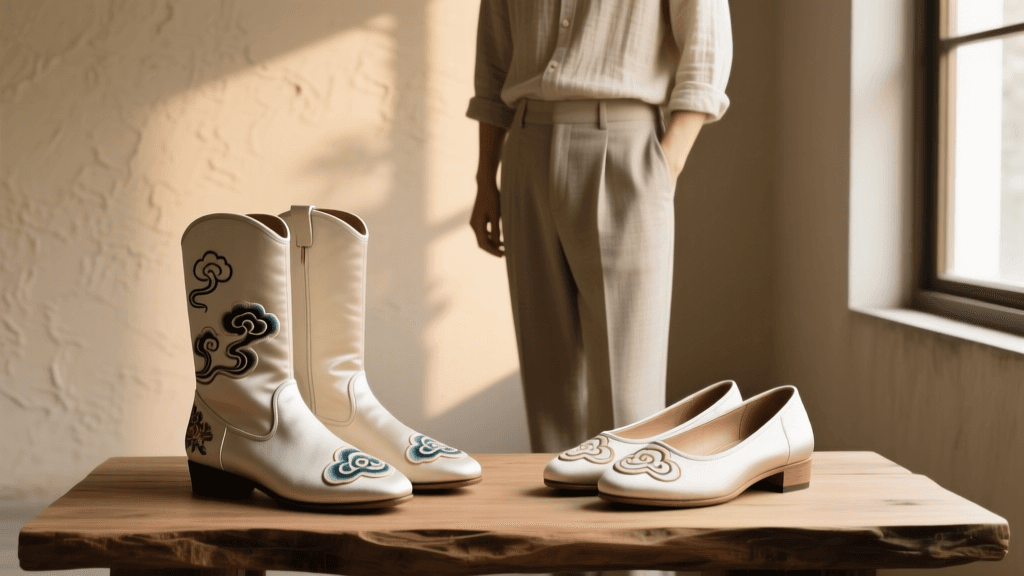
Cloud shoes, or Yuntou Xie, are arguably the most recognizable silhouette in traditional Chinese footwear. Characterized by their distinctive upturned toes that resemble the Ruyi cloud motif, these shoes were originally designed during the Ming and Qing dynasties to prevent the hems of long, flowing robes from dragging on the ground and becoming soiled. The upturned toe also served a symbolic purpose, representing upward mobility and good fortune.
In 2026, the Cloud Shoe has undergone a remarkable ergonomic renaissance. Historically, the soles were constructed from dozens of layers of compressed cotton and hemp, stitched together in a technique known as qiancengdi (thousand-layer sole). While culturally significant, these traditional soles lacked the arch support required for modern urban commuting. Leading heritage brands, alongside modern biomechanical engineers, have introduced hybrid soles in 2026. These feature a cork and EVA-foam core wrapped in traditional cotton stitching, providing the aesthetic of the qiancengdi with the shock absorption of a premium orthopedic shoe.
The uppers are crafted from sustainable peace silk and Song brocade, featuring intricate Suzhou embroidery. Motifs often draw from imperial archives, such as those meticulously digitized by The Palace Museum in Beijing, ensuring historical accuracy in the placement of cranes, peonies, and cloud patterns.
Traditional Boots (Xue): From Equestrian Roots to Urban Winter
While Cloud Shoes dominate the spring and summer collections, traditional boots, known as Xue, are the cornerstone of the 2026 autumn and winter Xin Zhongshi wardrobe. Originally popularized by northern nomadic tribes and later integrated into the official court dress of the Qing dynasty, Xue boots were designed for equestrian activities and harsh winters. They typically feature a thick, rigid sole and a shaft that reaches mid-calf, constructed from heavy cotton, velvet, or leather.
The 2026 iteration of the Xue boot bridges the gap between historical grandeur and contemporary winter utility. Designers are utilizing Zhangzhou velvet and heavy-weight hemp canvases, treated with eco-friendly, invisible hydrophobic coatings to protect against snow and sleet. The interior is lined with ethically sourced shearling or advanced thermal-recycled fleece, making them viable for sub-zero temperatures. The rigid, flat soles of the past have been replaced with flexible, vulcanized rubber outsoles that feature subtle, traditional coin-pattern treads for superior grip on icy city sidewalks.
Embroidered Slippers (Xiuhua Xie): The Art of Indoor Luxury
For indoor wear and relaxed settings, the Xiuhua Xie (embroidered slipper) remains a beloved classic. Unlike the structured Cloud Shoe or the robust boot, these slippers are soft-soled and designed for comfort. In 2026, there is a massive resurgence in the appreciation for regional embroidery styles. As recognized by the UNESCO Intangible Cultural Heritage registry, traditional sericulture and silk craftsmanship remain foundational to these textiles. Modern slippers frequently feature Shu embroidery from Sichuan, known for its vibrant colors and three-dimensional stitching, or Yue embroidery from Guangdong, celebrated for its intricate gold and silver thread work.
These slippers are increasingly popular as luxury gifting items in 2026, often sold in bespoke sets that include matching silk sleepwear and robes, offering a holistic approach to traditional loungewear.
2026 Material and Construction Comparison
When investing in traditional Chinese footwear, understanding the material landscape is crucial. The market in 2026 offers a variety of textiles, each with distinct properties, price points, and care requirements. Below is a comparative guide to the most prominent materials used by top-tier artisans this year.
| Material | Best Use Case | 2026 Price Range (USD) | Durability | Care Level |
|---|---|---|---|---|
| Song Brocade | Formal events, weddings, statement pieces | $250 - $600 | High (if kept dry) | High (Dry clean only) |
| Zhangzhou Velvet | Winter boots, autumn outdoor wear | $180 - $400 | Very High | Medium (Spot clean) |
| Peace Silk | Spring/Summer cloud shoes, indoor slippers | $150 - $350 | Medium | High (Hand wash cold) |
| Woven Hemp | Everyday casual wear, travel, summer | $80 - $180 | Very High | Low (Machine washable) |
Note: Prices reflect authentic, hand-embroidered pieces from established heritage brands and verified artisan cooperatives in 2026. Mass-produced, machine-embroidered alternatives are available at a fraction of the cost but lack the structural integrity and cultural authenticity of these tiers.
Styling Guide: Integrating Heritage Footwear into Modern Wardrobes
The key to mastering the Xin Zhongshi aesthetic in 2026 is juxtaposition. Pairing highly traditional footwear with strictly historical garments can sometimes look costumey; the modern approach relies on blending heritage pieces with contemporary tailoring.
- Cloud Shoes with Wide-Leg Trousers: Pair a low-vamp, embroidered Cloud Shoe with high-waisted, wide-leg linen or wool-blend trousers. Ensure the hem of the trouser grazes the top of the shoe, allowing the upturned Ruyi toe to peek out elegantly when walking. This creates a fluid, elongated silhouette.
- Ankle Boots and the Midi Skirt: Traditional velvet ankle boots look exceptionally striking when paired with a modern, structured midi skirt or a simplified, A-line mamianqun. Add a chunky, contemporary cashmere turtleneck to balance the ornate embroidery of the boots.
- Sock Pairings: In 2026, visible sock styling is prominent. Avoid standard athletic socks. Instead, opt for textured cotton tabi-style socks, or silk-blend socks featuring subtle tonal patterns that complement, rather than compete with, the shoe's embroidery.
- The Structured Blazer: For a high-fashion, avant-garde look, pair minimalist hemp Cloud Shoes with an oversized, structured Western blazer and tailored shorts. The contrast between the sharp tailoring and the soft, historical curve of the shoe is a hallmark of current editorial styling.
Sizing, Fit, and the 2026 Ergonomic Shift
One of the most significant barriers to purchasing traditional Chinese footwear internationally has historically been sizing. Traditional lasts (the molds used to shape shoes) were often narrow and featured shallow toe boxes. However, the 2026 market has seen a massive shift toward inclusive, global sizing.
Heritage brands like Neiliansheng (established in 1853) and modern bespoke studios now offer 'Global Fit' lasts. These feature a wider toe box and enhanced metatarsal support, accommodating a broader range of foot shapes without compromising the external traditional silhouette. When ordering, it is highly recommended to consult the brand's specific millimeter-based sizing chart rather than relying on standard US or EU conversions, as a 2026 size 38 in a traditional wooden last may fit vastly differently than a contemporary European leather shoe.
Care and Preservation of Silk and Brocade Footwear
Investing in authentic, hand-embroidered footwear requires a commitment to proper maintenance. The delicate nature of silk threads and metallic yarns means that standard shoe care routines will cause irreversible damage.
'The longevity of a silk-embroidered shoe relies entirely on environmental control and gentle, chemical-free cleaning. The oils from human skin and the acidity of modern rain are the primary enemies of heritage textiles.' — Textile Conservation Department, Victoria and Albert Museum Asian Collections guidelines.
Actionable Maintenance Steps for 2026:
- Surface Cleaning: Never machine wash or submerge brocade or silk shoes. Use a soft-bristled, natural horsehair brush to gently remove dust and dried dirt after every wear. For localized stains, use a specialized, pH-neutral silk detergent applied with a microfiber swab, dabbing (never rubbing) the area.
- Moisture Control: If your shoes become wet, do not place them near direct heat or sunlight, which will cause the silk to yellow and the natural dyes to fade. Stuff them with acid-free tissue paper to absorb moisture and maintain their shape, and let them air dry in a well-ventilated, shaded room.
- Storage: When not in use, store your footwear in breathable cotton dust bags. Avoid plastic bins, which trap humidity and encourage mold growth. Insert cedar shoe trees to maintain the structural integrity of the toe box and naturally repel insects. Maintain a closet humidity level between 45% and 55% to preserve the tension of the embroidery threads.
Sourcing Authentic Pieces
As the demand for Xin Zhongshi footwear peaks in 2026, the market has seen an influx of synthetic, mass-produced imitations. To ensure you are purchasing authentic, culturally respectful, and high-quality footwear, seek out established heritage brands with verifiable histories, or purchase directly from artisan cooperatives in regions renowned for their textile crafts, such as Suzhou and Hangzhou. Look for certifications of intangible cultural heritage craftsmanship, and always verify the fiber content—authentic pieces will proudly detail the specific type of silk, the origin of the metallic threads, and the name of the master embroiderer.
By understanding the history, embracing the modern ergonomic advancements, and committing to proper care, traditional Chinese footwear becomes not just a fashion statement, but a wearable piece of living history that elevates any 2026 wardrobe.