Pacific Northwest Regalia: Sourcing Button Blankets in 2026
The Enduring Legacy of Pacific Northwest Coast Regalia
The Pacific Northwest Coast is home to some of the most visually striking and culturally profound Indigenous dress traditions in North America. Among these, the button blanket stands out as a masterpiece of textile art and cultural identity. Worn during potlatches, dances, and significant community gatherings by nations such as the Tlingit, Haida, and Tsimshian, these garments are far more than mere clothing; they are wearable heraldry. As we move through 2026, the revitalization of Indigenous arts has led to a surge in both the creation and collection of authentic regalia. However, sourcing the correct, culturally respectful, and high-quality materials requires deep knowledge of both traditional methods and contemporary sustainable markets.
For modern artisans, cultural practitioners, and serious collectors, understanding the anatomy of these garments and where to procure authentic components is essential. The Sealaska Heritage Institute notes that the creation of regalia is deeply tied to clan identity and spiritual protocols, making the authenticity of materials not just an aesthetic choice, but a cultural imperative.
The Anatomy of the Button Blanket
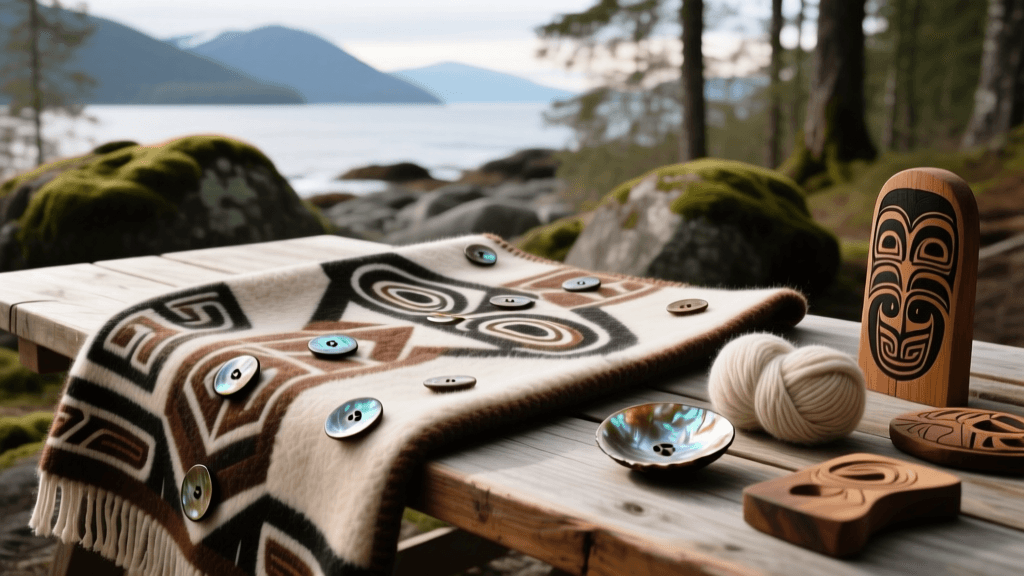
A traditional button blanket is constructed from a heavy, dark base—historically navy, black, or dark green broadcloth. Over this base, artisans appliqué a clan crest or formline design using contrasting colors, most notably red flannel or felt. The defining feature, however, is the meticulous hand-sewing of hundreds, sometimes thousands, of buttons along the edges of the appliqué and the borders of the blanket. These buttons catch the firelight—and today, the LED stage lights of modern community halls—during dances, creating a mesmerizing, rhythmic shimmer that brings the crest to life.
In 2026, contemporary artists are pushing the boundaries of these designs while strictly adhering to the foundational protocols of their respective nations. The structural integrity of the blanket relies heavily on the weight of the base fabric, which must be substantial enough to support the weight of hundreds of shell buttons without sagging or tearing at the seams.
Sourcing Authentic Materials in 2026
The landscape of textile sourcing has shifted dramatically over the last decade. Artisans today must balance historical accuracy with modern environmental conservation laws and supply chain realities.
Melton Wool and Broadcloth Bases
Historically, Indigenous artisans utilized trade blankets obtained from the Hudson's Bay Company or early maritime fur traders. Today, the gold standard for a button blanket base is 100% Melton wool. Melton is a tightly woven, heavily milled fabric that is wind-resistant and incredibly durable. For a standard adult-sized robe, artisans require approximately 3 to 4 yards of double-width (60-inch) Melton wool. In 2026, premium Melton wool sourced from heritage mills in the UK or specialized sustainable textile co-ops in North America typically costs between $45 and $65 CAD per yard. It is crucial to pre-shrink the wool using a commercial steam press before cutting, as any post-assembly shrinkage will distort the intricate formline appliqué.
Sustainable Abalone and Mother-of-Pearl
The shimmering buttons are the soul of the garment. Traditionally, these were carved from local abalone shells or traded dentalium. Due to strict marine conservation efforts and the endangered status of several North American abalone species, wild harvesting is heavily restricted. In 2026, ethical artisans have pivoted toward sustainably farmed Paua shell from New Zealand, which offers a nearly identical iridescent blue-green flash, or high-grade Mother-of-Pearl (MOP) sourced from regulated Pacific fisheries. Artisans typically use buttons ranging from 24-ligne (5/8 inch) to 30-ligne (3/4 inch) for the crest outlines, and smaller 18-ligne buttons for intricate interior detailing. Sourcing these from specialized Indigenous-owned bead and shell suppliers ensures the materials are ethically harvested and legally imported.
Appliqué Fabrics and Thread
The appliqué is traditionally cut from Stroud cloth or heavy cotton flannel. In 2026, premium wool-blend felts are highly favored for their sharp edges, which do not fray when cut into complex formline ovoids and U-shapes. For sewing, while traditional animal sinew is still used for ceremonial authenticity, many contemporary creators opt for heavy-duty, core-spun polyester-cotton thread (Size 12 or 16) to ensure the buttons remain securely fastened during vigorous dance movements.
Regional and Tribal Variations
While the button blanket is a shared regional tradition, distinct stylistic and material variations exist among the coastal nations.
Tlingit Traditions (Alaska and Yukon)
Tlingit regalia often features a heavier, more extensive use of abalone shell, sometimes incorporating it into carved wooden crest toppers that sit upon the shoulders of the blanket. Tlingit button blankets in 2026 frequently feature octopus bags and intricate beadwork integrated into the borders, reflecting historical trade routes with interior Athabascan peoples. The Burke Museum's Ethnology Collection highlights the profound complexity of Tlingit clan crests, which dictate the exact color palettes and motif placements used on the garments.
Haida Formline Integration (Haida Gwaii)
Haida artisans are renowned for their mastery of formline design—the continuous, flowing lines that define Pacific Northwest Coast art. Haida button blankets often feature striking, high-contrast appliqué work, predominantly utilizing deep reds and blacks against navy or black broadcloth. The precision of the Haida appliqué requires exceptionally sharp tailoring shears and a deep understanding of positive and negative space within the crest design.
Tsimshian Embellishments (British Columbia Coast)
Tsimshian button blankets often incorporate elaborate beadwork borders that frame the central buttoned crest. Artisans may use cut glass beads, seed beads, and metallic threads to create a multi-textured garment that reflects both coastal and interior influences. The integration of trade beads in 2026 continues to honor historical treaties and inter-tribal marriages that brought diverse materials to the coast.
2026 Material Sourcing and Cost Comparison
For collectors and artisans budgeting for a new commission or personal project, understanding the current market rates for authentic materials is vital. The table below outlines the standard material requirements and estimated costs for a full-sized ceremonial button blanket in 2026.
| Material Component | Traditional Historical Source | 2026 Sustainable / Modern Source | Est. Cost (2026 USD) |
|---|---|---|---|
| Base Cloth (3.5 yards) | Hudson Bay trade blankets, ship's wool | 100% Melton Wool (60-inch width) | $160 - $230 |
| Appliqué Fabric (2 yards) | Trade flannel, Stroud cloth | Premium Wool-Blend Felt / Heavy Flannel | $35 - $60 |
| Crest Buttons (approx. 500 pcs) | Hand-carved wild abalone, dentalium | Sustainably farmed Paua shell / MOP | $150 - $300 |
| Border Trim & Notions | Animal sinew, trade ribbons | Core-spun Poly/Cotton thread, silk ribbon | $25 - $45 |
Note: Labor costs for a master artisan to design, cut, and hand-sew a custom clan crest blanket typically range from $2,500 to $6,000+ in 2026, reflecting the hundreds of hours of skilled cultural labor involved.
Navigating Cultural Protocols and Authentic Purchasing
As interest in Indigenous textiles grows, so does the market for mass-produced, culturally appropriated knockoffs. In 2026, it is more important than ever for collectors and institutions to verify the provenance of their garments. The Indian Arts and Crafts Act strictly prohibits the misrepresentation of Native American arts and crafts. When purchasing a button blanket, buyers should seek out verified Indigenous artisans, galleries affiliated with organizations like the National Museum of the American Indian, or direct commissions from recognized clan members.
Authentic regalia is not merely 'decor'; it is a living embodiment of a clan's history, rights, and responsibilities. Many contemporary artisans now provide digital certificates of authenticity and detailed provenance documentation, ensuring that the cultural intellectual property of the crest remains protected even as the physical garment changes hands.
Preservation and Archival Care
Proper care of a button blanket is essential to preserve both the wool and the delicate shell buttons. In 2026, museum-grade preservation standards are accessible to private collectors. Blankets should never be hung on standard wire hangers, as the weight of the buttons will stretch and tear the broadcloth over time. Instead, they should be stored flat or gently rolled around an acid-free, unbuffered cotton tube.
When storing in a chest or archival box, use unbuffered acid-free tissue paper to pad the folds and prevent the buttons from pressing into the wool, which can cause permanent indentations or fiber breakage. Avoid plastic storage bins, which trap moisture and promote mildew growth on natural wool fibers. Climate-controlled environments with a relative humidity of 45-55% are ideal for maintaining the structural integrity of both the textile and the organic shell components.
Conclusion
The button blanket remains one of the most dynamic and resilient garments in North American Indigenous culture. By understanding the specific material requirements, respecting regional tribal variations, and committing to ethical sourcing practices, artisans and collectors in 2026 can ensure that these magnificent textiles continue to dance, shimmer, and tell the stories of the Pacific Northwest Coast for generations to come.