Sourcing Indigenous Textiles: NYC & LA Garment Districts 2026
The 2026 Landscape of American Fashion Hubs
The American fashion industry is undergoing a massive transformation in 2026, driven by a demand for sustainability, cultural authenticity, and ethical supply chains. For designers, collectors, and cultural institutions focused on the Americas and Indigenous categories, sourcing authentic traditional garments and textiles is no longer just about aesthetics; it is about honoring heritage and supporting Indigenous artisans. While global sourcing often looks overseas, the United States boasts two massive, historic fashion hubs that serve as critical gateways for Indigenous and Latin American textiles: the New York City Garment District and the Los Angeles Fashion District.
Navigating these sprawling urban hubs requires insider knowledge, especially in 2026, when market dynamics have shifted due to new nearshoring trends, updated import tariffs on South American fibers, and stricter cultural appropriation guidelines. Whether you are seeking hand-woven Zapotec wool, naturally dyed Oaxacan cotton, or ethically sourced Andean alpaca blends, understanding how to navigate these American fashion hubs is essential for any serious textile buyer.
Navigating the NYC Garment District for Indigenous Textiles
The New York City Garment District, historically centered between 34th and 42nd Streets, remains the intellectual and commercial heart of American fashion. In 2026, the district has evolved from a purely manufacturing hub into a curated center for high-end, specialized textile showrooms and ethical sourcing agencies. Organizations like Save the Garment Center have successfully lobbied to preserve the district's manufacturing and showroom spaces, ensuring that niche textile importers can maintain a physical presence in Manhattan.
For buyers seeking Indigenous and Latin American textiles, the NYC Garment District is best utilized for high-end, low-volume luxury sourcing. Showrooms located on 38th and 39th Streets frequently host exclusive collections of Andean alpaca and vicuña blends, often imported directly from cooperatives in Peru and Bolivia. Furthermore, NYC is home to several specialized PR and sourcing agencies that represent Native American and First Nations artisans. These agencies act as intermediaries, ensuring that traditional weavers from the Navajo Nation and the Pacific Northwest receive fair compensation and proper attribution when their textiles are adapted for contemporary fashion lines.
When visiting NYC showrooms in 2026, expect higher Minimum Order Quantities (MOQs) for raw yardage, often starting at 100 yards for imported South American wools. However, many showrooms now offer 'sample cut' programs, allowing independent designers to purchase 5 to 10 yards of authentic, hand-loomed Indigenous textiles at a premium per-yard cost, which is ideal for capsule collections or museum-grade garment replication.
Los Angeles Fashion District: Latin American & Southwestern Weaves
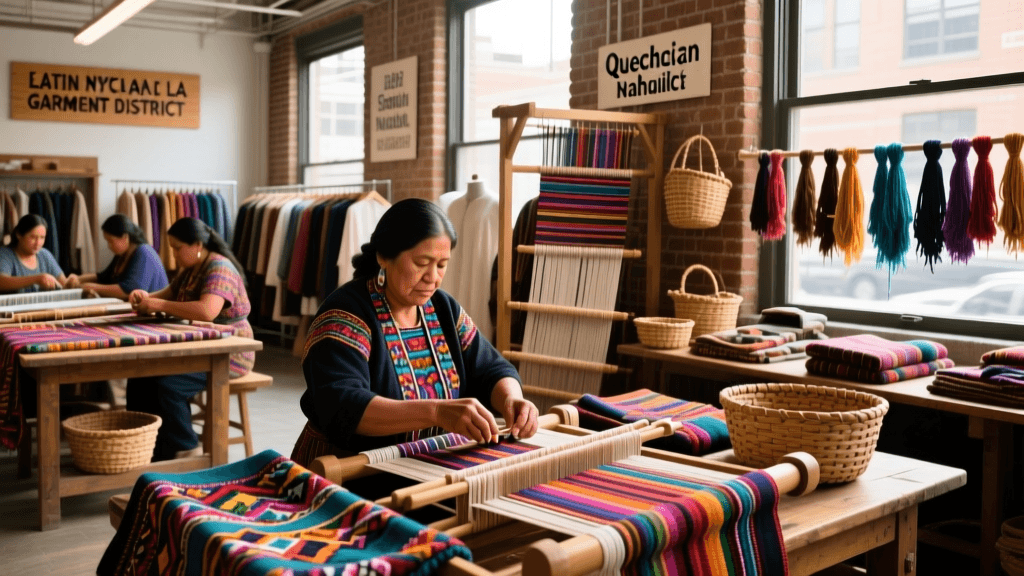
Spanning over 100 blocks in downtown Los Angeles, the LA Fashion District is the undisputed powerhouse for Latin American textile sourcing. Due to its geographic proximity and deep cultural ties to Mexico, Central America, and South America, LA serves as the primary entry point for traditional Mesoamerican and Andean textiles. According to the LA Fashion District official directory, the area has seen a 22% increase in specialized importers focusing exclusively on fair-trade, artisan-made Latin American fabrics over the past three years.
In 2026, the epicenter for Indigenous Latin American textiles in LA is found in the historic California Mart and the surrounding jobber stores on 9th and Maple Streets. Here, buyers can find everything as authentic Mayan brocade (huipil weaves) to heavy-duty Southwestern geometric blankets inspired by Pueblo and Navajo traditions. LA is particularly renowned for its access to naturally dyed cottons and wools. Importers working directly with Oaxacan cooperatives bring in yardage dyed with traditional cochineal (red), indigo (blue), and marigold (yellow).
The semi-annual LA Textile Show remains a premier event for buyers. The Spring 2026 edition featured a dedicated 'Artisans of the Americas' pavilion, highlighting direct-to-buyer opportunities from Indigenous collectives. Unlike NYC, LA's jobber market is highly accessible to small businesses and independent designers, with many vendors offering zero-MOQ or low-MOQ (10 to 20 yards) purchasing options, making it the ideal hub for emerging brands focusing on traditional Americas apparel.
Comparison Chart: NYC vs. LA Sourcing Hubs in 2026
| Feature | NYC Garment District | LA Fashion District |
|---|---|---|
| Primary Specialty | High-end Andean camelids (Alpaca/Vicuña), luxury Native American agency representations. | Mesoamerican cottons, Oaxacan wools, Southwestern geometric weaves, natural dyes. |
| Average MOQ (2026) | 100+ yards (Showrooms); 5-10 yards (Sample cuts at premium). | 10-50 yards (Jobbers); Zero-MOQ available at select cash-and-carry stores. |
| Pricing Tier | Premium / Luxury ($45 - $150+ per yard). | Wholesale / Mid-Tier ($12 - $65 per yard). |
| Best For | Established luxury brands, museum archives, high-end capsule collections. | Independent designers, contemporary streetwear, bohemian/artisanal brands. |
| Buyer Access | Strictly B2B; requires tax ID, business license, and showroom appointments. | Mixed; many jobbers allow public access, though best pricing requires a resale certificate. |
Ethical Sourcing and the Indian Arts and Crafts Act
As the demand for Indigenous aesthetics grows, so does the prevalence of counterfeit and culturally appropriated goods. In 2026, ethical sourcing is not just a moral imperative; it is a strict legal requirement. Any buyer sourcing Native American textiles in the United States must be intimately familiar with the Indian Arts and Crafts Act. The Indian Arts and Crafts Board (IACB), a division of the U.S. Department of the Interior, enforces this truth-in-advertising law, which prohibits misrepresenting goods as being Native American-made when they are not.
When buying textiles marketed as 'Navajo,' 'Zuni,' or 'Cherokee' in either the NYC or LA garment districts, buyers must request a Certificate of Authenticity or verify the vendor's tribal enrollment documentation. Mass-produced fabrics featuring Southwestern geometric prints are abundant in LA jobber stores, but they cannot legally be marketed as 'Native American' or 'Indian' textiles unless they are genuinely crafted by enrolled members of a state or federally recognized tribe. Ethical buyers in 2026 are increasingly bypassing middlemen, using the garment districts primarily as networking hubs to connect with verified Indigenous trade cooperatives and legal representatives.
Identifying Authentic Dyes and Weaves in 2026
To truly specialize in Americas and Indigenous garments, buyers must be able to identify authentic traditional techniques. In the showrooms of New York and the bustling aisles of Los Angeles, knowing the difference between a power-loomed imitation and a hand-woven masterpiece is critical.
- Cochineal Dye: Authentic Oaxacan and Peruvian textiles often use cochineal, an insect-based dye that yields vibrant reds and purples. In 2026, synthetic imitations are common. Authentic cochineal will show slight, beautiful variations in color saturation across the warp and weft, whereas synthetic prints will be perfectly uniform.
- Churro Wool: The Navajo-Churro sheep produces a unique, long-staple wool that is highly durable and possesses a distinct luster. Authentic hand-spun Churro wool will have a slightly coarse, rustic texture compared to commercially milled merino, and it is highly prized for traditional Southwest weaving.
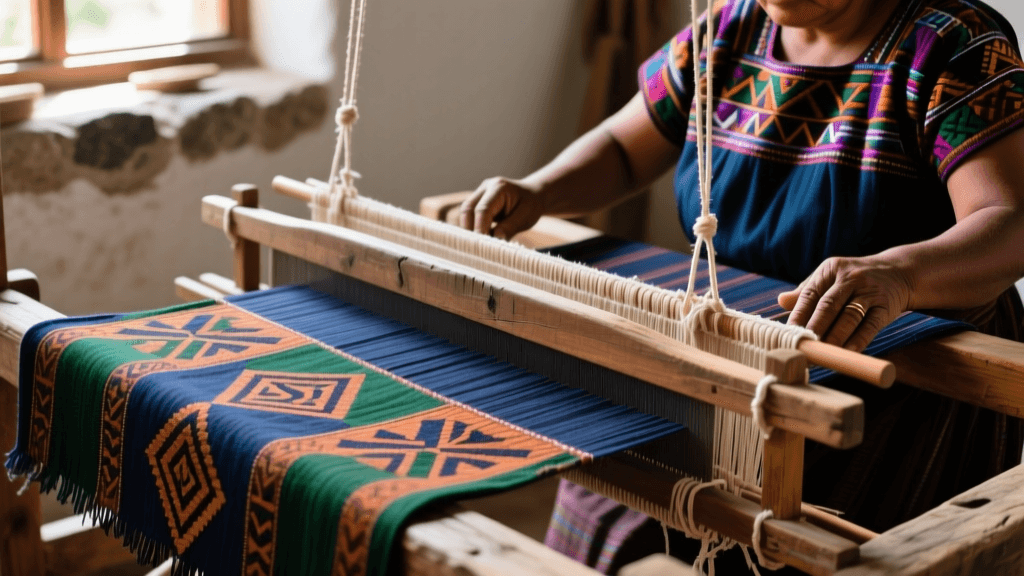
- Backstrap Loom Weaving: Traditional Mayan and Zapotec huipiles are woven on backstrap looms. This technique results in fabric with tightly packed, intricate brocade patterns and distinct, often heavier, selvedge edges. Power-loomed imitations will lack the structural density and the subtle, human irregularities that define true backstrap textiles.
Practical Sourcing Checklist for 2026 Buyers
To maximize your sourcing trips to the NYC and LA garment districts this year, keep this actionable checklist on hand:
- Prepare Your Documentation: Ensure your state resale certificate and federal EIN are digital and ready. Many high-end NYC showrooms will turn away buyers without proper B2B credentials.
- Schedule Ahead for NYC: Walk-ins are virtually obsolete in the Manhattan Garment District in 2026. Book showroom appointments at least two weeks in advance, specifically requesting to view 'Latin American and Indigenous artisanal collections.'
- Bring a Tension Gauge and Loupe: When evaluating hand-woven textiles in LA jobber stores, use a textile loupe to inspect the weave structure and a tension gauge to ensure the fabric meets your production standards for garment sewing.
- Verify Fair Trade Certifications: Look for current 2026 certifications from organizations like the World Fair Trade Organization (WFTO) or Nest, which guarantee that the Indigenous artisans who wove the textiles were paid living wages.
- Ask About Shrinkage and Bleeding: Naturally dyed Indigenous textiles, particularly those using indigo and cochineal, may bleed during the first few washes. Always ask the vendor for care instructions and purchase an extra yard for pre-production shrinkage and colorfastness testing.
By approaching the NYC and LA garment districts with a deep respect for cultural heritage, a commitment to legal compliance, and a keen eye for traditional craftsmanship, designers and buyers can successfully integrate the rich textile traditions of the Americas into the modern fashion landscape.