Authentic Oaxacan Huipil Sourcing & Weaving Guide 2026
The Enduring Legacy of the Oaxacan Huipil
The Oaxacan huipil is far more than a simple tunic; it is a wearable manuscript of indigenous identity, cosmology, and ancestral memory. Worn primarily by Zapotec, Mixtec, and Mazatec women in the southern Mexican state of Oaxaca, these garments have captivated global textile enthusiasts for generations. As we navigate the sustainable fashion landscape of 2026, the demand for ethically sourced, handwoven Latin American garments has reached an all-time high. However, this surge in popularity has also led to an influx of mass-produced imitations flooding the market.
For collectors, cultural enthusiasts, and conscious consumers, understanding the intricate details of traditional Mesoamerican textiles is essential. According to the Metropolitan Museum of Art's Arts of the Americas collection, indigenous weaving traditions represent some of the most complex and historically significant textile arts in the Western Hemisphere. This comprehensive guide will equip you with the actionable knowledge needed to identify authentic backstrap-woven huipils, understand their structural anatomy, and source them ethically in 2026.
The Anatomy of a Traditional Oaxacan Huipil
Unlike Western garments that are cut and sewn from pre-woven fabric, a traditional huipil is woven to shape. The garment is typically constructed from one, two, or three rectangular panels known as lienzos. These panels are sewn together using a traditional stitch, often leaving a distinctive, decorative seam called a randa.
Standard Measurements and Proportions
When sourcing an authentic huipil for personal wear or textile collection in 2026, it is crucial to understand the standard dimensions. Because they are woven on a backstrap loom, the width of the garment is limited by the weaver's arm span and hip width.
- Single-Panel Huipils: Typically measure 24 to 30 inches in width and 28 to 35 inches in length. These are common in everyday wear and are often made of lightweight, hand-spun white cotton.
- Two-Panel Huipils: Measure 40 to 50 inches in width (when laid flat) and 30 to 40 inches in length. The center seam often features intricate brocade patterns that align perfectly when the garment is worn.
- Three-Panel Huipils (Ceremonial): Can exceed 60 inches in width and 45 inches in length. These are heavy, elaborate garments reserved for weddings, festivals, and community leadership roles.
The arm and neck openings are not cut; rather, they are formed by leaving specific sections of the seams unjoined. This zero-waste approach to garment construction is a hallmark of pre-Columbian textile engineering that continues to inspire modern sustainable fashion designers today.
Zapotec Backstrap Weaving Techniques
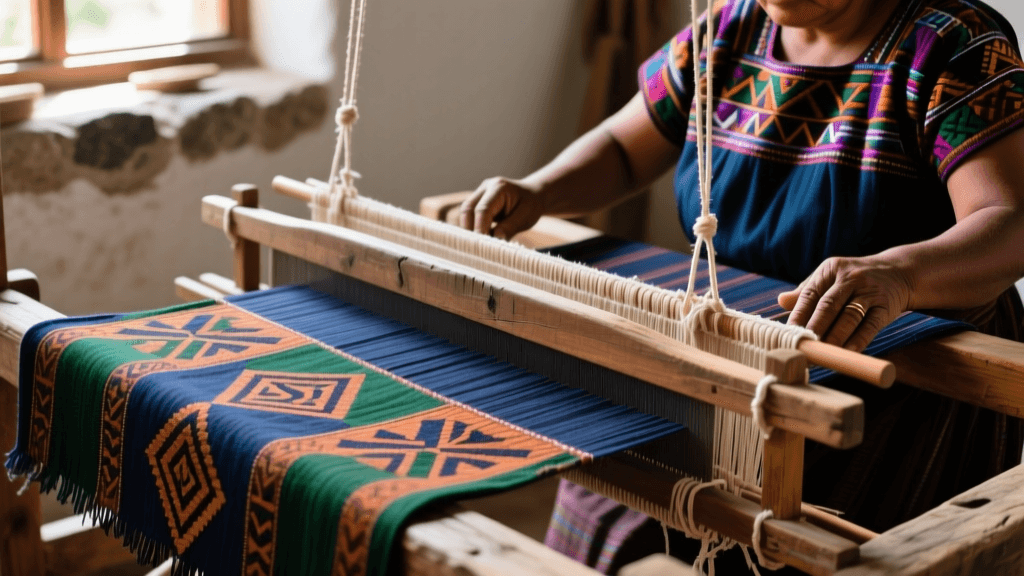
The soul of the Oaxacan huipil lies in the telar de cintura, or backstrap loom. This ancient device consists of a series of wooden rods, heddles, and a shuttle, with one end tied to a sturdy post or tree and the other end secured around the weaver's lower back via a leather or woven strap. The weaver's body acts as the tensioning mechanism; by leaning forward or backward, she controls the warp threads with microscopic precision.
Brocade vs. Embroidery: Spotting the Difference
One of the most critical skills for a textile buyer in 2026 is distinguishing between true woven brocade (trama suplementaria) and post-loom embroidery. In authentic Zapotec and Mixtec huipils, the vibrant geometric and zoomorphic patterns are not stitched onto the fabric after it is finished. Instead, they are woven directly into the cloth using a supplementary weft thread.
Actionable Tip: Turn the huipil inside out. If the pattern is visible and nearly identical on the reverse side (often appearing as a negative or slightly muted version of the front), it is authentic woven brocade. If the back shows a mess of knotted threads, or if the pattern is completely absent on the reverse, the design was machine-embroidered or hand-stitched after the weaving process, significantly lowering both the cultural and monetary value of the piece.
Natural Dyes: The 2026 Artisan Revival
The 2026 textile market has seen a massive resurgence in the use of natural, biodynamic dyes, driven by artisan cooperatives in the Valles Centrales region of Oaxaca. Synthetic aniline dyes, which dominated the late 20th century, are now largely rejected by master weavers who recognize the superior colorfastness and ecological benefits of traditional botanical and insect dyes.
Key Natural Dyes to Look For
- Cochineal (Grana Cochinilla): Derived from the Dactylopius coccus insect that lives on native nopal cacti. It produces a stunning spectrum of pinks, deep crimsons, and purples (when modified with an alkaline agent like wood ash). In 2026, cooperative-grown cochineal yields a color that is remarkably resistant to UV fading.
- Indigo (Añil): Sourced from the leaves of the Indigofera suffruticosa plant. The fermentation vat process yields rich, deep blues. Authentic indigo will often have a slight, pleasant earthy scent and may show subtle variations in tone across the yarn.
- Marigold (Cempasúchil) and Pecan Shells: Used to achieve vibrant yellows, burnt oranges, and deep, warm browns. These are often mordanted with alum to ensure the colors bind permanently to the cotton fibers.
2026 Fair-Trade Pricing and Sourcing Guide
Sourcing an authentic huipil requires navigating a complex market. In 2026, ethical sourcing means purchasing directly from artisan cooperatives or verified fair-trade galleries that guarantee the weaver receives a living wage. The UNESCO Intangible Cultural Heritage registry frequently highlights the importance of safeguarding these traditional crafts by ensuring economic viability for the practitioners.
Below is a breakdown of what you should expect to pay for authentic, handwoven Oaxacan huipils in the current market. Prices reflect direct-from-cooperative or ethical gallery rates in USD.
| Garment Type | Material & Dyes | Estimated 2026 Fair-Trade Price (USD) | Average Weaving Time |
|---|---|---|---|
| Everyday Single-Panel | Commercial cotton, synthetic accents | $120 - $180 | 3 to 4 weeks |
| Festival Two-Panel | Hand-spun cotton, natural dyes, heavy brocade | $350 - $600 | 2 to 4 months |
| Ceremonial Three-Panel | Coyuche (native brown cotton), 100% natural dyes, master-level brocade | $800 - $1,500+ | 6 to 9 months |
'When you buy a handwoven huipil, you are not just buying cloth; you are purchasing the time, the eyesight, and the ancestral memory of the weaver.' — Master Weaver from Teotitlán del Valle
Red Flags When Sourcing Online or In-Person
If you encounter a 'huipil' selling for $35 to $50 that features dense, complex patterns, it is almost certainly machine-made in a factory, often using polyester-blend threads. True handwoven cotton has a distinct, slightly irregular texture. The selvedge edges should be perfectly finished by the loom, not hemmed by a sewing machine. Furthermore, authentic weavers often leave a small, intentional 'flaw' or variation in the pattern, a spiritual practice acknowledging that only the divine creates true perfection.
Caring for Your Handwoven Garment
An authentic, naturally dyed huipil is an investment that can last for generations if cared for properly. The hand-spun cotton and botanical dyes require gentle, specific maintenance to preserve their structural integrity and vibrancy.
Washing and Drying Instructions
- Hand Wash Only: Never place a backstrap-woven garment in a washing machine. The agitation will distort the warp tension and cause the supplementary weft threads to pull and snag.
- Use pH-Neutral Soap: Use a specialized textile wash or a mild, pH-neutral baby shampoo. Avoid harsh detergents, bleach, or optical brighteners, which will strip natural dyes like cochineal and indigo.
- Cold Water Soak: Submerge the garment in cold water for no more than 15 minutes. Gently agitate with your hands. Do not wring or twist the fabric.
- Shade Dry: Roll the huipil in a clean, dry towel to press out excess water. Lay it flat on a drying rack in a shaded, well-ventilated area. Direct sunlight will rapidly fade natural botanical dyes.
Storage Best Practices
When storing your huipil, avoid wire hangers, which can stretch the shoulder seams and distort the warp threads. Instead, fold the garment loosely along its natural panel seams. Wrap it in acid-free tissue paper or unbleached muslin cloth to protect it from dust and moisture. Store it in a cedar chest or a breathable cotton storage box, and avoid using mothballs, which contain harsh chemicals that can react with natural dyes and leave a permanent, toxic odor.
Conclusion
The Oaxacan huipil remains one of the most profound expressions of indigenous artistry in the Americas. As we move through 2026, the responsibility falls on us as consumers and collectors to honor the labor, history, and cultural significance embedded in every thread. By understanding the mechanics of the backstrap loom, recognizing the brilliance of natural dyes, and committing to fair-trade sourcing, you ensure that these vital Zapotec and Mixtec weaving traditions will continue to thrive for centuries to come.