Mexican Huipil Embroidery Counted Thread Techniques And Village Signatures
Rooted Threads: The Huipil as Living Archive
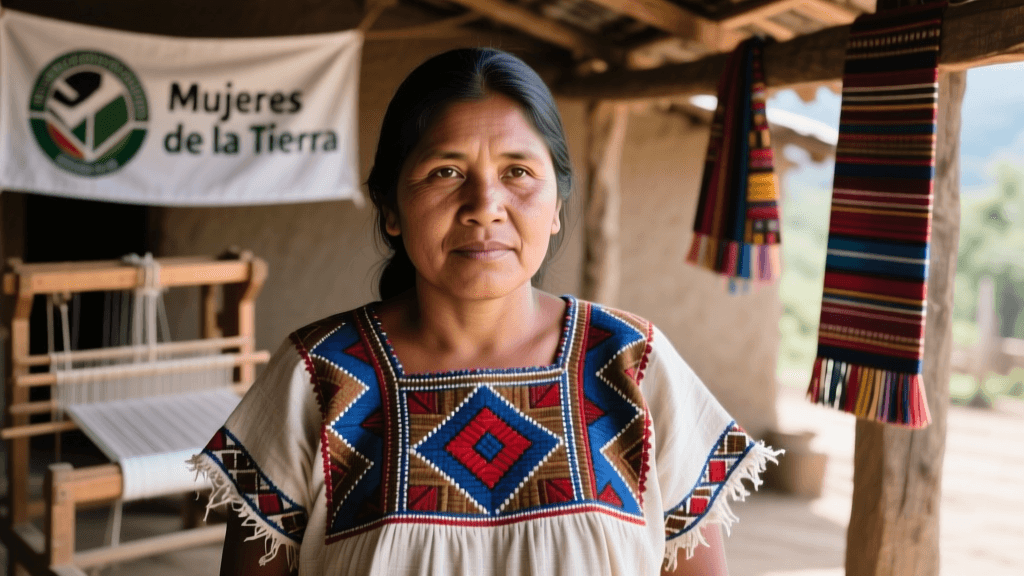
The huipil—worn by Maya women across highland Guatemala—is not merely garment but embodied geography. Each stitch encodes lineage, cosmology, and territorial memory. Unlike mass-produced textiles, the huipil functions as a vertical archive: warp threads represent ancestral time, weft threads mark lived experience, and counted-thread embroidery—where motifs emerge from precise calculation of fabric grid intersections—serves as both mathematical discipline and spiritual notation. In San Juan Sacatepéquez, a community renowned for its indigo-dyed cotton huipiles, artisans count up to 48 threads per centimetre in fine handwoven cloth, producing motifs so dense they achieve near-photographic fidelity in floral and avian forms.
Village Signatures: Geometry as Identity
Every Maya community maintains distinct visual grammar. In Nahualá, Ixil weavers employ a 12×12 thread count per square centimetre to render jaguar paws—a symbol tied to the sacred mountain Tz’ikinajb’al—and restrict use of red cochineal dye to ceremonial huipiles worn during the annual Ch’ut Q’ij (New Year) rites. In contrast, Santiago Atitlán’s Tz’utujil weavers use a 9×9 thread grid for geometric fretwork, embedding 72 symmetrical units across the chest panel to mirror the seven levels of the Maya cosmos. These signatures are neither decorative nor arbitrary; they constitute legally recognised cultural identifiers under Guatemala’s Ley de Protección al Patrimonio Cultural (2015), which mandates communal registration of design motifs with the Dirección General del Patrimonio Cultural y Natural.
San Antonio Aguas Calientes: Precision in Pomegranate Motifs
Here, huipiles feature pomegranates rendered through double-counted cross-stitch on hand-spun, naturally dyed cotton. Artisans calculate each fruit using exactly 168 stitches—12 rows × 14 columns—to replicate the seed chamber structure sacred in K’iche’ creation narratives. A full ceremonial huipil requires 2,100 hours of labour, with embroidery alone consuming 1,400 hours. The base cloth measures precisely 1.2 metres wide and 2.4 metres long, dimensions calibrated to align with solar equinox alignments observed from the village’s central plaza.
Counted-Thread Embroidery: Mathematics Woven into Cloth
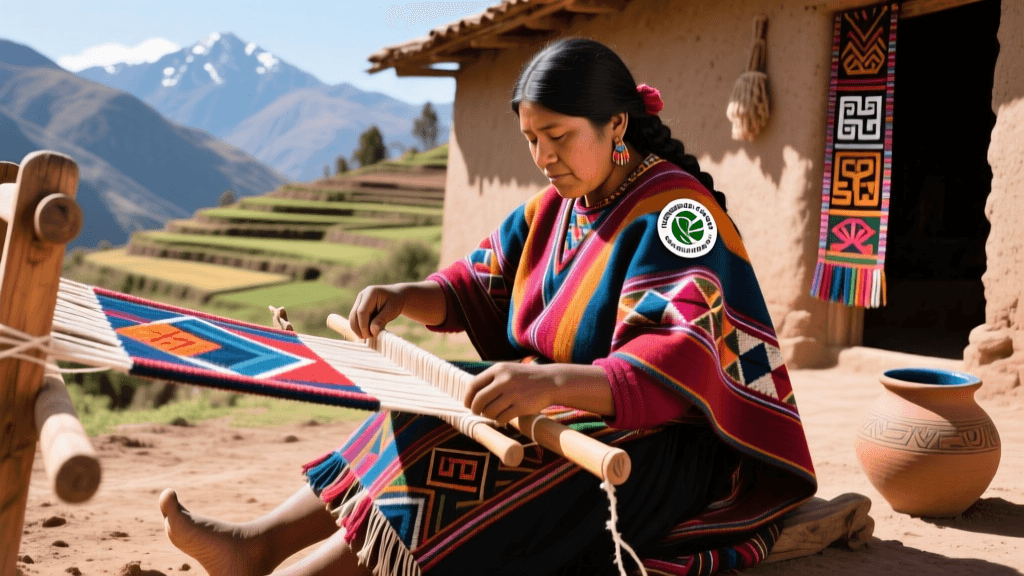
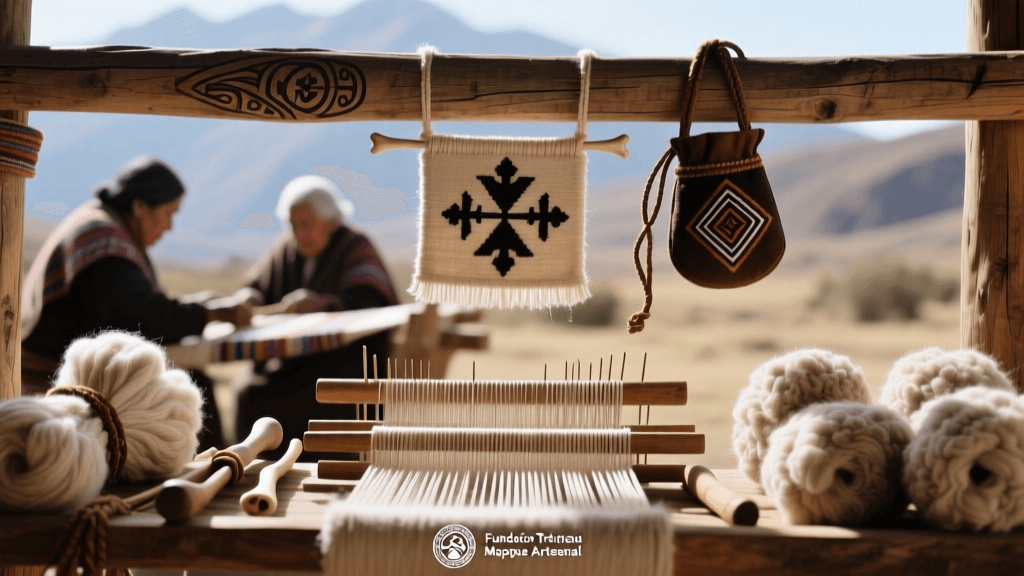
Counted-thread techniques demand rigorous spatial cognition. Weavers do not sketch designs on fabric; instead, they internalise grid coordinates relative to warp tension and thread density. In Chichicastenango, Kaqchikel embroiderers use a 10-thread-per-centimetre foundation cloth, then overlay motifs using only even-numbered counts—2, 4, 6—to maintain ritual symmetry. This constraint reflects the Maya concept of tz’aq, or balanced reciprocity, where imbalance invites misfortune. A single huipil chest panel may contain 3,200 individual stitches, each placed with millimetre accuracy verified against wooden counting frames calibrated to 0.5 mm increments.
Materials and Measurement Standards
Natural dyes follow exacting ratios: 1 kilogram of cochineal insects yields dye for 3.2 metres of cloth; 10 litres of fermented indigo vats process 1.5 kilograms of cotton yarn per batch. Spinning standards are equally precise: hand-spun cotton must achieve 1,200 twists per metre to withstand the tension of backstrap loom weaving. Loom width is fixed at 45 cm—the traditional span of a woman’s outstretched arms—ensuring ergonomic continuity across generations.
- In San Pedro La Laguna, Tz’utujil huipiles measure exactly 1.15 m in length to correspond with the height of the local patron saint’s statue in the church atrium.
- The Centro de Textiles Tradicionales del Guatemala (CTTG) has documented over 287 distinct village-specific motifs since its founding in 1999.
- A 2022 CTTG survey found that 83% of master weavers in Sololá department teach counting methods exclusively through oral instruction—no written charts or digital tools.
- At the Museo Ixchel del Traje Indígena in Guatemala City, conservation records show huipiles from the 1940s retain original thread counts within ±0.3 threads/cm despite decades of wear.
- The National Museum of the American Indian (NMAI) holds 412 documented huipiles, with 67% catalogued to specific villages using thread-count analysis and dye chromatography.
Ceremonial Weight and Ritual Function
Huipiles operate as active participants in ceremony—not passive costume. During the K’atun renewal rite in Momostenango, elders don huipiles embroidered with 365 diamond motifs—one for each day—sewn onto cloth woven with 260 warp threads, echoing the Tzolkin calendar cycle. The garment is ritually washed in spring water before dawn, then folded along precise diagonal axes that replicate the four cardinal directions. When worn, the huipil’s shoulder seams must align with the wearer’s clavicles to ensure correct energetic flow, a requirement enforced by elder weavers who measure alignment using calibrated palm-width calipers (1 palm = 8.3 cm).
Inter-Community Recognition Protocols
Recognition of authenticity relies on tactile and visual literacy. In market exchanges at Chichicastenango’s Thursday market, buyers assess huipiles by rubbing thumb and forefinger along the hem to detect subtle variations in thread twist density—San Juan Comalapa huipiles register 1.7 twists/mm, while those from Santa Catarina Ixtahuacán yield 2.1 twists/mm. No two villages share identical combinations of thread count, motif scale, dye saturation, and stitch tension. This system functions as a living intellectual property framework, upheld by the Asociación de Mujeres del Altiplano (AMAA), which since 2007 has certified over 1,200 weavers through village-based peer review boards.
Institutional Safeguards and Contemporary Practice
The Museo Nacional de Arqueología y Etnología in Guatemala City maintains a textile database containing microphotographs of 1,842 huipil samples, each annotated with thread-count measurements, dye spectra, and provenance interviews. Similarly, the Centro de Estudios Mayas at Universidad Francisco Marroquín conducts biannual field surveys measuring stitch consistency across 14 municipalities. Their 2023 report confirmed that huipiles from San Andrés Xecul maintained an average deviation of only 0.08 threads/cm across 214 samples—evidence of intergenerational technical fidelity.
“The huipil is not worn—it is inhabited. Every counted thread anchors the wearer to a specific mountain, river, and ancestor. To alter the count is to sever the line.” — Doña Juana López, master weaver, San Juan Sacatepéquez (quoted in Textile Sovereignty in Highland Guatemala, CTTG, 2021)
| Village | Thread Count (threads/cm) | Primary Motif | Ceremonial Use Frequency | Dye Source |
|---|---|---|---|---|
| San Antonio Aguas Calientes | 16 | Pomegranate | 12 times/year | Cochineal + logwood |
| Nahualá | 12 | Jaguar paw | 7 times/year | Indigo + annatto |
| Santiago Atitlán | 9 | Fretwork | 18 times/year | Indigo + marigold |
Contemporary challenges persist. Synthetic dyes now appear in 19% of commercially sold huipiles, according to a 2023 AMAA audit—yet these lack the UV-reactive properties of natural dyes that cause ceremonial garments to shimmer under candlelight, a phenomenon linked to the Maya concept of tz’aqil, or divine radiance. Likewise, machine-woven base cloths—measuring 1.32 m wide instead of the traditional 1.2 m—disrupt the ritual proportionality required for proper folding and storage. Despite this, village-level cooperatives like the Cooperativa de Artesanía Maya “Tz’unun” in Sololá continue training youth in counted-thread methodology using calibrated wooden looms and magnifying lenses calibrated to 10× magnification.
Each huipil remains a sovereign document. Its geometry asserts presence. Its thread count resists erasure. Its motifs name rivers, mountains, and ancestors without translation. When a young weaver in San Juan Comalapa completes her first full-counted huipil—measuring precisely 1.2 m × 2.4 m, stitched with 3,200 counted motifs, dyed with 1.7 kg of native plants, and approved by three elder judges—she does not finish a garment. She affirms a covenant written in fibre, visible only to those who know how to count.
The precision is non-negotiable: 12 rows × 14 columns for the pomegranate. 72 symmetrical units for cosmic balance. 1,200 twists per metre for structural integrity. 0.5 mm calibration for counting frames. 8.3 cm for palm-width measurement. These numbers are not metrics—they are markers of belonging, transmitted not through textbooks but through fingertips tracing the same grid their great-grandmothers mapped under the same moon.
Preservation occurs not in glass cases alone, but in the calloused index finger counting threads at dawn, in the child learning to distinguish 9×9 from 12×12 grids by touch alone, in the cooperative ledger recording each new motif registered under communal copyright. This is textile sovereignty enacted daily—thread by counted thread.