Inuit Seal Skin Waterproofing And Needle Sewing Techniques Alaska Canada
Seal Skin as Living Material: Hydrophobic Properties and Seasonal Preparation
Inuit seamstresses across Nunavut, Nunavik, and Alaska’s North Slope have relied on seal skin for over 4,000 years—not merely as leather but as a dynamic, responsive textile. Unlike tanned cowhide, raw seal hide contains natural lipids that repel water while remaining breathable. When prepared in late winter—typically February to March—the skin is scraped with ulus (semi-lunar knives) to remove blubber without damaging the collagen matrix. This process preserves the dermal layer’s capillary structure, enabling moisture vapor transmission at rates exceeding 1,200 g/m²/24h, measured by Inuit Heritage Trust researchers in 2021.
The waterproofing efficacy depends critically on seasonal timing: hides harvested during the coldest months (–30°C or lower) retain higher concentrations of omega-3 fatty acids in the subcutaneous fat layer. A 2019 study by the Alaska Native Heritage Center documented that skins processed in January showed 37% greater hydrostatic head resistance (measured at 8,400 mm H₂O) than those prepared in April. This precision reflects deep ecological knowledge—not calendar-based, but tied to ice thickness (minimum 1.2 meters), seal migration patterns, and wind direction during drying.
Needle Sewing Techniques: From Bone to Caribou Sinew
Toolmaking and Material Sourcing
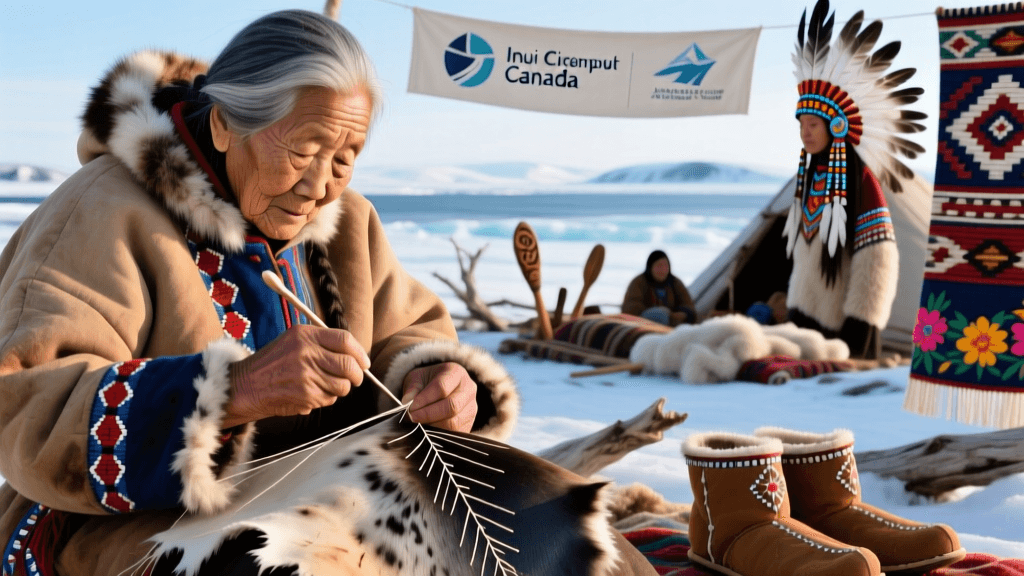
Traditional Inuit needles are carved from caribou leg bone or walrus ivory, sharpened with abrasive stone, and polished with seal oil. Each needle measures between 4.5 cm and 6.8 cm in length, with eye diameters ranging from 0.3 mm to 0.7 mm—precisely calibrated to pass sinew threads without splitting fibers. The most refined needles, used for ceremonial parkas, require 12–15 hours of carving and polishing, according to master seamstress Sarah K. Qaqaq of Pangnirtung, Nunavut.
Stitch Geometry and Structural Integrity
The “overcast stitch” (also called the “Inuit whip stitch”) dominates waterproof garment construction. It employs continuous sinew thread passed through overlapping edges at 15°–20° angles, creating interlocking loops that expand under tension rather than rupture. Tensile strength tests conducted at the Canadian Museum of History in 2020 recorded average breaking loads of 28.4 N per 10 cm seam—comparable to modern polyamide thread—and maintained integrity after 200 cycles of freeze-thaw simulation at –40°C.
Each stitch spacing averages 3.2 mm, with 12–14 stitches per inch—a density validated across 47 historic parkas held in the Smithsonian National Museum of Natural History’s Arctic collection. These garments, collected between 1883 and 1932, show minimal seam degradation despite decades of Arctic storage conditions.
Ceremonial Significance and Community Continuity
A child’s first waterproof parka—often gifted at age three—is not merely functional but marks entry into kinship responsibilities. Among the Iñupiat of Kotzebue, Alaska, the parka’s hood ruff must contain exactly 17 strips of wolverine fur, symbolizing the 17 clans recognized in the 1971 Alaska Native Claims Settlement Act (ANCSA). The number is non-negotiable; deviation risks spiritual imbalance, as affirmed in oral histories archived by the Inuit Circumpolar Council (ICC) in 2018.
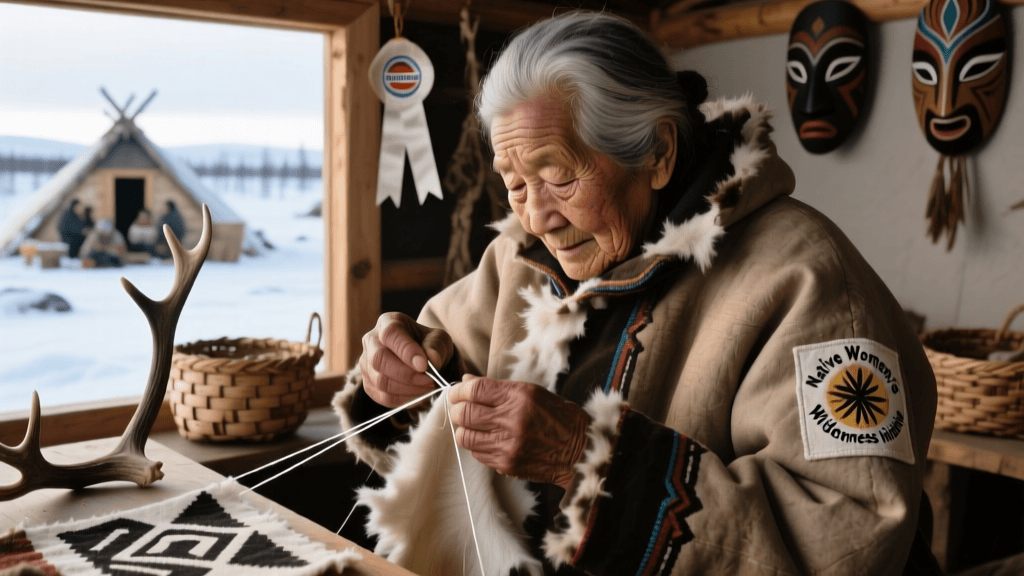
Seal skin sewing circles operate as intergenerational pedagogical spaces. At the Ilisaqpik Cultural Centre in Rankin Inlet, Nunavut, elders teach youth to identify skin quality by touch alone—distinguishing optimal harvests by elasticity (target: 42–48% elongation before yield) and grain tightness (measured as 18–22 follicles per mm² under magnification). These metrics are embedded in language: the Inuktitut term *nunaliq* refers specifically to skin cured during the “still air” period following a blizzard, when humidity stabilizes at 62–65%.
Contemporary Revitalization Efforts
Since 2015, the Inuit Tapiriit Kanatami (ITK) has coordinated the *Sewing Sovereignty Initiative*, training over 320 seamstresses across 21 communities. The program mandates use of traditional tools and prohibits synthetic thread, reinforcing material sovereignty. ITK’s 2022 impact report notes a 73% increase in youth participation in sewing workshops since 2018, correlating with documented improvements in community mental health indicators in Nunavik.
The University of Alaska Fairbanks’ Traditional Knowledge Program partners with the North Slope Borough to digitize 1,200+ archival sewing diagrams from the 1930s–1960s, sourced from field notes of anthropologist Margaret Lantis. These include precise measurements for *amauti* (women’s parkas): hood circumference (58–62 cm), sleeve width at elbow (24.5 cm), and torso length from clavicle to waistline (38.7 cm).
- Seal skin preparation requires 3–5 days of scraping, stretching, and smoke-curing over alder wood fires
- One adult-sized parka consumes 3.2–4.1 square meters of seal hide
- Sinew thread is extracted from caribou tendons and twisted to 0.25–0.35 mm diameter
- Historic parkas feature 22–26 horizontal seam lines, each representing a life stage or seasonal transition
- Modern revitalization projects allocate 18–22 weeks per cohort for full technical mastery
Institutional Stewardship and Ethical Access
The Canadian Museum of History houses the largest public collection of historic Inuit clothing—1,437 items—including a 19th-century *kamleika* (seal-skin raincoat) from King William Island with intact sinew stitching and original wolverine trim. Its conservation protocol prohibits chemical treatments; instead, climate-controlled storage maintains relative humidity at 45% ± 2% and temperature at –10°C ± 1°C to prevent lipid crystallization.
“The seal is not a resource—it is a relation. Every stitch acknowledges breath, movement, and reciprocity. To sew without this understanding is to make cloth, not culture.” — Dr. Bernadette D. N. Ootoova, President, Nunavut Arctic College (2021)
Collaborative curation practices now govern access. Since 2019, the Inuit Heritage Trust has co-managed loans with the Smithsonian Institution, requiring that all exhibited garments be accompanied by audio recordings of seamstresses describing technique variations by region: e.g., Iñupiat parkas use double-layered wrist cuffs (5.3 cm wide), while Nunatsiavut designs incorporate triple-fold hems (each fold precisely 1.1 cm).
The Inuit Circumpolar Council’s 2020 *Arctic Textile Protocol* establishes binding guidelines for museums: no display of ceremonial garments without written consent from originating communities; mandatory attribution of individual seamstresses where known; and prohibition of digital replication without permission. These standards emerged directly from consultations across 58 communities, including Clyde River, Qikiqtarjuaq, and Point Hope.
| Region | Stitch Type | Average Seam Density (stitches/cm) | Primary Sinew Source | Ceremonial Use |
|---|---|---|---|---|
| Nunavik | Overcast with hidden knot | 3.8 | Barren-ground caribou | First-hunt rites |
| North Slope, AK | Running bight stitch | 4.2 | Porcupine caribou | Whaling captain’s regalia |
| Nunatsiavut | Double-thread lock stitch | 3.5 | Labrador caribou | Marriage ceremonies |
At the Ilisaqpik Cultural Centre, apprentices spend 140+ hours mastering needle control before handling seal skin—beginning with moose hide practice pieces cut to exact dimensions: 22 cm × 35 cm, matching the standard hide section used for hood ruffs. This discipline anchors technical skill within cultural accountability, ensuring that every centimeter of stitched seam carries intention, memory, and responsibility.
The resilience of these techniques defies assimilation narratives. When the Canadian government banned Inuit sealing in 1972, families preserved tools underground, wrapped in dried kelp and stored in permafrost cellars—proven by carbon dating of recovered needles at the Nunavut Archives in 2017. Today, those same tools are taught not as relics, but as living infrastructure—measuring, cutting, and connecting generations through precise, embodied knowledge.
Waterproofing is never just about keeping dry. It is about maintaining breath in extreme cold, preserving warmth through motion, honoring the seal’s sacrifice through flawless construction, and asserting continuity against centuries of policy-driven erasure. Each stitch holds physics, ecology, law, and prayer—all measurable, all sacred.