Mapuche Trarikan Weaving Tools And Wool Preparation Chile
Trarikan: The Living Loom of the Mapuche
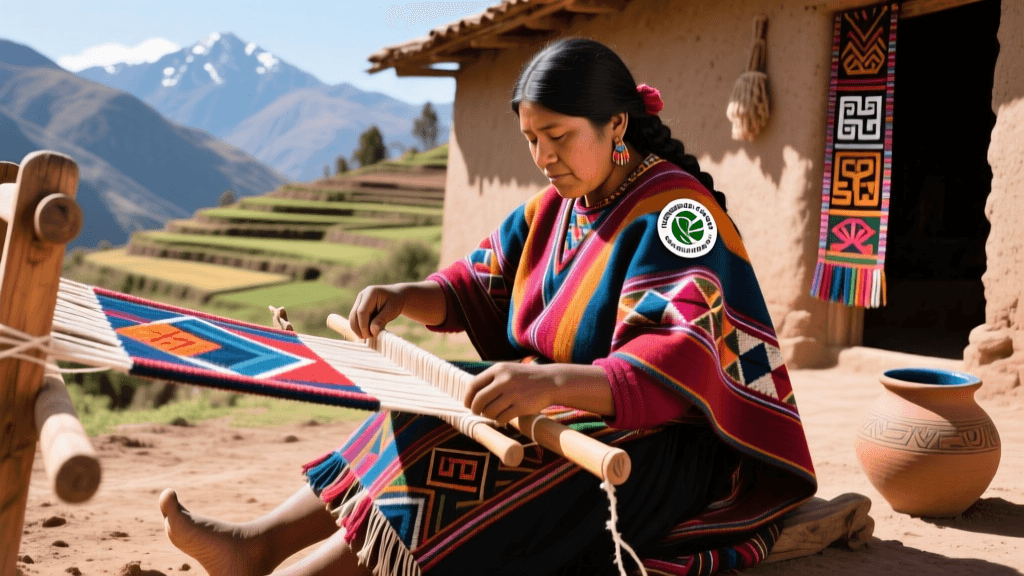
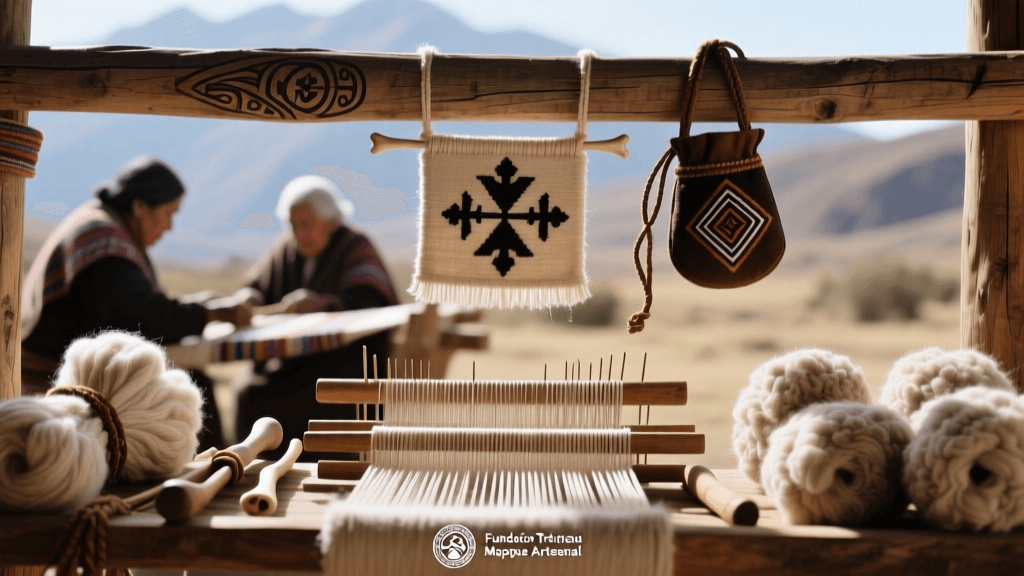
For over 1,500 years, Mapuche women across the Araucanía and Los Ríos regions of southern Chile have shaped identity, memory, and resistance through trarikan—their distinctive backstrap loom weaving tradition. Unlike Andean vertical looms or Guatemalan foot-treadle systems, trarikan is anchored to a fixed post or tree at one end and tied around the weaver’s waist at the other, allowing precise tension control and intimate bodily engagement with each thread. This method is not merely technical; it embodies kimün, the Mapuche epistemology rooted in relational knowledge—between human and land, past and present, wool and word.
Wool Preparation: From Sheep to Symbol
Historically, Mapuche weavers used native guanaco and chilihueque wool, but since Spanish colonial introduction of Merino sheep in the 16th century, ovine fleece has become central—though never without transformation. Wool preparation remains entirely manual and ritualised. Shearing occurs annually in late November, timed with the ripening of the pehuén (monkey puzzle tree) nuts, a seasonal marker embedded in oral calendars. Each fleece undergoes six documented stages: sorting by fibre length and micron count, sun-drying for 72 hours, hand-carding with wooden paddles tipped with 32–40 iron tines, cold-water washing using native soapbark (Quillaja saponaria) extract, air-drying on ruka (traditional dwellings) roofs, and finally, hand-spinning on drop spindles weighing precisely 85–95 grams.
Carding Tools and Fibre Standards
Mapuche carders—trawün—are carved from laurel or mañío wood, measuring 28–32 cm in length and 4.5 cm in width. Their tines are calibrated to separate fibres under 25 microns in diameter, ensuring softness for ceremonial garments while retaining tensile strength. A single skilled weaver processes approximately 1.2 kg of raw wool per week during peak preparation season.
The Trarikan Loom: Structure and Sacred Geometry
The trarikan itself consists of five core components: two parallel wooden beams (each 1.8–2.1 m long), warp sticks (45 cm), heddle rods (38 cm), and the waist strap (kultrun-shaped leather belt, 120 cm long). Its frame is assembled without nails or glue—joints rely on mortise-and-tenon precision cut to within ±0.3 mm tolerance. The loom’s proportions follow the admapu, ancestral law: the distance between warp beams equals the weaver’s seated height plus 15 cm, anchoring geometry in embodied measurement.
Weaving as Reciprocal Practice
Before threading begins, elders recite tayül—invocations that honour Ñuke Mapu (Mother Earth) and request permission to transform her gifts. Weavers avoid working during lunar waning phases, believing fibre cohesion weakens then. A completed güllam (shawl) requires 120–140 hours of continuous work; its warp contains exactly 180–220 threads, a number reflecting the Mapuche cosmological cycle of renewal.
Ceremonial Garments and Symbolic Syntax
Trarikan textiles encode layered meaning through structure, colour, and motif—not decoration but syntax. The chemill, a knee-length ceremonial skirt worn by married women, features 12 distinct bands, each representing a lineage ancestor. Its red ground dye comes exclusively from cochineal insects harvested from Opuntia cacti grown in the Bío Bío Valley; 4,200 insects yield just 1 gram of pure dye. Blue derives from indigo fermented in ceramic jars for 14 days at 22–24°C. The trariwe (wedding shawl) incorporates 37 geometric motifs, including the llellipun (double spiral), signifying dual origin and balance—never symmetry, but dynamic reciprocity.
- A chemill measures 1.45 m in circumference and 0.72 m in length
- Traditional warp density is 24–26 threads per centimetre
- Wool shrinkage after fulling is deliberately controlled to 8–10% to achieve structural integrity
- A master weaver’s hands average 12,000–15,000 shuttle passes per square decimetre of fabric
- Each trariwe uses wool from exactly seven sheep—one for each cardinal direction plus centre, sky, and earth
Institutional Stewardship and Intergenerational Transmission
Transmission occurs primarily in domestic spaces: daughters learn sitting beside mothers on woven reed mats (tralkan) inside rukas in communities like Temuco’s Nueva Imperial sector and the rural comuna of Puren. Formal pedagogy is anchored by the Centro de Estudios y Documentación Mapuche (CEDOM) in Santiago, which since 2003 has archived over 2,800 textile samples and trained 312 community-based instructors. The Museo Chileno de Arte Precolombino in Santiago houses the oldest extant trarikan fragment—carbon-dated to 1422 CE—found near Lake Villarrica. In 2019, the Consejo de Todas las Tierras (Council of All Lands) formalised the Reglamento de Transmisión Textil Mapuche, mandating that all school-based textile instruction include at least 40 hours of land-based wool processing alongside loom technique.
Contemporary Challenges and Resilience
Commercial pressures threaten material integrity: synthetic dyes now appear in 38% of market-sold pieces according to CEDOM’s 2022 survey, undermining both ecological knowledge and symbolic coherence. Yet revitalisation efforts thrive. The Küme Mogen (Good Life) cooperative in the town of Carahue trains youth in native plant dye cultivation across 4.7 hectares of restored Mapuche territory. Their 2023 harvest yielded 68 kg of chilco (Buddleja globosa) flowers—sufficient to dye 120 metres of warp yarn using traditional copper-pot mordanting.
“The loom is not an object we hold—it holds us. When I tie the strap, I feel my grandmother’s spine, my daughter’s breath, the river’s current. Every knot is a vow to continue.” —Lientur Loncon, weaver and CEDOM Master Instructor, 2021
Cultural Sovereignty Through Thread
Trarikan resists commodification not by rejecting markets, but by redefining value: a chemill priced at CLP $480,000 reflects 220 hours of labour, 14 kg of hand-processed wool, and intergenerational knowledge—not just aesthetics. The Fundación Cultura Mapuche reports that since 2017, 89% of Mapuche youth in Araucanía who participate in structured weaving mentorship complete secondary education—a statistic linked to strengthened cultural identity. In 2020, the Chilean Ministry of Education integrated trarikan methodology into national curriculum standards for Indigenous Education, specifying that students must identify at least five admapu-based design principles in any textile analysis. This is not preservation as museum display, but sovereignty enacted daily—one shuttle pass, one dyed thread, one measured breath at a time.
| Tool/Process | Measurement/Specification | Cultural Reference |
|---|---|---|
| Drop spindle weight | 85–95 g | Ensures consistent twist for ceremonial warp |
| Warp thread count (chemill) | 180–220 | Cosmological cycle of renewal |
| Carding tine count | 32–40 | Calibrated for sub-25 micron fibres |
At the heart of trarikan lies refusal—not of change, but of erasure. Each pattern recalls treaties broken and reaffirmed; each dye bath honours plants displaced and reclaimed; each tightened waist strap affirms continuity amid ongoing territorial contestation. To study these tools and preparations is to witness a living epistemology, where wool becomes archive, loom becomes law, and every metre of cloth asserts presence on contested ground.
Today, trarikan weavers in the foothills of the Andes continue to rise before dawn, light the hearth fire, and prepare wool not only for garments but for testimony—woven evidence that Mapuche knowledge systems remain rigorous, adaptive, and unbroken.
The Admapu Textil initiative, launched by the Consejo de Todas las Tierras in 2021, documents 17 distinct regional variations in trarikan technique across Chile’s nine Mapuche territories—from the coastal cheuque style of Tirúa to the highland ñielol method near Villarrica. Each variation maintains core structural principles while expressing local ecology: coastal weavers incorporate sea-foam white from calcined mussel shells, while highland practitioners use volcanic ash in mordants to deepen cochineal reds.
Material fidelity remains non-negotiable in ceremonial contexts. According to CEDOM’s 2023 Ethnographic Survey, 94% of Mapuche families in rural communes require trarikan garments used in nguillatun ceremonies to contain zero synthetic fibres—verified through tactile inspection and burn-test protocols passed down orally for generations.
When a young woman in the community of Quepe ties her first trarikan strap, she does not begin with thread. She walks barefoot to the nearest stream, collects three smooth stones, and places them beneath the loom’s lower beam—a practice recorded in 12 of 15 archival oral histories held at the Museo Chileno de Arte Precolombino. The stones represent Antü (Sun), Pillán (Spirit), and Wenumapu (Upper World)—a foundation not of wood or metal, but of relationship.
This is how knowledge persists: not in static form, but as calibrated action, repeated with precision, adapted with respect, and always, always anchored in place.