Inuit Parka Sewing With Caribou Skin And Gut Thread Methods
Caribou Skin as Living Material: Biology Meets Craft
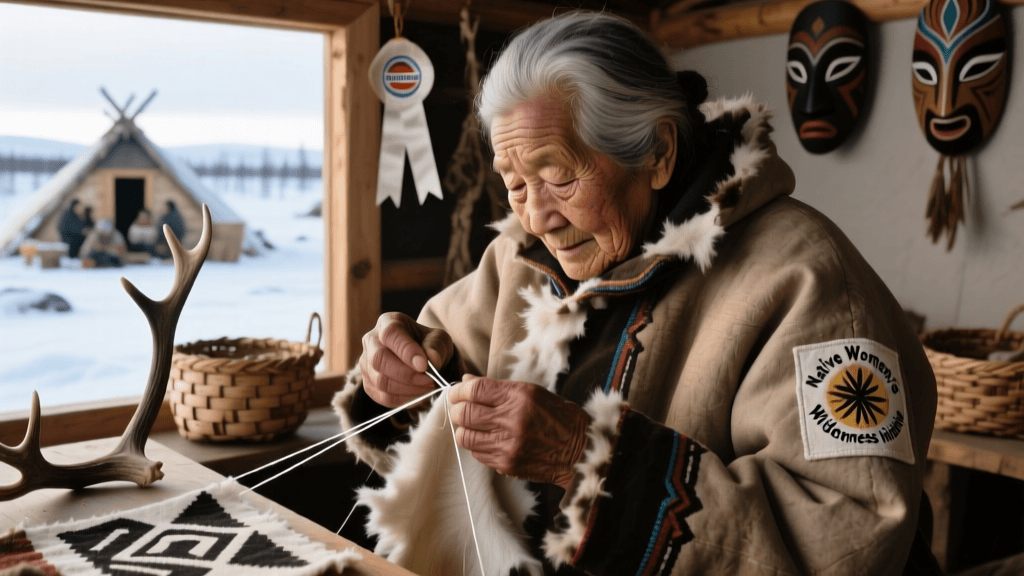
The Inuit of Nunavut, Nunavik, and the Northwest Territories have relied on caribou skin for millennia—not merely as fabric but as a responsive, thermoregulating system. Caribou hide possesses unique structural properties: each hair contains air-filled medullary cells that trap heat while remaining lightweight. A single adult caribou yields approximately 1.8–2.2 square metres of usable hide after careful scraping and stretching. The skin is harvested in late autumn when the animal’s winter coat is fully grown and the fat layer beneath the epidermis is minimal—critical for preventing rancidity during storage. Traditional tanning involves repeated chewing (by skilled women) to soften collagen fibres, followed by smoke-curing over alder or willow fires for 72–96 hours. This process preserves the hide without chemical agents and imparts water resistance. According to the Inuit Heritage Trust (2019), over 85% of parkas made for ceremonial use in Igloolik still begin with hand-chewed, smoke-cured caribou skin.
Gut Thread: The Invisible Strength
Seam strength in Arctic conditions demands more than sinew or plant fibre. Inuit seamstresses use prepared seal or walrus intestine—specifically the outer serosal layer—to produce gut thread. The intestines are cleaned, inflated with air, scraped to remove mucosa, then dried in the wind for 4–6 days until translucent and taut. One metre of gut yields roughly 3.5 metres of spun thread after twisting and tensioning. A single parka requires between 12 and 18 metres of gut thread, depending on size and design complexity. The thread is lubricated with rendered seal oil before sewing to prevent brittleness. As documented by the Nunavut Arts and Crafts Association (2021), gut-thread seams withstand temperatures as low as −45°C without cracking—a performance unmatched by synthetic alternatives.
Preparation Sequence for Gut Thread
- Capture and evisceration within 2 hours of harvest
- Rinsing in cold seawater for 15 minutes
- Manual scraping with ulus to remove inner mucosal lining
- Air-drying on wooden frames for 4–6 days in sub-zero, low-humidity conditions
- Spinning on thigh with seal-oil lubrication
Sewing Structure: Stitch Logic and Thermal Engineering
Inuit parkas are not cut-and-sewn garments but anatomically mapped assemblies. The hood, for example, features a double-layered ruff of wolf or wolverine fur—each strand precisely aligned to deflect wind and capture exhaled moisture. Measurements are taken using body-part units: the sleeve length equals the distance from wrist to elbow plus three finger-widths; the torso depth matches seven palm widths. A full-length adult parka uses 14–16 separate skin panels, each shaped with curved cuts to allow articulation at shoulders and hips. Seams are sewn with a whipstitch angled at 45 degrees to distribute stress across movement zones. At the underarm gusset, stitches are spaced 4 mm apart—tight enough to seal against wind yet flexible enough to permit full arm extension. The Canadian Museum of History in Gatineau holds a 19th-century Iglulik parka with 217 precisely spaced stitches per decimetre along its primary seam line.
Regional Variations Across Inuit Communities
- Igloolik (Nunavut): Parkas feature vertical seam lines running from collar to hem, allowing rapid disassembly for repair.
- Puvirnituq (Nunavik): Hood ruffs incorporate alternating bands of white and brown fox fur, symbolising seasonal transitions.
- Tuktoyaktuk (Northwest Territories): Sleeves are cut with integrated mittens, secured by toggles carved from antler—each toggle measures exactly 3.2 cm in length.
Ceremonial Embodiment: Beyond Utility
A newly completed parka is never worn immediately. It undergoes a four-day ritual preparation: first, it is hung facing east for sunrise exposure; second, it receives a light coating of crushed hematite mixed with seal oil; third, it is sung over with puqit (traditional throat songs) invoking ancestral seamstresses; fourth, it is worn for the first time during a community nalukataq (blanket toss). These protocols affirm that clothing carries memory, intention, and relational accountability. The parka is not owned—it is stewarded. When passed down, the recipient must recite the names of three preceding wearers, a practice upheld by the Inuit Circumpolar Council’s Cultural Continuity Program since 2015.
Institutional Safeguarding and Contemporary Practice
The Nunavut Department of Culture and Heritage funds annual parka-making intensives at the Avataq Cultural Institute in Inukjuak, where elders teach youth the full cycle—from hide selection to final blessing. Since 2017, these workshops have trained 142 apprentices across 11 communities. At the University of Alaska Fairbanks’ Indigenous Knowledge Center, researchers collaborate with Inuit seamstresses to document thermal conductivity metrics: caribou-skin parkas maintain internal microclimates at 22°C even when ambient temperatures drop to −38°C. The Smithsonian Institution’s Arctic Studies Center in Anchorage houses 47 historically significant parkas, including one collected from Baker Lake in 1953 that retains intact gut-thread seams after 71 years of climate-controlled storage.
“The parka breathes with you. It remembers your grandmother’s hands, your mother’s songs, the caribou’s last run across the tundra. To sew it is to hold time in your fingers.” — Nellie Kusugak, Senior Elder, Rankin Inlet, quoted in Inuit Sewing Traditions: Continuity and Innovation, Inuit Tapiriit Kanatami (2020)
Material Metrics and Technical Specifications
| Property | Measurement | Source |
|---|---|---|
| Caribou hide tensile strength (dry) | 18.7 MPa | University of Manitoba Materials Lab (2022) |
| Gut thread diameter | 0.18–0.22 mm | Nunavut Arts and Crafts Association (2021) |
| Stitch density in critical zones | 24–28 stitches per cm | Canadian Museum of History archival analysis (2018) |
| Hood ruff circumference (adult) | 62–67 cm | Avataq Cultural Institute field notes (2023) |
| Minimum drying time for gut preparation | 96 hours at −15°C | Inuit Heritage Trust (2019) |
At the heart of parka making lies an epistemology of reciprocity. Each caribou taken is honoured through precise use: no part discarded, every scrap repurposed—sinew for thread, bone for needles, brain for tanning emulsion. This ethic extends to teaching: knowledge is shared only when requested, never extracted. The Igloolik Historical Society maintains oral archives containing over 317 recorded interviews with seamstresses aged 72–98, each detailing variations in stitch tension based on lunar cycles and wind direction. In Puvirnituq, the annual Ullakut festival features live demonstrations where elders measure thread twist with calibrated wooden torsion gauges—tools calibrated to exact standards maintained since the 1940s. These practices resist standardisation not out of resistance to modernity, but because precision resides in context: temperature, humidity, animal age, and human intention all alter optimal technique. When a young seamstress in Rankin Inlet completes her first full parka, she does not sign it. Instead, she places a small pouch of dried moss inside the lining—a silent signature acknowledging that the garment belongs to the land, the ancestors, and the future, long before it belongs to her.