Navajo Yei Bi Chei Wool Weaving And Sacred Design Rules
Origins and Spiritual Foundations of Yei Bi Chei Weaving
The Yei Bi Chei (pronounced “YAY bee chay”) is not merely a textile motif—it is a living invocation. Rooted in Diné (Navajo) cosmology, the Yei are sacred Holy People who mediate between humans and the spiritual realm. Their depiction in wool weaving emerged in the early 20th century, following the 1913–1914 ceremonial reforms that permitted limited visual representation of sacred beings under strict ritual protocols. Unlike earlier Navajo textiles—such as the classic Two Grey Hills or Ganado styles—the Yei Bi Chei rug demands adherence to precise theological boundaries: no Yei may be shown facing outward from the rug’s border, and each must stand on a “rainbow path” (a horizontal band of red, orange, yellow, green, blue, indigo, violet) measuring exactly 1.5 inches in width.
Weaving Techniques and Material Specifications
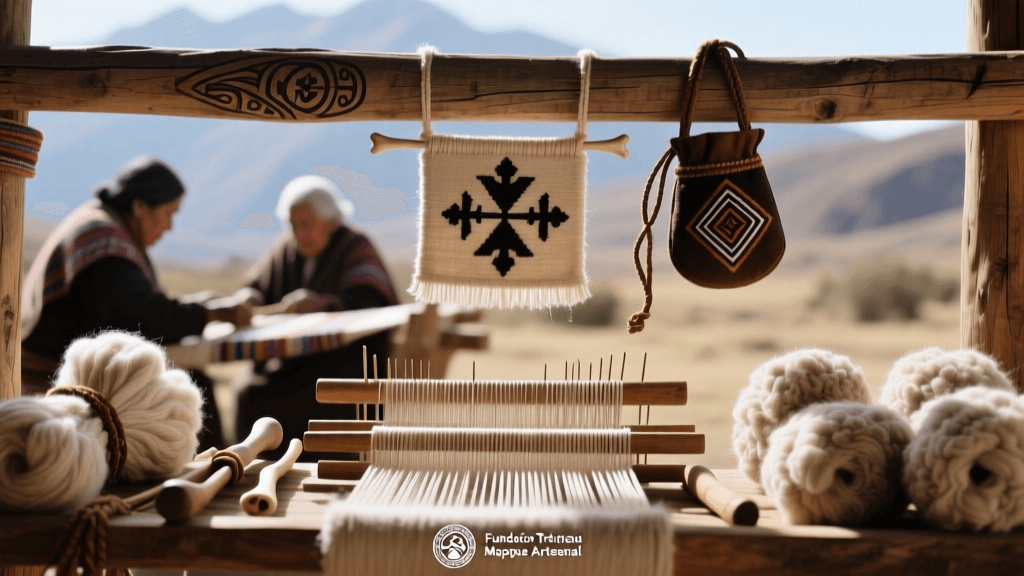
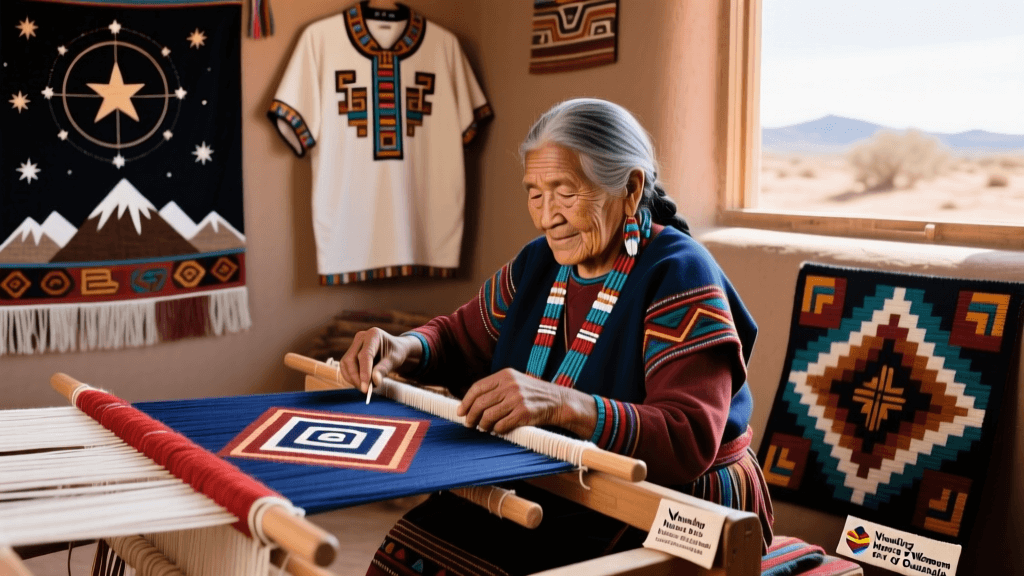
Authentic Yei Bi Chei rugs are handwoven on upright looms using 100% hand-spun Churro sheep wool. The Churro breed, reintroduced to Dinétah in 1990 by the Navajo Sheep Project, produces fleece with a staple length of 4–6 inches and a micron count averaging 58–62—ideal for durability and fine detail. Each rug requires approximately 12–18 months to complete, depending on size and complexity. A standard ceremonial-sized rug measures 48 inches by 72 inches and contains over 1,200 weft rows per linear foot. Weavers use the traditional “lazy line” technique—diagonal discontinuous weft insertion—to avoid tension distortion across large fields.
Wool Preparation Protocols
Before spinning, wool undergoes a four-stage purification process: sun-drying for 72 hours, washing in yucca root suds (not soap), combing with bone needles carved from bighorn sheep, and blessing with corn pollen at dawn. This sequence reflects the Diné principle of Hózhǫ́—harmony and balance. Failure to observe any step invalidates the rug’s ceremonial function.
Dye Sources and Color Symbolism
Natural dyes dominate authentic pieces: black from sumac berries fermented for 14 days; yellow from rabbitbrush blossoms gathered only during the waxing moon; red from cochineal insects sourced via trade with Pueblo communities near Santa Fe. Each hue carries doctrinal weight: turquoise represents sky father Diyin Dine’é; white shell signifies earth mother; jet black embodies night and protection. Synthetic dyes are strictly prohibited for ceremonial use.
Ceremonial Context and Ritual Restrictions
Yei Bi Chei rugs serve as temporary altars during Nightway (Tł’éé’jił) and Enemyway (Anaa’jí) ceremonies. They are never hung on walls or used as floor coverings outside ritual contexts. During a full Nightway, the rug must be placed precisely 3 feet east of the hogan’s central fire pit, oriented so all Yei face inward toward the patient. No more than seven Yei may appear—a number tied to the seven sacred mountains defining Dinétah: Dookʼoʼosłííd (San Francisco Peaks), Tsoodził (Mount Taylor), Sání (Hesperus Mountain), Dibé Nitsaa (Mount Hesperus), Naatsisʼáán (Blanca Peak), and two others whose locations remain unrecorded in public sources.
“A Yei Bi Chei is not art—it is prayer made visible. To weave one without proper initiation, song knowledge, and clan permission is not appropriation; it is spiritual harm.” — Dr. Loretta Yazzie, Diné Cultural Preservation Officer, Navajo Nation Heritage Center (2021)
Contemporary Stewardship and Legal Protections
In 2018, the Navajo Nation Council passed Resolution CJY-18-027, establishing the Yei Bi Chei Design Certification Program. To earn certification, weavers must submit lineage documentation proving descent from a certified Yei Bi Chei practitioner, complete 200 hours of supervised training with a master weaver from the Tó Neinilii Clan, and pass oral examination administered by the Navajo Nation Department of Culture, Recreation & Tourism. As of June 2023, only 47 weavers hold active certification. Certified rugs bear a woven signature panel measuring 2.5 inches × 3 inches containing the weaver’s clan symbol and ceremonial name in Diné Bizaad.
Institutional Safeguards
The Museum of Northern Arizona in Flagstaff maintains the largest publicly accessible archive of pre-1940 Yei Bi Chei fragments—32 textile swatches dated between 1917 and 1939. These pieces were acquired through ethical collaboration with the Navajo Nation Historic Preservation Department, which retains veto power over exhibition labels and digital reproduction rights. Similarly, the Heard Museum’s “Weaving Worlds” permanent gallery in Phoenix features six certified contemporary Yei Bi Chei rugs displayed exclusively alongside audio recordings of the associated chants performed by Navajo Medicine Men licensed by the Diné Nation Health Services.
- Each certified Yei Bi Chei rug includes a numbered brass tag stamped with the Navajo Nation seal and issued by the Office of the President and Vice President
- Minimum warp density required: 18 ends per inch (EPI), verified using calibrated magnification tools calibrated annually at the Navajo Technical University Textile Lab
- Maximum allowable deviation in Yei posture: ±3 degrees from vertical axis, measured with digital inclinometers certified by the Bureau of Indian Affairs Engineering Division
- Rugs intended for ceremonial use must weigh between 12.8 and 14.2 pounds—verified on Navajo Nation–calibrated scales at the Crownpoint Weaving Cooperative
- The rainbow path must contain exactly seven distinct hues; omission or substitution of even one color voids ritual validity
Ethical Engagement and Community Partnerships
Purchasing or studying Yei Bi Chei textiles demands direct accountability to Diné governance structures. The Navajo Nation Department of Justice’s Intellectual Property Unit (est. 2015) prosecutes unauthorized commercial replication, including digital prints sold online without tribal consent. In 2022, the unit filed 17 cease-and-desist orders against U.S.-based retailers violating the Navajo Nation Trademark Act. Authentic engagement begins with supporting certified cooperatives: the Crownpoint Weaving Cooperative (founded 1974), the Toadlena Trading Post Weavers Guild (established 1989), and the Navajo Handicrafts Cooperative Association headquartered in Window Rock.
Non-Diné researchers must obtain written permission from the Navajo Nation Human Subjects Review Board before photographing, measuring, or documenting any Yei Bi Chei textile—even those held in museum collections. This requirement stems from the 2019 Diné Bikeyah Research Ethics Code, developed jointly by Diné College and the Navajo Nation Division of Health.
Education initiatives led by the Navajo Nation Museum emphasize intergenerational transmission: since 2016, its Youth Weaving Apprenticeship Program has trained 89 Diné teens, each completing a minimum 36-inch-square Yei Bi Chei sampler under mentorship of certified elders. Completion requires recitation of the full “Yei Bi Chei Origin Song” in fluent Diné Bizaad—a linguistic benchmark verified by Navajo Language Academy linguists.
Commercial reproductions marketed as “Navajo-inspired” violate both federal law and Diné ethical codes. The Indian Arts and Crafts Act of 1990 mandates that only enrolled members of federally recognized tribes may label work as “Navajo.” Yet enforcement remains inconsistent: a 2021 audit by the National Congress of American Indians found that 63% of online listings claiming Navajo origin lacked verifiable tribal affiliation.
True respect manifests not in admiration alone but in material support. Every certified Yei Bi Chei rug purchased directly from a Navajo weaver returns 100% of proceeds to the creator’s family and community. In contrast, third-party retail markups often exceed 400%, diverting resources from cultural continuity efforts like the Diné College Wool Processing Facility in Tsaile—where students learn traditional scouring, carding, and dyeing techniques using equipment donated by the Southwest Indian Polytechnic Institute.
| Feature | Traditional Standard | Certification Requirement |
|---|---|---|
| Warp yarn twist | Z-twist only | Measured at 1.8 twists per inch ±0.1 |
| Yei height ratio | 1:2.3 (width to height) | Validated via digital calipers at Navajo Technical University |
| Border thickness | 3.5 inches minimum | Must include three concentric bands: lightning, corn, and mountain pattern |
Recognition of Yei Bi Chei weaving as sacred practice—not folk art—requires dismantling colonial frameworks that separate aesthetics from theology. When the Navajo Nation partnered with UNESCO in 2020 to nominate Diné weaving traditions for Intangible Cultural Heritage status, the application explicitly excluded Yei Bi Chei designs from public nomination materials, citing their inherent restriction to initiated practitioners. This deliberate omission affirms a core Diné value: some knowledge is not meant to be shared, but honored through restraint.
The integrity of this tradition rests not in static preservation but in dynamic, accountable continuity. Each certified rug woven today reaffirms a covenant older than written records—between land, language, lineage, and the Holy People who walk beside us in wool and prayer.