Pacific Northwest Chilkat & Ravenstail Weaving Revival 2026
The Spiritual and Historical Roots of PNW Weaving
The Pacific Northwest Coast is home to some of the most complex, mathematically rigorous, and visually striking textile traditions in the world. For the Tlingit, Haida, and Tsimshian peoples, weaving is not merely a method of garment creation; it is a profound spiritual practice that encodes clan history, ancestral lineage, and cosmic balance. As we move through 2026, the revitalization of Indigenous North American dress traditions has reached a remarkable zenith, driven by a new generation of master weavers, museum repatriations, and a fierce commitment to cultural sovereignty.
Unlike the loom-woven textiles of the Navajo (Diné) or the beadwork of the Great Lakes tribes, Pacific Northwest Coast (PNW) weaving relies on a unique warp-weighted technique and the intricate manipulation of natural fibers. The garments produced—primarily ceremonial robes, tunics, and leggings—are considered living entities. When danced, the fringes sway and the formline designs appear to breathe, bringing the ancestral spirits into the physical realm. Understanding these traditions in 2026 requires a deep dive into the materials, the mathematics of the loom, and the contemporary boundaries of Indigenous fashion.
Ravenstail vs. Chilkat: Understanding the Distinctions
While often grouped together by outsiders, Ravenstail and Chilkat weaving are distinct traditions with separate historical trajectories and visual vocabularies. Both utilize the same foundational twining technique, but their aesthetic and structural executions differ vastly.
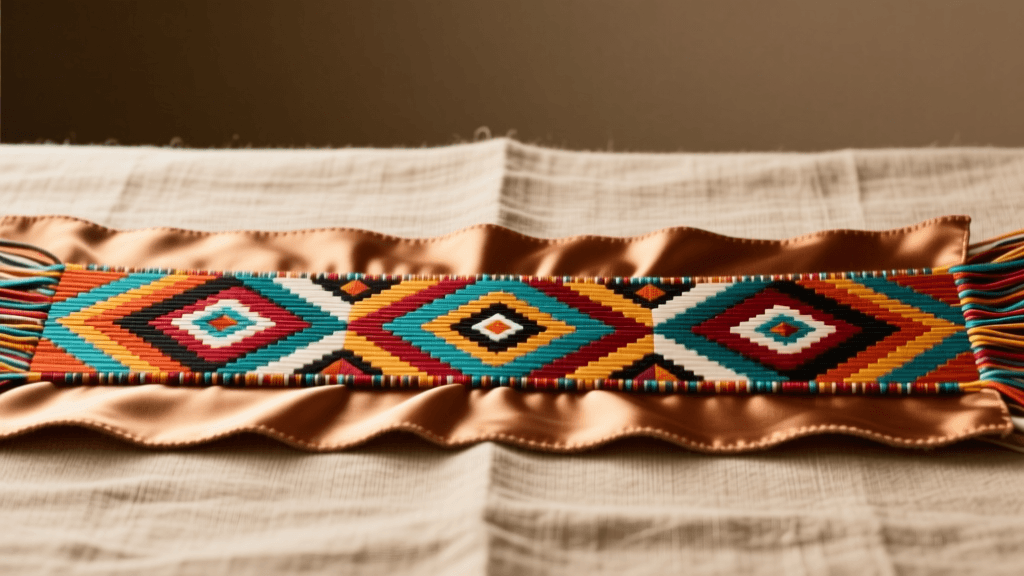
- Ravenstail (Kutaakaa): The older of the two traditions, Ravenstail weaving is characterized by stark, geometric patterns. Utilizing primarily black, white, and yellow, the designs feature sharp angles, zigzags, and diamond shapes that represent the eyes and feathers of the raven. The geometric precision requires intense mathematical foresight, as the weaver must calculate the exact placement of color shifts rows in advance.
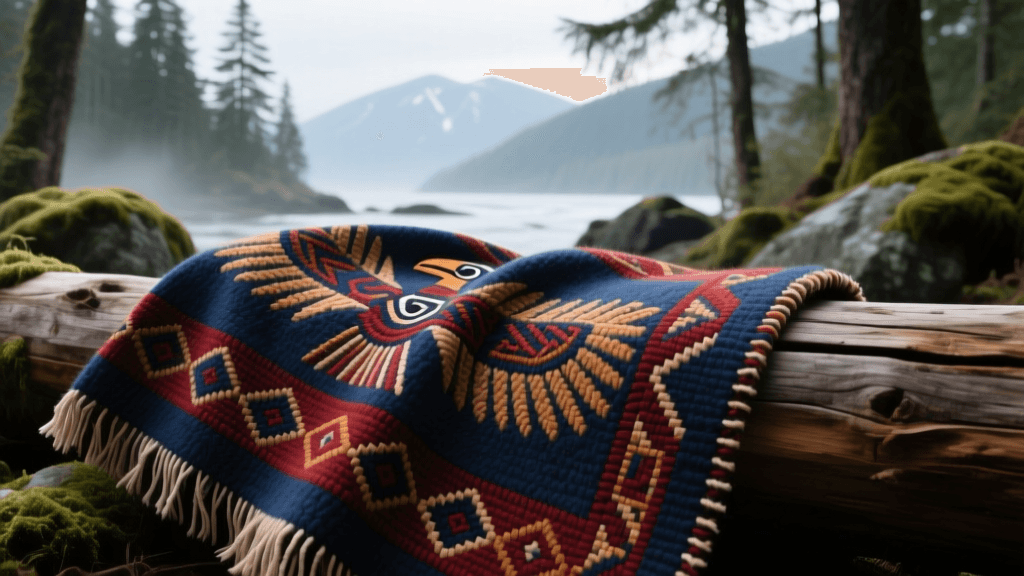
- Chilkat (Naaxein): Emerging later through the integration of curvilinear formline design (the hallmark of PNW carving and painting), Chilkat weaving features sweeping ovoids, U-forms, and split-U forms. These robes depict animals, mythological beings, and clan crests. The designs are painted on a pattern board by a male artist, and the female weaver translates this 2D template into a 3D textile, a collaborative process that remains central to the art form today.
Material Sourcing in 2026: Navigating Climate and Conservation
The soul of a PNW robe lies in its materials. Traditionally, weavers utilized the wool of the mountain goat and the inner bark of the yellow cedar tree. The preparation of these materials is extraordinarily labor-intensive. The cedar bark is harvested in the spring, boiled, and beaten to separate the soft inner core, which is then twisted with the goat wool to create a thick, durable warp thread.
In 2026, climate shifts in the Tongass National Forest and surrounding coastal regions have prompted weavers to work alongside the USDA Forest Service and local tribal conservation boards to ensure sustainable yellow cedar bark harvesting. Over-harvesting can kill the tree, so modern protocols dictate strict rotational harvesting and the use of fallen timber where possible.
| Material | Traditional Use | 2026 Sourcing & Alternatives | Estimated Cost / Availability |
|---|---|---|---|
| Mountain Goat Wool | Weft and Warp core | Shed wool collected from bushes; sustainably hunted hides. Merino wool blends used for practice. | $40-$80 per oz (Raw); Highly restricted |
| Yellow Cedar Bark | Warp foundation | Sustainable tribal harvesting permits; commercial cedar bark from heritage suppliers. | $25-$50 per bundle |
| Wolf Lichen | Yellow Dye | Slow-growing; foraged with strict ecological limits. Sometimes substituted with commercial acid dyes for non-ceremonial pieces. | $60 per oz (Dried) |
| Hemlock Bark & Iron | Black Dye | Abundant; harvested sustainably from fallen hemlock branches and oxidized with local bog mud. | Low cost; High labor to process |
Natural Dyes and the Chemistry of Color
The vibrant colors of ancestral robes were achieved through a deep understanding of local botany and chemistry. In 2026, master weavers are reviving complex dye recipes that were nearly lost during the 20th century. The brilliant yellow, iconic to both Ravenstail and Chilkat robes, is derived from wolf lichen (Letharia vulpina). Because this lichen grows incredibly slowly on the bark of old-growth conifers, weavers today practice meticulous micro-harvesting to protect the forest ecosystem.
Black dye is achieved by boiling hemlock bark to extract tannins, then introducing an iron mordant—historically sourced from iron-rich bog mud or oxidized copper. The resulting black is deep, colorfast, and slightly acidic, which actually helps preserve the wool fibers over centuries. The stark white of the mountain goat wool is left undyed, though it requires hours of meticulous washing, carding, and sun-bleaching to achieve the luminous brightness required for high-status garments.
The Mathematics and Mechanics of the Warp-Weighted Loom
Unlike the Navajo upright loom or the European treadle loom, PNW weavers use a warp-weighted loom. This ancient technology consists of a simple crossbar suspended from the ceiling or a frame, with the warp threads hanging down, weighted by stones or cedar burls to maintain tension.
The weaver works from the top down, using a twining technique where two weft threads are twisted around each other, encasing the warp threads. There are no heddles or shuttles; every single intersection is twisted by hand. A full-sized Chilkat dance robe contains tens of thousands of these hand-twined intersections. It is estimated that a master weaver in 2026 will spend between 1,500 and 2,500 hours to complete a single ceremonial robe, often taking two to three years from the initial harvesting of materials to the final braiding of the fringe.
Repatriation and the 2026 Technical Renaissance
The year 2026 has marked a significant milestone in the repatriation of Indigenous textiles. As institutions like the Smithsonian National Museum of the American Indian and various European museums return ancestral robes to their rightful clans, contemporary weavers have gained unprecedented access to study 19th-century techniques. By examining the tension, the spin of the yarn, and the specific twining structures of these returned garments, modern weavers are correcting decades of assumed knowledge and elevating the technical precision of new robes to match their ancestral counterparts.
Organizations such as the Sealaska Heritage Institute have been instrumental in this renaissance, hosting intensive master-apprentice workshops, funding material harvesting expeditions, and providing studio space for weavers to collaborate. Furthermore, the Native Arts and Cultures Foundation has provided vital fellowships in 2026, allowing weavers to take time away from standard employment to focus entirely on the grueling, months-long process of spinning yarn and weaving.
Contemporary 2026 Fashion and Ceremonial Boundaries
While the full Chilkat and Ravenstail robes remain strictly ceremonial—worn only during potlatches, memorial gatherings, and sacred dances—the visual language and techniques of PNW weaving have gracefully expanded into contemporary Indigenous fashion. In 2026, it is increasingly common to see Indigenous leaders, artists, and professionals wearing woven neckties, lapel pins, headbands, and vests that incorporate Ravenstail geometric patterns or Chilkat formline motifs.
These contemporary garments are often woven using commercially sourced, high-grade merino wool or silk blends, making them more accessible and durable for daily wear. However, the cultural protocol remains strict: sacred clan crests and specific spiritual motifs are never placed on commercialized, everyday items. The distinction between 'art for the market' and 'regalia for the spirit' is fiercely protected by the weaving community, ensuring that the sacred power of the Naaxein remains uncompromised.
How to Support, Study, and Commission PNW Textiles
For collectors, museums, and supporters of Indigenous arts looking to engage with Pacific Northwest weaving in 2026, direct relationships with artists and tribal enterprises are paramount. The secondary market is often fraught with misattributions and historical exploitation; therefore, purchasing directly from the weaver or through verified tribal galleries ensures that the economic benefits support the continuation of the art form.
- Commissioning a Ceremonial Robe: Be prepared for a multi-year waitlist. As of 2026, a fully traditional, hand-spun mountain goat and cedar bark Chilkat robe ranges from $30,000 to over $50,000, reflecting the thousands of hours of specialized labor and the high cost of sustainably sourced materials.
- Contemporary Woven Accessories: Woven headbands, small medallions, and neckties typically range from $250 to $800. These pieces make excellent, culturally respectful acquisitions for those wishing to support living artists.
- Education and Workshops: Non-Indigenous individuals interested in the mathematics and history of the loom can attend academic lectures and museum exhibitions. However, hands-on weaving workshops involving sacred patterns and traditional material processing are generally reserved for Indigenous community members to protect cultural intellectual property.
The survival and flourishing of Chilkat and Ravenstail weaving in 2026 is a testament to the resilience of the Tlingit, Haida, and Tsimshian peoples. Through a delicate balance of ecological stewardship, mathematical brilliance, and spiritual devotion, the weavers of the Pacific Northwest continue to wrap their communities in the living history of their ancestors.